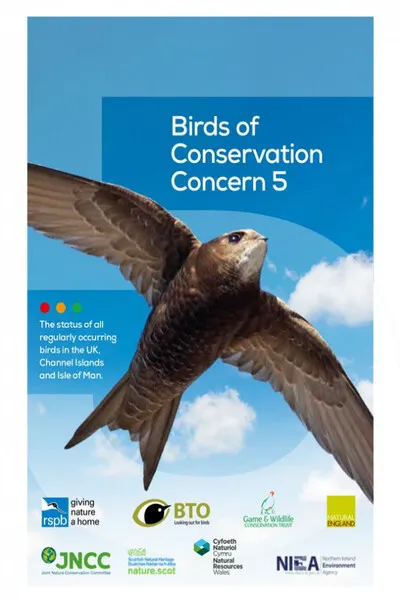
Commonly referred to as the UK Red List for birds, the status of birds has now been reviewed five times, covering the UK, Channel Islands and Isle of Man.
Birds of Conservation Concern 5
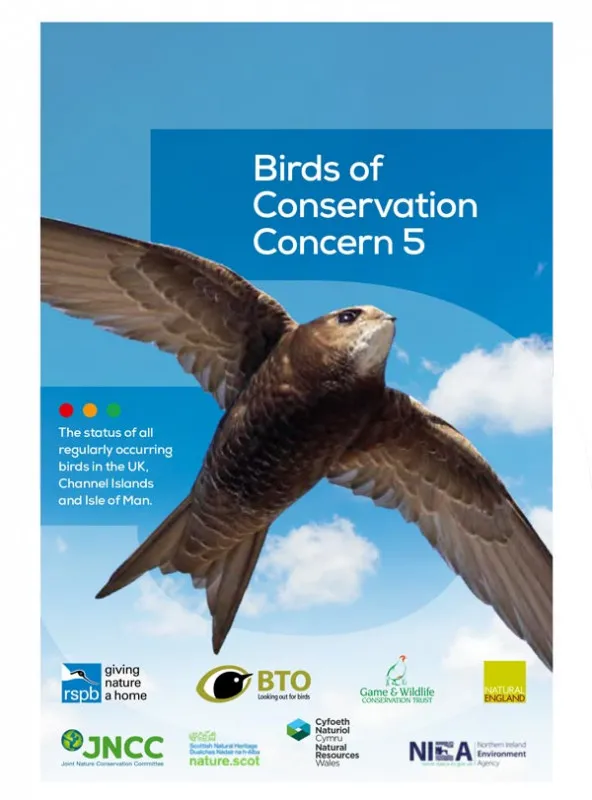
The latest review was published in December 2021, as Birds of Conservation Concern 5 (BOCC5). This updates the last assessment in 2015. Using standardised criteria, experts from a range of bird NGOs, including BTO, assessed 245 species with breeding, passage or wintering populations in the UK and assigned each to the Red, Amber or Green Lists of conservation concern.
Assessing extinction risk
The same group of experts undertook a parallel exercise to assess the extinction risk of all bird species for Great Britain (the geographical area at which all other taxa are assessed) using the criteria and protocols established globally by the International Union for the Conservation of Nature (IUCN).
This resulted in the assessment of 235 regularly occurring species (breeding or wintering or both), the total number assessed differing slightly from BOCC5 due to different rules on the inclusion of scarce breeders and colonisation patterns. The results of this second IUCN assessment (IUCN2) are provided in the same paper as BOCC5.
How the lists are decided
The BOCC assessment is based on the most up-to-date evidence available. Criteria include conservation status at global and European levels. Within the UK, criteria include:
- Historical decline
- Trends in population and range
- Rarity
- Localised distribution
- International importance
Golden Oriole (previously Red-listed but which has not bred in the UK since 2009) now joins a Black List of eight other species now considered to have ceased breeding in the UK (including Serin, Temminck’s Stint and the once widespread Wryneck).
Four new species that have more recently become sufficiently established, as well as Yellow-browed Warbler (no longer considered a scarce migrant), were assessed by BOCC5 – Little Bittern, Cattle Egret, Great White Egret and Black-winged Stilt – and all went onto the Amber list due to criteria related to scarcity and localisation.
The IUCN assessment process uses the same underlying data on population trends and population size but the time periods over which change is assessed differs and is linked to generation length and also population size. With their focus on extinction risk, the IUCN assessments also consider the potential for populations in Great Britain to be rescued by immigration from increasing populations in surrounding geographical areas.
The growing Red List
This update shows that the UK’s bird species are increasingly at risk, with the Red List growing from 67 to 70. By contrast, the first Red List, published in 1996, had only 36 species.
Eleven species have been Red-listed for the first time in 2021:
- Due to worsening declines in breeding populations (Greenfinch, Swift, House Martin, Ptarmigan, Purple Sandpiper and Montagu’s Harrier)
- Due to worsening declines in non-breeding wintering populations (Bewick’s Swan, Goldeneye, Smew and Dunlin)
- Due to assessment by IUCN criteria as Globally Vulnerable (Leach’s Petrel) and due to evidence of severe declines since 2000 based on new surveys on St Kilda, which holds more than 90% of the UK’s population
The evidence for the changes in the other species comes from the UK’s key monitoring schemes such as BTO/JNCC/RSPB Breeding Bird Survey (BBS) for terrestrial birds, the BTO/RSPB/JNCC Wetland Bird Survey (WeBS) for wintering populations and the Rare Breeding Bird Panel (RBBP) for scarce breeding species such as Purple Sandpiper.
From Green to Red
Two species moved directly from the Green to Red List: Greenfinch and Ptarmigan.
Increasingly severe declines in Greenfinch numbers have been reported in BBS reports for more than a decade, and the initial regional pattern of declines was associated with outbreaks of the disease Trichomonosis. This disease of the digestive tract is widespread in Greenfinch populations across Europe and may also be starting to affect other species such as Collared Dove, Sparrowhawk and Chaffinch.
A species of montane uplands, Ptarmigan is a difficult species to census and data are scarce, but an analysis of game bag data for this quarry species revealed a long-term decline of more than 80% since the 1960s, in agreement with the loss of range revealed by Bird Atlas 2007–11 and the sensitivity to climate change of this montane species.
The IUCN assessment resulted in 108 (46%) of regularly occurring species being assessed as threatened with extinction in Great Britain, meaning that their population status was classed as Critically Endangered, Endangered, or Vulnerable, as opposed to Near Threatened or of Least Concern. Of those 108 species, 21 were considered Critically Endangered, 41 Endangered and 46 Vulnerable.
There is considerable overlap between the lists but unlike the Red List in BOCC5, IUCN2 highlights the vulnerability of some stable but small and hence vulnerable populations as well as declines in species over much shorter recent time periods, as seen for Chaffinch and Swallow.
What kinds of birds are in the most trouble?
How does the Red List break down across habitats or taxonomic groupings?
Unlike previous BOCC assessments, where there was a clearer pattern of influx to the Red List, with upland and woodland species joining the already listed farmland species, this update is more of a mixed bag. However, the worsening status of Afro-Palearctic migrants continues with two aerial insectivores – Swift and House Martin – joining other migrants such as Cuckoo and Nightingale on the Red List. Although deteriorating conditions on the wintering grounds and on stopover sites are likely factors, the reliance of many long-distance migrants on insects and other invertebrates suggests that declines in those could also play a role.
The other group joining the Red List also encompasses migrants: in this case, wintering wildfowl and waders that breed at higher latitudes and to the east, but winter in the UK. Climate change and milder winters in regions such as the Baltic Sea have resulted in many of these species being less likely to migrate as far west and south as the UK, in a pattern termed 'short-stopping'. This is likely the case for Red List newcomers Dunlin and Smew, but can be further complicated by broader declines in populations, as is known for the Eastern flyway populations of Bewick’s Swan.
Can conservation action work?
There is also better news.
White-tailed Eagle no longer qualifies for ‘historical decline’ thanks to further recovery of the breeding population and intense conservation efforts. Similarly, five previously Red-listed species (Pied Flycatcher, Song Thrush, Black Redstart, Grey Wagtail and Redwing) have shown modest but sufficient improvements in breeding population status to have moved from Red to Amber. Red Grouse, Mute Swan and Kingfisher also move from Amber to Green.
Overall, the Amber List has increased from 96 in BOCC4 to 103 in BOCC5, this difference reflecting both negative changes (moves to the Red List) and positive changes (moves to the Green List). The Green list, now 72 species long, includes a range of common garden species such as Blue Tit, Blackbird and Robin, and saw a net loss of nine species since BOCC4.
- The full lists are available in the Birds of Conservation Concern 5 summary leaflet or the full publication.
Search filters
Birds of Conservation Concern Wales 4: the population status of birds in Wales
Author:
Published: 2022
The latest review of the conservation status of birds in Wales. The report assessed all 220 bird species which regularly occur in Wales. There are now 60 species of bird on the Red List, with 91 on the Amber List and just 69 - less than a third of the total number of species - on the Green List. The latest review of the conservation status of birds in Wales comes 20 years after the first, when the Red List was less than half the length it is today. The report assessed all 220 bird species which regularly occur in Wales. There are now 60 species of bird on the Red List in Wales, with 91 on the Amber List and 69 on the Green List. The Birds of Conservation Concern in Wales report assesses the status of each species against a set of objective criteria. Data sources include the BTO/JNCC/RSPB Breeding Bird Survey and the BTO/RSPB/JNCC Wetland Bird Survey, as well as Bird Atlases and other BTO-led monitoring schemes and citizen science initiatives. These are used to quantify the changing status of the species’ Welsh population. The UK, European and global conservation status of the species is also considered, placing the Welsh population into a wider context. The Red ListSwift, Greenfinch and Rook – familiar breeding species in steep decline across the UK – are among the new additions to the Welsh Red List, which now also includes Purple Sandpiper, on account of a rapidly shrinking Welsh wintering population, and Leach’s Petrel, an enigmatic seabird in decline across its global range. These species now sit alongside well-known conservation priorities, such as Curlew, Hen Harrier and Turtle Dove as birds at risk of being lost from Wales for good. Uplands and woodlands Many of the species on the Red List are found in upland and farmland habitats. Starling, Tree Sparrow, Yellow Wagtail and Yellowhammer can no longer be found in much of Wales, while iconic species of mountain and moorland, such as Ring Ouzel, Merlin and Black Grouse, remain in serious trouble. Wales is well known for its populations of woodland birds; however, many of these – including Lesser Spotted Woodpecker, Willow Warbler and Spotted Flycatcher – also feature on the Red List. Goldcrest, which has seen its Welsh population shrink alarmingly in recent decades, is another new addition. On the coast The assessment for Birds of Conservation Concern Wales 4 took place before the impacts of avian influenza could be taken into account. Breeding seabird species have been struggling in Wales for many years, however, and most were already of conservation concern before the outbreak of this disease. Kittiwake, Puffin, Black-headed Gull, and Common, Arctic and Sandwich Tern remain on the Red List. Wales holds internationally significant numbers of breeding seabirds, making the decline of these colonies a global concern. The Amber ListDeclines in Wheatear, Garden Warbler and House Martin - all migrants which breed in Europe and winter in sub-Saharan Africa - mean these species have moved from the Green List to the Amber List. Many other ‘Afro-Palearctic' migrant species are also in decline, but the potential reasons for this, such as habitat loss and reduced availability of invertebrate prey, are not well understood. Closer to home, the declines in the Welsh Chaffinch population, linked to the disease trichomonosis, have seen the species Amber-listed. A number of other species have been placed on the Amber List because of the wider importance of their Welsh populations, which in each case make up more than half the UK total. Wales is home to more than three-quarters of the UK’s Choughs, for example, so recent declines are cause for concern. The nation’s breeding populations of Manx Shearwater, Pied Flycatcher, Goshawk and Hawfinch also account for more than half the UK total, as does its wintering population of Spotted Redshank. It’s not all bad news, though: some species now on the Amber List have moved up from the Red List, indicating some positive change in their population trends. These include Common Sandpiper, Great Black-backed Gull, Bullfinch, Goldcrest and Pied Flycatcher. The Green ListWhile the report contains much cause for alarm, several conservation success stories shine through. Red Kite was almost lost as a British bird during the first half of the 20th century, when only a handful of pairs remained in remote Welsh valleys. Since then, a sustained conservation effort has brought the species back from the brink. Wales is now home to more than 2,500 pairs of Red Kite and the species has now been moved to the Green List, reflecting this incredible change in fortunes. Song Thrush, Reed Bunting, Long-tailed Tit, Redwing and Kingfisher are among the other species to have gone Green, providing much-needed hope that things can go up as well as down.
06.12.22
Reports Birds of Conservation Concern
The status of our bird populations: the fifth Birds of Conservation Concern in the United Kingdom, Channel Islands and Isle of Man and second IUCN Red List assessment of extinction risk for Great Britain
Author:
Published: 2021
Commonly referred to as the UK Red List for birds, this is the fifth review of the status of birds in the UK, Channel Islands and Isle of Man, published in December 2021 as Birds of Conservation Concern 5 (BOCC5). This updates the last assessment in 2015. Using standardised criteria, experts from a range of bird NGOs, including BTO, assessed 245 species with breeding, passage or wintering populations in the UK and assigned each to the Red, Amber or Green Lists of conservation concern. The same group of experts undertook a parallel exercise to assess the extinction risk of all bird species for Great Britain (the geographical area at which all other taxa are assessed) using the criteria and protocols established globally by the International Union for the Conservation of Nature (IUCN). This resulted in the assessment of 235 regularly occurring species (breeding or wintering or both), the total number assessed differing slightly from BOCC5 due to different rules on the inclusion of scarce breeders and colonisation patterns. The results of this second IUCN assessment (IUCN2) are provided in the same paper as BOCC5. Increasingly at risk This update shows that the UK’s bird species are increasingly at risk, with the Red List growing from 67 to 70. Eleven species were Red-listed for the first time, six due to worsening declines in breeding populations (Greenfinch, Swift, House Martin, Ptarmigan, Purple Sandpiper and Montagu’s Harrier), four due to worsening declines in non-breeding wintering populations (Bewick’s Swan, Goldeneye, Smew and Dunlin) and one (Leach’s Storm-petrel) because it is assessed according to IUCN criteria as Globally Vulnerable, and due to evidence of severe declines since 2000 based on new surveys on St Kilda, which holds more than 90% of the UK’s populations. The evidence for the changes in the other species come from the UK’s key monitoring schemes such as BTO/JNCC/RSPB Breeding Bird Survey (BBS) for terrestrial birds, the BTO/RSPB/JNCC Wetland Bird Survey (WeBS) for wintering populations and the Rare Breeding Bird Panel (RBBP) for scarce breeding species such as Purple Sandpiper. The IUCN assessment resulted in 108 (46%) of regularly occurring species being assessed as threatened with extinction in Great Britain, meaning that their population status was classed as Critically Endangered, Endangered, or Vulnerable, as opposed to Near Threatened or of Least Concern. Of those 108 species, 21 were considered Critically Endangered, 41 Endangered and 46 Vulnerable. There is considerable overlap between the lists but unlike the Red List in BOCC5, IUCN2 highlights the vulnerability of some stable but small and hence vulnerable populations as well as declines in species over much shorter recent time periods, as seen for Chaffinch and Swallow.
01.12.21
Reports Birds of Conservation Concern