The Wider Countryside Butterfly Survey (WCBS) is BTO’s main scheme for monitoring population changes of the UK’s common and widespread butterflies.
About the Wider Countryside Butterfly Survey (WCBS)
The Wider Countryside Butterfly Survey feeds into the UK Butterfly Monitoring Scheme (UKBMS), a long-term monitoring scheme running since 1976 - it celebrates its fiftieth birthday in 2025! - that is important in both assessing the changing status of widespread butterfly species and in providing an indicator of the health of the wider countryside.
The UKBMS involves repeat survey sampling at thousands of locations across the UK. The key method involves weekly counts of butterflies along defined transects on days with suitable weather criteria from April to September. The UKBMS also includes butterfly counts from randomly selected Wider Countryside Butterfly Survey squares (which include BTO/JNCC/RSPB Breeding Bird Survey squares) and targeted species surveys.For more information, visit the UKBMS website.
- All BBS volunteers can take part in the WCBS by making extra visits to their square between May and August to count butterflies.
The UK Butterfly Monitoring Scheme is organized and funded by Butterfly Conservation, the Centre for Ecology and Hydrology, British Trust for Ornithology, and the Joint Nature Conservation Committee.
The UKBMS is indebted to all volunteers who contribute data to the scheme and we now have data from the WCBS, carried out on BBS squares spanning back to the pilot years of 2007 and 2008.
Get involved
Squares, instructions and recording forms
If you would like to get involved, all you need to get started is tell us at bbs@bto.org so we can allocate your BBS square for the WCBS. Then you can either download the instructions and recording form, or email bbs@bto.org to request a pack of paper forms.
Square allocation for the WCBS on BBS squares and all WCBS data from BBS squares are entered into the UKBMS data entry system. For guidance on how to register your BBS square for the WCBS on the UKBMS website, please email bbs@bto.org
Entering data for the WCBS
- Register at www.ukbms.org/mydata/ (the register button is at the top right-hand side of the screen). When choosing your username on this website, it is helpful to us if you use your BTO username.
- Wait for us to email you to confirm that your account has been linked to your square(s). This can only be done during working hours, so please be patient.
- Once allocated the square, log in to the UKBMS website. Hover over ‘My Data’ along the top of the page, then hover over 'Walks' and then when it appears, click on 'My Walks'.
- In the page that opens, it is crucial you change the 'Site Type' to WCBS-BBS in the drop down menu, 'Filter by site' by selecting the square you are entering data for and then find the date of your WCBS survey in the calendar and click on the little green ‘plus’ sign. You can now enter and save the data from your visit.
Watch our tutorial on using the WCBS Data Entry system:
Latest results
The UK Butterfly Monitoring Scheme (UKBMS) 2024 Official Statistic has been released. This includes data collected by the c.300 BBS volunteers who take part in the Wider Countryside Butterfly Survey on their squares each year.
- The Official Statistic describes the trends of 58 out of 59 of the regularly occurring butterfly species in the UK.
- It is based on the results of the UKBMS, including data from BTO volunteers who contribute to the WCBS.
- The 2025 Official Statistic marks the 50th year of the UK Butterfly Monitoring Scheme, which is the largest insect monitoring scheme in the world.
Butterfly populations fluctuate naturally from year to year. However, records in the UKBMS dataset begin as early as 1976, which allows us to identify long-term population trends. The latest results show that butterflies had an average season last year (2025), with 2025 ranking 20th out of the 50 recorded seasons in terms of overall butterfly abundance. However, long-term trends still show overall declines in 58% of the UK’s butterfly species since 1976.
2025 report headlines
- Poor weather in 2023 and 2024 led to one of the worst years on record for UK butterflies in 2024, but the drier and sunnier weather in 2025 allowed butterfly populations to recover slightly
- After its worst year on record in 2024, Small Tortoiseshell was recorded more frequently in 2025 - although it has still declined by 87% since the mid 1970s
- Specialist butterfly species show the most significant declines, except in the case of significant conservation intervention
Spotlight on specialists
‘Specialist’ butterflies have very particular requirements for completing their lifecycle. For example, they may require grassy vegetation at a specific height to lay their eggs on, or only lay their eggs on one specific plant species. Some butterflies also need other invertebrates to complete their life cycle, such as the Large Blue. This species’ caterpillars need to be cared for by ant colonies to survive.
The 2025 Official Statistics show that many specialist butterfly species in the UK are struggling:
- Pearl-bordered Fritillary caterpillars feed only on violets, and adults seek out warm, sheltered and sunny glades in woodland clearings and on bracken-covered hillsides to lay their eggs. This species has declined by 70% since 1976.
- White-letter Hairstreaks lay their eggs only on elm trees, which have almost disappeared from the UK due to Dutch Elm Disease. This butterfly has declined by 80% since 1976.
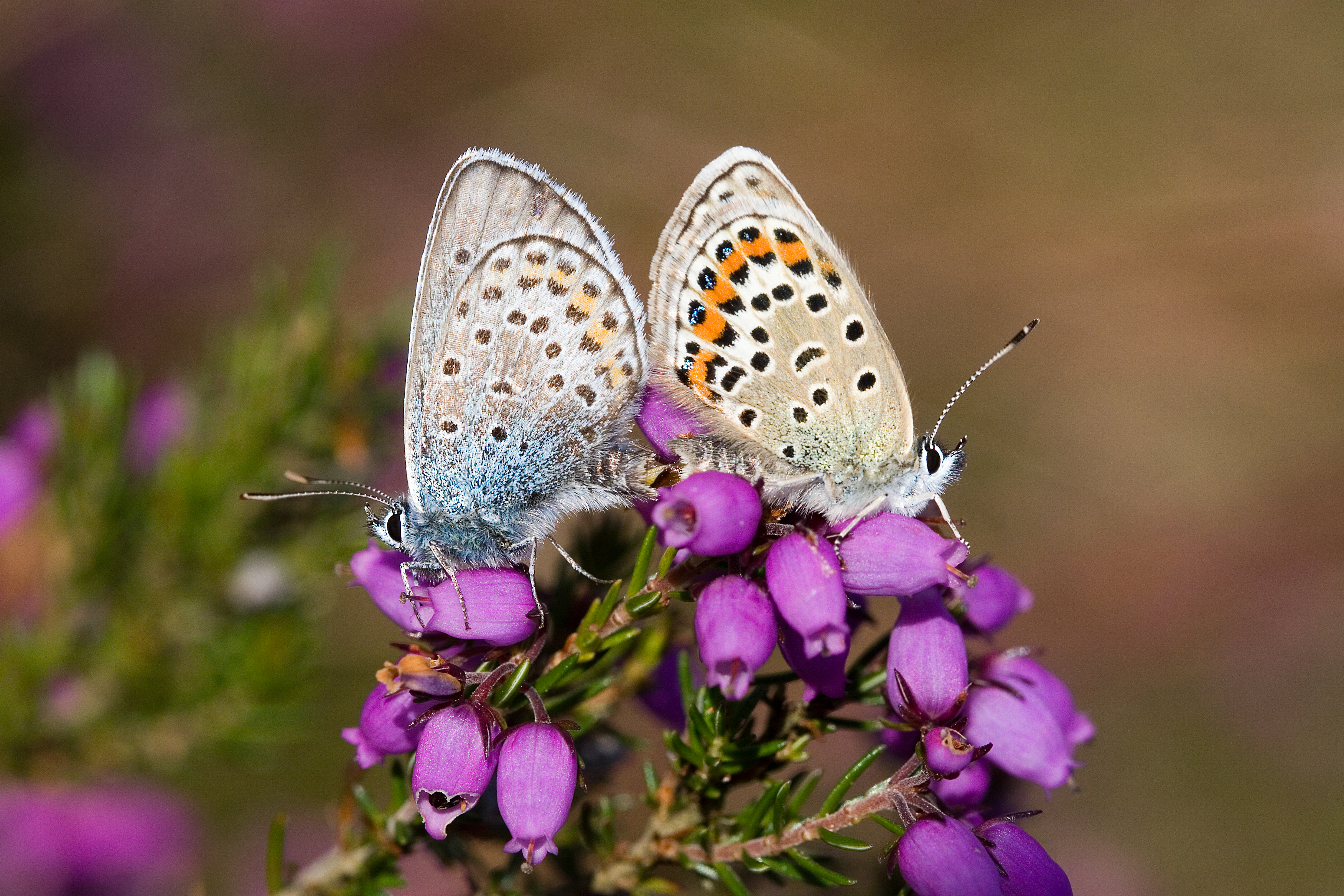
However, the report also highlights the positive impact of conservation action for other specialist butterflies, like the Silver-studded Blue, Black Hairstreak and Large Blue. These populations have increased over the last 10 years as a result of targeted interventions, including habitat management and reintroductions.
- Read more about the latest results on the UKBMS website >
Publications
The latest publications using WCBS data can be viewed on the BBS-related reports and newsletters webpage. This includes the WCBS newsletters and the UKBMS Annual Report.
The UKBMS Official Statistics can be viewed on the UKBMS website.