Read reviews of the books we hold in the Chris Mead Library, written by our in-house experts. A selection of book reviews also features in our members’ magazine, BTO News.
Featured review
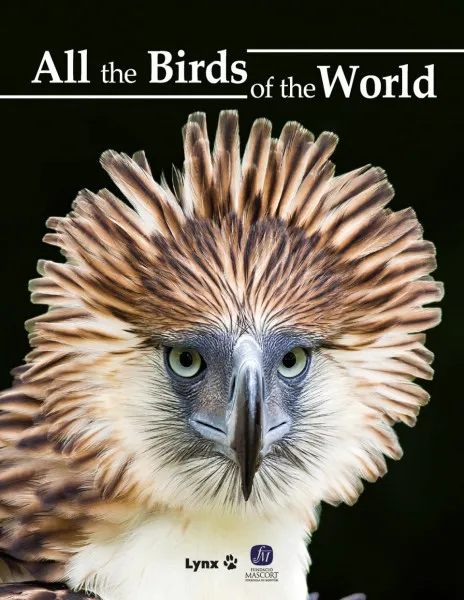
All the Birds of the World
Lynx have had a long-term project to produce an exhaustive guide to the birds of the world. It started out with the 17 volumes of the Handbook of the Birds of the World (1992–2013) which has family and species accounts for all birds. This was followed by the two volumes of the Illustrated Checklist of the Birds of the World (2014–2016). They have now published the third and final stage of this avian odyssey with this current book.
Search filters
European Breeding Bird Atlas 2
Author: Verena Keller, Sergi Herrando, Petr Voříšek, Martí Franch, Marina Kipson, Pietro Milanesi, David Martí, Marc Anton, Alena Klvaňová, Mikhail V. Kalyakin, Hans-Günther Bauer & Ruud P. B. Foppen
Publisher: Lynx Edicions
Published: 2020
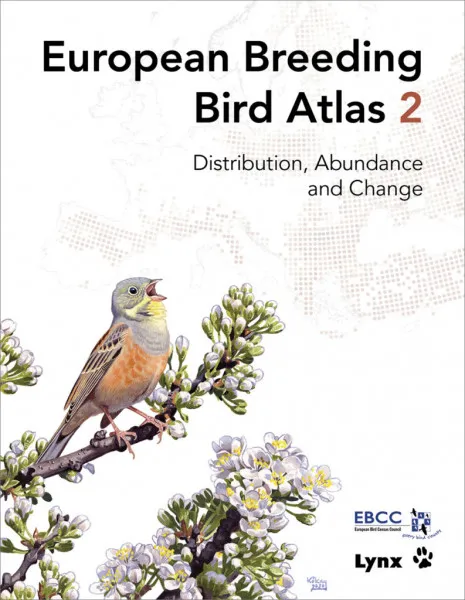
Considered by the judges of British Bird Book of the Year 2021 to be the most significant, influential and far-reaching title of the past 12 months, all six awarded their top marks to EBBA2. The book’s wide appeal, broad application and significant contribution to science were all commended. The judges praised both the high value of the publication’s content and the accessible way in which information was presented, from the readable texts to the different maps, which deliver data in clear and easy-to-interpret ways. With a growing number of species showing changes in population and distribution, this title not only offers an up-to-date overview of the current situation for each species but will also act as a vital checkpoint to look back on and compare against over the coming decades.
Multimedia Identification Guide to North Atlantic Seabirds: Shearwaters, Jouanin’s & White-Chinned Petrels
Author: Bob Flood(Author), Ashley Fisher(Author) & John Gale(Illustrator)
Publisher: Scilly Pelagics
Published: 2020
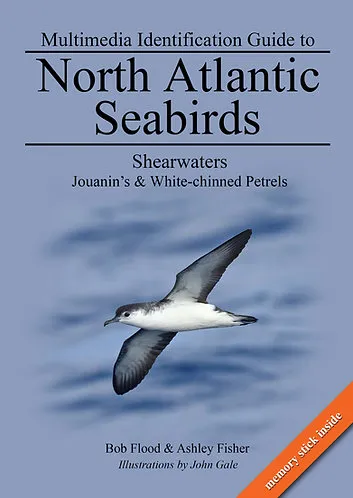
Those who have seen previous titles in the Guide to North Atlantic Seabirds series will not be surprised to see this latest offering score highly in Bird Book of the Year 2021. The text, the photographs, the artwork and the accompanying video footage were all praised by the judges for being of exceptional quality, with much of the material in the book presented for the first time. This is the definitive guide for the identification of shearwaters in the North Atlantic and sets a high bar for coverage of seabirds across the world’s other oceans.
Human, Nature
Author: Ian Carter
Publisher: Pelagic Publishing
Published: 2021
The judges of Bird Book of the Year 2021 enjoyed the straight-talking and balanced approach taken by the author in addressing issues that others may have skirted. Ian’s personal knowledge around the complexities of many of the subjects shines through, as does his personal passion and love for the natural world. Since the book is part autobiographical, part philosophical and part practical, the judges felt that every reader would find something here that they were interested in – or something they didn’t know.
The Glitter in the Green
Author: Jon Dunn
Publisher: Bloomsbury
Published: 2022
Another journey of discovery, in this title the author goes in search of hummingbirds. For those judges who have been fortunate enough to see hummingbirds, this book brought back many fond memories; while one judge who hadn’t seen a hummingbird in the flesh commented that this book ‘really brought the Natural History Museum’s famous hummingbird cabinet to life’ by putting some real-world context onto the species it contains.
Vagrancy in Birds
Author: Alexander Lees & James Gilroy
Publisher: Helm, London
Published: 2021
Avian vagrancy is a phenomenon that has fascinated natural historians for centuries. From Victorian collectors willing to spend fortunes on a rare specimen, to today’s high-octane bird-chasing ‘twitchers’, the enigma of vagrancy has become a source of obsession for countless birders worldwide. The ‘twitching’ scene in Britain is well established with reports of large numbers gathering at the site of a rare bird often being reported in the mainstream press. However, this practice isn’t confined to Britain and vagrancy in birds occurs across the globe. For the first time, this book, in no short order, explores the how and the why of bird vagrancy on a global scale, exploring in great detail how birds navigate and the driving forces that find some birds thousands of kilometres from their intended location, and even on different continents from the one they set out for. My personal favourite chapter, Vagrancy Through Compass Errors, works through the various vagrancy hypotheses and makes for fascinating reading. I really enjoyed reading through the ideas on how reverse migration, mirror-image misorientation, compass errors and the axis of migration might work on a migrant bird and how each of these might explain how ‘lost’ birds end up where they do. The first 71 pages takes us through all of the possible causes of vagrancy in birds, from compass errors, wind drift and overshooting to extreme weather, irruptions and human-driven vagrancy and sets the scene for the bulk of the book, where the authors look at vagrancy family by family, exploring why some are more prone to vagrancy than others – ever thought why Nearctic herons are so rare here and yet are frequent visitors to the Azores out in the mid-Atlantic? The authors suggest that their southerly breeding distribution in the States may well be why – eight species of Nearctic herons have been found on the Azores, compared to four in Britain. There are over 300 mouthwatering photographs of rare birds from across the globe illustrating the various sections of the book and these are stunning, making me go back to the book again and again just to look through them. However, this is a book that should be read from cover to cover, to not do so would be to miss out on an awful lot, that said, the way the book is put together does mean that it can be dipped into. I found myself skipping to a family of birds to see which species were most likely to be prone to vagrancy, and when and where they might turn up. Being able to look at bird families from across the globe and the chances of vagrancy affecting individual birds within them is one of the most interesting things I have read on birds for a long time. This is a book I will definitely add to my bookshelf.
Naturalized Parrots of the World
Author: Stephen Pruett-Jones (Ed.)
Publisher: Princeton University Press, Princeton & Oxford
Published: 2021
Parrots are among the most endangered birds globally, their populations threatened by habitat loss, trapping for the pet trade (both legal and illegal), and shooting, the latter predominantly centred on real or perceived threats to agriculture. Trapping for the pet trade has, ironically, both contributed to population declines within native ranges and seen parrots introduced to other geographical regions and habitats. Of the roughly 300 parrot species known to have been transported beyond their native range, no fewer than 75 have established breeding populations in the countries to which they were introduced. Parrots have been remarkably successful at adapting to their new environments, and this success may pose challenges for conservation, agriculture, and other human activities. Through a series of chapters, each authored by different researchers, this book explores the scale of these introductions, the factors behind their success, and the implications and ecological impacts associated with them. The first part of the book (chapters one to nine) covers background and ecology, while the second part (chapters 10 to 19) presents a series of case studies, one of which provides a useful overview of the status of naturalized parrots in the United Kingdom. As you might expect from what is really a series of scientific papers, each with its own reference list, there is some degree of repetition, but this does not jar too strongly. The order of the chapters enables the reader to view the book as a whole, the editor presenting the scale and distribution of naturalized parrot populations, before turning to chapters covering the most important aspects of these introductions. While Sarah Crowley delivers on the human dimension to parrot introductions and subsequent responses, Emiliano Mori and Mattia Menchetti present the evidence for their ecological impacts. Through this we learn of the 19.6 million parrots traded legally between 1975 and 2015 (representing a quarter of the legal bird trade), and that Rose-ringed Parakeets introduced to Seville in Spain have triggered a population decline in Europe’s largest known colony of Great Noctule Bat. Importantly, the book also considers the question of whether naturalized parrots should be considered as priority invasive species; while there is relatively little evidence of ecological impacts so far, the precautionary principle might suggest that more should be done to control these introduced populations now. Some BTO data and research outputs find their way into the book, although data from BirdTrack (www.birdtrack.net), BTO Garden BirdWatch (www.bto.org/gbw), and the Bird Atlases would have been useful additions to the UK case study. BTO’s weekly Garden BirdWatch provides the best national picture of Rose-ringed Parakeets for the UK, while the BirdTrack records for UK parakeets are more complete than those used, which are derived from e-bird. Overall, an excellent synthesis of the current status and issues relating to naturalized parrot populations across the globe.
Birds of Lincolnshire
Author: Colin Casey, John Clarkson, Phil Espin & Phil Hyde
Publisher: Lincolnshire Bird Club
Published: 2021
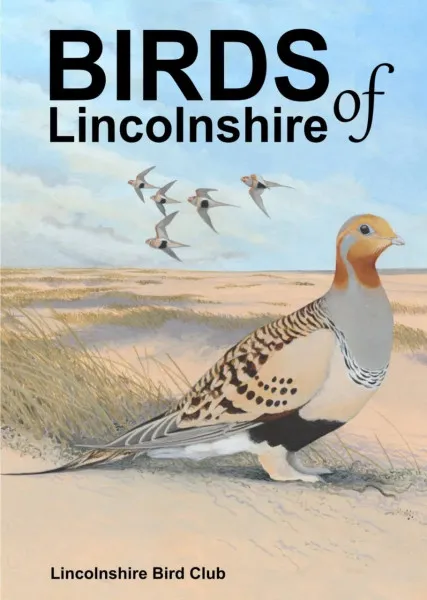
The last comprehensive review of Lincolnshire’s birds was completed more than three decades ago, so this book will undoubtably serve as a timely and eagerly awaited update. Produced on behalf of Lincolnshire Bird Club, this book aims to document the status of every bird species that has occurred in the county and report on the changes concerning their population and distribution since the last publication. By this virtue it also serves to showcase Lincolnshire’s birdlife and habitats to anyone unfamiliar with the county, so I thought it was perhaps a missed opportunity not to use a more representative and relevant species for the front cover instead of using artwork, superb as it is, depicting an historic occurrence of vagrant Pallas’s Sandgrouse. As you would expect, the main content concentrates on the population trends and change status of for each species - supported by distribution maps, tables and trend graphs where applicable. Key contextual information is also provided using Breeding Bird Survey population index comparisons with the East Midlands and England. A considerable amount has been packed into each page, resulting in the text appearing condensed and not the most comfortable to read at first glance. However, the quality and consistency of the respective images is overall exceptional and shows how far bird photography has progressed in the last few decades. It is a pity the majority of the photos were not credited, although the authors do acknowledge this at the start. I thought it was a clever addition to include images of key birding sites and landscapes characteristic of Lincolnshire. This gives context to the subject matter and helps pull it away from functioning merely as reference tool. This is the type of publication you use to look up one species account and end reading a dozen more in the process – an indication of its significant value as a source for information. Aside from the minor editorial and formatting criticisms, this book is once again a fine example of the immeasurable work of bird recorders, reflected up and down the country, and a celebration of their combined efforts. To compile and report these records is an enormous undertaking, and the authors should be proud of this remarkable achievement. An essential book even if you have just a passing interest in Lincolnshire birdlife.
The Gull Next Door: A Portrait of a Misunderstood Bird
Author: Marianne Taylor
Publisher: Princeton University Press, Princeton
Published: 2020
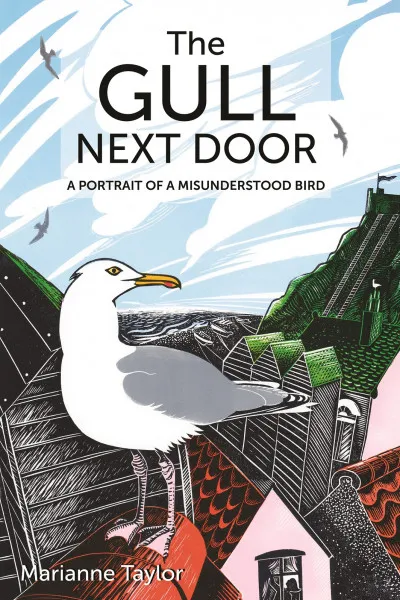
Early on in The Gull Next Door, author Marianne Taylor declares that she is “not a true, hardcore larophile”. Don’t be deceived though – she clearly knows her stuff about gulls, and her deep affection for these birds is apparent throughout this entertaining and expansive book. The Gull Next Door uses the author’s own experiences as jumping off points to cover everything from gull evolution and physiology to the biodiversity crisis. We begin in Hastings, with the author rescuing rooftop-nesting Herring Gulls in her childhood home. Later on, we find out about the gulls she’s encountered at many other stages of her life. These accounts give the book a deeply personal feel, which is amplified by the author’s own illustrations found throughout the chapters. These really capture the character the species concerned and convey the extent to which the author must have watched and studied each. The book is made up of a prologue, followed by eight chapters. It kicks off with a look at ‘Britain’s Gulls’, where we are given a brief introduction to each of the species that breed in Britain, apart from the Herring Gull. As the author’s favourite gull, this species later has a chapter devoted to it alone. The other chapters mostly consider the relationships between people and gulls, with a look at gulls in global folklore and modern culture, how gulls have been persecuted across the years and the threats they face now, and tips for living alongside them. Although the author is clearly enamoured by gulls, she doesn’t shy away from their less becoming characteristics. However, any unpleasant details are balanced by the comprehensive information she gives on the more redeeming and fascinating aspects of gull behaviour, ecology and physiology, and overall, the author’s love and admiration for gulls is infectious, as is her fear for them. The general style of the book is conversational and humorous. There is the occasional slip in the accuracy of some of the details, but such mistakes are only minor and shouldn’t detract from the overall enjoyment of the book or the author’s accomplishment in bringing so much information together in such an appealing way. The book ends with a rallying cry to protect the natural world. The author draws parallels between human attitudes towards gulls and those towards other species that have become locally extinct thanks to their tendency to impinge on human spaces and lifestyles. She suggests that familiarity (with gulls living in urban spaces) can breed admiration, and help keep humans in touch with the natural world on which we depend, giving us cause to protect it. The book’s postscript, written just as the Covid-19 pandemic was taking hold, and heavily referencing the climate crisis, says “we are going to need our wildlife to help get us out of this mess”. As a larophile myself, I hope Marianne Taylor’s book challenges and changes the perceptions of some readers to gulls and other ‘undesirable animals’, and if that is part of a broader shift towards improving the lot of gulls and seabirds in general, then I’d be delighted. Either way, I admire the author’s ambition, and recommend her book.
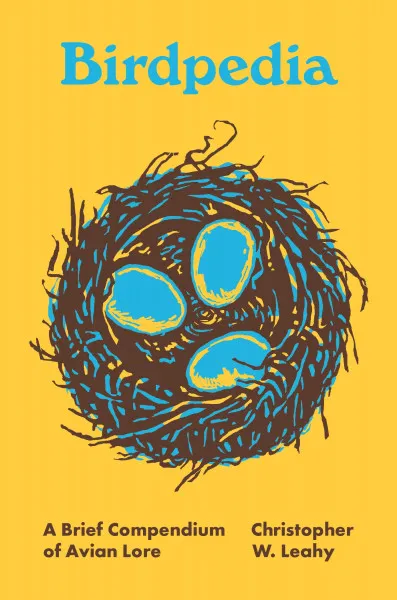
Birdpedia: A Brief Compendium of Avian Lore
Author: Christopher W Leahy(Author) & Abby McBride(Illustrator)
Publisher: Princeton University Press, Princeton
Published: 2021
Birdpedia is an eclectic and entertaining read. It follows an A–Z format, taking the reader from ‘Abundance’ to ‘Zugenruhe’. Along the way, we learn about everything from ornithological pioneers and poetry, to bird evolution, physiology, taxonomy, behaviour, the many threats that have faced birds in the past and those they continue to face today. The style is conversational, with a good dose of humour. Readers will find sections on ‘Air Conditioning (Do Birds Sweat?)’ and ‘Jizz (Not What You’re Thinking)’, and if you’ve ever wanted to know the answer to questions like whether birds fart, then this is the book for you! There are several quirky ideas that stuck in my mind, like the author’s suggestion that the Pliocene would be the best time in the planet’s past for a birder to visit if time machines should ever be invented, with up to 150,000 potential ticks! These more off-the-cuff excepts are balanced by serious and academic entries, and this book is packed full of information, presented in a wonderfully accessible way. As the author is American, it’s unsurprising that book feels US-centric. The units given for facts like the largest birds are all imperial in the first instance, many of the ornithologists mentioned worked on the other side of the Atlantic, and the sections on folklore similarly focus on that region (all 60-odd colloquial names for the Ruddy Duck are listed in one chapter, for example). However, that does not give it a parochial feel, and the book should appeal to people interested in birds no matter where they happen to live. The book itself is pocket-sized, should you ever wish to carry it around and dip in and out of the fantastic facts contained in its pages. Its words are complemented by charming sketches by Abby McBride, which further broaden its appeal. If you’re looking for a light-hearted yet informative Christmas present for a bird-loving friend or family member this year, then you won’t go too far wrong with Birdpedia.