Read reviews of the books we hold in the Chris Mead Library, written by our in-house experts. A selection of book reviews also features in our members’ magazine, BTO News.
Featured review
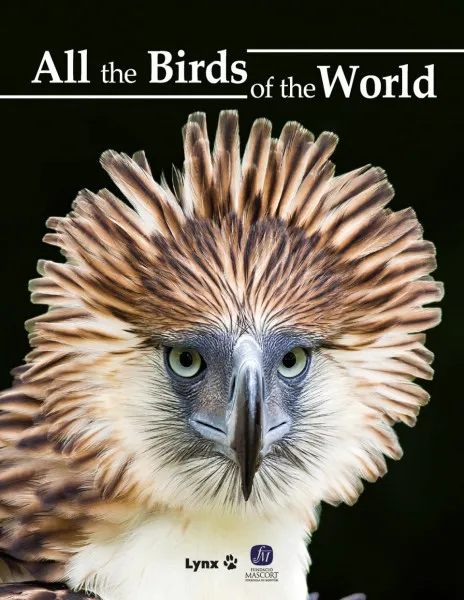
All the Birds of the World
Lynx have had a long-term project to produce an exhaustive guide to the birds of the world. It started out with the 17 volumes of the Handbook of the Birds of the World (1992–2013) which has family and species accounts for all birds. This was followed by the two volumes of the Illustrated Checklist of the Birds of the World (2014–2016). They have now published the third and final stage of this avian odyssey with this current book.
Search filters
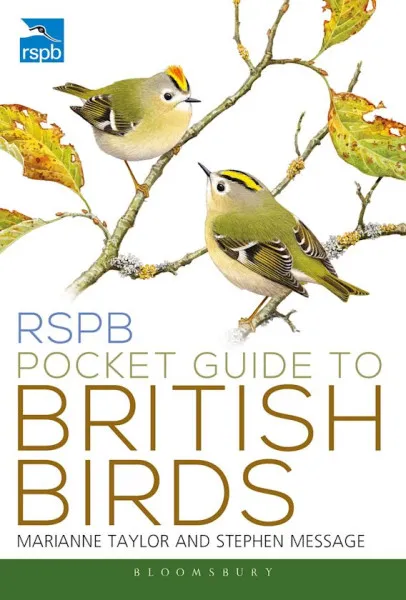
RSPB Pocket Guide to British Birds
Author: Marianne Taylor
Publisher: Bloomsbury
Published: 2022
This book may be small but packs quite a punch – more than 300 species of bird are covered. Each species account gives you illustrations (especially good for waders where the images used highlight key id features), ‘key features’ to look for with explanations about how to identify the species, short descriptions of song and call, where to see the bird and a brief summary of movements and population. It’s like a condensed version of the RSPB’s excellent Handbook of British Birds. There are some really nice touches here – there is a coloured label by the name of each species giving the birds status according to the Birds of Conservation Concern categories of Amber-, Green-, or Red-listed. It’s also very helpful that there are ‘ID Pitfalls’ where potential confusion species are listed, and the differences explained. This will be especially useful for the improving birder! First published in 2022, the maps are as up-to-date as you might hope for. Some species like Nuthatch and Little Egret are expanding north rapidly, and populations of birds like Cranes, Storks, and White-tailed Eagles are being assisted by reintroductions. This is all explained in the text. A pocket guide will always have to compromise on the level of detail they can give to each species. I think this book finds the right balance here. At only £8.99 it’s nice to think that this book might be found in car glove boxes, jacket pockets and thousands of rucksacks across the UK.
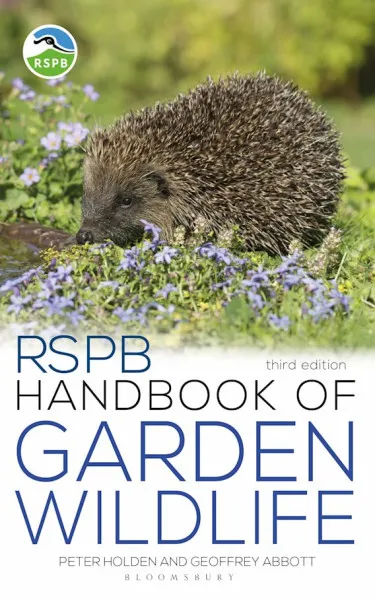
RSPB Handbook of Garden Wildlife
Author: Peter Holden & Geoffrey Abbott
Publisher: Bloomsbury Publishing, London
Published: 2023
Gardens cumulatively make up a huge habitat in the UK and for those of us lucky enough to have a garden they have the potential to host all sorts of amazing wildlife. This book is a remarkably comprehensive guide to almost everything that might share a space with humans. It covers much, much more than just birds. Species account for our feathered friends cover less than a fifth of the book. Mammals are covered in a good level of detail (although Red Squirrels are in every sense displaced by their grey cousin, and Pine Marten doesn’t feature). It’s fantastic to see that over half the book is taken up covering invertebrates and plants – the latter covering both native flora as well as popular cultivated plants. If you have a garden and want to make it better for wildlife there are all sorts of tips here – ponds and nest box design, calendars of what-to-do-when and even activities for children. Given the incredibly broad range of topics covered by this book it seems likely that getting interested in one of the species groups like fungi, beetles, or amphibians will likely lead to further research online or in more specific books. Even a bird guide would come in handy. This is a great book and one that should be on the shelves of all green-fingered naturalists – whether you’ve a few acres or a window box!
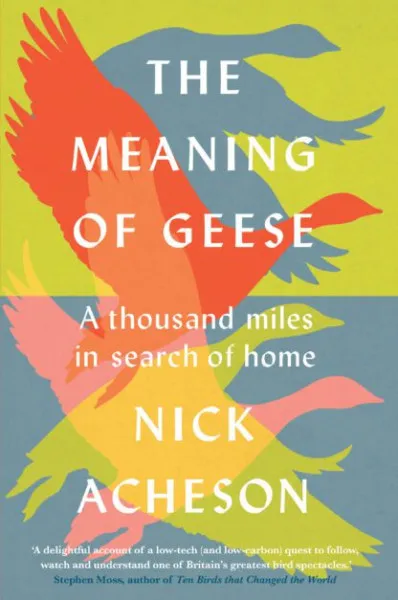
The Meaning of Geese
Author: Nick Acheson
Publisher: Chelsea Green Publishing UK
Published: 2023
3rd place in Best Bird Book of the Year 2023 Migratory geese fall into that group of species that have an accompanying cultural resonance because their arrivals and departures mark the changing seasons. This resonance is particularly strong for those birdwatchers, and others, who are rooted within the landscapes touched by these birds on their long migratory journeys. Nick Acheson is one such individual, and the significance of the pinks, brents and white-fronts that winter in his north Norfolk landscape is evident from his engaging and beautifully delivered text. Billed as ‘one man’s thousand-mile journey … on an old red bicycle in search of wild geese’ The Meaning of Geese delivers so much more than this. Framed by living alone during lockdown, the narrative reveals a broader community of goose enthusiasts, drawn together by a fascination for these winter visitors, both common and rare. The community includes some who watch the birds for recreation and others for whom this is a professional (ecological) relationship; then there are the landowners and tenant farmers who host the vast flocks, and the wildfowlers who take sport from them. What emerges is a sense of shared passion, and a shared responsibility for the future of these birds. Equally evident from the text is Nick’s depth of knowledge, of the geese and the other wildlife portrayed in this book, but also of the landscape in which he was born and raised. Although the author’s encounters are presented through a season of watching geese, and made possible through the miles cycled on an ancient bicycle, don’t expect this to be your typical quest-based nature writing; it is much more than that. It is a quiet book that celebrates these winter visitors and, at the same time, reveals something of the author and his approach to watching nature. There is much that we, as readers and birdwatchers, can learn from such an account.
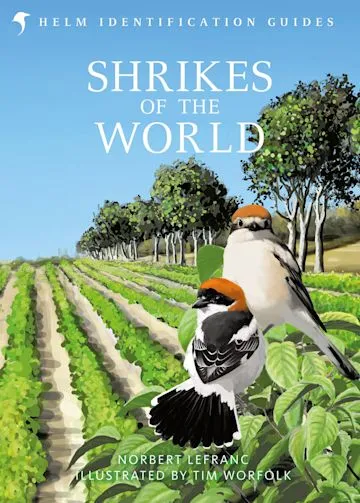
Shrikes of the World
Author: Norbert Lefranc (author) & Tim Worfolk (illustrator)
Publisher: Helm, London
Published: 2022
Winner of Best Bird Book of the Year 2023 Shrikes occupy a strange place in the minds and hearts of ornithologists; at once being attractive passerines, but with a raptorial streak that led to many of us being brought up to know them as butcherbirds for their habit of impaling food items on thorns and barbed wire. They can be a birder’s dream and nightmare, with complexes of closely intertwined species and subspecies making field identification of individuals tricky. And they are at once widespread globally, but with specific conservation requirements that that make them locally rare, as here in the UK. Twenty-six years ago, author Norbert Lefranc and illustrator Tim Worfolk produced a labour of love with the first edition of Shrikes of the World, which became the definitive work for this multifaceted, complicated group of birds. With a new series of stunningly detailed plates showing the full range of variation within species, and text accounts that incorporate recent advances in genetic work, the wait for the second edition has surely been worth it. The first chapter gives a helpful introduction to the structure of the book as a whole and the individual species accounts. With a family as taxonomically knotty as shrikes, it is inevitable that some of the early chapters should concern their systematics. Here the authors also invite Jérôme Fuchs, noted expert in shrike taxonomy, to contribute an introduction to the true shrikes; defined in the book as the genus Lanius. Yellow-billed Shrike and Magpie Shrike were previously in two genera of their own, but have recently been re-sequenced into Lanius, and the book reflects this up-to-date taxonomy. Also included is the genus Eurocephalus, consisting of two species from Africa that recent research suggests may not even belong within the shrike family. Despite the qualms around their taxonomy, the authors have opted to keep these two species in the book, to reflect the current accepted structure of the shrike family. Following the nitty-gritty of shrike relationships, there are general yet truly detailed accounts of the two shrike genera, filled with rich descriptions of their history, morphology, migration, habitat, and more, and includes a particularly enjoyable section on their food storage behaviour, with suitably gruesome illustrations. The colour plates are simply spectacular, with the illustrations being almost photographic in their detail. The species accounts follow a set structure and include high quality photographs of the birds in the field, with maps clearly showing the known range and where there are some uncertainties. I had the good fortune to be in Nigeria while reviewing this book, where there are two resident species of shrike that were completely unfamiliar to me; Yellow-billed Shrike and Emin’s Shrike. While my handy Helm Field Guide to the Birds of West Africa allowed me to quickly identify the two species, Shrikes of the World gave an invaluable deeper level of understanding, allowing me to interpret the behaviour of a family group of Yellow-billed Shrikes and learn things about them that could only otherwise be gleaned from painstaking fieldwork rather than a simple birding outing. For Emin’s Shrike, while the details of the ecology of the species were interesting enough, I particularly enjoyed learning about the origin of the honorific name. I am not usually a fan of honorific names and support the US-based movement Bird Names for Birds, but the line about Pasha Emin led me down a rabbit hole of learning about the colonial history of Africa, and the remarkable life of the man for whom the shrike was named. For shrikes closer to home, the teasing apart of the various subspecies and forms of Great Grey Shrike did much to help me to understand this complex species group. All species accounts include sections on threats and conservation, and for Red-backed Shrike, a species that declined in the UK to the point that it was no longer a regularly breeding species in the 1990s, the section helped to put that decline in the context of their migration route and several conservation successes in Europe, raising hopes that with appropriate land management, the species may become a much more regular feature of farmed landscapes in England once again. Overall, Shrikes of the World is a tour de force of detailed ornithological writing and illustration, a significant update to the original work, and is well worth a butcher(bird)’s hook!
Low-carbon birding
Author: Javier Caletrío
Publisher: Pelagic Publishing
Published: 2022
As Javier Caletrío notes at the very beginning of his introduction to this collection of essays, ‘There is a beauty in the simplicity of birdwatching’. This simplicity is something that has all too often been lost; countless birdwatchers continue to burn significant quantities of fossil fuels in their attempts to see increasingly rare and exotic birds, often in increasingly rare and exotic locations. This book challenges the notion that birdwatching needs to be based around powered travel, refocusing instead on the intimate and rewarding nature of birding more locally. It is a timely reminder to us all, challenging us to question our own birdwatching habits and to choose an alternative approach that lessens our already significant impact on the planet. The book begins with two chapters by Javier Caletrío, the first of which was originally published in 2018 in the journal British Birds. Both are important in setting the scene, highlighting the degree to which birding and birdwatching tourism are contributing to the climate crisis. The second of these chapters is framed around the sorts of questions a reader is likely to have about their own impacts, particularly whether taking individual action can make a difference; spoiler alert – it can! While these chapters make a powerful case in their own right, it is the remainder of the book – some 29 chapters, written by a diverse suite of contributors – that demonstrates how a low-carbon and local approach to birdwatching can deliver enjoyment, science, and increased connection. From patch birding to the use of acoustic recording devices, and from birding by bike to an encounter with three-figure flocks of Hawfinches in the Surrey Hills, the contributed essays show how increasing numbers of birders are moving towards a more rewarding way of engaging with birds, low in carbon but high in reward.

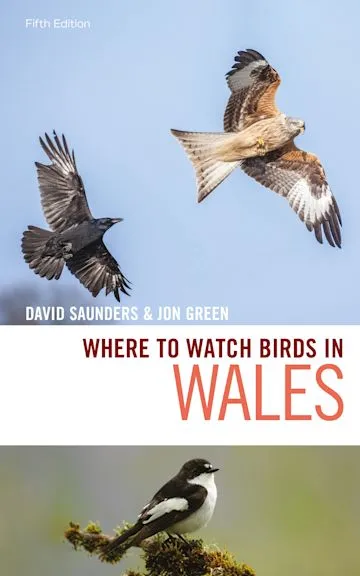
Where to Watch Birds in Wales
Author: David Saunders & Jon Green
Publisher: Helm, London
Published: 2022
Following the long-established format of the Where to Watch Birds in… guides, a newly-updated fifth edition of this guide to birdwatching sites in Wales is now available. The addition of new locations brings this volume to a total of 142 sites. Most of the premier birdwatching locations in Wales have an entry; nonetheless, this is not an exhaustive guide, so other worthy and popular birdwatching locations are necessarily overlooked. Likewise, many ‘sites’ cover very large areas and are themselves comprised of a number of distinct locations. The book itself is nicely produced and a good size to carry into the field (or in holiday baggage, for those visiting from elsewhere!). Each site is presented according to the familiar, tried-and-tested formula of these guides. A basic map picks out access and parking information along with key named locations, and enough information is provided to identify the site’s features on more detailed OS maps. Text provides information about the site’s habitat, typical species, and when and how to visit. A final ‘calendar’ box gives information about what species to expect year-round and in each part of the year. The 14 vice-counties of Wales are used to sort sites into conveniently-sized chapters, with a separate map of sites within each vice-county. Whilst this seems a sensible way to subdivide the book into manageable chunks, one might question the decision to order the chapters alphabetically by vice-county names, which occasionally leads to geographically-neighbouring sites becoming separated within the pages. For example, the Little Orme (page 104, Caernarfonshire) and Rhos-on-Sea (page 160, Denbighshire) are in such close proximity that they comprise opposite ends of a single WeBS site, but a reader unfamiliar with the area might struggle to identify that the two can readily be visited in a single trip. A final index to species will allow readers with particular target species to quickly identify the sites where they stand the most chance of success. The site accounts are well-researched and written with advice from experienced local birders. Inclusion of historical rarities at some sites is a nice touch but dooms the book to being immediately out-of-date (even as I type, twitchers descend upon RSPB Conwy to view a Red-rumped Swallow, which will surely warrant a mention in a future sixth edition!). Overall, this book will be a very useful travel guide for birders visiting Wales from elsewhere, especially those who have not previously visited and have little idea of where to begin. Those wishing to target sightings of Welsh specialities such as Pied Flycatcher or Chough would also benefit from a copy. Those with existing local knowledge may not find much within these pages that they do not already know, but may still find interest within the site accounts.
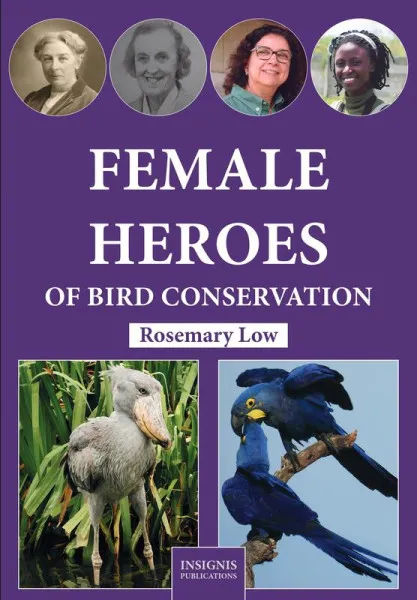
Female Heroes of Bird Conservation
Author: Rosemary Low
Publisher: Rosemary Low (self-published)
Published: 2021
It is an extremely depressing truth that women’s contributions to science are often overlooked. Historically, it was commonplace for women’s scientific work to either be ignored or stolen. Although modern women are much better represented, a leaky pipeline (the phenomenon by which capable individuals from minority groups are gradually lost from the scientific workforce) still poses massive problems for equality and diversity targets. Representation is key, and so it is refreshing to find a book dedicated to highlighting the profiles of female ornithologists. Female Heroes of Bird Conservation wears its heart on its sleeve. Readers looking for a clinical account of the scientific contributions of female ornithologists should look elsewhere. Through poignant retellings of these women’s lives, this book aims to inspire its readers to reach the same lofty heights as its subjects. It is clear that the author, Rosemary Low, has more passion in her little finger, than most people have in their entire bodies. Her dedication to her subject matter is obvious in the meticulously researched accounts and the emotional language used to express her admiration for their accomplishments. What better voice to tell the stories of these women who are too often forgotten? The book is divided between female ornithologists of the past and present. Although initially a little chaotic in structure, I learned a huge amount from the first half (historical female ornithologists) about the origins of my discipline and the role women played in its history. As an ornithologist who specialised in individual differences in behaviour, I find it particularly enlightening to see how many of these women were drawn to birds due to their unique personalities: a concept that would not be truly accepted by science for another hundred years. There are occasions when I wonder if the lens under which the early female ornithologists have been placed might be a touch too forgiving. It cannot be denied that these women were ahead of their time and overcame monumental prejudice in their determination to contribute to science. Despite this, additional analysis of the role that privilege and colonialism played in their success would have been both relevant and fascinating. Diversity is addressed more strongly in the second half, which examines women working in ornithology today. The prose benefits from the author’s lived experience, as she has spent time with these women over the years. You will particularly enjoy these chapters if you share the author’s love of parrots or have an interest in techniques such as captive breeding or reintroduction programmes. Although other topics do make an appearance, given the range of issues existing in modern ornithology, some readers might find this focus limited. Regardless, the truth remains that these women have remarkable stories to tell, and I am pleased that this book exists to preserve their legacy.
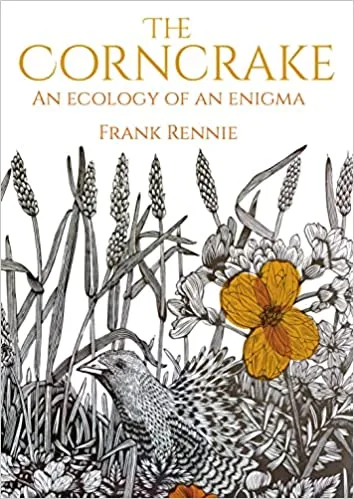
The Corncrake: an ecology of an enigma
Author: Frank Rennie
Publisher: Whittles Publishing, Dunbeath
Published: 2022
This comprehensive monograph is, perhaps surprisingly, the first to be published on this charismatic species. Extremely well referenced, while still being highly readable, Frank Rennie’s book provides a fascinating account of the Corncrake, both here and more widely across its range. As you would expect for a monograph, there are sections on breeding biology, migration, status, taxonomy, diet, mortality, and conservation. Refreshingly, the cultural importance of the Corncrake is also explored, and there is even an appendix with details of vernacular names – King of the Quail being one of my favourites. Also evident is the author’s love for this bird, perhaps unsurprising because he must be one of the very few people able to hear calling Corncrakes from both his home and office! My only small criticisms are the lack of an index, the quality of some of the figure reproductions, and the absence of a more detailed discussion of the reintroduction work that has been taking place in parts of the former breeding range here in the UK. These apart, I’d definitely recommend this book for anyone with an interest in this enigmatic bird.
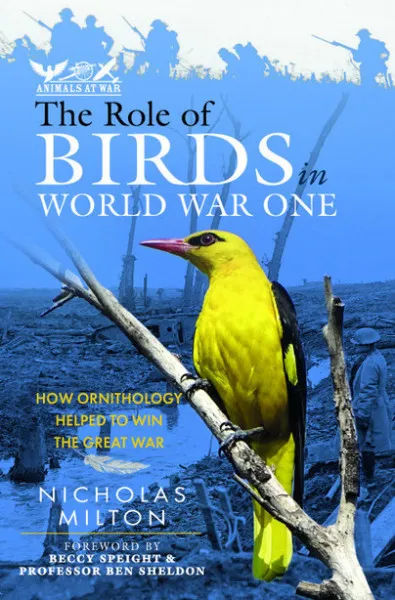
The Role of Birds in World War One: How Ornithology Helped to Win the Great War
Author: Nicholas Milton
Publisher: Pen & Sword History, Barnsley
Published: 2022
In a follow-up to last year’s The Role of Birds in World War Two: How Ornithology Helped to Win the War, Nicholas Milton has produced another fascinating book exploring the role played by birds in 20th century conflict. Described as “The Best Birdwatching Army Ever Sent to War”, the British Expeditionary Force included hundreds of both professional and amateur ornithologists. This book covers a number of their stories, starting with the Foreign Secretary at the outbreak of war, Sir Edward Grey, winding its way through individuals such as the British Army’s Official Rat Catcher, Philip Gosse, and Thomas Mills, who had the idea to try to gain military advantage by training gulls at sea to detect submarine periscopes. The birds themselves are by no means forgotten, from reports of House Martins sensing overhead Zeppelins to the work of the British Army Carrier Pigeon Service. Birdwatching increased in popularity throughout the war, and it became one of the most popular pastimes in the trenches. From the Skylark, whose song could still be heard over the din of battle, to the report of a Blackbird so undisturbed by the fighting that it built its nest inside a horse-drawn field gun, the book highlights the resilience of nature and how this contributed to the soldiers’ welfare and mental health. As well as more traditional birdwatching it also highlights opportunities that presented themselves for slightly more unusual research, such as the French pilot who published observations on bird flight which he had made at altitude. The book concludes with an ‘Ornithological Roll of Honour’, a tribute to 37 ornithologists who lost their lives during the Great War. Comprising professional ornithologists, amateur birders, bird artists and photographers, the stories of their lives and their contribution to ornithology before and during the war serve as a poignant reminder of what they might have gone on to achieve. Like it’s World War Two companion, this is an easy-to-read work packed with interesting and often moving details about an unusual subject. With consideration of both ornithology and historical context, it should appeal to anyone with an interest in either field.