Read reviews of the books we hold in the Chris Mead Library, written by our in-house experts. A selection of book reviews also features in our members’ magazine, BTO News.
Featured review
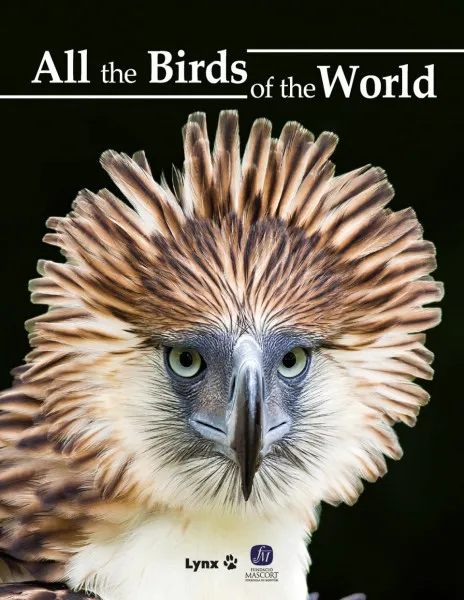
All the Birds of the World
Lynx have had a long-term project to produce an exhaustive guide to the birds of the world. It started out with the 17 volumes of the Handbook of the Birds of the World (1992–2013) which has family and species accounts for all birds. This was followed by the two volumes of the Illustrated Checklist of the Birds of the World (2014–2016). They have now published the third and final stage of this avian odyssey with this current book.
Search filters
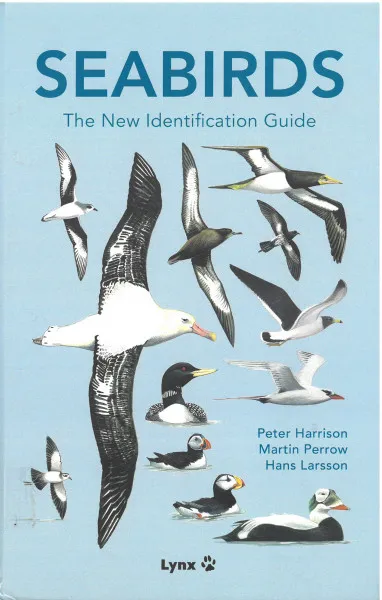
Seabirds: The New Identification Guide
Author: Peter Harrison, Martin Perrow & Hans Larsson
Publisher: Lynx Edicions, Barcelona
Published: 2021
For many, seabirds are a bit of a mystery in that they occupy a world that for most is largely inaccessible. However, during the last couple of decades pelagic tours, both daily and for longer periods, have grown in popularity and have brought some of the world’s seabirds within reach, so a new identification guide to this amazing group of birds couldn’t have come at a better time. Much has changed since Peter Harrison’s Seabirds: An Identification Guide was published back in 1983. Back then, the author described the 107 known species of tubenoses with his guide; due to taxonomic advances that number has risen to 170. Within its 600 pages, Seabirds: The New Identification Guide describes 434 species from 18 families, with all but one illustrated. I often wonder how many people read the introductory pages of field guides but to not read the preface and the acknowledgements pages at the beginning of this book would be to seriously miss out. Peter Harrison takes the reader on a voyage of discovery that continues to this day and his passion shines throughout the book. The species accounts are a delight, with wonderful up-to-date illustrations and the latest information captured by the succinct accompanying text, which also contains a map of the distribution of each and every bird described. For anyone with an interest in the world’s seabirds this book is a must, but it doesn’t stop there - this is a book for anyone with an interest in birds and one not to be missed.
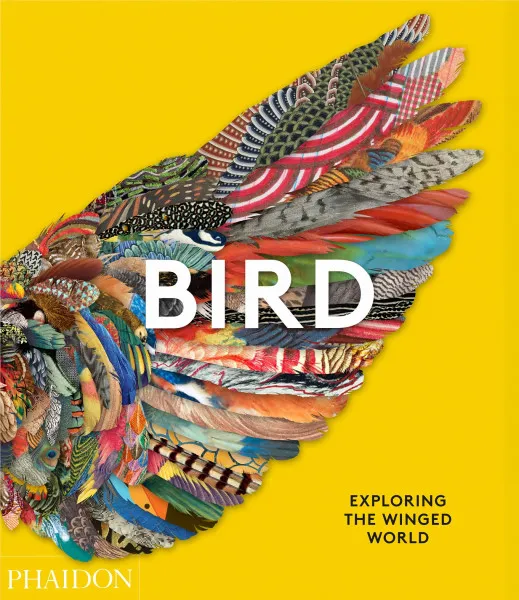
Bird: Exploring the Winged World
Author: Phaidon Editors(Editor), Katrina van Grouw(Introduction By) & Jen Lobo(Contributor)
Publisher: Phaidon Press, London
Published: 2021
This is the perfect coffee table book for when it’s so cold and wet that you’ve decided to postpone your birdwatching session: this rich visual survey of artworks will cure your ‘fomo’ on birds and museums. From cave drawings to Egyptian sculptures to 17th-century Dutch paintings to the Twitter logo, this book encompasses a great overview in time which emphasizes the longevity of human admiration for birds, represented here in a wide range of techniques including fine art, photography, ornithological drawings, sculptures and fashion. The ubiquity of birds in visual representation does not only highlight their omnipresence in our daily lives, but also reminds us that they are inspiring subject matter, one that actively contributes to the way we interact with the world and other living beings. Rather than being classified in alphabetical or chronological order, the works have been beautifully arranged in pairs, with mirroring visual details which both contrast and highlight one another’s original components. On one side, you might have an 18th-century Japanese woodblock print of pigeons and sparrows (p. 122), depicted with fine, sharp outlines, allowing the intricate details of the round feathers and spotted plumage to attract the eye of the viewer, in comparison with the juxtaposed work, a 21st-century photograph taken on ground level (p. 123), revealing a blurry, cropped pigeon taking a step towards the left, and behind it, the legs of passers-by coincidentally walking in the same direction. Although these works portray the pigeon under different lights, by drawing the viewer’s attention to either details or movement, both intrinsically reveal a sense of care and concern about representing these – often despised – living beings that are so present in our everyday lives. By celebrating the extremely rich diversity of birds, this book reflects the power of art to offer alternative, aesthetic and affective ways of shifting the place often occupied by humans at the centre of ethical reflection, to instead focus on other, rich and differentiated modes of existence, in order to refine our sensibility to the living world.
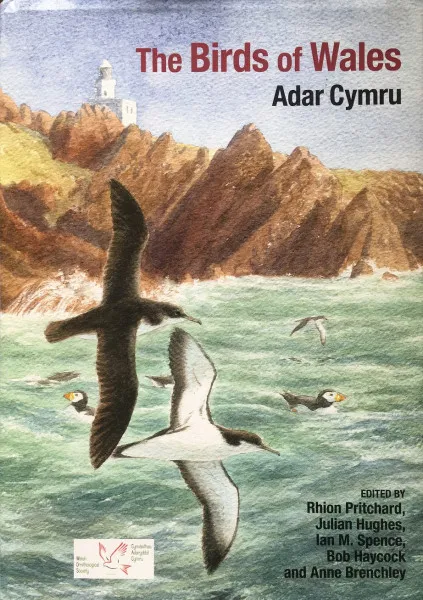
The Birds of Wales/Adar Cymru
Author: Rhion Pritchard(Editor), Julian Hughes(Editor), Ian M Spence(Editor), Bob Haycock(Editor) & Anne Brenchley(Editor)
Publisher: Liverpool University Press, Liverpool
Published: 2021
This impressive tome from the Welsh Ornithological Society is the third full avifauna for Wales, following 1994’s original Birds in Wales (Lovegrove, Williams & Williams) and a subsequent update volume, Birds in Wales 1992-2000 (Green). The new volume is the first to include data from the 21st century, during which rapid changes in the population status and distributions of many species have occurred, making it a particularly valuable addition to the ornithological literature. The Birds of Wales was a big team effort: edited by an elite team of five including two BTO Regional Representatives, and with a further 46 authors (including BTO staff and volunteers) contributing species accounts. This is to the clear benefit of the book, authors having had the ability to write about their species of expertise, as well as the time to write well-researched and detailed accounts for every species. It is beautifully illustrated with a scattering of photographs generously donated by a number of photographers: most, but not all, resident breeding and wintering species are represented. Some of the atlases on my shelves compromise on quality in order to include a photograph of every species, but for this volume, the editors appear to have erred on the side of including only high-quality images. The book itself is a premium hardback publication from Liverpool University Press, leaving nothing to be desired in terms of design, print, or production quality. Carrying it into the field would be brave, but it would be the perfect addition to (or even replacement for!) a coffee table. The text is in English, but speakers of Cymraeg will hopefully appreciate the inclusion of a Welsh name for each species alongside its English and binomial monikers (all summarised and accessible through an additional Welsh-language species index). Although it largely follows the formula of an atlas, it’s important to realise that this is not an atlas. Whilst the formulaic consistency of presentation from species to species that can be found in atlases is often reassuring (and facilitates between-species comparison), freedom from this approach has allowed the authors and editors of The Birds of Wales the flexibility to pick and choose which graphs are of most interest on a species-by-species basis. For example, we are shown how Spotted Flycatcher (Gwybedog Mannog) counts vary throughout the year, giving a sense of the timing of their migration, but given a map of Pied Flycatcher (Gwybedog Brith) ringing recoveries, illustrating their migration pathways from Welsh breeding populations down to Africa. Even species now absent from Wales except as vagrants are given fair treatment; for example, a fascinating map in the Nightingale (Eos) entry illustrates the distribution of place-names containing “Eos” in Wales - like beavers and cranes, our cultural heritage suggests that this species may once have been more widespread in Wales. Writing as a relative newcomer to the BTO’s Cymru office, this is already proving to be an invaluable reference for information on species ecology and demography in Wales, with well-thumbed pages on Cormorant (Mulfran), Goosander (Hwyaden Ddanheddog), White-fronted Goose (Gŵydd Dalcenwen), and of course Curlew (Gylfinir) in particular! It will be of use and interest to those based elsewhere in the UK and abroad, but Welsh-based birders and ornithologists should not be without a copy.
How You Can Save the Planet
Author: Hendrikus van Hensbergen
Publisher: Hamish Hamilton, London
Published: 2021
A book by Hendrikus van Hensbergen, the founder Action for Conservation (an organisation getting more young people involved in nature), needs little introduction. Highlighting the lack of participation of young people in conservation, the organisation has helped to inspire others in the field to engage more with the young. The charity has a large following and holds a series of successful events and programmes throughout the year. Action for Conservation was a major influence in the creation of the BTO’s Youth Advisory Panel. You could easily be forgiven for assuming that van Hensbergen would be writing a biography. He certainly has enough experiences to talk about. Yet, his book is a powerful addition to the work of Action for Conservation, getting young people to realise what they can do to help 'save the planet'. The book acts as a guide to how school age children can create their own campaigns, organise projects and speak to those in power. Van Hensbergen explores the ways in which young people can get involved and, refreshingly, does not sugar-coat the practicalities and compromises needed to get projects off the ground. At the end of the book there are links to many organisations that can help with plans. Speaking from personal experience, the clear guide to places is highly useful in what can sometimes seem like a daunting task. The true selling point of the book is the inspiring case studies of individual actions for conservation. These stories importantly help to make the book seem realistic, enthusing its young readers to think "if they can do it why can’t I?" The individuals range in age, with some young people’s journeys being from the age of 6 to 13 in the case of Louise Chauvet and to others who found nature later, when in secondary school. A few of the stories are especially inspiring due to the exceptional nature of the individuals involved; Helena Gualinga’s challenge to the fossil fuel industry in the Amazon Rainforest springs to mind among many others. Van Hensbergen also does a great job of looking at individuals from communities traditionally underrepresented in the sector and their stories are a positive way of giving these communities a voice. Moreover, the difficult experience referenced by individuals like Dara McAnulty, who faced bullying as an autistic person who was into nature, are particularly special in encouraging others not to let the bullies prevail. If I had any complaint with the book, it would be its format. A larger A4 workbook would be more appealing to read rather than the current large amount of often-squashed large text. A larger format would enable crucial points to be highlighted and allow for annotations, which I feel the current format does not particularly support. As an 'Action' guide it feels disappointing to see the book let down by a conventional format. It would also have been worthwhile for some of the interviews with the young people featured in the book to have been expanded. Overall How You Can Save the Planet is an engaging and thought provoking book and an extremely useful guide for young people keen to get involved in environmental action.

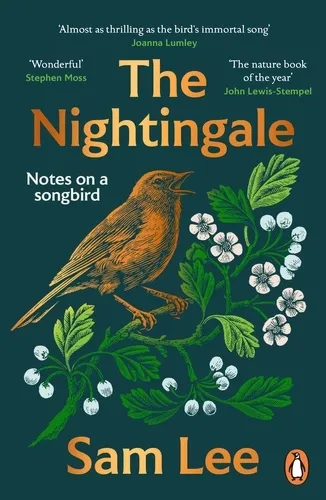
The Nightingale: Notes on a Songbird
Author: Sam Lee
Publisher: Century, London
Published: 2021
Many will know Sam Lee as an award-winning singer, a folk music specialist dedicated to collecting and interpreting Britain’s oral tradition. Some will know him for his work as musical director for RSPB’s ‘Let Nature Sing’, while others will know him through his springtime concert series ‘Singing with Nightingales’, where an audience is led out into darkness of a late spring evening to hear Nightingales and human performers create music in each other’s company, and sometimes together. All three of these ‘Sam’s’ coalesce around an incredible passion and enthusiasm for the (not so) Common Nightingale, something that is evident throughout the book. There is a wonderful richness to this book, both in terms of what it contains and how it is written. The manner in which the book has been set out places it somewhere between a species monograph (though virtually reference free) and nature writing. It is not a straight narrative, in that it contains artwork, illustration and break out sections that occasionally disrupt the flow but more often add to the richness. It has thicker, brighter paper than you would usually see, beautiful endpapers and a stitched in ribbon to mark your page, but no index, and is a wonderful size in the hand when reading. The first few chapters introduce the Nightingale, bringing much of our current (and former) knowledge of the species together in a was that is both easily accessible and engaging to read. Sam Lee weaves personal encounters into the text, drawing you in, posing questions and presenting ideas in an almost conversational manner. In addition to learning about the bird – its behaviour, habitats, migrations and population decline – we also learn about human responses to its song, which goes on to be the main focus of the book. The bulk of the book is dedicated to the cultural impact of the Nightingale, exploring the bird’s role in literature, music, folklore and tradition, not just here in the UK but across cultures and through time. As you might expect, there is reference to John Keats (Ode to a Nightingale), to Beatrice Harrison (the cellist who famously played with these birds in her Oxted garden), to John Clare (The Nightingale’s Nest) and to Greek mythology (Procne and Philomela). However, not only are these particular cultural references explored in more and better detail than usually seen – did you know about D H Lawrence’s witty response to John Keats poem? I didn’t! – but they also form just a small part of a very much wider trove of stories, folklore and song presented with similar authority. Nowhere else is the richness of Nightingale lore presented so eloquently or so completely as it is here. Folk song features strongly, as you might expect from an author who has spent more than a decade learning the old songs from the now diminishing number of families who have kept them alive from one generation to the next. As Sam Lee notes, when it comes to folk song, "the Nightingale tends to reveal more about the culture that is singing about him or her than about the actual nature of the bird." And so we learn not just about the bird, but also about the oral tradition and the singers and communities who have woven the Nightingale into their own stories. One of these communities is the one of which Sam is himself a member, those aware of the tremendous impacts of our activities on this once more common bird and who have used the species as a rallying call to face our environmental crisis head-on. The book ends with a very personal call to action, recognising the need for us all to engage with nature and asking the reader to be present and pause, so that we can "give renewed adoration towards that small, quiet beauty, so hidden from our daily worlds…" This wonderful book not only gives practical advice on how to do this, but it also helps us better understand our connections with the rest of the natural world, and in particular with this very special bird.
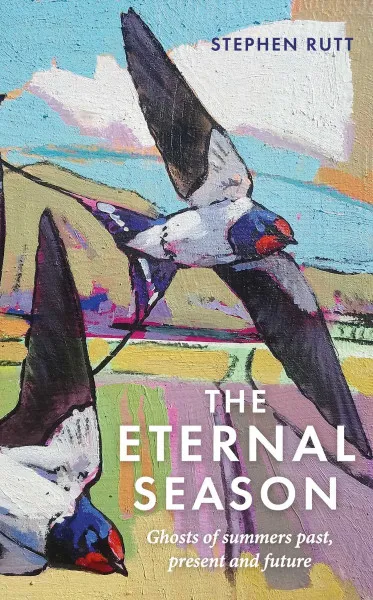
The Eternal Season: Ghosts of Summers Past, Present and Future
Author: Stephen Rutt
Publisher: Elliott and Thompson Ltd, London
Published: 2021
The Eternal Season is an exploration of the British summer, framed within the 2020 global pandemic but reaching back in time through reference to the writings of others, the author’s recollections of younger years, and the stark figures presented from BTO’s long-term monitoring schemes. This is a book about change and the disturbances that we are now seeing in the patterns and rhythms of the natural world; from the changing arrival and departure dates of summer migrants, through the declines evident across many different taxa, and on to the climate-driven colonisation of Britain by others. Through accessible and engaging narrative, Rutt picks out examples of these changes, each viewed through personal experience and encounter. There is a poignancy to this book, something that could easily come across as pain and make this a difficult and upsetting read. In response to the experiences of communities living through devastating changes to their environment in the Upper Hunter Valley region of New South Wales, the Australian environmental philosopher and activist Glenn Albrecht coined the term ‘Solastalgia’. Albrecht described this as "… the lived experience of negative environmental change" and it is this experience that is the central theme of this book. The honesty of the text and the way in which we can see the author through his words, balances any pain that might come from the discussion of so much loss. It is the joy that the author experiences from his wildlife experiences that counters the underlying sense of loss. As a result the book feels more immediate and more hopeful, with that hope coming from the experiences of the natural world so eloquently presented. Rutt avoids any sense of elegy but still manages to underline the loss that we have seen in just a few generations. The book starts like much nature writing and feels little different from the myriad of works that now crowd this space, but as you progress further into the text you see it pull away from the crowd to deliver something more meaningful, something that lingers longer. The last proper chapter – the main chapters are intercut with shorter sections that describe particular wildlife encounters – brings the author’s thoughts on the changes we are seeing in the natural world to the fore. It highlights the importance of thinking locally – a theme most eloquently presented by the writer Barry Lopez – and the need for ecoliteracy, among others, and draws the text to its logical conclusion. A well-written, accessible and engaging book containing some real gems.
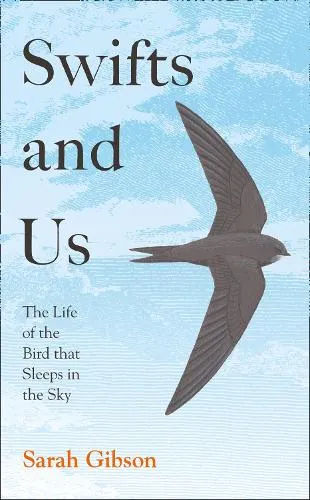
Swifts and Us: The Life of the Bird that Sleeps in the Sky
Author: Sarah Gibson
Publisher: William Collins, London
Published: 2021
Just as the May return of our breeding Swifts delivers a feeling of reassurance, so their late summer departure leaves a sense of loss. That loss, repeated each year, now carries the greater weight that comes from knowledge of the decline in UK Swift populations, evident in BTO’s long-term datasets. Sarah Gibson came to Swifts late but is a passionate local advocate for this long-distance traveller, involved in efforts to identify and protect breeding sites and increase awareness. Through this book she recounts her travels across Europe to watch Swifts; from the Little Swifts she encounters in the Spanish seaside town of Sanlúcar de Barrameda, to the Alpine Swifts of Saluzzo in Italy. Central to these trips are the encounters with those, like her, who dedicate time to these wonderful birds. Although the text jumps around a little, the book is broadly split into two sections; the first covers Swift behaviour and ecology and the second the encounters with Swifts and those who study them. As you might expect, there is a chapter dedicated to the Swifts that breed in the tower of the Oxford Museum of Natural History, so famously brought to wider attention by David Lack and the film by Derek Bromhall. Other chapters highlight much of the conservation work that is taking place across the UK, from Edward Mayer and Jake Allsop in England to Mark Smyth and others active in Northern Ireland. There is even a short section on what to do if you find a grounded Swift, which basically says don’t do anything – just get it to a Swift rehabilitator. A short series of excellent photographs, including one of Laurent Godel’s dynamic portraits of Swift flights, sits at the centre of the book. Overall an enjoyable read which, while it lacks the compelling narrative of David Lack’s classic on the species or the lyricism of essays by Richard Mabey or Helen Macdonald, delivers an engaging portrait of the world of Swift conservation.
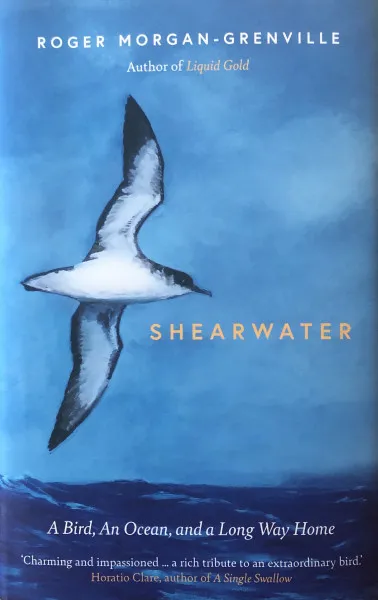
Shearwater: A Bird, an Ocean, and a Long Way Home
Author: Roger Morgan-Grenville
Publisher: Icon Books, London
Published: 2021
Part travelogue, part memoir, Morgan-Grenville’s book delivers an engaging account of one of our least accessible breeding birds, the Manx Shearwater. The 13 chapters are structured around a narrative journey, beginning under the watchful gaze of a grandmother whose strong presence shapes the remainder of the book. The story of the Manx Shearwater, both in its breeding colonies and out on the open ocean, is told in a way that brings together the bird’s ecology with acutely judged but lightly handled human observation. Through this approach we follow the author as he experiences the nocturnal arrivals of shearwaters at their breeding sites and meets the seabird ecologists working to understand this rather enigmatic bird. From the islands of Rum and Skomer, to the Península Valdés in Argentina, Morgan-Grenville’s travels follow those of our Manx Shearwaters as they return to their true home, a life on the wing that takes them across huge distances of ocean. This very well written book, touched with humour and presenting knowledge that is lightly-worn, provides an accessible and engaging introduction to this wonderful bird and to those remote places on the margins of our archipelago where, for a few brief weeks, it is tied to a terrestrial existence.
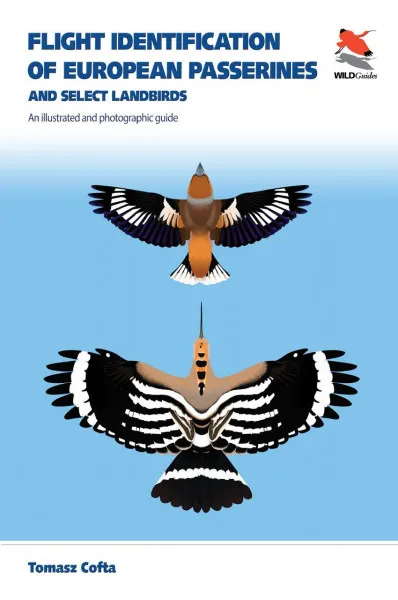
Flight Identification of European Passerines and Other Selected Landbirds: an Illustrated and Photographic Guide
Author: Tomasz Cofta, photographs by Michal Skakuj
Publisher: Princeton University Press, Princeton & Oxford
Published: 2021
Vis-migging, the art of watching, identifying and recording all of the birds seen flying through and over a particular watchpoint is better known as recording visible migration. The ability to accurately identify what often amount to little more than smallish dots is something that can only be gained by spending time vis-migging – lots and lots of time, learning the different flight patterns of the different families and the individual species. There is a short-cut to gaining the huge amount of knowledge and experience needed and that is to learn from someone else who has that knowledge and experience. In this book Tomasz aims to do just that, provide the reader with a mentor and a useable toolkit to help begin to tease apart the intricacies of the flight patterns of 237 European and Turkish birds. Each species is assigned an F-wave category (the undulating flight pattern of a bird), ranging from none - no discernible F-wave – to very distinctive, high F-wave, as seen in woodpeckers. Where it is a useful feature, the flight calls are also described phonetically and accompanied by a spectrogram of each call. At the front of the book there is a QR code that links to recordings of the flight calls described for each species, which alone is a very useful resource. Each of the species is illustrated by the most beautiful, original artwork by the author and accompanied by several photographs showing the features that are most encountered in flight. The artwork is sublime and shows each species in great detail from above, below and in profile. Each species is also accompanied by several in flight photographs and though I am not too sure how useful these are, they do provide another point of reference. Would I buy this book? Absolutely, it is a book I wouldn’t want to be without and I have found myself reading through it again and again, sometimes just to enjoy the wonderful illustrations.