Read reviews of the books we hold in the Chris Mead Library, written by our in-house experts. A selection of book reviews also features in our members’ magazine, BTO News.
Featured review
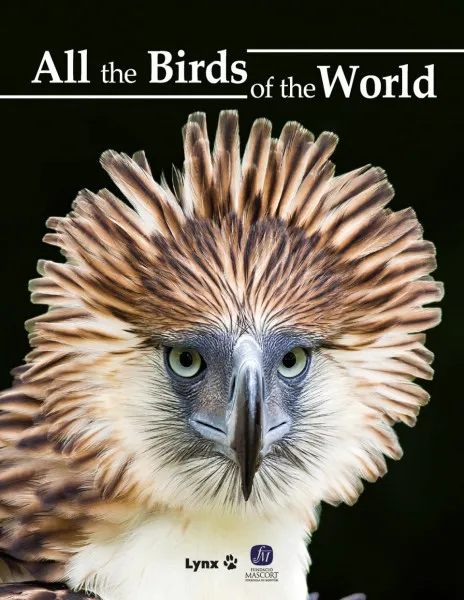
All the Birds of the World
Lynx have had a long-term project to produce an exhaustive guide to the birds of the world. It started out with the 17 volumes of the Handbook of the Birds of the World (1992–2013) which has family and species accounts for all birds. This was followed by the two volumes of the Illustrated Checklist of the Birds of the World (2014–2016). They have now published the third and final stage of this avian odyssey with this current book.
Search filters
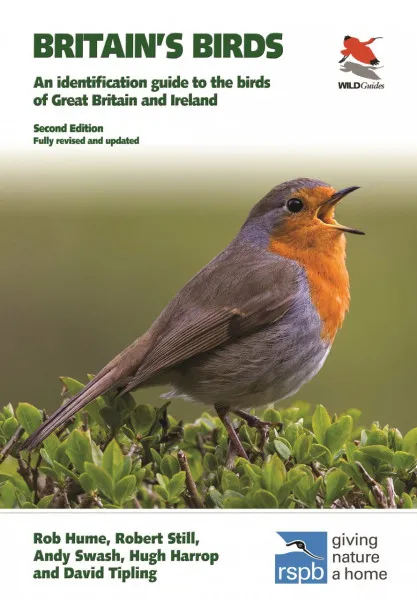
Britain's Birds: an Identification Guide to the Birds of Great Britain and Ireland
Author: Rob Hume, Robert Still, Andy Swash, Hugh Harrop & David Tipling
Publisher: Princeton University Press, Princeton (NJ) & Oxford
Published: 2020
This bird ID guide covers 631 species and includes birds recorded in Britain and Ireland. It is incredibly comprehensive and has a plentiful amount of glossy, detailed photographs which show all the plumages you are likely to see for both common and rare birds. The layout is practical and user-friendly which makes it easy to use and compare species. It has Species Accounts for each species described which includes English and scientific names, measurements, overview and description, conservation status, legal protection and Irish records, status and distribution map and habitat. This means that the level of description is extensive and there is great potential to learn more about an unfamiliar species from the guide alone. There are also overview pages of how to identify more general groups of birds such as wildfowl, corvids and buntings. This book, originally published in 2016, has been revised and updated for the second edition to make identification even easier. There are 12 new species recorded plus hundreds of new photos and fully revised species accounts to include the latest information in identification features, status, numbers, range and plumages seen during only part of the year. It’s a must have for beginners, experienced and professional birders alike.
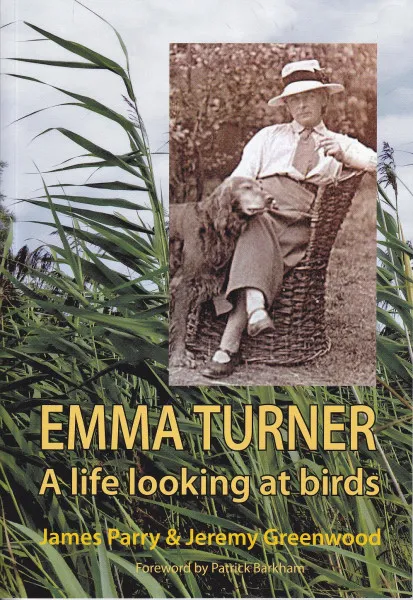
Emma Turner : a life looking at birds
Author: James Parry & Jeremy Greenwood
Publisher: Norfolk & Norwich Naturalists' Society, Norwich
Published: 2020
Emma Turner was a pioneer: one of the early bird ringers; one of the early bird photographers; one of the first 15 woman fellows of the Linnean Society (January 1905) and one of the first four female members of the British Ornithologists’ Union (May 1910). All this when women were considered very much to be second class citizens. It is noted in this book however that there is no indication that Emma Turner played any significant part, indeed any part, in the campaign for women’s rights which was going on in the early 20th Century. It seems that rather little is actually known about her especially the early years. However in 1900 when she was 33 she decided to take up photography and especially of birds. Over the next 20-30 years she lectured widely using her own photographs, spent several weeks in spring and summer for many years on a houseboat on Hickling Broad in Norfolk and a couple of summers living in a small hut looking after the tern colonies on Scolt Head Island off the north Norfolk coast. As a result of these various projects she wrote several books, the most well-known of which are Broadland Birds (published 1924) and Birdwatching on Scolt Head (1928), numerous chapters in other books and articles in such as British Birds and Country Life. The authors of this short biography have concentrated largely on this period of bird watching and photography and her activities on these subjects. They have managed to find various diaries and notebooks as well as photographic prints and negatives (all now deposited in the BTO archives) and have pieced together what they could on her overall life. The result is a comprehensive summary of her birdwatching activities in a period when natural history was becoming more popular as a field hobby actually looking at and studying birds rather than just shooting them, and very much a period when the whole subject was still heavily dominated by men. The book includes a comprehensive bibliography and many of her photographs, some published for the first time.
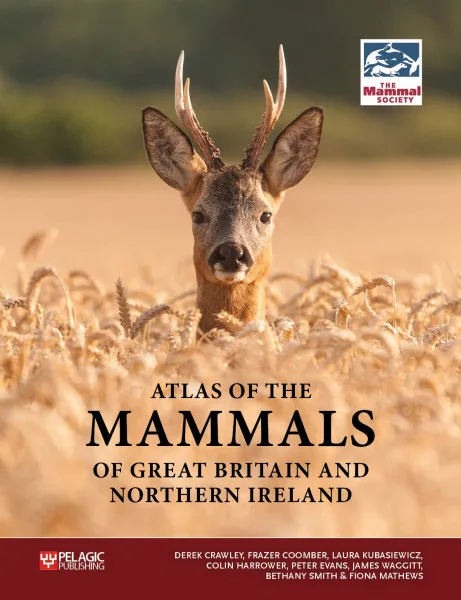
Atlas of the Mammals of Great Britain and Northern Ireland
Author: Derek Crawley, Frazer Coomber, Laura Kubasiewicz, Colin Harrower, Peter Evans, James Waggitt, Bethany Smith & Fiona Matthews
Publisher: Pelagic Publishing, Exeter
Published: 2020
This is the first national Mammal Atlas to be published since 1993 (Atlas of Mammals in Britain by Henry Arnold) and documents changes in recorded distribution between 1960 and 2016. It is aimed as an essential reference for ecological consultants wishing to know which species of protected mammals could potentially be affected by a development in a particular area. It is a culmination of many years’ worth of work in compiling data from records made in a variety of ways; from the old-fashioned method with pen and paper to taking advantage of modern developments in ‘citizen science’. From the foreword, it is clear that this has been a passion project for many people. Initially spear-headed by Derek Yalden, the previous president of the Mammal Society (sadly deceased in 2013), it has been a large collaborative effort between hundreds of organisations and contributors. This is a concise book, covering the broad strokes of the distribution of all mammals (both terrestrial and cetaceans) found in the UK and includes summaries of vagrant species, those without established populations and feral colonies and populations. 84 species are covered in further detail with two-page species accounts giving concise summaries of distribution, ecology and identification. Also included in the species accounts is a distribution map and a graph showing the seasonal distribution of records (only between 2000-2016). The resolution for the distribution maps is 10 km, so it is not suitable for those looking to see species distribution at a county or local level. The data are sourced from many places, including public bodies, conservation organisations, universities, local biological record centres and by members of the public using publically available recording tools such as iRecord and the Mammal Tracker app. This has resulted in a vast amount of data contributing to the Atlas which have been verified by the Mammal Society. There are only a small number of species that have been included which have not been verified as they are unlikely to be misidentified (Moles Talpa europaea, Rabbits Oryctolagus cuniculus, Badger Meles meles, Foxes Vulpes vulpes and Hedgehogs Erinaceus europaeus). In the methods chapter, the authors admit that ‘There may be discrepancies between the Atlas maps and the known distributions of some species’, without stating which species may be inaccurate. This is explained to be due to a variety of reasons, including the possibility of false presence records if the species can be easily misidentified and that some data-sharing agreements mean that some records might not have been accessible. Therefore, the authors state that ‘the maps will only be as good as the available records… many will represent the actual species distribution as well as, to some extent, the distribution of observers’. However, this Atlas provides a good summary of the mammals found in the UK and can be treated as a starting point for investigating a specific species’ distribution. Bibliographies have been provided in each species account which can be used to gain a more accurate and up-to-date picture of where the species is distributed and how healthy their populations within the UK are.
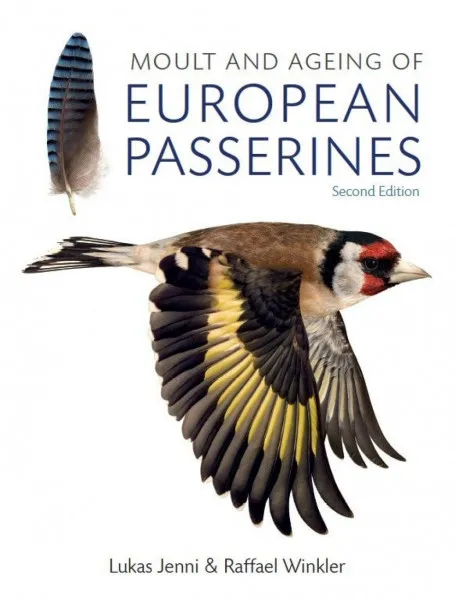
Moult and Ageing of European Passerines
Author: Lukas Jenni & Raffael Winkler
Publisher: Helm, London
Published: 2020
Moult is a pivotal stage in the annual cycle of all birds and understanding the effect of moult strategy on plumage is an essential tool for ageing birds in the field for birdwatchers and ringers alike. The first edition of Moult and Ageing of European Passerines was published in 1994 after 16 years of collecting data from 140,000 birds captured at ringing stations in Switzerland and elsewhere in Europe, as well as specimens held at several European natural history museums. High quality colour photographs illustrating different moult stages for 58 species of European passerine accompanied a detailed guide to understanding the function of moult, different moult strategies and how the quality of different feather generations can be used to age live birds. Needless to say, before selling out, the book was in high demand and remains so on the second-hand marketplace today. The long awaited second edition builds upon this already high bar by not only incorporating data on moult from another 40,000 birds but also adds another 16 new species accounts. The introductory sections incorporate much new material drawing on the findings of field observations and research carried out over the quarter of a century that has passed since the publication of the first edition. The first part of this phenomenal, large format guide provides a comprehensive overview of moult with chapters on the function and consequence of moult; terminology and methods in moult research – new for the second edition; adult moult; and moult during the first year of life. There is significant focus on moult sequence and strategies, and how moult fits in with other events occurring within the annual cycle. Part two concentrates on the principle of employing an understanding of moult strategy, and the identification of different feather generations in the wing, to ageing birds in the field. The bulk of this part however, and indeed the book, is comprised of the species accounts for 74 species of passerine occurring in Europe; replete with informative descriptions of the extent of moult at different life stages and how this knowledge may be applied to ageing individuals encountered in the field. Uniquely amongst ageing and sexing guides the species accounts include an extensive series of colour photographs which present readers with examples of juvenile and adult plumages illustrating post-juvenile, post-breeding and pre-breeding moult where appropriate. The guide clearly distils decades worth of personal ringing data and from that perspective it makes an excellent reference work for any ringer not already fortunate enough to own the first edition of this legendary work; and even then, there are good reasons to upgrade. For those however, who have started ringing more recently or others seeking to further a deeper interest in passerine moult then this outstanding book comes highly commended.>
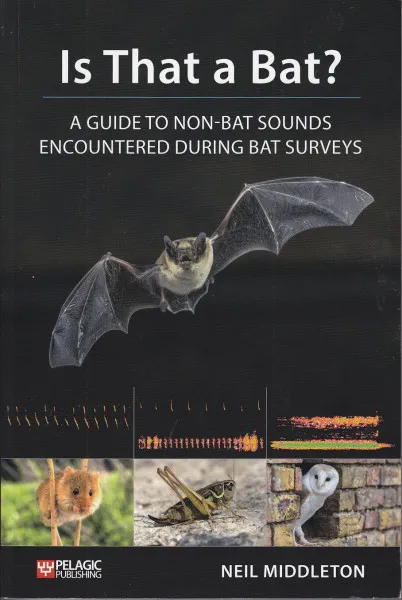
Is That a Bat? A Guide to Non-Bat Sounds Encountered during Bat Surveys
Author: Neil Middleton
Publisher: Pelagic Press, Exeter
Published: 2020
There has been some ground-breaking development in bat detector technology in recent years, such as the Audiomoth and Echometer Touch, reviewed in BTO News, Spring 2018, which have enabled a much wider audience of non-bat specialists to become interested in bat sound identification. Newcomers to this are supported by a Facebook page ‘Bat Call Sound Analysis Workshop’ which was set up by Rich Flight for anyone to be able to receive comments from the wider bat community on sound recordings, and by two excellent books published by Pelagic Publishing. The first by Jon Russ on British Bat Calls: A Guide to Species Identification, and the second by Neil Middleton, Andrew Froud and Keith French on the Social Calls of the Bats of Britain and Ireland (the latter book reviewed in BTO News 312). However, for new and experienced observers alike, there can be unfamiliar sounds. These may relate to difficult to identify bat species, but insects, birds and terrestrial mammals may also be recorded as ‘by-catch’ during bat surveys. This includes calls that can be confused with bats. Is That a Bat? also written by Neil Middleton and published by Pelagic Publishing, is the first attempt to pull together and summarise the current knowledge of many of these other sounds that are likely to be recorded during bat surveys. This is a complex area of study, where there is still much to learn. However, this book and downloadable call library does an excellent job in highlighting the potential for identifying other sounds, in a very entertaining book. Knowing that Neil Middleton was working on this book for some time and working myself on the sound identification of small mammals and bush-crickets, it has been a great opportunity to collaborate with Neil over the past couple of years. Many of the recordings collected by Neil have been built into software that I have been working on for the automatic sound identification of bats and other species groups, which is already being used to process ‘bat’ recordings. This has now been developed into our cutting-edge acoustic monitoring tool, the BTO Acoustic Pipeline. Admittedly, this is an area of study that fascinates me, but this is the book highlight for me this year.
An Indifference of Birds
Author: Richard Smyth
Publisher: Uniformbooks, Axminster
Published: 2020
In this brilliant book, Smyth shines a light on the relationship between birds and humans. In particular, on the roles we have played, and continue to play, in bird lives and histories. In doing so, he gently challenges mainstream narratives in modern-day conservation, prompting the reader to examine their own notions of value and motivation. Smyth looks at the various ways in which we have given to and taken from birds, tipped the balances to favour some birds to the detriment of others. Ideas such as shifting baselines, re-introduction and naturalness are explored and teased out. In doing so, he exposes some of the inconsistencies that abound in our regard for and treatment of birds (and for the world that they and we live in). These ideas are also looked at from a “bird’s eye view”, setting them against the moment-to-moment struggle to find food and shelter, to raise young, to stay alive. Smyth returns repeatedly to the eponymous conclusion of the book; that in spite of our profound impact on their lives, individual birds are supremely indifferent to us. At the same time, he eloquently, artfully, joyfully celebrates birds, and what they mean to us. The book is short (I finished it in a single weekend), reading like a short series of lectures. But, brevity notwithstanding, it takes the reader along very different paths from those trodden by other nature-oriented contemporaries. I whole-heartedly commend it, and the author, for the quality of his writing, the clarity of his thought, and his passion for those indifferent birds!
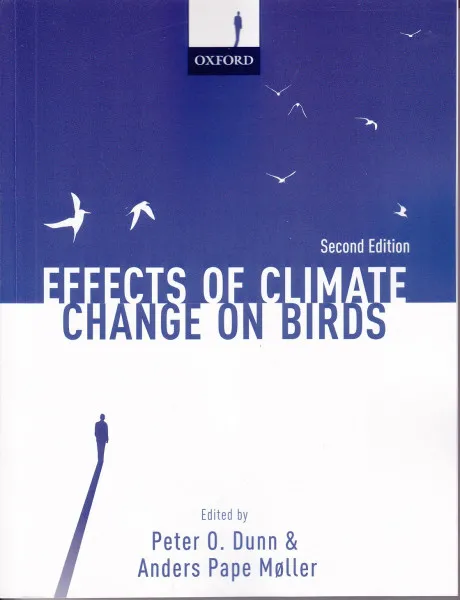
Effects of Climate Change on Birds
Author: Peter O Dunn(Editor) & Anders Pape Møller(Editor)
Publisher: Oxford University Press, Oxford
Published: 2010
Since the publication of the first edition of this edited volume 10 years ago, we have all grown in our awareness of the twin biodiversity and climate crises that the planet faces. There is building evidence that the climate is changing, and of its impact on biodiversity, of which the literature on birds is a significant component. The authors start their book with an assessment that more than 11,400 papers have been published on the subject of climate change and birds, of which two thirds have been published since 2010. This makes it very difficult for any of us to keep on top of what is a fast moving literature, and so Dunn and Møller have pulled together an impressive list of 35 internationally respected authors to write 19 chapters that provide an accessible way into this vast topic. The chapters are split across four sections. The first introductory section contains a useful summary of climate change that is particularly helpful for anyone struggling with the complexity of the climate system and the breadth of impacts. It concludes with a bullet point summary of major IPCC results that provides a handy reference of the subject. Having this at the start of the book provides a useful platform on which the rest of the volume is built. The second section has a methodological focus and includes five chapters that provide a useful summary of approaches and latest advances in relation to a number of key aspects of the subject. The first of these reviews sources and approaches to analysing long-term climate data. This will be particularly useful for anyone looking to access such data for their own studies, although there is a risk that the websites mentioned where data may be accessed may gradually go out of date. The second chapter nicely complements the first by reviewing different sources of bird data, many of which result from citizen science initiatives. Three more statistical chapters then follow that consider ways to quantify climate sensitivity, ecological niche modelling and the analysis of population dynamics. These excellent summaries should be very helpful for those looking to undertake similar analyses, and particularly describe some of the most recent developments in modelling impacts on populations. Evidence around the impacts of climate change on bird populations forms the subject of the third book section. This contains chapters that review changes in migration, timing of breeding and breeding success, physiological responses, evolutionary responses, population responses and changes in distribution in response to climate change. The first four of these chapters nicely document the range of impacts observed - the chapter on physiology in particular contained much recent material that was new to me. The latter two chapters in this section are more methodological in nature, reviewing approaches used for future projections of abundance and distribution respectively. Like the chapters in section two, they do so with reference to much new and recent material, usefully highlighting challenges of scale and propagating uncertainty, but I did wonder if these chapters would really have fitted in better in that section. Given the title of the section on population consequences, I also felt that an overview of the evidence of the impacts of climate change on bird populations across the world would have made a useful addition. The final section of the book, entitled interspecific effects of climate change, puts birds in a wider ecological context. Two of the chapters consider particular mechanisms of climate change impacts, covering host-parasite and predator-prey interactions, whilst a third also covers aspects of relationships with other taxa. Both the host-parasite and predator-prey chapters included some really nice recent examples, the first in my opinion being something of a neglected topic, whilst the latter provided a nice overview of what is now a really quite extensive literature. The next chapter is a succinct summary of the impacts of climate change on bird communities, summarising what is really some of the most compelling evidence of impacts to date. Finally in this section, an ambitious chapter gives a pretty comprehensive assessment of the attempts that have been made to assess the future vulnerability of birds to climate change, and considers how best conservationists should respond. For anyone wanting to get up to speed with the topic, or even for those more familiar with the subject but struggling to keep up with the literature, I would heartily recommend this book. As a result of being an edited volume, it does suffer from a degree of duplication between some chapters whilst other aspects of the subject were hardly covered at all, but in general the chapters are excellent and in combination they provide a pretty comprehensive summary. I would have welcomed more of a synthesis from the book editors to pull out key themes and patterns across the chapters and sections. Their concluding chapter was pretty short and given their experience, felt like a lost opportunity to provide more of a challenging synthesis of the subject. Having said that, I would agree with the five main areas of future research need that they highlight, so do go and read this book, and be inspired to tackle at least one of these!
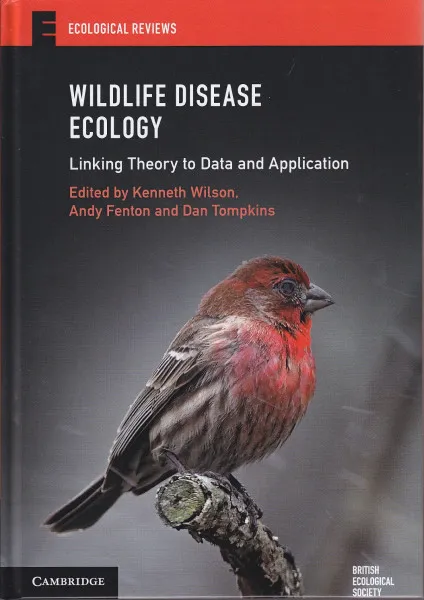
Wildlife Disease Ecology: Linking Theory to Data and Application
Author: Kenneth Wilson, Andy Fenton & Dan Tompkins (eds.)
Publisher: Cambridge University Press, Cambridge
Published: 2019
Zoonotic diseases (those that infect humans but which originate in populations of wild animals), especially novel ones, sometimes receive quite high profile, e.g. avian influenza, Ebola and, more recently, coronaviruses. The study of disease in wild animals, though, is something of a ‘Cinderella’ subject and this book does a valuable service in bringing together a wide range of case-studies, from carnations through to American buffalo, to show what a fertile area it is. Three chapters may be of particular interest to BTO readers. One on Red Grouse shows the complex ways in which the parasite influences infected birds’ behaviour and physiology, one on the House Finch, describes how large-scale volunteer-collected data can help us understand disease spread, and one on Badgers explores how we measure the spread of infected individuals and some of the implications of this for management strategies. This is a book aimed squarely at researchers, but it does start with a helpful glossary and many of the authors have attempted to write in a style that is accessible to non-specialists. In a move that should be copied by others, the publisher has provided non-technical summaries to all the chapters on its website, which provide at least the gist of each case, though making them a bit longer might have made them even more useful to those daunted by the full text. Overall, this is a fascinating collection of studies that showcases why wildlife diseases are worthy of study and how combining field observations, experiments, mathematical models and the latest in genomic and molecular research provides not only research insight, but also contributes to effective conservation and management efforts.
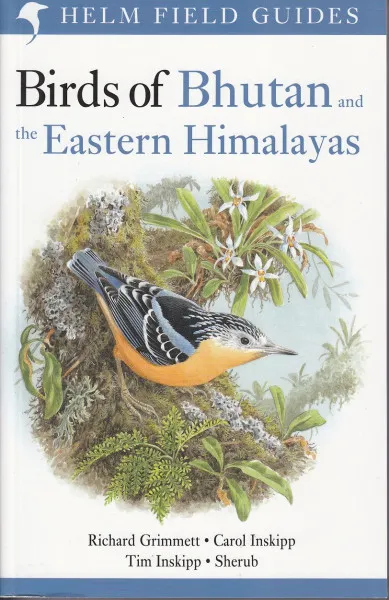
Birds of Bhutan and the Eastern Himalayas
Author: Richard Grimmett, Carol Inskipp, Tim Inskipp & Sherub
Publisher: Helm, London
Published: 2019
The original Birds of Bhutan published by Helm in 1999 was the first field guide to the avifauna of this Himalayan nation; the new work however, is not simply just a second edition but has been extended to include the neighbouring Indian states of Sikkim and Arunachal Pradesh, and also adds the renowned Bhutanese bird expert Sherub as a fourth author. Whilst much of the book is devoted to the superbly illustrated plates and corresponding species accounts, the introductory section is extensive. Along with the usual guide to using the book which in this case also covers the taxonomy used, there is a really useful account of the main habitats found within the geographic area covered, including habitat features, elevation; as well as listing a few characteristic, threatened, or range restricted species that may be found within them. A table of globally threatened or range restricted species found within the geographic scope of the book is another useful feature. A brief guide to the some of the key and more accessible birdwatching areas found within the region provides those considering a visit to the region with a list of nature reserves, national parks and other areas that offer notable birding experiences. Location, habitats and target species are detailed along with an indication of the best time to visit; making this a useful place to begin when putting together an itinerary. A section of the introduction is devoted to conservation issues affecting birdlife within Bhutan and the surrounding regions of the Eastern Himalayas. Like so many other parts of the world land use is a major concern and while forest cover remains high, commercial forestry and other human activities are impacting forest quality, particularly at lower altitudes; as a result Bhutan has imposed a ban on timber exports. Agriculture expansion, necessary to feed growing populations, is responsible for the degradation of lowland grasslands and wetlands; the latter also being affected by the increased use of hydropower. Fortunately the region has many protected areas, most notably in Bhutan where almost 50 percent of the country, inclusive of all major ecosystems, is designated. In addition to formal conservation measures the dominant religious beliefs of Hinduism and Buddhism usefully convey implicit protection to most wildlife, particularly within Bhutan itself. The introduction concludes with maps of Important Bird Areas within the region, a glossary, references, regional organisation details, and an illustrated guide to bird families occurring within the geographic scope of the book. The larger part of the book however, is comprised of the species accounts and the accompanying 152 colour plates. The plates, printed opposite the accounts of the species depicted, are skilfully illustrated by many prominent artists with sex and age difference shown where appropriate. Birds in flight are presented for species that are more frequently encountered in transit such as raptors, gulls and herons; or where salient features are only visible when on the wing, such as nightjars. Species accounts, whilst concise, include an abbreviated list of the regions in which the bird can be found along with a handy range map; residency status usefully details altitude. A brief guide to identification lists features used to separate a species from those most similar where confusion is possible; details any age and gender differences; describes voice including song and call; and provides an indication of preferred habitats as well as any notable behavioural traits. For those visiting Bhutan or the Eastern Himalayas this definitive field guide really is the only one you need to pack. If however, your concern is for your carbon footprint then the guide still serves as a great insight into the amazingly diverse avifauna that needs conserving in the face of inevitable climate change.