Read reviews of the books we hold in the Chris Mead Library, written by our in-house experts. A selection of book reviews also features in our members’ magazine, BTO News.
Featured review
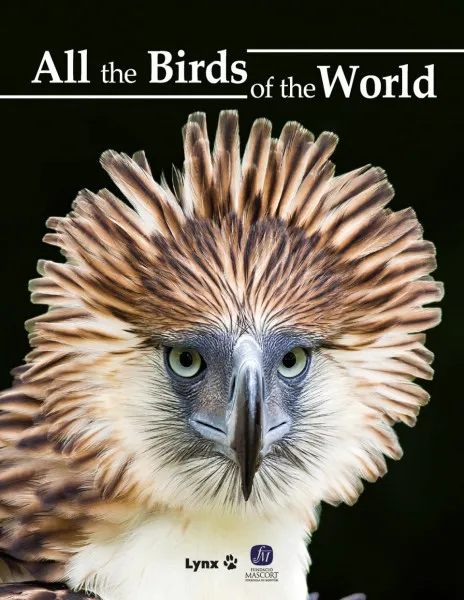
All the Birds of the World
Lynx have had a long-term project to produce an exhaustive guide to the birds of the world. It started out with the 17 volumes of the Handbook of the Birds of the World (1992–2013) which has family and species accounts for all birds. This was followed by the two volumes of the Illustrated Checklist of the Birds of the World (2014–2016). They have now published the third and final stage of this avian odyssey with this current book.
Search filters
Birds of the UK Overseas Territories
Author: Roger Riddington(Editor) & Miranda Krestovnikoff(Foreword By)
Publisher: Poyser, London
Published: 2020
Readers of British Birds will most likely be familiar with much of the content of this new publication from Poyser, which brings together 13 papers published over the past 12 years, each describing the birds of the various far-flung remnants of Britain’s colonial history. Each of these papers now forms a chapter that gives a detailed introduction to the ornithological interest of the United Kingdom Overseas Territories (UKOTs). The addition of the paper on the British Virgin Islands, which has not yet been published in British Birds, completes the set, along with a new introductory chapter explaining the importance of the UKOTs for global biodiversity. Many of the older papers include postscript updates on particularly pressing or long-running conservation issues, and some also provide new advice on travelling to and submitting records within the territories. This book is a whistle-stop tour of some truly spectacular parts of the world, whipping from the arid slopes of Ascension Island to the frigid shores of South Georgia, to the tropical islands of the Caribbean and the white sandy beaches of Henderson Island in the Pacific Ocean. For the carbon-conscious birder this is a great summary of the birdlife of some places that you may be unlikely to visit, though for me it certainly invoked itchy-feet! Most of the UKOTs are islands or archipelagos, and so species endemism is high, meaning that each chapter has something new to offer, including those for UKOTs that are relatively close to one another such as Anguilla and Montserrat. As each territory is quite discreet (with the obvious exception of the vast British Antarctic Territory), at no point does the book become overwhelming with statistics and figures, providing population estimates in local and regional contexts. Given the length of time between authoring of each paper, there is no set layout for each chapter, but broadly they cover: a description of the breeding birds with special focus on endemics; an account of the migratory and vagrant birds that occur; habitats, climate and vegetation through time; a history of bird recording up to present, and; a run-through of past, current and expected conservation issues. The UKOTs hold a wealth of biodiversity, but a recurring theme throughout the chapters is that despite the many thousands of miles of ocean that separate the them, the threats posed by invasive species, human development pressure and climate change are shared by them all. As pointed out in the introduction, the strange constitutional situation UKOTs find themselves in means that they have limited access to international or UK conservation funds. Much of the vital conservation work to protect fragile environments, safeguard unique island endemics and conserve globally threatened species is carried out by passionate local ornithologists and conservationists, and a particular highlight of this book is how it showcases local conservation success stories, such as the remarkable recovery of the Cahow (Pterodroma cahow) in Bermuda. The individual chapters of this book are a good primer for visiting birders to each of the UKOTs, and provide helpful tips on spotting local specialties, where to visit and sometimes who to speak to. Given the disparate nature of the territories that the UK currently has responsibility for, the real value of this book is as a compilation of the immense diversity of life and environments that the UK has responsibility for beyond the shores of Britain. I feel this is a book that should be on the shelves of UK conservation policymakers as a reminder that some of the species and habitats we need to prioritise for conservation and research may not necessarily be right on our doorstep.
Rostherne Mere: Birds of Mere and Margin: One Hundred and Thirty Years of Observations
Author: Steve Barber, Bill Bellamy and Tom Wall; with Ray Scally (illus.)
Publisher: Tom Wall (privately published)
Published: 2019
This book is a nice local avifauna of the famous Rostherne Mere National Nature Reserve in north Cheshire. But if the word ‘avifauna’ makes readers think of their standard format – a dry catalogue of species, with interrogation of old records to see if they meet modern identification criteria – they will be in for a surprise; in my opinion, a pleasant one. The authors have adopted a charming style, enlivened by copious anecdotes and plenty of photographs and illustrations (by Ray Scally), making an eminently readable volume. One surprise is their loose adherence to taxonomic order, with some birds dealt with in groups according to habitat, the allotted amount of space varying greatly according to the amount of study that each has had. For instance, the chapter ‘a miscellany at the margins’ covers 19 species from Marsh Harrier and Osprey to Kingfisher and Starling. Of course this means an element of referring to the index to find out where a species occurs, but probably no more than needed in all bird-books to keep up with the frequent changes to the systematic list. The records cover 130 years, from 1886 to 2016, the site having inevitably had varying intensity of study during that time. Rostherne is fortunate that for the first half of the 1900s it benefited from the attention of two local ornithologists who had risen to national prominence through their writings (T.A. Coward and A.W. Boyd), and records from their network of correspondents. In the last half-century or so, events such as appointment of Nature Conservancy wardens, construction of an observatory building, donation of a monster telescope and a programme of ringing all encouraged observations so that birds have been recorded on most days. This book is a welcome overview of the birds of Rostherne Mere and will, I believe, be enjoyed by anyone, whether or not they have ever been there. Those interested in more than just the birds will learn much from the companion volume Rostherne Mere – Aspects of a Wetland Nature Reserve.
Rostherne Mere: Aspects of a Wetland Nature Reserve: Wildlife, Science and People Through Time
Author: Tom Wall and Gisèle Wall (eds.)
Publisher: Tom Wall (privately published)
Published: 2019
In 1912, the grandly-named Society for the Promotion of Nature Reserves for Britain and the Empire, fore-runner of The Wildlife Trusts, started to compile a list of 284 potential reserves in the British Isles. Rostherne Mere was included, although the benevolent ownership by the Egerton family meant that there was not seen to be any urgency in securing its conservation by other organisations and the site, especially its birds, was well-recorded. But eventually its vulnerability was recognised – including as a picnic and bathing spot for Manchester residents! – and numerous behind-the-scenes negotiations in the 1950s, masterminded by Max Nicholson, Director-General of the newly-formed Nature Conservancy, led to Lord Egerton, with no heirs, bequeathing the Mere to the nation. So, Rostherne Mere became, in 1961, our 99th National Nature Reserve (NNR). This is an imperfect précis of half a century’s progress to NNR status, described in fascinating detail in the first part of this book, with interesting insights into the mixture of personal relations, politics and finance, with a focus on conservation helping to hold it all together. Physically, Rostherne is the most northerly and deepest of the Ice Age meres of the Cheshire-Shropshire Plain, reaching over 30 m, and the last to freeze over. It is thus not surprising that its main importance was seen as a wildfowl refuge. As an NNR, Nature Conservancy wardens undertook more surveys of flora and fauna themselves, as well as lots of management work, and went out to recruit numerous academic and other researchers into other aspects of the Mere’s natural history. Accounts of the management – especially grappling with water quality, eutrophication and pollution – and of research, mostly on fish, make up the rest of the book, some with chapters written by the lead researchers themselves. There is a little overlap with the Birds of Mere and Margin volume, with a summary chapter on the birds, including a long-running study of Reed Warblers, but they have a different focus and I doubt that any purchaser of both books would feel cheated by their repeated appearance. Tom Wall, as principal author, must be congratulated for his vision in conceiving, and the immense scholarship in producing this masterpiece, all written in an engaging style and including every imaginable document, map, graph and photograph. It is a joy to read, and also repays study and thought, with lessons to be learned even now.
Birds of the West Indies
Author: Herbert A. Raffaele, James W. Wiley, Orlando H. Garrido, Allan R. Keith & Janis Raffaele
Publisher: Helm, London
Published: 2020
Having observed last year when reviewing the excellent new Lynx Edicions Birds of the West Indies following a recent trip to the region, that all the available bird guides at that time appeared to be reprints of older books, it’s good to see one of those books has now been given a much needed update. For many years, the Helm Birds of the West Indies has been the go-to guide for the region, as a clear, straightforward, no nonsense book. This new slightly enlarged second edition takes the good basics of the prevision edition and improves on it while adding 60 more species (now covering >600 species) and importantly updating the conservation statuses and ranges of the region’s species. As you would expect in a new edition there is new artwork, both for the new species but also replacing much of the more old-fashioned artwork such as all the warbler and some of the flycatcher plates from the first edition with better images. The images are also better spread out with less species per plate on average, making the guide less cluttered and allowing the already well set out written species accounts to be expanded to make them more informative whilst remaining concise. Useful up to date information such as briefly covering the serious effects of the 2017 Hurricane Maria on Dominica’s two endemic parrot species is also included. More generally there have been some improvements in the layout and organisation of the book such as better colour coding of the book’s sections making it easier to navigate. One thing to note in this new edition is that the book often purposefully breaks taxonomic order to group similar-looking families together for comparisons such as having swallows and martins straight after swifts in an otherwise non-passerine grouping. If the book were entirely full of unfamiliar taxa, this would probably bother me less and it does have some possible advantages in the field, especially for beginners. However, because I am familiar with many of the families (if not the species themselves!) and know roughly where to expect them normally, I find it a bit jarring and would probably prefer something closer to current taxonomic order as used in the first edition. Oddly, I also noticed that wrens randomly appear on the same page as some of the cuckoos, which really doesn’t make sense taxonomically or for comparisons. In terms of other minor criticises to make, there are still a few more bits of old artwork it would have been nice to update and it would also be helpful to illustrate some more of the distinct island subspecies. Although hardly unusual in a modern bird guide, it might have been good for encouraging local birding interest, to include some well recognised local species names in the accounts, such as for the endemic endangered Imperial Parrot/Amazon, which in Dominica is largely referred to by its native name the Sisserou. Also the map of the region covered near the start of the first edition, which I found quite useful to refer to, has unfortunately gone. However, these minor quibbles aside, this book represents a significant and much needed update on the previous edition and a fine, straightforward, easy to use bird guide in its own right and a strong contribution to furthering ornithology in the region. Although the larger Lynx Edicions guide is arguably a superior bird book in terms of content and has a slightly wider scope, at only around half the price and a significantly smaller, more portable size, the Helm Birds of the West Indies is both a more practical field guide and excellent value for money. Ideally, if you’re unfamiliar with the region’s birds you’d probably want both on a trip, perhaps with the Helm in your day bag and the Lynx back at base, but if space is at a premium, as it usually is when travelling, I can strongly recommend having this excellent guide along on its own on a birding trip to the West Indies.
The Pelagic Dictionary of Natural History of the British Isles
Author: Peter J. Jarvis
Publisher: Pelagic Press, Exeter
Published: 2021
This impressive compendium sits somewhere between dictionary and encyclopedia, providing information for 10,000 species of animals, plants, fungi and algae of the British Isles. Detailed descriptions are given, not only about identification and taxonomy, but also distribution, population trends, and even origins of the species name. Did you know, for example, that the species name for Chaffinch means ‘unmarried finch’, because Linnaeus, who named it, only ever saw males? The Crab Hacker Barnacle owes its name to a competition winner; presumably Barnacle McBarnacleface already existed. Sometimes you have to delve a little deeper into the text to look up the words used in the entries (at least I did), but that’s part of the fun, getting lost in the various definitions. There’s also a handy section at the beginning defining common biological terms. This would be a very useful addition to any library, classroom, or bookshelf of anyone interested in natural history, or indeed crossword fans!
The Birds of Nottinghamshire
Author: Jason Reece, Nick Crouch, David Parkin, Chris du Feu & Bernie Ellis
Publisher: Liverpool University Press, Liverpool
Published: 2019
It is 44 years since the last review of the county’s birds and much has changed since then. I’m not sure back then anyone would have predicted Little Egret breeding in the county. The book follows a tried and tested format, I thoroughly enjoyed reading the introduction to the birds of Nottinghamshire; I grew up in the county and cut my birding teeth at Attenborough and thought that I had a reasonable handle on the history of the birds and birdwatchers in the county, but there is clearly a lot more to learn. I love the account of the finding of a Pallas’s Sandgrouse by Joseph Whitaker on 14 June 1888 and the photograph of the Trent Valley Bird Watchers outdoor meeting from 8 June 1937 – you don’t see many bow ties being sported by bird watchers these days. The thorough history section is followed by an equally thorough exploration of the county’s climate and habitats. I had always thought that being a landlocked county might offer Nottinghamshire shelter from the worst the weather might throw at the UK but I hadn’t realised that gale-force winds are only recorded on average around two days per year. The species accounts follow and every species encountered in the county up to 2018 is included, with each species either accompanied by some superb artwork from Michael Warren or by a photograph of the species taken in the county, or more often than not, by both. Within this section are finders’ accounts of some of the rare birds that have been seen in the county that are published for the first time. It is these that I found most fascinating as they put you in the shoes of the finder and allow an insight into the thrill of finding your own rarity. It has to be said that rarities were just that in my time in the county, but I was lucky enough to see the 1976 Little Crake at Attenborough, and of course this book is thoroughly researched so it is included here. As I would expect from the authors involved. The Birds of Nottinghamshire is a weighty tome that runs to 606 pages, a result of the incredible amount of information it carries, both informative and entertaining in equal measure. You can’t have an interest in the birds of Nottinghamshire and not own this book.
Britain's Birds: an Identification Guide to the Birds of Great Britain and Ireland
Author: Rob Hume, Robert Still, Andy Swash, Hugh Harrop & David Tipling
Publisher: Princeton University Press, Princeton (NJ) & Oxford
Published: 2020
This bird ID guide covers 631 species and includes birds recorded in Britain and Ireland. It is incredibly comprehensive and has a plentiful amount of glossy, detailed photographs which show all the plumages you are likely to see for both common and rare birds. The layout is practical and user-friendly which makes it easy to use and compare species. It has Species Accounts for each species described which includes English and scientific names, measurements, overview and description, conservation status, legal protection and Irish records, status and distribution map and habitat. This means that the level of description is extensive and there is great potential to learn more about an unfamiliar species from the guide alone. There are also overview pages of how to identify more general groups of birds such as wildfowl, corvids and buntings. This book, originally published in 2016, has been revised and updated for the second edition to make identification even easier. There are 12 new species recorded plus hundreds of new photos and fully revised species accounts to include the latest information in identification features, status, numbers, range and plumages seen during only part of the year. It’s a must have for beginners, experienced and professional birders alike.
Emma Turner : a life looking at birds
Author: James Parry & Jeremy Greenwood
Publisher: Norfolk & Norwich Naturalists' Society, Norwich
Published: 2020
Emma Turner was a pioneer: one of the early bird ringers; one of the early bird photographers; one of the first 15 woman fellows of the Linnean Society (January 1905) and one of the first four female members of the British Ornithologists’ Union (May 1910). All this when women were considered very much to be second class citizens. It is noted in this book however that there is no indication that Emma Turner played any significant part, indeed any part, in the campaign for women’s rights which was going on in the early 20th Century. It seems that rather little is actually known about her especially the early years. However in 1900 when she was 33 she decided to take up photography and especially of birds. Over the next 20-30 years she lectured widely using her own photographs, spent several weeks in spring and summer for many years on a houseboat on Hickling Broad in Norfolk and a couple of summers living in a small hut looking after the tern colonies on Scolt Head Island off the north Norfolk coast. As a result of these various projects she wrote several books, the most well-known of which are Broadland Birds (published 1924) and Birdwatching on Scolt Head (1928), numerous chapters in other books and articles in such as British Birds and Country Life. The authors of this short biography have concentrated largely on this period of bird watching and photography and her activities on these subjects. They have managed to find various diaries and notebooks as well as photographic prints and negatives (all now deposited in the BTO archives) and have pieced together what they could on her overall life. The result is a comprehensive summary of her birdwatching activities in a period when natural history was becoming more popular as a field hobby actually looking at and studying birds rather than just shooting them, and very much a period when the whole subject was still heavily dominated by men. The book includes a comprehensive bibliography and many of her photographs, some published for the first time.
Atlas of the Mammals of Great Britain and Northern Ireland
Author: Derek Crawley, Frazer Coomber, Laura Kubasiewicz, Colin Harrower, Peter Evans, James Waggitt, Bethany Smith & Fiona Matthews
Publisher: Pelagic Publishing, Exeter
Published: 2020
This is the first national Mammal Atlas to be published since 1993 (Atlas of Mammals in Britain by Henry Arnold) and documents changes in recorded distribution between 1960 and 2016. It is aimed as an essential reference for ecological consultants wishing to know which species of protected mammals could potentially be affected by a development in a particular area. It is a culmination of many years’ worth of work in compiling data from records made in a variety of ways; from the old-fashioned method with pen and paper to taking advantage of modern developments in ‘citizen science’. From the foreword, it is clear that this has been a passion project for many people. Initially spear-headed by Derek Yalden, the previous president of the Mammal Society (sadly deceased in 2013), it has been a large collaborative effort between hundreds of organisations and contributors. This is a concise book, covering the broad strokes of the distribution of all mammals (both terrestrial and cetaceans) found in the UK and includes summaries of vagrant species, those without established populations and feral colonies and populations. 84 species are covered in further detail with two-page species accounts giving concise summaries of distribution, ecology and identification. Also included in the species accounts is a distribution map and a graph showing the seasonal distribution of records (only between 2000-2016). The resolution for the distribution maps is 10 km, so it is not suitable for those looking to see species distribution at a county or local level. The data are sourced from many places, including public bodies, conservation organisations, universities, local biological record centres and by members of the public using publically available recording tools such as iRecord and the Mammal Tracker app. This has resulted in a vast amount of data contributing to the Atlas which have been verified by the Mammal Society. There are only a small number of species that have been included which have not been verified as they are unlikely to be misidentified (Moles Talpa europaea, Rabbits Oryctolagus cuniculus, Badger Meles meles, Foxes Vulpes vulpes and Hedgehogs Erinaceus europaeus). In the methods chapter, the authors admit that ‘There may be discrepancies between the Atlas maps and the known distributions of some species’, without stating which species may be inaccurate. This is explained to be due to a variety of reasons, including the possibility of false presence records if the species can be easily misidentified and that some data-sharing agreements mean that some records might not have been accessible. Therefore, the authors state that ‘the maps will only be as good as the available records… many will represent the actual species distribution as well as, to some extent, the distribution of observers’. However, this Atlas provides a good summary of the mammals found in the UK and can be treated as a starting point for investigating a specific species’ distribution. Bibliographies have been provided in each species account which can be used to gain a more accurate and up-to-date picture of where the species is distributed and how healthy their populations within the UK are.