Read reviews of the books we hold in the Chris Mead Library, written by our in-house experts. A selection of book reviews also features in our members’ magazine, BTO News.
Featured review
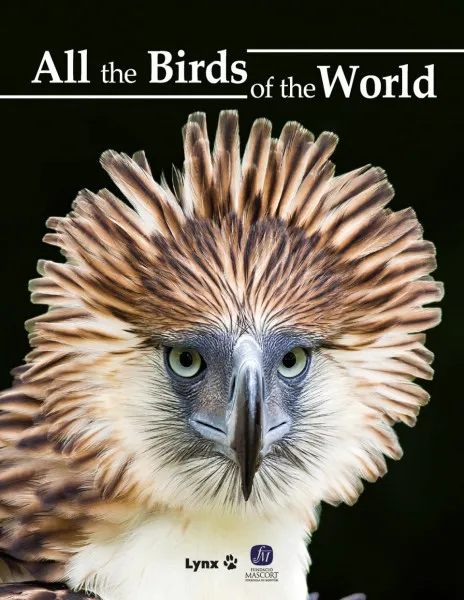
All the Birds of the World
Lynx have had a long-term project to produce an exhaustive guide to the birds of the world. It started out with the 17 volumes of the Handbook of the Birds of the World (1992–2013) which has family and species accounts for all birds. This was followed by the two volumes of the Illustrated Checklist of the Birds of the World (2014–2016). They have now published the third and final stage of this avian odyssey with this current book.
Search filters
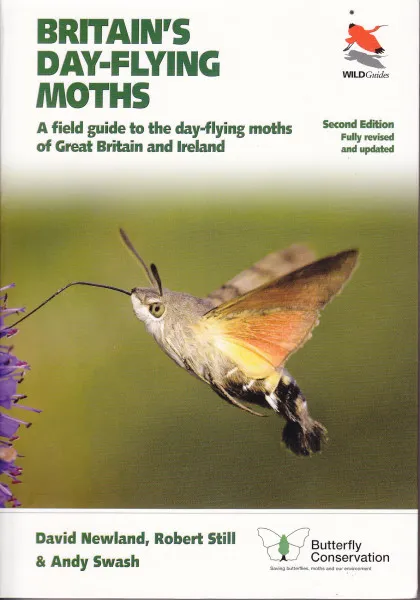
Britain's Day-Flying Moths: a Field Guide to the Day-flying Moths of Great Britain and Ireland
Author: David Newland, Robert Still & Andy Swash
Publisher: Princeton University Press, Princeton (NJ) & Oxford
Published: 2019
Mention of a day-flying moth to many people will receive a reaction akin to ‘Don’t you mean a butterfly?’ However, as mentioned in WildGuide’s Britain’s Day-flying Moths the number of moth species which are most active in the day (158 covered in the book) comfortably doubles the number of our butterflies (71 species including migrants). The differences between moths and butterflies are included here, along with the book’s definition of day-flying which encompasses those species which are easily disturbed in the day and are likely to be encountered in flight. By focussing on this selected group of moths over the entire group, numbering over 2,500 species, the book is accessible for the enthusiastic naturalist who hasn’t made the leap to the expensive world of moth-trapping. That should not be seen as if it would only appeal to beginners though, as it includes topics such as the tantalising and more specialised world of clearwing pheromones, which is covered in detail. The flexibound cover makes it comfortable to use in the field and the high-quality photographs should allow for easy identifications. Most species receive a full-page account, covering behaviour, food preferences (for both adult and caterpillar), flight times and advice on how to see the moth in action. Besides the comprehensive species accounts, there are sections covering moth biology, naming conventions and a guide to the best habitats for seeing a diverse range of day-flyers. Is every moth that one could conceivably encounter during daylight covered? Of course not, but that shouldn’t prevent a budding lepidopterist from getting a lot out this charming book.
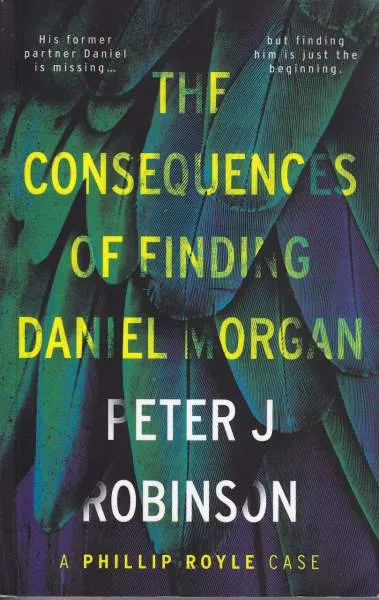
The Consequences of Finding Daniel Morgan
Author: Peter J Robinson
Publisher: Matador, Kibworth Beauchamp
Published: 2019
A thriller surrounding illegal wildlife trade, focusing on tropical birds and remote locations, is certainly a new find in the ornithological section of the library. Robinson’s crime novel is a welcome new genre, and I was excited to get tucked into what was bound to be an exciting read. For the most part, it proved to be just that. The scenes are set with knowledge of the area, describing Cairns to a level of detail that brought me back to my backpacking days in the city. The story, which follows Philip Royle as he chases his missing colleague, follows a nice arc with a dramatic plot-twist that I hadn’t seen coming. Epic chases across the Australian outback and Washington politics, all with a hint of kidnapping and several murders, most certainly keep you on your toes as you work your way through the book. However, the writing overall is at times a bit long-winded and there is a lot of repetition throughout the novel, often within sentences. There are some minor factual errors, such as referring to the Bengal Tiger as Indian Tiger. The GPS-tags that the author kindly describes as being used by BTO for tracking migratory birds, which are used in the novel to track crates of eggs being transported, most certainly wouldn’t be cut out for this kind of work, but these kinds of small errors can easily be forgiven for the thrill of the story. Slightly less easy to forgive are the descriptions of almost all female characters by their dress, long-leggedness or “scantily-clad bodies”, which was in stark contrast with the way in which male characters were described. Royle’s partner-in-crime, Charlie Lacey, came across as literary eye-candy rather than a well-developed character, which I hope will be rectified in future novels. Despite this, I found myself unable to put the book down easily; I just had to know what the next clue would be in the chase for the truth. This is what makes for great crime writing, and I do hope Robinson will continue to publish the stories of Philip Royle and his quest for justice, but perhaps with Charlie Lacey in a pair of jeans instead of a dress – that way she can at least go for her gun when needed.
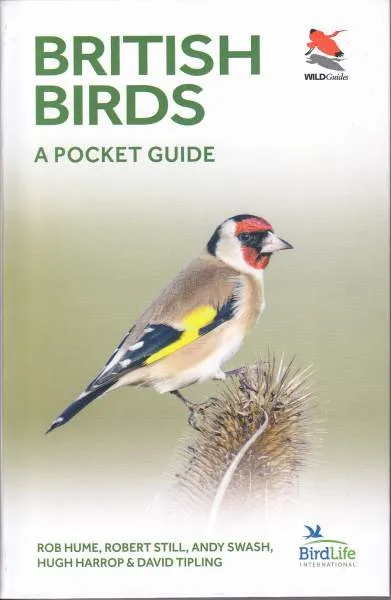
British Birds: A Pocket Guide (WILDGuides)
Author: Rob Hume, Robert Still, Andy Swash, Hugh Harrop & David Tipling
Publisher: Princeton University Press, Princeton (NJ) & Oxford
Published: 2019
Throughout my birding life I have never been a fan of photographic guides. The images in most of these early guides were of poor quality and often only featured one or two plumages per species. Back in 2016 that changed after seeing a copy of the WILDGuides' Britain's Birds: An Identification Guide to the Birds of Britain and Ireland in the accommodation I was renting on Shetland. This book was packed with high-quality photos by various photographers, including Hugh Harrop and David Tipling, and each species had a whole suite of photos showing the various ages and plumages. The book was also full of useful identification snippets and side-by-side comparisons of similar species. I purchased a copy as soon as I returned home, but it is best treated as a reference book rather than a field guide due to its size. That has all changed with the publication of the new British Birds: A Pocket Guide which, as its title suggests, is designed to be taken into the field. As you would expect there is some trimming down to be done to make it a pocket edition. Whereas the original book covered all those species that have occurred in the UK (600 species) this book only covers the most regularly occurring species, 248 in all, plus 45 scarcer species. The book still manages to include over 1,600 photos, all of which are of a high quality. It starts with a guide to using the book and is followed by a section on bird topography, identification and finally birds by habitat. Once into the main body of the book each species has at least one photograph accompanied by a short amount of text detailing size, identification features, voice and a distribution map. Those species that have a range of plumages or age groups such as wildfowl, gulls and waders, are assigned more photographs to show the different plumages states. As in the original book this guide is full of nuggets of information such as showing the difference in tertial patterning in juveniles of the larger gulls and makes identification that much easier. Similar species, such as Curlew and Whimbrel, are often depicted next to each other and in similar postures with the identification features useful in separation highlighted for each species. For some family groups there are also additional comparison pages that show a number of species in that family side by side and how they can be identified. The page for Calidris waders showing both winter and summer plumage, and the two pages detailing the four main age groups of the larger gulls will no doubt prove most helpful for those who struggle with these groups. In all this is a fantastic piece of work. It continues the spirit of the first book and manages to cram a huge amount of information in the pages without it feeling too cluttered or overwhelming. The text is concise but thorough enough to help with identification. Priced at £9.99, this is a must have for new and seasoned birders alike.
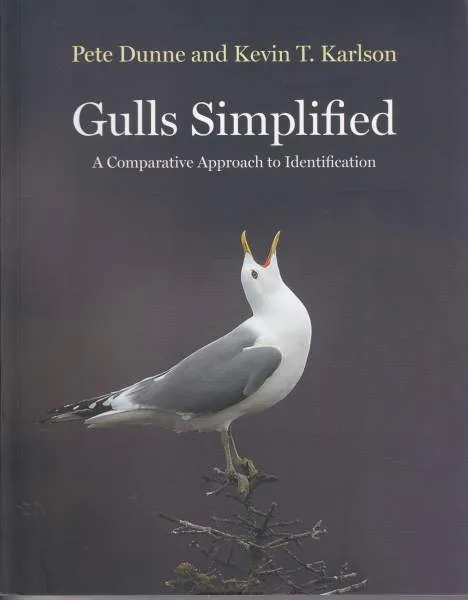
Gulls Simplified: A Comparative Approach to Identification
Author: Pete Dunne & Kevin T Karlson
Publisher: Princeton University Press
Published: 2018
This book aims to look at shape and structure, before dwelling on finer plumage characteristics, an approach you might already use on raptors. It starts ‘Gulls? No waaaayyeeeeeeeeeee!!!!!!!!!!!!!!!!!!!!!!!!!!’, which rather sets the tone for the rest of the book; chatty, laid back and informal. Author Pete Dunne realised he was better able to identify a Lesser Black-backed Gull at 200 yards than at 20 feet. Although, being a book covering the gulls of North America, I can relate to this point when thinking about species such as Caspian Gull here in the UK, or Lesser Black-backed Gull vs Greater Black-backed Gull, structure is a good place to start. It is acknowledged early on that you could argue (quite easily!) that gulls cannot be simplified, but that the pathway to identification can be. Gull nuts subconsciously do it all the time, narrowing down the options on structure. Pages six to nine are full of gull profiles – the first two pages are cut-out photographs, the latter two are those same images in silhouette, bringing to life the point exactly. This is followed by illustrated anatomical terms. One (of the many) things I like about this book is that these terms are repeated throughout. For example, on a given species page, where the text mentions the tertials or wing coverts, the accompanying image will have labelled pointers showing readers where those parts of the gull are, so you don’t have to keep flicking back to the introductory pages – it makes the book very accessible to all. Why would it need pointers to plumage characteristics if we are only looking at structure? Well, this book doesn’t underestimate the need to look at plumage and does go into detail regarding within-species variation of plumages of similarly aged gulls. This is also highlighted with the important addition of the date each photograph was taken, allowing readers to properly analyse the image. Ah the images… the cover sets the standards high, and the full-page images within are simply stunning too. OK, if I have to choose – the Ring-billed Gull by John McNamara on page 32 is probably a personal favourite. The majority of photographs are by Kevin T. Karlson and make for a beautifully illustrated publication. If I were being very picky, it would be nice not to have the same images repeated, for example, the flight shot of the adult breeding Heermaan’s Gull and profile snaps of an immature Thayer’s Gull and Iceland (Kumlien’s) are used a couple of times – I would have hoped there would be enough images to show various points without recycling the same image – but it’s not something you’d notice unless you’d looked through the book as often as I have! Overall, they are perfectly placed to explain a point and many are fascinating; with species in the same frame allowing direct comparisons. These images teamed with the friendly style of writing make you want to read and study every corner of this book, every paragraph, every caption and to top off the enjoyment – a quiz! Oh yes, this book has a photographic quiz at the back, and it is great fun – really! From a UK perspective, you will need to ignore some of the American spelling, for example the colour ‘gray’ and the term ‘molt’ – unfortunately two of the most frequently used words in gull identification! Species names may cause some confusion for those who don’t know the quirks in common bird names such as their Herring Gulls are American Herring Gulls when they visit the UK and a distinct species, ‘Iceland’ Gull is our ‘Kumlien's’ and ‘our’ Common Gulls are their Mew Gull – the latter two pairs being separate races. Overall though, it is a refreshingly uncomplicated read and I often find myself browsing through the pages again and again. This is a book on the gulls of North America, aimed to complement other gull books on the bookshelf (even for the American audiences) as stated by the author. It provides an enjoyable read, is easy on the eye and for those of us who are gull mad, it makes one look at gulls from a simplified perspective once more. For those new to gull identification, this book probably isn’t going to be very helpful when learning gull identification in the UK, but for those who are already hooked and searching for vagrant gulls from the other side of the pond here in the UK, it really is a lovely book and now sits proudly between my other gull books! OK, that’s a lie, it mostly lives on the floor next to my bed but staying off the bookshelf and in easy reach is a good sign! A highly recommended book for North American and UK gull geeks of all abilities.
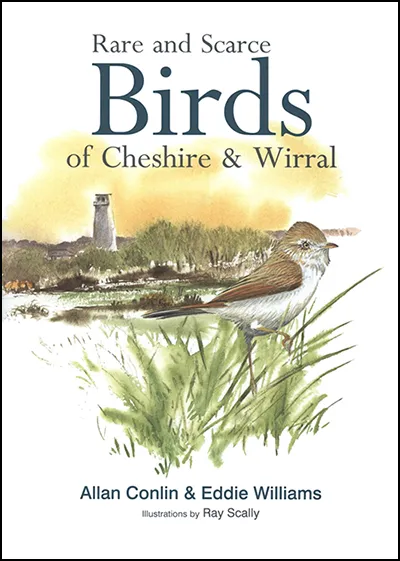
Rare and Scarce Birds of Cheshire & Wirral
Author: Allan Conlin & Eddie Williams
Publisher: Privately published
Published: 2017
Having grown up on the Wirral peninsula and begun my birding career there I was excited to lay my hands on this new book. It begins with four fascinating short chapters. The first provides an overview of the Wirral’s long history of seabird records, most notably of course its sometimes exceptional numbers (and also exceptional views) of Leach’s Petrels Oceanodroma leucorhoa. The other three chapters focus on some of the more dramatic status changes which have taken place in the county in recent years – the invasion of Great White Egrets Ardea alba and Cattle Egrets Bubulcus ibis (the latter now a breeder here), the increased prominence of scoter Melanitta flocks (including Surf Scoters M. perspicillata) and the remarkable 2016 influx of Yellow-browed Warblers Phylloscopus inornatus. It is salutary to think that by the time I left Wirral in the mid-1980s I had never seen any of these latter species in the area. The next segment of the book comprises a useful and very clear map of the area and a site guide to the more notable birding locations, from the sandstone ramparts of Hilbre Island in the north-west via the internationally important Dee and Mersey estuaries to the freshwater wetlands of Sandbach Flashes in the south-east. The meat of the book is of course the 161 individual species accounts. These follow a standard format beginning with an overview of the species’ home range and status in Britain. Then come the details of the Cheshire & Wirral occurrences, with, for the rarer species, all records listed. The texts are solid and accurate – the only error I noted was that Subalpine Warbler Sylvia cantillans has four subspecies, not two as stated here. Some of the systematic list was a real trip down memory lane. I was pleased to be reminded of two famous bird characters – the extraordinary wintering Kentish Plover Charadrius alexandrinus at West Kirby from 1974 to 1979 and the Iceland Gull Larus glaucoides which returned to New Brighton each winter from 1955 to 1985. It was also nice to reminisce about the great seabird autumn of 1978 and my first Leach’s Petrel, Sabine’s Gull Xema sabini and Long-tailed Skua Stercorarius longicaudus, the latter identified thanks to the ‘Witherby Handbook’ in the school library. An equally happy read was the account of the 1979 Asian Desert Warbler Sylvia nana at Meols, my first ‘top drawer’ rarity and the subject of an anxious after-school dash following a tip-off from the late ‘Prof’ Craggs. Since those days the keen birders of Cheshire & Wirral have gone on to find an enviable list of rare birds. The best passerine I found on Hilbre (my first much-loved local patch) was a Firecrest Regulus ignicapilla but in more recent years the members of the Observatory there have gone on to claim much greater prizes including Red-flanked Bluetail Tarsiger cyanurus, Paddyfield Warbler Acrocephalus agricola and even Yellow-breasted Bunting Emberiza aureola! The roll call of star finds across the rest of the county (including American Herring Gull Larus smithsonianus, Little Swift Apus affinis, Black-billed Cuckoo Coccyzus erythropthalmus and White-crowned Sparrow Zonotrichia leucophrys) serves as a reminder that persistence and alertness always pay off. Inevitably, the list of rarities includes many Nearctic species but the simultaneous presence of an Arctic Warbler Phylloscopus borealis and a Red-breasted Flycatcher Ficedula parva in the same garden (at Meols in October 1971) would be impressive anywhere on the east coast. An engaging feature of the book is the inclusion of ‘finder’s accounts’, all of which capture well the subtle mix of shock, panic and joy which can accompany the discovery of a rare bird. The text is relieved by a generous helping of photographs, some of which (for example the Leach’s Petrel against a rearing wave) are simply superb. Others are a little more ‘retro’ but are no less pleasing for that. There are some great habitat shots too, that of a storm-lashed New Brighton being particularly dramatic. Also on show is the terrific artwork of Ray Scally, known to many for illustrating the late Martin Garner’s ‘Challenge’ series. I particularly liked the diminutive and jizzy Greenish Warbler Phylloscopus trochioloides and the sun-drenched Collared Pratincole Glareola pratincola. This book is a superb summary of the rare bird highlights of what is demonstrably a great birding area. For anyone who lives or who has lived in the county this will be an essential purchase but it deserves a wider audience too. Looking back to my formative years on Wirral (birding by bicycle and with no telescope) I wonder what I missed!
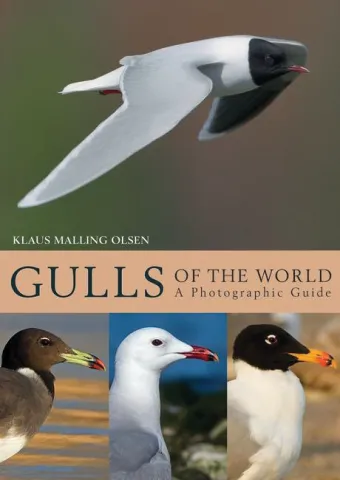
Gulls of the World: a photographic guide
Author: Klaus Malling Olsen
Publisher: Bloomsbury
Published: 2018
This book was originally reviewed by Brian Small on behalf of British Birds. The review can be read on the BB website: https://britishbirds.co.uk/article/gulls-of-the-world-a-photographic-guide/ Is there space on your shelf for another book on gulls? For any ‘gull freak’ the answer will always be ‘yes’, but for more ‘normal’ birders what does this guide offer that others have not? My most-thumbed (gull) books are Gulls of Europe, Asia & North America, by the same author and illustrated by Hans Larsson; Gulls of the Americas, by Howell & Dunn; and, of course, Gulls: a guide to identification, by Peter Grant. There are classic papers too: Lars Jonsson’s article in Alula on Yellow-legged Larus michahellis and Caspian Gulls L. cachinnansas well as his ‘fuscus’ [Lesser Black-backed Gull L. fuscus] paper in Birding World; and the BB papers by Martin Garner and David Quinn on Yellow-legged and Caspian Gulls. There are other articles, and other books; will this new addition become equally well used? In many ways it is unfair to compare this guide to the gulls of the world with those detailed papers, as they have the capacity to deal with the intricacies of gull ageing and identification that a guide of this kind cannot. Indeed, the author professes it to be a ‘companion guide’ to (his own) Gulls of Europe, Asia & North America and to offer a ‘more concise’ view of gull identification. In this respect he has succeeded; while at the same time acknowledging that the minutiae of difficult gull identification are better served by the ‘overwhelming’ plethora of images on the internet, for example at www.gull-research.org, and by detailed papers on individual species. Following a 12-page introductory section on various elements and difficulties of gull identification, the new book moves you swiftly on to the main species accounts. These vary in length according to identification difficulty and where the plumage is most complicated. There are 1–4 pages of dense text, including a map, followed by a series of photographs showing the development of the plumage through a number of age stages and some individual variation (and occasional hybrids/intergrades). There are just eight images for Dolphin Gull Leucophaeus scoresbii, but over 30 images to help us navigate the intricacies of Iceland Gull L. glaucoides, Herring Gull L. argentatus and American Herring Gull L. smithsonianus. Individual species texts deal with ‘Identification’ (which actually is a detailed description of plumages), ‘Moult notes’, ‘Geographical variation’, ‘Hybridisation’, ‘Status, habitat and distribution’, ‘Similar species’ (which has a better discussion of identification than ‘Identification’, as it compares the discussed species with others) and ‘References’. I have to admit that I find it hard to gain a true impression from the detailed written descriptions of gull plumages, especially juvenile, without photographs or artwork. Here’s a description of a juvenile gull: ‘Head and breast muddy brown, streaked or mottled, often with more solid eye-mask. Underbody whitish with greyish brown mottling or spotting along the flanks. Central belly and undertail-coverts whitish with dark markings normally restricted to fine spots or arrow shapes along sides of undertail coverts…’. It could be any one of umpteen species (it’s actually a Caspian Gull). However, as this is a ‘photographic guide’ the focus of attention is on the images. Virtually all of the images are good, well-chosen to illustrate a point and are accompanied by text. I have two comments: firstly, the annotations could have been more detailed – in many instances there is the space – and have pointed out more of the key features; secondly, I think that in quite a few cases the reproduction is a touch too dark or contrasting, with heavy shadow or very dark background. For example, in my copy I find that the mantle tone of ‘Heuglin’s Gull’ L. fuscus heugliniis a shade too dark. A simple header at the top of each page might have been a good idea too, to save you paging back and forth to find out which species you’re looking at. The taxonomy chosen, in my opinion, takes a sensible and proactive view: ‘Mew Gull’ L. (canus)brachyrhynchusis treated as separate from Common Gull, ‘Thayer’s Gull’ L. (glaucoides) thayeri (of particular personal interest) is not lumped with Iceland Gull, nor is Heuglin’s lumped with Lesser Black-backed. Distinct (sub-) species such as ‘Steppe Gull’ L. (fuscus) barabensis, ‘Azores Gull’ L. (michahellis) atlantis, etc., are described in separate accounts, with a strong series of images. I enjoyed this book (the more I use it the more I like it) and, despite a few personal misgivings about one or two elements, I am confident it will find a prominent place on my bookshelf; I am quite sure I shall go back to it time and again.
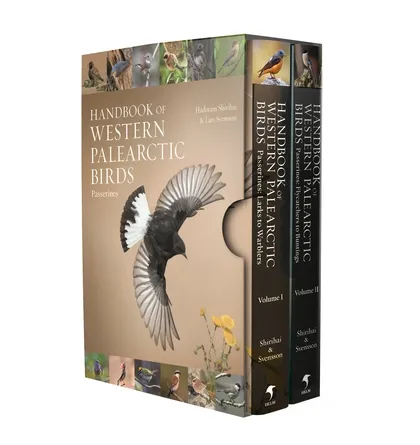
Handbook of Western Palearctic Birds: Passerines
Author: Hadoram Shirihai & Lars Svensson
Publisher: Christopher Helm, London
Published: 2021
Many ornithologists already have the multi-volume Birds of the Western Palearctic or the Concise BWP on their shelves. This new work covers almost the same ground geographically, though adding Iran and all of Arabia and following national boundaries across Africa, but it differs in concentrating on specific and racial identification, ageing and sexing. It is a massive step forward in these areas from the days of BWP, as would be expected from two of the foremost experts in these fields. Breeding and behaviour are not included: this is not a comprehensive ‘handbook’ in the tradition of Witherby and BWP. With the help of more than 5,000 superbly presented photos and 400 maps, however, we can find the very latest information on plumages, moults, calls and measurements – and how to clinch a difficult identification. The authors encourage the use of moult patterns to age birds in the field or from photographs, while the biometric information is clearly aimed more at ringers and museum workers. The photos and maps are all of very high quality and make these books fascinating to browse. Among the highlights for me are the inclusion of marginal species of which I was unaware, like Amethyst Starling, and vagrants such as Chestnut Bunting and Black-naped Monarch. A few established introductions, such as Red Avadavat, are helpfully included but not others – Red-billed Leiothrix, for example. In their ordering of families, the authors reject all recent scientific advances and revert to the work of Voous in the 1970s, on the grounds that our knowledge of avian evolution is still incomplete. This puts, for example, wagtails into the first volume and corvids into the second, which many BTO members would no longer expect. In contrast to this conservative approach, they have independently reassessed species boundaries and the divisions between races, recognising no previous authority. This a step back from the global unity of taxonomic opinion that most birdwatchers eagerly await. I will certainly be consulting this book next time I encounter a passerine I can’t confidently identify. These pages comprise all the options, along with priceless hints and caveats and are – though apparently some photos have been miscaptioned – as comprehensive and authoritative as anyone could wish. Two non-passerine volumes are planned to follow at intervals of three to four years.
Far From Land
Author: Michael Brooke & Bruce Pearson
Publisher: Princeton University Press, Woodstock
Published: 2018
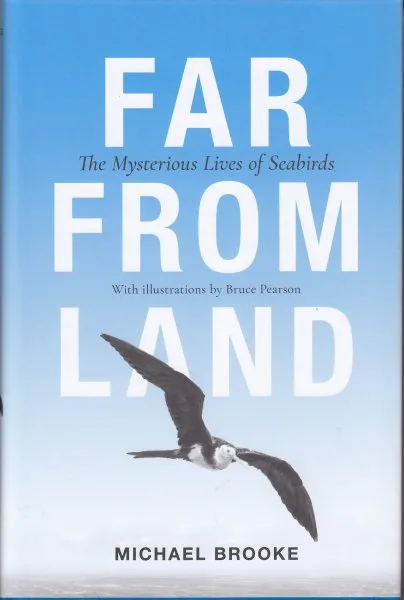
Michael Brooke’s Far From Land; the Mysterious Lives of Seabirds takes the reader on a magical tour of every ocean and some of the remotest locations on the planet through the lives of seabirds. Michael Brooke’s passion for seabirds shines through from every page of this book. As a seabird biologist, he has spent his career studying this enigmatic group of birds. Out of necessity, his, and many other seabird researchers’, studies have mostly been conducted on land, leaving large gaps in our knowledge about where seabirds go when they leave our shores, how they migrate, how they cope with inclement weather conditions at sea, how they locate their food and so on. Over the past 20 years, these questions, and many more, have started to be answered thanks to modern electronic tracking devices; in this book, Brooke reveals what these emerging technologies have uncovered about the lives of seabirds when at sea. The book starts by introducing the reader to the seabird families of the world as well as to the various electronic devices that have provided so much previously unobtainable information. The book then charts the progression of seabirds from fledging, through immaturity to adulthood, revealing what we now know, thanks to electronic devices, about their wanderings as unencumbered juveniles, their migrations as adult birds, the restrictions placed on them when breeding, their abilities to flourish in (what we would consider to be) inhospitable oceanic conditions and their various feeding strategies. The final chapter looks at interactions between humans and birds, historically, currently and into the future. The book contains a series of colour plates along with black and white photographs. Each chapter is also beautifully illustrated by Bruce Pearson, the renowned wildlife artist. Stunning as the photographs and drawings are, I did occasionally find myself wishing for a splash of colour to truly appreciate the beauty of the Red-necked Phalarope or the absurdity of Red-footed Booby feet. Throughout, the text is personalised by the inclusion of anecdotes from Brooke’s days spent researching seabirds as well as occasional, sometimes random, often humorous, asides (we learn, for instance, that Finsbury Park is the London underground station used by supporters of Arsenal Football Club when heading to a home game and that Sooty Shearwaters can fly almost as quickly as Usain Bolt can run a 100m race). This book will appeal to anyone with an interest in seabirds and tracking technologies. It provides a detailed and thoroughly referenced review of the knowledge these technologies have imparted, yet is written in an easily accessible, highly readable, style. At times, it does career though numerous different species to illustrate a point, which can be a little confusing, although understandable in the context. The book is packed with fascinating discoveries and revelations – just how and why penguins leap so suddenly from the water onto an ice shelf being one of my personal favourites. What we have learned to date from these relatively new technologies is astonishing; researchers are now able to tell, remotely, where a bird is, whether it is flying or swimming, how deep it is diving, whether (and when) it is eating and so on. The potential for future discoveries as technologies advance is truly exciting and I cannot wait for the sequel to this book in 20 years’ time. I would highly recommend Far From Land to anyone with an interest in the subject.
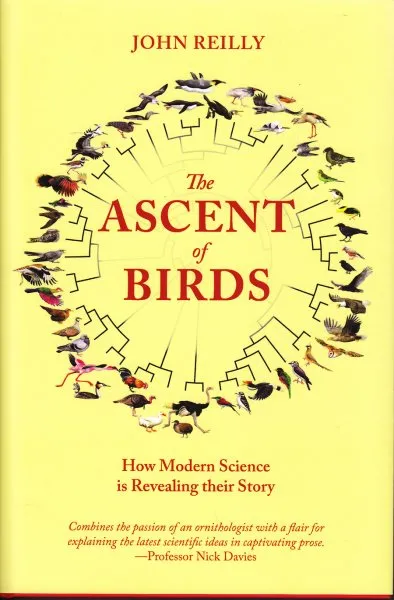
The Ascent of Birds: How Modern Science is Revealing their Story
Author: John Reilly
Publisher: Pelagic Publishing, Exeter
Published: 2018
If, like me, you are continually perplexed by the seemingly random re-ordering of birds on the British List every year, then this is the book for you. Any list of species needs to be ordered in some way, and all modern lists try to reflect the order in which species diverged, from earliest to most recent. Until the ground-breaking work of Charles Sibley in the mid 1980’s, a relatively stable consensus had emerged based largely on anatomical and physical characteristics. Unfortunately, these turn out not to be terribly helpful, distantly related species may look similar because they occupy similar habitats, and closely related ones may diverge markedly to fill unoccupied niches. The rapid advancement in molecular techniques is now providing, in ever finer detail, a picture of the true relationships, based on genetic differences. In 27 chapters, each based around a particular bird group, this book follows these relationships and the evolutionary adaptations that have led groups to diverge in different ways. The author was a medical scientist during his working life and this shows: physiological and biochemical adaptations are well covered, ecological ones perhaps a little less so. Although he doesn’t shy away from details (concentration is required in one or two places), the writing is engaging and the story never less than fascinating, so I found it hard to put down. Is this the last word on the topic? Undoubtedly not. Two initiatives: the Birds 10,000 Genomes (B10K, https://10k.genomics.cn) and the just launched OpenWings (blog.openwings.org) projects aim to sequence all or part of the genomes of every bird species in the same manner over the next few years; more surprises undoubtedly await. In the meantime though, this ranks among the best popular science books and provides a great guide to our current understanding of where, and how, birds evolved.