Read reviews of the books we hold in the Chris Mead Library, written by our in-house experts. A selection of book reviews also features in our members’ magazine, BTO News.
Featured review
All the Birds of the World
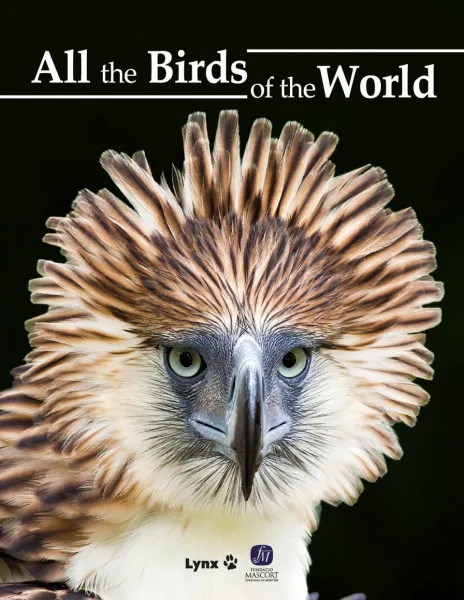
Lynx have had a long-term project to produce an exhaustive guide to the birds of the world. It started out with the 17 volumes of the Handbook of the Birds of the World (1992–2013) which has family and species accounts for all birds. This was followed by the two volumes of the Illustrated Checklist of the Birds of the World (2014–2016). They have now published the third and final stage of this avian odyssey with this current book.
Search filters
Birds and Us: A 12,000 Year History, from Cave Art to Conservation
Author: Tim R Birkhead
Publisher: Viking Books, London
Published: 2022
The scope of Birds and Us is impressive, beginning 8,000 years ago with Neolithic cave art and ending on a 2018 undergraduate trip to Bempton Cliffs. As BTO Vice-president Prof Tim Birkhead takes us through the millennia in between, he weaves together art, religion and science with rich historical detail, mini-biographies and personal anecdotes. The book is written clearly and directly, and the result is a highly engaging journey which will appeal to anyone interested in the relationship between human society and birds. The book brims with factual information, which at most times is threaded well through the overarching narrative. Learning something new while reading Birds and Us is almost inevitable, given the variety of subjects it covers: ancient Egyptian tomb paintings, the work of Aristotle and Pliny the Elder, the Bayeux Tapestry, Renaissance anatomical dissections, Aztec culture, the early efforts to document birds in Britain and Europe, Darwin, the Church, pre-Raphaelite art, and the rapid development of ornithology and behavioural ecology as ‘proper science’ throughout the 20th century. It should be made clearer, though, that Birds and Us is a Eurocentric labour of love. Although the preface tells us the book will take us across several continents, the few portions of the book focused on areas outside Europe are framed by the contributions of appropriated knowledge, natural resources and cultural artefacts to Western science. The book lacks an explicit description of its limitations in this respect, something which emphasises its inconsistent acknowledgements about the footprint of colonialism on ornithology. The final chapters may be of particular interest to BTO readers, detailing the shift towards birdwatching rather than collecting (helped along, of course, by the advent of binoculars), the formation of BTO in 1932, and the creation of the journal Bird Study to document the results of BTO’s surveys. Several key figures for whom BTO holds archival documents are also mentioned, including Emma Louisa Turner, a pioneering early photographer of birds. Throughout the book, the historical narrative is interspersed with anecdotes from the author’s own journey through birdwatching and ornithology, culminating in his work observing Guillemot behaviour on Skomer for over five decades. This is one of the book’s greatest strengths: by presenting the development of society’s relationship with birds in parallel with his own, Prof Birkhead transforms what could have been a distant, dry history into something much more intimate. His personal reflections encourage us to consider our own unique experience of birds, how this was shaped by culture, and how it may evolve as we move into a future of biodiversity and climate crisis.
Galapagos Crusoes: A Year Alone with the Birds
Author: Bryan Nelson & June Nelson
Publisher: Bradt Travel Guides, Chalfont St Peter
Published: 2022
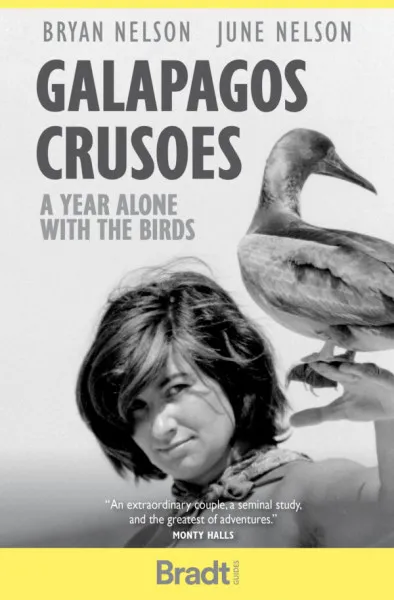
Galapagos Crusoes: A Year Alone with the Birds is an update to Bryan Nelson’s original 1968 book Galapagos: Islands of Birds, with additional stories from June, his wife. The two of them spent a year on two islands in Galapagos – Tower and Hood (known as Genovesa and Española today) - studying seabirds. As such, the book is a great introduction to the different species found on the Islands with in-depth chapters on the various mammals, reptiles, insects and birds that the Nelsons shared their islands with. These include fantastic descriptions of a range of wildlife from Galapagos Sea Lions to Lava Lizards. There is even more detail about the birds that they did their research on – the boobies (Blue-footed, Red-footed and Nazca) and the Waved Albatross – which is a treat for anyone who has an interest in seabirds, and much of it is still relevant today. The book also provides incredible stories and insight into what it was like to live in the Galapagos Islands in the 1960s, both on the uninhabited islands that the Nelsons chose to do their research and in general. The Islands are 600 miles off the coast of Ecuador and, even with today’s technology, they are a tricky place to live. So imagine what it was like in the 1960s when almost everything had to be imported by boat from the mainland, and healthcare was almost non-existent. June’s additions to Bryan’s initial book really bring to life the day-to-day reality of living on a deserted island, several hours’ boat journey away from even Galapaguenian civilisation. There were obvious challenges to overcome, such as the fact that the majority of the islands lack freshwater, which they planned for meticulously. Nothing could prepare them, however, for experiences including sharing their tent with curious birds and giant centipedes, constantly having to fix equipment that was not made for the harsh Galapagos environment, and working out what to wear when meeting HRH Prince Philip onboard the Royal Yacht Britannia at the end of their trip. This really is a book for everyone, whether you’re interested in wildlife in general, birds in particular, the Galapagos Islands, or the idea of living on an uninhabited island in the middle of nowhere.
Man and Bird in the Palaeolithic of Western Europe
Author: Anne Eastham
Publisher: Archaeopress Publishing Ltd, Oxford
Published: 2021
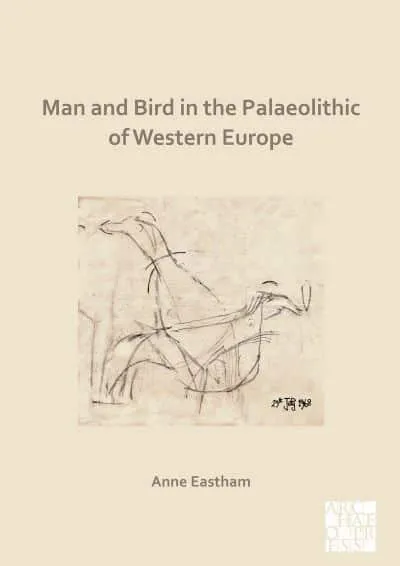
This book attempts to straddle the two disciplines of ornithology and archaeology, by fusing the author’s stated passion for birds with their obvious deep knowledge of early hunter-gatherer communities in Europe. With 134 pages of text out of 149 altogether, do not be fooled into thinking this will be a light or easy read; it is a dense academic piece. The first chapters describe aspects of the ecology and diversity birds, and lives of the humans and Neanderthals that lived alongside them in Palaeolithic Europe, based on evidence from archaeological dig sites across the continent. A chapter on ancient bird catching techniques was most interesting to me as a ringer. Two chapters devoted to birds in Paleolithic art, images found on cave walls and images on items such as bones, were fascinating, shedding light on the cultural significance of birds to hunter-gatherer societies which I felt gave important context to the significance we place on birds today. The value of birds as a resource to Paleolithic humans is also discussed, again, drawing on evidence gathered from numerous dig sites. The author’s first-hand experience at many of these sites is evident throughout. The most interesting part of the book for me was the case study focused on Snowy Owls in the Atlantic Pyrenees, and the apparent social importance this species had for Paleolithic communities in that part of Europe. This was based on what appeared to be intensively processed bone remains from a large number of birds in a cave system. Hints at how the Snowy Owls were used by the cave inhabitants include cut marks and burns on the bone fragments, and the presence of earthy pigments on some leg bones, which as well as offering tantalising clues about the lives of hunter-gatherers in that period, also say something about the past ecology of a species that now resides far to the north. Unfortunately, this book suffers from a severe lack of editing. There are numerous spelling mistakes and grammatical errors that make it a difficult read at times, and in some cases, it is barely comprehensible. As well as benefitting from a proofreader, I felt the book could have done with co-authorship with an ornithologist as it was clear that archaeology is the author’s profession, but ornithology is a secondary interest. I cannot speak to the quality of the archaeological information presented in the book, but the ornithological information is sometimes inaccurate; for example, scientific names used are often out-of-date or inconsistent, and ornithological papers are distinctly lacking in the reference list. The author uses many technical terms, and whilst I understood most of the ones related to birds, I struggled with the archaeological ones, and would have liked a glossary. I am sure an archaeologist reading the same book would wish for a glossary of ornithological terms. This is a book that is definitely aimed more at students of Palaeolithic archaeology than birders, but if one can get past the obvious errors and inaccuracies and has a primer to studies of the Palaeolithic to hand, it may offer a window into the interactions between birds and people during the earliest part of human prehistory.
The Secret Life of Birds
Author: Moira Butterfield & Vivian Mineker
Publisher: Happy Yak, London
Published: 2022
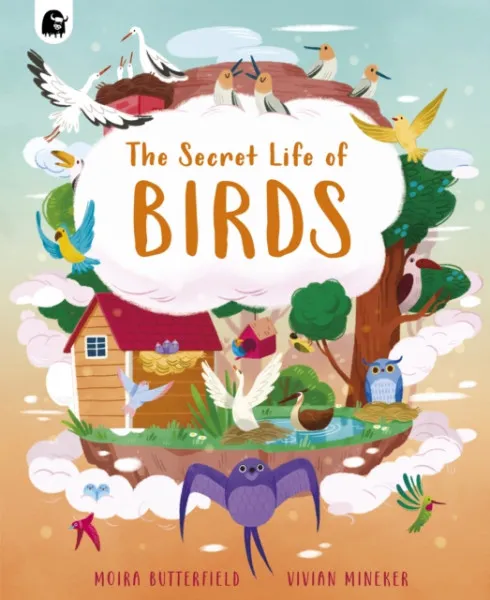
The Secret Life of Birds is a collection of delightful stories and engaging facts, which imparts a love of birds and of nature on the next generation, inspiring them to look after the world around them. Readers are invited to follow the book's guide, Speedy the Swift, as they fly through the pages, introducing us to their bird friends who teach the reader about such things as anatomy, the science of feathers and moulting, diet and migration. Interspersing the narrative are traditional stories from around the globe, introducing the reader to how different cultures respect birds too. As well as the narrative and story, there are facts dotted into the book that adults and children alike will find fascinating, such as did you know that Swift chicks do press-ups on their wing tips to make themselves stronger? This is a joyous book, with bright illustrations, that really aims to impart the love of birds to its readers. It mixes natural history with a splash of fantasy, creating a book to be poured over time and again.
How Birds Live Together: Colonies and Communities in the Avian World
Author: Marianne Taylor
Publisher: Princeton University Press, Princeton & Oxford
Published: 2022
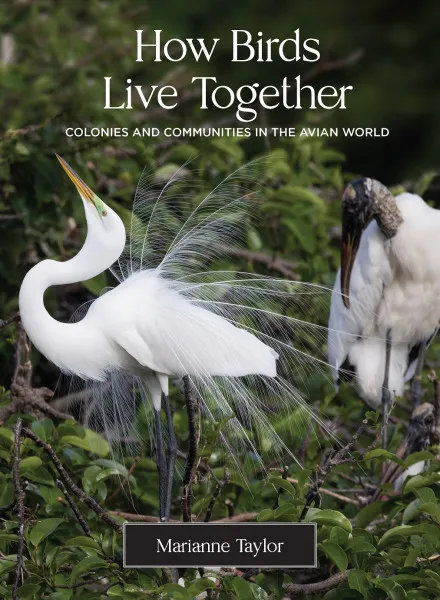
How Birds Live Together offers an overarching view of the different and unexpected ways that birds nest and interact together. Many differing nesting habits are covered, from seabird cliff colonies to burrow nesters, to predator and prey nesting together and even non-social nesters, with discussions on the challenges, benefits, hazards, and social dynamics of each style of living, and features a wealth of species as examples. The author, Marianne Taylor, has clearly done extensive research and showcases colonies from around the world, including Scottish cliff colonies, the Everglades National Park and the Namib Desert. The chapters are full of glossy photographs and maps, with many case studies discussed and species and colony profiles included. As the publisher is American, there is the odd Americanism slipped in, so there is the opportunity for learning new words too, such as 'murre', otherwise known as a Guillemot! The chapters are very readable and it is easy to pick up the narrative where you left off, making it accessible for someone entering into the world of colony birds.
The Extraordinary World of Birds
Author: David Lindo & Claire McElfatrick (illustrator)
Publisher: Dorling Kindersley, London
Published: 2022
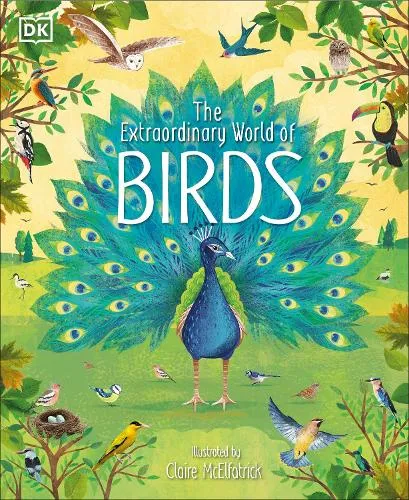
An expertly written and beautifully illustrated book, that does as the title suggests - convince children that the bird world is in fact extraordinary. Covering all aspects of birds’ lives, the author takes the reader on a journey of discovery, from teaching children about the ancestry of birds and their behaviours, to offering ways they can help protect them such as setting up feeders and making a bird-friendly garden. Furthermore, children will delight in the excitement of finding out new and interesting bird facts, and these are accompanied by bright and colourful illustrations which help bring the book to life. The author has also included a page on how to get into birding, which is sure to spark curiosity and encourage participation with birding in the future. Despite this book being targeted at children, do not let this deter you from reading it, as it is brilliant, and everyone (including adults) is sure to learn something new. Both myself and my year 1 class loved it and it is quickly becoming the class’s favourite book. Overall, I feel this book by David Lindo will not only help inspire children’s interest in birds, but also a desire to protect them for the future, and is well worth a read.
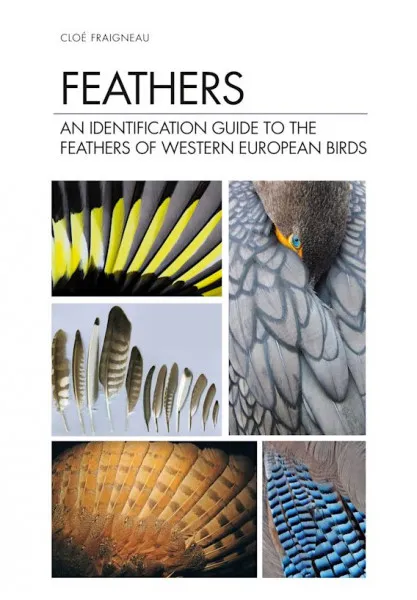
Feathers: An Identification Guide to the Feathers of Western European Birds
Author: Fraigneau. Cloé
Publisher: Helm, London
Published: 2021
The pattern and colouration of feathers provide valuable and often memorable clues to bird identification. Taken in isolation, however, feathers can be surprisingly hard to identify, particularly for those who do not have experience of birds in the hand. If you have even the slightest inclination to identify the feathers that you come across, this reference guide is a revelation – not to mention a thing of great beauty! The book comprises eight chapters, including introductory sections on feather collection and preservation, the identification process and feather adaptations, and an extensive appendix. The introductory chapters are all packed with useful information and practical tips that help to narrow down the options when faced with an unfamiliar feather. After these come a series of identification exercises, an inspired inclusion that adds a genuinely interactive element to aid learning and prepare the reader for the challenges of identifying lone feathers. The species descriptions that follow account for about two-thirds of the content and cover more than 400 species. These are treated in groups of birds with similar feathers and/or lifestyles: passerines, near-passerines, aquatic birds, terrestrial birds of dry habitats (galliformes, bustards) and birds of prey. Whilst this arrangement is at odds with the way standard bird identification guides tend to be organised, it makes perfect sense when faced with a feather in isolation: convergent evolution has led to many examples of quite distantly-related species having similar-looking feathers. The distinctive criteria of the feathers of each group are presented, before a detailed description of the characteristics of those of each species within it. There are comparison tables of measurements of the larger feathers (typically wing and tail) for sub-groups of species, for example the flycatchers, the buntings, and pipits and wagtails. Other helpful tables include ones that compare primaries and secondaries separately, and the colour characteristics of feathers of birds from the same grouping. Finally come the plates, which are a joy to behold! These feature high-quality photographs of the most distinctive feathers, typically from between two and six species per page, with each page being just under A4 dimensions. For many species, there are also smaller photographs of a whole wing which provide valuable context, particularly for readers who are not familiar with the typical shapes of the different wing feathers. It is impossible to do this book justice in a short review but suffice to say that it is the most visually appealing, informative and educational bird book I have opened in a very long time!
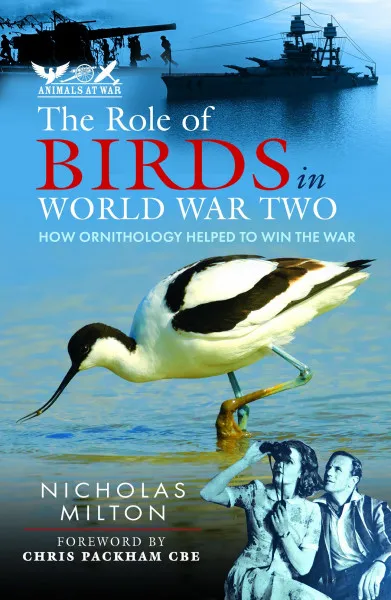
The Role of Birds in World War Two: How Ornithology Helped to Win the War
Author: Milton, Nicholas
Publisher: Pen & Sword History, Barnsley
Published: 2022
Stories such as War Horse have brought the history of animals in warfare into the public consciousness. Their significant contribution was formally recognised in 1943 through the creation of the PDSA Dickin Medal awarded for gallantry and devotion to duty, and the important role played by birds in World War Two is clear from the fact that pigeons are the most numerous recipients. You would be forgiven for thinking this will be a book about messenger pigeons. Whilst individuals such as Winkie, who delivered a message leading to the rescue of an aircrew who had crash-landed in the North Sea, are included, Nicholas Milton’s fascinating work goes beyond individual tales of feathered valour. From the avian origins of the Government’s Mass Observation programme to record everyday life in Britain, to military personnel and Prisoners of War enjoying birdwatching in times of adversity, this book explores the numerous ways in which birds had an impact in the Second World War. Amongst the stories of birdwatchers there is welcome mention of several key figures in BTO history. Max Nicholson, the central founder of BTO, held important positions during the war in the Ministries of Shipping and Transport, but would break away from meetings to listen to a Black Redstart singing outside his office. Bernard Tucker, the first BTO Secretary, makes an appearance in a story about Peter Scott’s discovery of a White-fronted Goose on the Severn Estuary. One of Tucker’s successors, James Fisher, published the guide Watching Birds during the Blitz in 1940 which went on to sell over three million copies. As the author notes in his preface, nature was as important to people’s mental well-being during the Blitz as it has been during the COVID-19 pandemic. In addition to the direct contribution made by birds themselves, The Role of Birds in World War Two also highlights their more indirect impact on the lives of those who studied them. It is an unusual and informative approach to a subject about which not much has previously been written, which should appeal to anyone with an interest in history as much as birds.
Short-eared Owls
Author: Bryan Benn
Publisher: Bryan Benn
Published: 2021
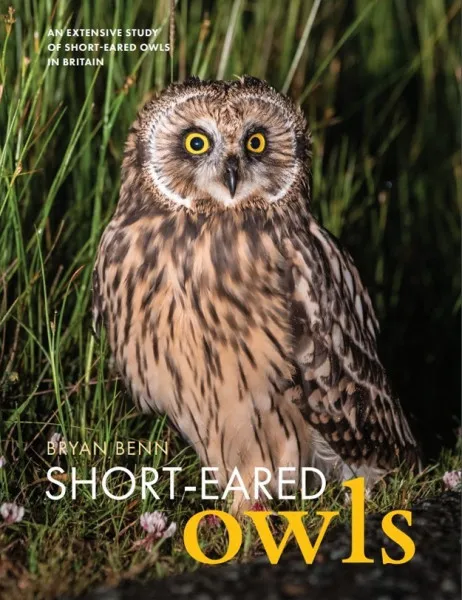
This book is a remarkable achievement. It describes one man’s study of Short-eared Owls over 10 years across different parts of Britain. While the main strengths of the book are those personal observations supported by a collection of stunning photographs (again the work of one man), Bryan Benn has put these into context in a series of carefully thought out chapters. Subjects covered include appearance, habitats, behaviour (including breeding, hunting and social), movements, voice and conservation. While some observations are placed successfully into context, only a limited amount of literature appears to have been reviewed. As a result this is not a definitive monograph but as Short-eared Owls remain poorly understood, it is a valuable source of information. I will certainly be using it repeatedly. It is even more remarkable when you consider this is the result of one man’s work, not just the observations and photographs but notably the determination to write and self-publish what is a very attractive book. Not only a valuable addition to information about a poorly understood species, this book also demonstrates many things that others could aspire to – tenacity to study a bird, meticulous recording of observations and determination to make it all accessible. The book is available from the cafe at Elmley NNR at £30 per copy to visitors, or £35 plus P&P for online sales.