Spring migration finishes up in 2026.
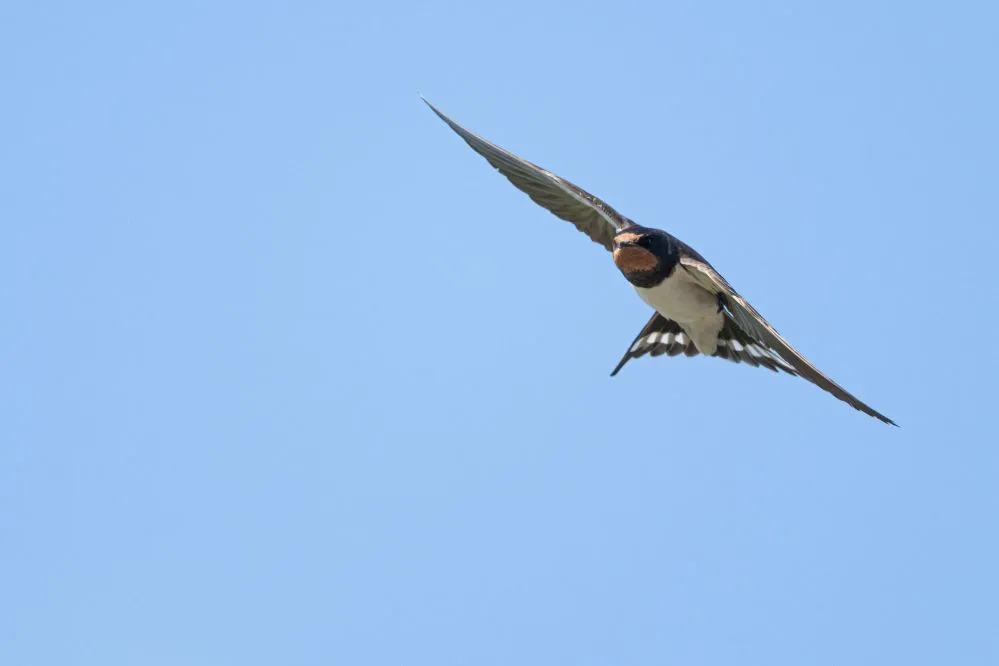
One of the interesting features of birding is that every year is a bit different and this year has been no exception. In many respects 2026 saw an early spring, but as always patterns of arrival have varied between species.
We know that many summer migrants are arriving earlier in response to climate change, but even compared to other recent years, this year saw earlier arrivals of Chiffchaff, Blackcap, Garden Warbler, Whitethroat, Reed Warbler and Sedge Warbler.
It was also a fairly early spring for Cuckoo, with the main arrival taking place in mid April. Moreover, Cuckoos were reported more frequently across the spring than in most other recent years. Hopefully this indicates a good last year for Cuckoos in terms of breeding success and survival, but we will have to await the results of this year’s BTO/JNCC/RSPB Breeding Bird Survey before we can say this with more confidence.
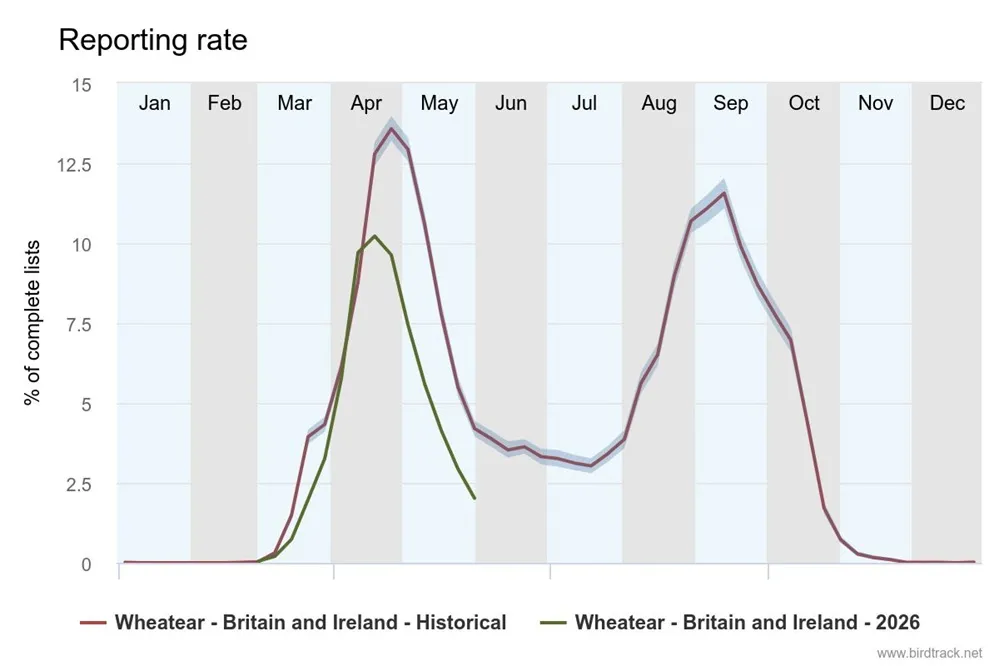
Wheatears were initially late to arrive before the reporting rate picked up in the first half of April to catch up with the historic curve. However, reports subsequently dropped off with the reporting rate well below historic levels for the rest of the spring, reflecting the declining population of this species.
Reporting rates for Swallow and House Martin have also been well below historic levels, but Sand Martins seem to be faring better, with the reporting rate above the historic curve throughout the spring.
Mid April saw an early arrival of Swifts, but the reporting rate then fell behind the historic curve in May, perhaps the result of a relatively cold first half of the month. Spotted Flycatchers may also have been held up by these conditions, with the steepest increase in the reporting rate not coming until the second half of May this year.
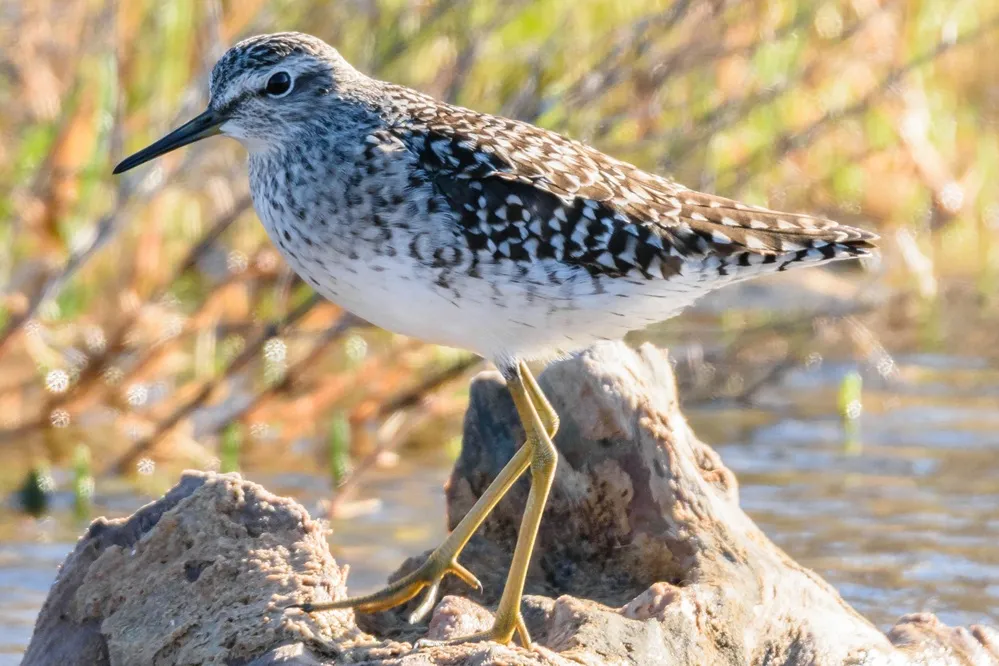
As well as birds coming to breed in Britain and Ireland, spring also sees many birds moving through on passage. For some species, easterly winds are key to bringing them here, but timing is everything! This spring saw a period of predominantly easterly winds in late April and early May, which resulted in a very good year for sightings of Wood Sandpiper and Temminck’s Stint, and a few days where large numbers of Black Terns moved through Britain. However, the latter part of the month, which tends to be best for passerine ‘drift migrants’, had less productive conditions. Consequently, species like Red-backed Shrike, Bluethroat and Icterine Warbler have been seen less often this spring than in a good year.
On the west coast of Scotland, there were some good days of skua passage, with a total of 498 Long-tailed Skuas passing Aird an Runair, North Uist, during May. While this was a lot more than 2025’s total of 63, it was also far below the record of 4,640 in 2015! The south coast of England also experienced some good days of skua passage, with Dungeness, Kent, recording 157 Pomarine Skuas during the spring.
As is always the case during migration periods, there have also been many rarities found, including a Northern Parula on Fair Isle – the first spring record here of this American warbler – and Ireland’s first Trumpeter Finch in Wexford.
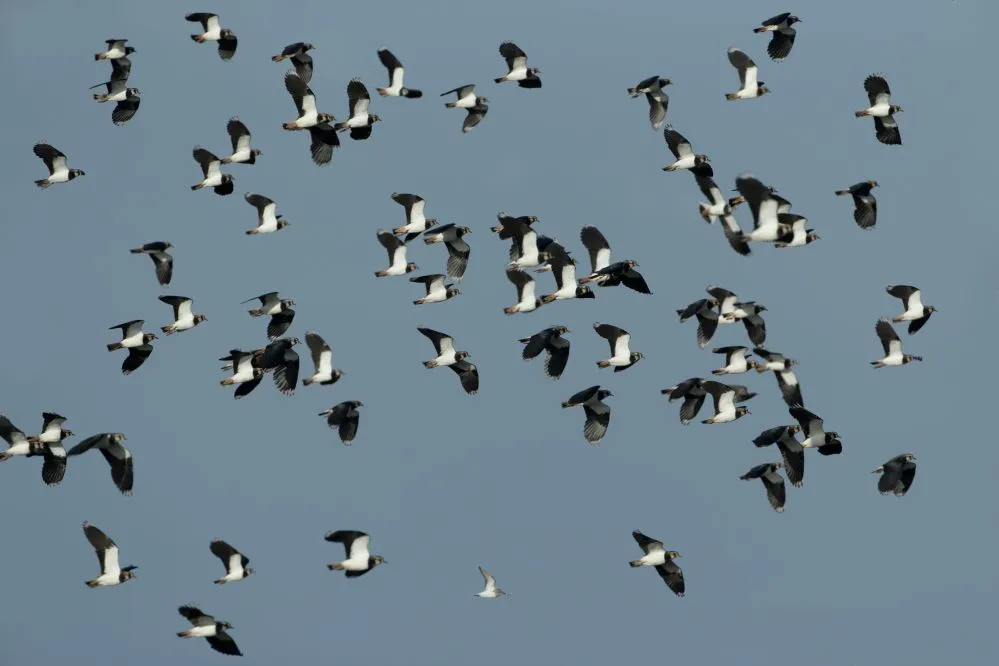
While the human calendar may consider us to now be entering summer, in the birding calendar we are arguably on the verge of autumn! Our famous BTO satellite-tagged Cuckoos could start moving south towards their wintering grounds any day now, and within the next week we will likely receive the first reports of Green Sandpipers returning from their Baltic and Fennoscandian breeding grounds, followed soon after by Spotted Redshanks and the first Wood Sandpipers of the autumn. Meanwhile, Curlew and Redshank will start building up in number at the coast, having mostly bred further inland, and flocks of Lapwing will congregate around wetlands again. Wader passage will ramp up further in July, and southbound Willow Warblers will likely be the first sign of passerine migration from mid July.
This will be the last migration blog for a while, before the blog returns for the main autumn migration period. Thank you to everyone who has added their sightings to BirdTrack this spring and helped us monitor the migration and I wish you an enjoyable summer.
Add your sightings to BirdTrack
Help us track the departures and arrivals of migrating birds by adding your sightings to BirdTrack. It’s free, quick and easy, and signing up also allows you to explore trends, reports and recent records in your area.
Author(s)

Tom Jordan