Cuckoo
Introduction
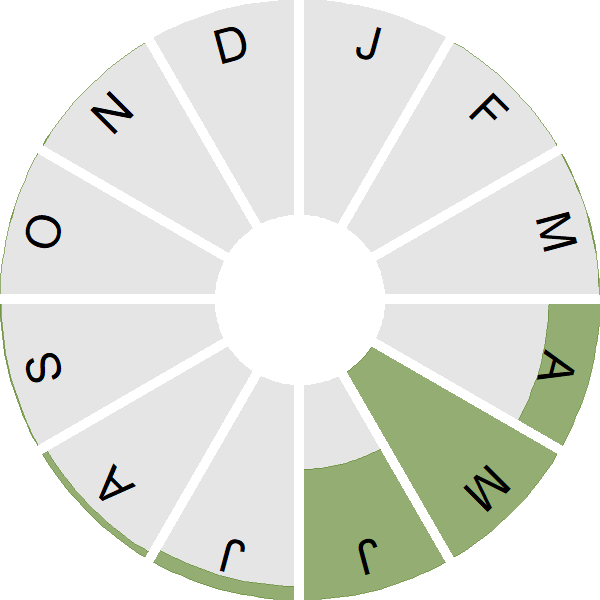
Cuckoo is a summer visitor to our shores, the males arriving in late April and leaving again as early as the first week of June.
Cuckoo numbers are declining in Britain, albeit with much regional variation, and the bird's familiar two-note call has been lost from many of its former haunts. It is the populations in the southern half of Britain that have undergone the greatest decline, something that has been linked to the different routes used by migrating Cuckoos as they travel to and from their African wintering grounds.
Since 2011, BTO researchers have been fitting tracking devices to Cuckoos breeding in Britain and elsewhere as part of the Cuckoo Tracking Project. This important research revealed the migration routes and wintering areas of British Cuckoos for the first time. While some birds migrate south-east via Italy, others take a western route. Interestingly, all of the birds winter in the same part of central Africa, and all of them return via the western route in spring. If you would like to support this ground-breaking research, please consider sponsoring a Cuckoo.
- Our Trends Explorer gives you the latest insight into how this species' population is changing.
Key Stats









Identification
ID Videos
This section features BTO training videos headlining this species, or featuring it as a potential confusion species.
Cuckoo
Songs and Calls
Song:
Song:
Status and Trends
Conservation Status
Population Change
The CBC/BBS trend shows Cuckoo abundance to have been in decline since the early 1980s. The species was moved in 2002 from the green to the amber list, and in the 2009 review met red-list criteria. The sensitivity of CBC to change in this species may have been relatively low, mainly because Cuckoo territories were typically larger than census plots (Marchant et al. 1990). BBS shows a continuing strong decline in England, but not in Scotland, where a moderate increase has occurred. In Wales, the species declined in the first 15 years of BBS but have been stable over the most recent ten year period. The BBS map of change in relative density between 1994-96 and 2007-09 indicates that decrease has been most severe in Northern Ireland and southeastern England and that increase has occurred in northwestern Scotland. Cuckoos increased significantly during 1994-2006 in lowland semi-natural grass, heath and bog but decreased in almost all other habitat types (Newson et al. 2009). Results from analyses of data from two citizen science schemes, including BirdTrack, suggest regional differences in the UK may date back much earlier, with tentative comparisons made with data from 100 years ago (Sparks et al. 2017). There has been a decline across Europe since 1980 (PECBMS: PECBMS 2020a).
Distribution
Breeding Cuckoos are found in over three-quarters of 10-km squares, in a range of habitat types, although they reach highest densities in upland and marginal habitats. Dartmoor, Exmoor and the New Forest in England, and the Brecon Beacons in Wales, hold relatively high densities but abundance peaks in western and northern Scotland and in western Ireland.
Occupied 10-km squares in UK
2008–11
or view it on Bird Atlas Mapstore.
European Distribution Map
Distribution Change
The Cuckoo's British & Irish range contracted by 10% between 1968–72 and 1988–91.
Change in occupied 10-km squares in the UK
from 1968–72 to 2008–11
or view it on Bird Atlas Mapstore.
Seasonality
Cuckoos are summer visitors, arriving from mid-April with adults rapidly disappearing in June after egg laying, followed by a long tail of rarely-reported juveniles into early autumn.
Weekly pattern of occurrence
The graph shows when the species is present in the UK, with taller bars indicating a higher likelihood of encountering the species in appropriate regions and habitats.

Habitats
Breeding season habitats
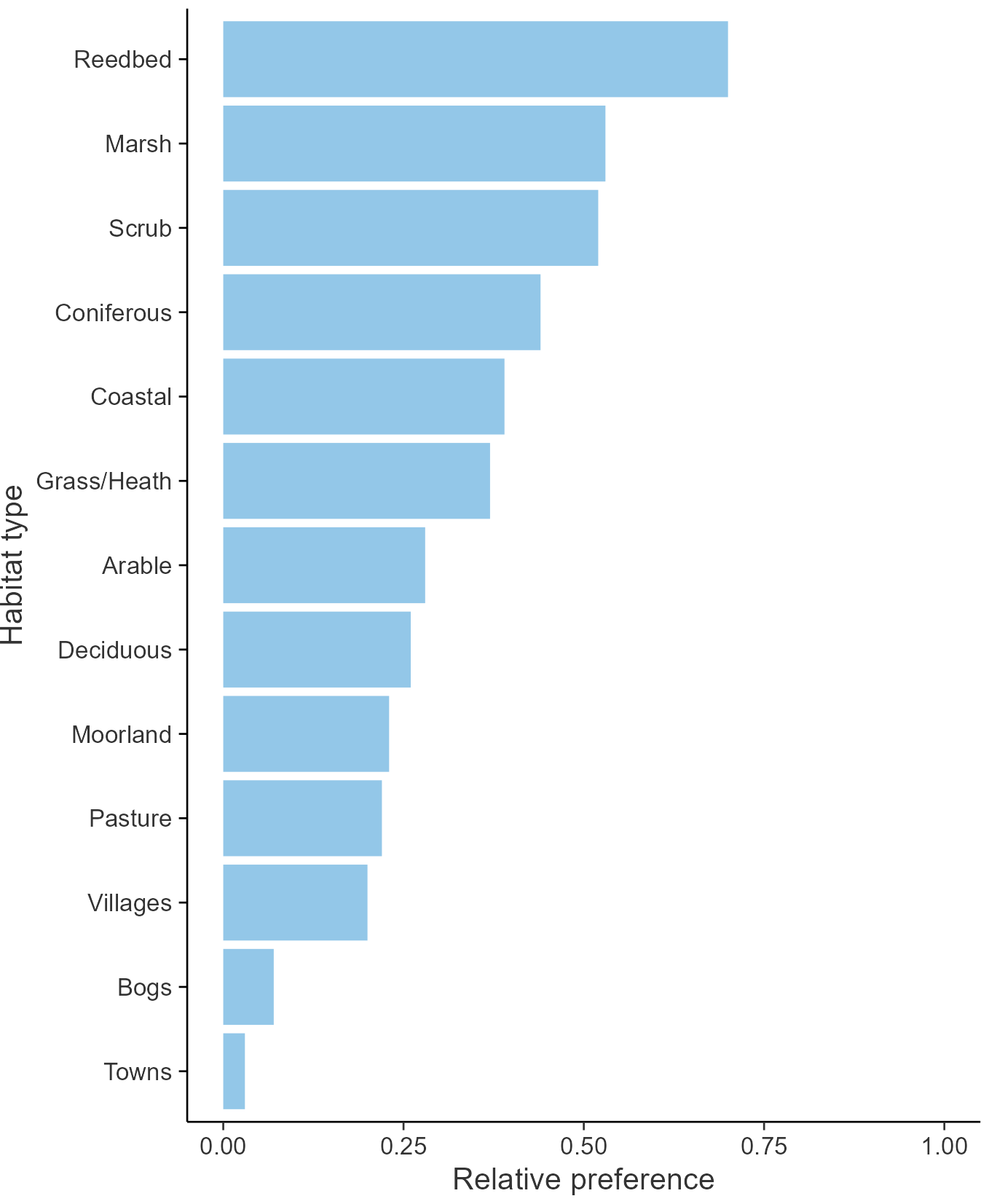
Relative frequency by habitat
The graph shows the habitats occupied in the breeding season, with the most utilised habitats shown at the top. Bars of similar size indicate the species is equally likely to be recorded in those habitats.
Movement
Britain & Ireland movement
Foreign locations of birds ringed or recovered in Britain & Ireland
Dots show the foreign destinations of birds ringed in Britain & Ireland, and the origins of birds ringed overseas that were subsequently recaptured, resighted or found dead in Britain & Ireland. Dot colours indicate the time of year that the species was present at the location.
- Winter (Nov-Feb)
- Spring (Mar-Apr)
- Summer (May-Jul)
- Autumn (Aug-Oct)

European movements
EuroBirdPortal uses birdwatcher's records, such as those logged in BirdTrack to map the flows of birds as they arrive and depart Europe. See maps for this species here.
The Eurasian-African Migration Atlas shows movements of individual birds ringed or recovered in Europe. See maps for this species here.
Biology
Productivity and Nesting
Nesting timing
Egg measurements
Clutch Size
Survival and Longevity
Survival is shown as the proportion of birds surviving from one year to the next and is derived from bird ringing data. It can also be used to estimate how long birds typically live.
View number ringed each year in the Online Ringing Report.
Lifespan
Biometrics
Wing length and body weights are from live birds (source).
Wing length
Body weight
Ring Size
Classification, names and codes
Classification and Codes
- Order: Cuculiformes
- Family: Cuculidae
- Scientific name: Cuculus canorus
- Authority: Linnaeus, 1758
- BTO 2-letter code: CK
- BTO 5-letter code: CUCKO
- Euring code number: 7240
Alternate species names
- Catalan: cucut comú
- Czech: kukacka obecná
- Danish: Gøg
- Dutch: Koekoek
- Estonian: kägu
- Finnish: käki
- French: Coucou gris
- Gaelic: Cuthag
- German: Kuckuck
- Hungarian: kakukk
- Icelandic: Gaukur
- Irish: Cuach
- Italian: Cuculo
- Latvian: dzeguze
- Lithuanian: paprastoji gegute
- Norwegian: Gjøk
- Polish: kukulka (zwyczajna)
- Portuguese: cuco
- Slovak: kukucka obycajná
- Slovenian: kukavica
- Spanish: Cuco común
- Swedish: gök
- Welsh: Cog
Research
Causes of Change and Solutions
Causes of change
Recent tracking work suggests that reduced survival on migration could be a primary driver of population decline in Cuckoos. However, this may not be the only driver and a number of other hypotheses have been proposed.
Further information on causes of change
Recent tracking work from nine tagging locations across the UK has identified that Cuckoos nesting in the UK use two distinct routes to reach the same wintering grounds, and identified a strong correlation between population trends in each area and the proportion of Cuckoos following each migration route. This suggests that recent problems on the western migration route through Spain may have contributed to the population decline (Hewson et al. 2016).
Decreased food supplies on the breeding grounds has also been suggested as a possible cause (Glue 2006, Denerley 2014), following the rapid declines of many British moth species (Conrad et al. 2006), important prey items in Cuckoo diet. Denerley et al. (2018) found that Cuckoo presence in Devon was related to that of macro-moth prey species, and suggested that the trends in prey species could explain the differing UK trends and also an increasing association with semi-natural sites such as heathland and wetland rather than lowland farm habitats. Based on both molecular DNA sequencing of faeces and the study of recent photos from crowd sourcing, Mills et al. (2020) concluded that Cuckoo diet was largely similar to that previously documented prior to the decline; they also surmise that this could explain the regional patterns of decline.
Given that the Cuckoo is a migrant, and the fact that many long-distance migrants have been found to be declining (Sanderson et al. 2006, Hewson & Noble 2009), factors operating on wintering grounds have also been suggested as a possible primary driver of Cuckoo declines (Glue 2006, Payevsky 2006, Newson et al. 2009). However, as trends differ across the UK, the fact that the tracking work ( Hewson et al. 2016) found that all Cuckoos used the same wintering grounds suggests that over-winter factors can be discounted.
Cuckoo abundance may be related to their breeding success, which might in turn be determined by the abundance of breeding success of host species. Evidence from BBS data show strong variation in Cuckoo population trends between habitats, which may reflect regional differences in the main hosts and differing trends in Cuckoo breeding success among those host species (Newson et al. 2009). Douglas et al. (2010b) found a strong positive correlation between change in Cuckoo numbers and numbers of Meadow Pipit in the previous year, also based on BBS data, but this only accounted for 1% of the decline in Cuckoo populations so this is unlikely to be a primary driver. A study from the 1980s using Nest Record Scheme data also found changes in usage of some key host species (Brooke & Davies 1987) but the authors also thought that this was unlikely to be the main cause of population decline. There has perhaps been a disproportionate emphasis on the role of brood parasitism aspects in Cuckoo decline.
Another hypothesis for the decline of Cuckoos relates to phenological mismatch in the timing of host and Cuckoo breeding. There is evidence relating to climate-induced changes in phenology. The extent to which this may be driving population declines is unclear, although modelling suggests that climate change may have had a negative impact on the long-term trend for this species (Pearce-Higgins & Crick 2019). Newson et al. (2016) found that Cuckoo had not changed its arrival date between the 1960s and the 2000s (the date advance slightly by c.3 days but this change was not significant). Douglas et al. (2010b) used BBS data and found that in recent decades, earlier breeding Dunnock nests have become less available to Cuckoos, whilst those of Reed Warblers more so. However, they suggested that changes in host phenology are likely to have had only a minimal impact on Cuckoo population trend (Douglas et al. 2010b). In Europe, other recent studies have suggested that climate change might disrupt the association between the life cycles of the Cuckoo and its short-distance migrant hosts and they state that this mismatch may contribute to the decline in Cuckoo (Saino et al. 2009, Moller et al. 2011). Thus, evidence at European scale at least is equivocal.
Information about conservation actions
The research suggests that reduced survival on the western migration route through Spain may be the primary driver of the population decline of the Cuckoo in the south and east of the UK (Hewson et al. 2016), and therefore conservation action outside the UK may be required to reverse the declines. However, there is also evidence suggesting that declines in prey species, in particular larger moths, may also have contributed to the declines (Denerley et al. 2018), and therefore actions to improve habitat to benefit invertebrates may also benefit this species. At a local level, these may include habitat actions such as the provision of beetle banks, set-aside, planting buffer strips around arable fields and restoring or creating semi-natural grassland.
However, Cuckoo territories are comparatively large and, if prey availability is contributing to the declines, it is likely that these will only be reversed if policies ensure that habitat management occurs over a correspondingly large scale through a landscape scale approach.
Publications (10)
Genomic architecture of egg mimicry and its consequences for speciation in parasitic cuckoos
Author:
Published: 2025
Cuckoos are brood parasites, meaning they lay their eggs in other species' nests, and the resulting chicks are raised by the host species. Cuckoos therefore face strong evolutionary pressure for their eggs and offspring to match those of their hosts, yet each Cuckoo species parasitises multiple hosts. This study examines the genetic basis of egg coloration in the Common Cuckoo and the Oriental Cuckoo.
30.10.25
Papers

The benefits of protected areas for bird population trends may depend on their condition
Author:
Published: 2024
BTO-led research highlights the importance of the quality of protected areas in their effectiveness.
28.03.24
Papers
Recurrence, fidelity and proximity to previously visited sites throughout the annual cycle in a trans-Saharan migrant, the Common Cuckoo
Author:
Published: 2024
Satellite-tracked male Cuckoos show higher fidelity to sites used during the breeding season than to sites used at other times of the year.
20.03.24
Papers
Combining remote sensing and tracking data to quantify species’ cumulative exposure to anthropogenic change
Author:
Published: 2023
Many long-distance migratory bird species are experiencing severe population declines. These declines are being caused by human-driven changes, such as habitat loss and climate change, but the relative severity of these varies in space and time. Understanding this variation is key to understanding where species might be most exposed to population-limiting effects. This study used 10 years’ worth of satellite data from birds tagged as part of the BTO Cuckoo Tracking Project alongside data on human impacts on the environment (including the location of infrastructure, habitat change and climate change) collected via remote sensing to address these information gaps.
09.10.23
Papers

Spring arrival of the Common Cuckoo at breeding grounds is strongly determined by environmental conditions in tropical Africa
Author:
Published: 2023
The average spring arrival dates of many summer migrants have advanced over recent decades, but the Cuckoo is one of several species in which this has not happened. The long-term decline in UK Cuckoo populations, together with the link between a changing climate and changing spring arrival dates more generally, raises the question as to why there has been such a limited shift in Cuckoo arrival times. This study sets out to address this question. The authors use 11 years of satellite tracking data from 87 male Cuckoos, tagged at 11 sites across the UK, to examine variation in migratory timing throughout the annual cycle and its potential consequences. A number of key questions were addressed through this work. How much variation and repeatability is there in migratory timing across the annual cycle, and how likely is it that the Cuckoo’s ability to respond to environmental change is being constrained? How is spring arrival at the breeding grounds impacted by the timing of previous migration stages (such as departure from the wintering grounds and spring stopover sites)? Does the timing of migration impact mortality, and does this vary by breeding habitat and/or the post-breeding migration route used? The analyses revealed that the degree of variation in migratory timing differed significantly across the annual cycle. It was largest for movements from the central African wintering grounds, then decreased sharply to its minimum at departure from the West African stopover. It then remained low through to arrival at the breeding grounds, before increasing again during southbound migration through Europe and across the Sahara. The major determinant of the timing of spring arrival in the UK was departure from West Africa. Individuals that left West Africa earliest arrived back on the breeding grounds earliest. The high level of synchrony observed in Cuckoos at departure from West Africa suggests a relatively narrow optimal window of departure from this stopover, and limited flexibility to adjust the timing of this event. The results strongly suggest that the arrival of UK Cuckoos at their breeding grounds is limited by the environmental conditions constraining the timing of their departure from the spring stopover site in West Africa. Conditions within Africa improve from south to north in the northern hemisphere spring, with the arrival of rains associated with the Intertropical Convergence Zone. The rains deliver a flush of vegetation and a burst of invertebrate activity, the latter providing food for many migrating birds. The timing of increases in resource availability across the dry-to-wet season transition, which limit fattening rates in migrating birds, likely delay Cuckoos reaching the appropriate body condition to initiate a northward crossing of the Sahara. By looking at how mortality risk varied with timing across the annual cycle, the team was able to gain some important insight into how these limitations impact individuals and, therefore, potentially populations. In periods following the migration stages that were most important in determining breeding grounds spring arrival timing, early birds were more likely to die than later ones. This suggests that in order to try to gain the benefits of arriving early at the breeding grounds, birds suffer increased mortality risk; in other words, they are trading off exposing themselves to survival risks against the benefits of early arrival. Such risks may become more necessary as birds try to keep up with climate change on the breeding grounds. The fact that the authors found that migration timing didn’t reset during the midwinter period, and that part of post-breeding migration is included in the periods when birds appear to be exposing themselves to these risks, suggests that in the case of UK Cuckoos, all ecological levers are being pulled in an attempt to advance spring arrival. The resulting increase in mortality rates may form part of the demographic mechanisms linking failure to advance spring arrival to the population declines that we have seen. This work adds to our understanding of why UK Cuckoos have only shown a limited advance to the timing of their spring arrival. This new knowledge allows for better prediction of future responses to a changing climate, and reveals how conservation measures might mitigate the consequences of timing stresses at different points of the Cuckoo’s annual cycle.
21.06.23
Papers
Breeding ground correlates of the distribution and decline of the Common Cuckoo Cuculus canorus at two spatial scales
Author:
Published: 2018
Although we have lost over three-quarters of the UK Cuckoo population, we are unsure of the causes of this decline. Alongside this, the strong divide in northern and southern populations of Cuckoo and their local trends are cause to question why the local differences arise. This study, led by PhD student Chloe Denerley and using BTO's BBS data, used local data from Devon in comparison against data on Cuckoos and their hosts, habitats, and prey items. In Devon, Cuckoos were more likely to be found in areas with semi-natural habitat and more Meadow Pipits (but fewer Dunnocks) and with a higher number of moth species, which are predated by Cuckoos in late summer. Across the UK, Cuckoos have become more associated with upland heath with Meadow Pipits, and with wetland habitats with Reed Warblers, and the distribution of Cuckoos shifting from south to north within the UK. The abundance of moth species preyed upon by Cuckoos has declined four times faster than that of other moths. Overall, the results suggest that Cuckoos have contracted out of the farmed countryside and into heathlands and the uplands. Coordinated monitoring of moth, host and Cuckoo numbers across such projects could tell us much about the long-term prospects for reversing Cuckoo population decline in the UK
12.06.18
Papers
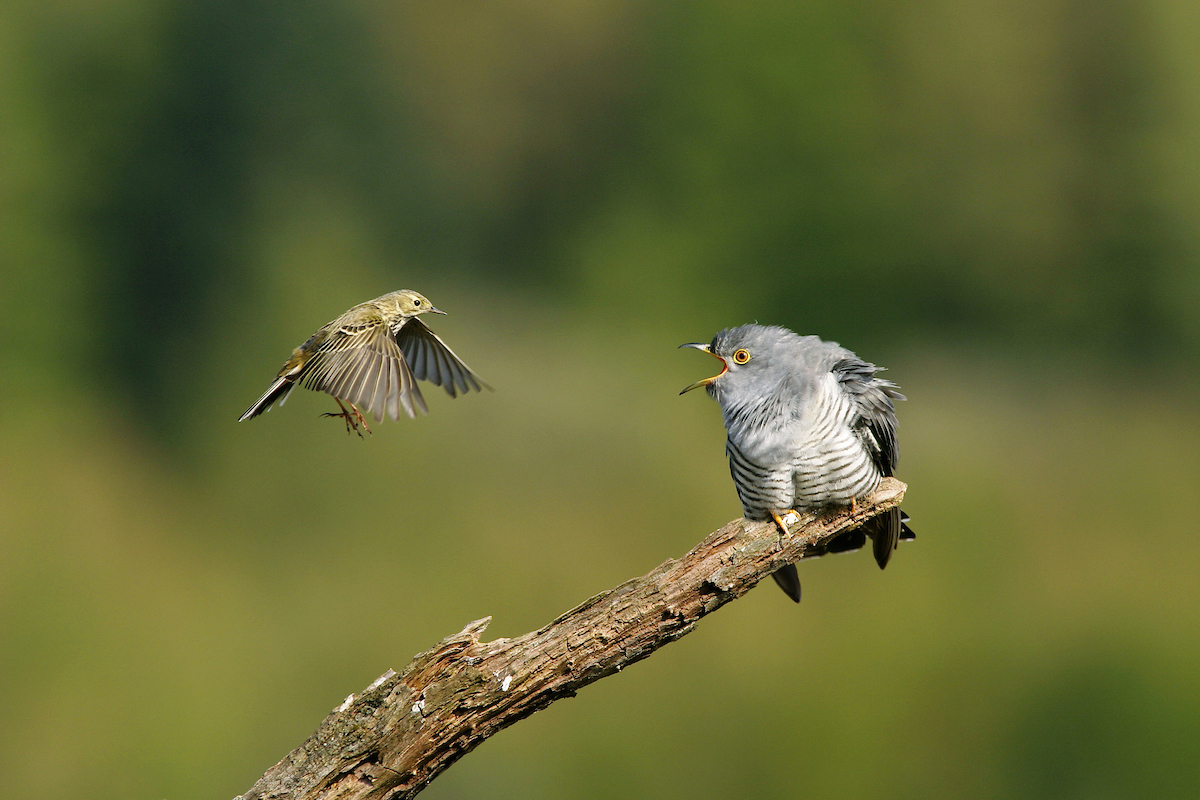
Characteristics determining host suitability for a generalist parasite.
Author:
Published: 2018
Cuckoos have been documented using a range of host species but most of their eggs are laid in the nests of just a small number of species. Why do they select these species and to what extent might other species be suitable hosts, as yet unused to any great degree? The Cuckoo is a generalist avian brood parasite, known to have utilized at least 125 different bird species as a host within Europe. Despite this, individual female Cuckoos are thought to be host-specific, preferentially laying their eggs in one – or a few – host nests. This has led to individual female Cuckoos being classified into host races, termed ‘gentes’, some 20 of which have been described within Europe. Given the large number of songbird species breeding in Europe, and the relatively few female Cuckoo gentes, it raises the question of what makes a good host. By examining data from three different sources, including nest record data from the BTO, Bård Stokke and colleagues sought to establish which characteristics determined the suitability of a songbird species as a potential Cuckoo host. Some of the characteristics they investigated included nest placement, chick diet, habitat, abundance and the timing of the breeding period. The results of analysing two independent data sets, one from the UK and one from Germany, produced similar results. The analyses revealed that species breeding in forest and rocky areas were used less than species breeding in other habitats; that those feeding their nestlings with plant material were used less often than those feeding their nestlings with invertebrates (though not significantly so in the UK) and that hosts tended to be of intermediate body size and have larger populations. The analyses also showed that, perhaps unsurprisingly, species nesting in cavities are used less frequently than those nesting elsewhere. Nest height, nest depth and overlap in the breeding period did not appear to affect parasitism in any of the data sets examined. Through the work the researchers were able to calculate a ‘host suitability index’ for each of the European species in the study. Interestingly, there was no evidence of a clear separation between suitable and unsuitable host species’ instead, there appeared to be a continuum from low to high suitability. However, all of the species with a recognized corresponding Cuckoo gens are ranked towards the high suitability end of the continuum. The host suitability index could indicate species that might become the focus of Cuckoo nest parasitism in future if, for example, the host population increases because of climate- or habitat- change.
19.04.18
Papers

Flight Lines: Tracking the wonders of bird migration
Author:
Published: 2017
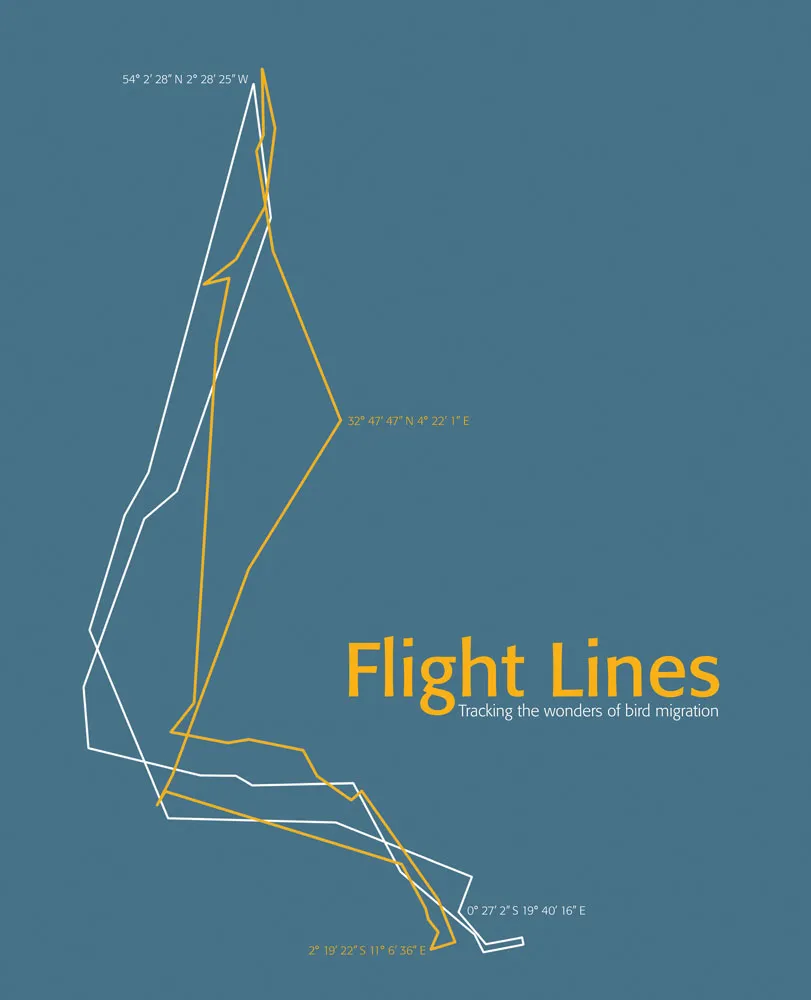
This stunning new book brings together the latest research findings, delivered through an accessible and engaging narrative by the BTO's Mike Toms, with the wonderful artwork generated through the BTO/SWLA Flight Lines project. If you have an interest in our summer migrants, then you'll welcome this fantastic opportunity to discover their stories through art and the written word. By pairing artists, storytellers and photojournalists with the researchers and volunteers studying our summer migrants, we are able to tell the stories of our migrant birds, and the work being done to secure a future for them. Includes artwork by SWLA member artists Carry Akroyd, Kim Atkinson, Federico Gemma, Richard Johnson, Szabolcs Kokay, Harriet Mead, Bruce Pearson, Greg Poole, Dafila Scott, Jane Smith, John Threlfall, Esther Tyson, Matt Underwood, Michael Warren, Darren Woodhead and others.
21.08.17
Books and guides Book
Population decline is linked to migration route in the Common Cuckoo, a long-distance nocturnally-migrating bird
Author:
Published: 2016
When the BTO began ground-breaking Cuckoo tracking project in 2011, we had very little idea where these birds spent the winter or how they got there. Our latest research not only reveals this information, but also shows that Cuckoos’ use of autumn migration routes helps explain population declines. 56 Autumn migration routes 2011-14. Infographic by Nigel Hawtin.Like many migrant birds, the Cuckoo is in long-term decline as a breeding bird in Britain, and has been on the Red List of Birds of Conservation Concern since 2009. The breeding behaviour of the Cuckoo has been very well-studied, but until recently, knowledge of this species’ migratory and wintering behaviour was very limited. In 2011, a BTO team, led by Chris Hewson, set out to change this, using satellite-tags to track the movements of male Cuckoos breeding in East Anglia. This study has since been extended to track males from several other sites across Britain. This work has not only revealed details of Cuckoos’ migration timings and wintering grounds, but has also showed “our” breeding birds take one of two routes south to Africa after breeding. Crucially, differential rates of mortality have been found on these routes, which strongly correlate with breeding population trends. The study included information from 42 male Cuckoos tagged at nine different breeding locations in England, Scotland and Wales, and tracked over 56 autumn migrations between 2011 and 2014. Birds either migrated southwest via Spain and Morocco (the ‘west route’) or southeast via Italy or the Balkans (the ‘east route’) before converging in the Congo basin of central Africa. Birds taking the west route left eight days later on average than those taking the east route. Interestingly, birds on the west route were more likely to die before completing the Sahara crossing, even though their route was 12% shorter to this point, demonstrating route-specific costs of migration for the first time. There was no difference in survival during the rest of their southward migrations, or during their return northward journeys to the breeding grounds. The differences in survival were correlated with breeding population changes assessed via two independent datasets – from bird Atlases in 1988-1991 and 2007-2011, and from the annual BTO/JNCC/RSPB Breeding Bird Survey. The strong relationships found provide the first direct evidence that conditions encountered during migration can have an impact on breeding populations. Despite the obvious ecological barrier presented by the Sahara, most of the mortality on the west route occurred in Europe, suggesting the conditions at stopover sites are responsible. In recent years, Spain has suffered droughts and wildfires, which might have affected the Cuckoos, although other factors like large-scale habitat change might also have played a role. Declines in Cuckoos’ main food source on the breeding grounds (the caterpillars of large moths) were also particularly severe in areas in which birds migrating on the west route were tagged, which might have compounded difficulties encountered further south, especially given their later departure dates from the UK but similar arrival time south of the Sahara, which suggests they may undertake more fattening here than birds that migrate via Italy. The fact that the western route persists despite the apparent disadvantages suggests that the conditions leading to increased mortality have arisen recently. This study not only demonstrates how conditions during migration can influence the population dynamics of long-distance migrants through effects on survival, but also underlines the need for a full annual-cycle approach to understanding migratory birds and their conservation needs. The results show unexpected variation in migration routes and mortality and this illustrates that we need to collect information on the variability in migratory behaviour and performance if we are to understand migratory animal declines in general. Future work of this sort will be vital for the conservation of Afro-Palaearctic migrants. It will be needed to identify key areas where stopover site quality has declined, and could be used to predict future responses of species to climate change, for instance.
19.07.16
Papers

An assessment of the potential benefits of additional stratification of BBS squares by habitat and accessibility to enhance the monitoring of rare species and habitats.
Author:
Published: 2016
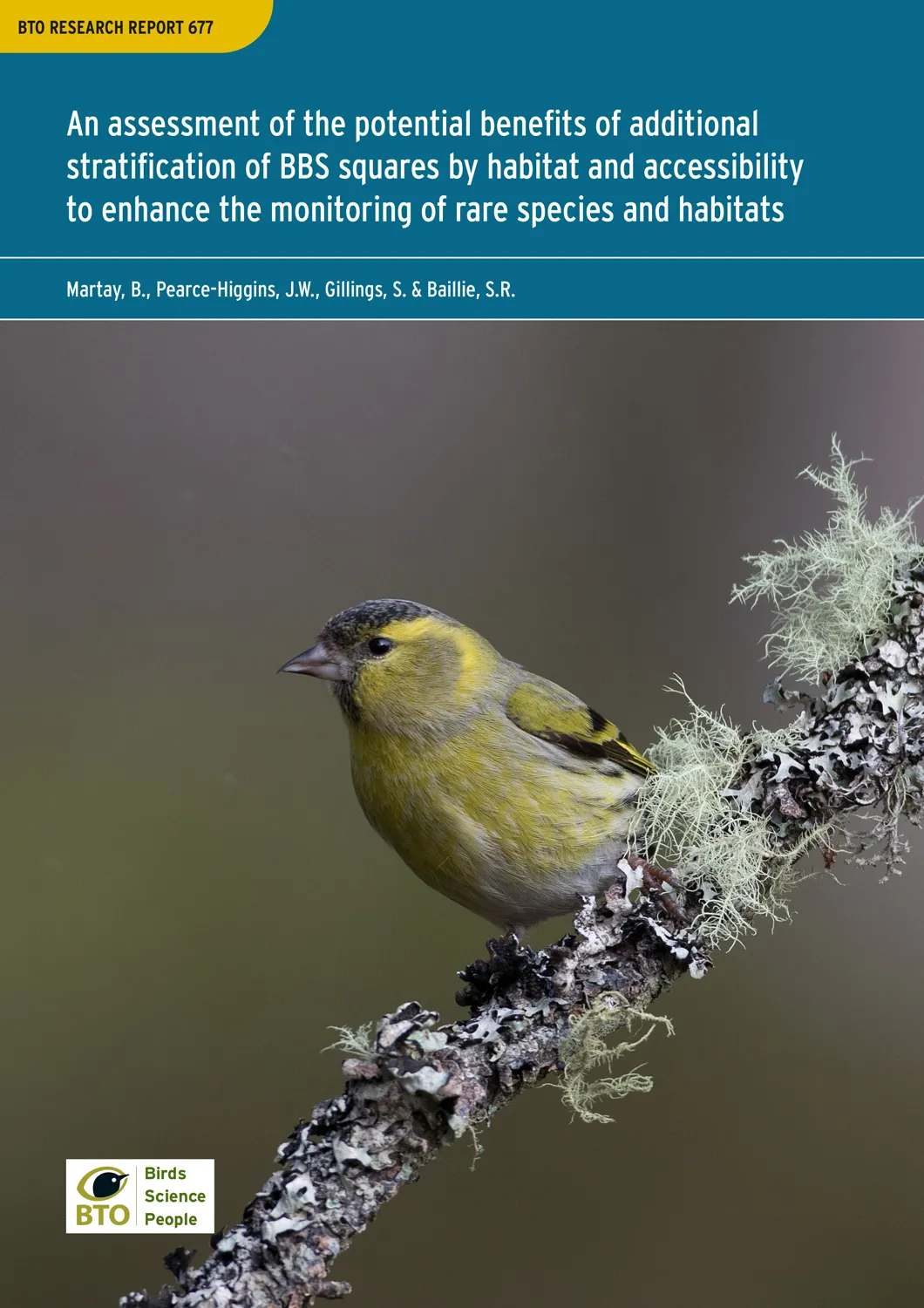
Every year, volunteers across the UK take part in the BTO/RSPB/JNCC Breeding Bird Survey (BBS), recording breeding birds in randomly selected 1-km squares (stratified regionally by observer availability) to robustly monitor population trends of some UK bird species. However, the chances of randomly selected squares containing rarer bird species and the habitats of interest that only cover a small proportion of the landscape are low, limiting our ability to monitor population changes. The work reported here examines options for increasing coverage of rare species and of assemblages occupying certain habitats of interest within the BBS framework, by including additional strata based on habitat type. It also assesses the benefits and risks of including an additional stratum based on accessibility to increase volunteer uptake in large regions with low observer density and many inaccessible areas. Volunteer recruitment is often difficult in these regions because randomly selected unmonitored BBS squares may require long drives, difficult walks and over-night camping.
23.03.16
BTO Research Reports
More Evidence
More evidence from Conservation Evidence.com
Partners




Citing BirdFacts
If you wish to cite particular content in this page (e.g. a specific value) it is best to use the original sources as linked in the page. For a more general citation of the whole page please use: BTO (20XX) BirdFacts Species: profiles of birds occurring in the United Kingdom. BTO, Thetford (www.bto.org/birdfacts, accessed on xx/xx/xxxx).