Spring migration finally picks up the pace in April 2026.
For much of March we commented that the spring migration had so far been more of a trickle than a flood, but in the last few days things have really picked up, with lots more reports of spring migrants.
The combination of clear skies, warmer temperatures and southerly winds since Easter Monday has created good conditions for migration, with new arrivals apparent each day this week. However, as we discussed in the last blog, there haven’t been many notable ‘falls’ of birds at the coast, with many migrants sneaking through unnoticed and suddenly appearing at their breeding sites.
BirdTrack reporting rates, which are calculated weekly, won’t reveal the full scale of this week’s arrival until they are updated next week, but there is already a lot to report.
Starting with waterbirds, the reporting rate for Garganey increased to 0.7% in the last week, with arrivals of this uncommon spring migrant duck evidently picking up a little. Little Ringed Plovers are continuing to increase and this year’s arrival is still markedly ahead of the historic curve.
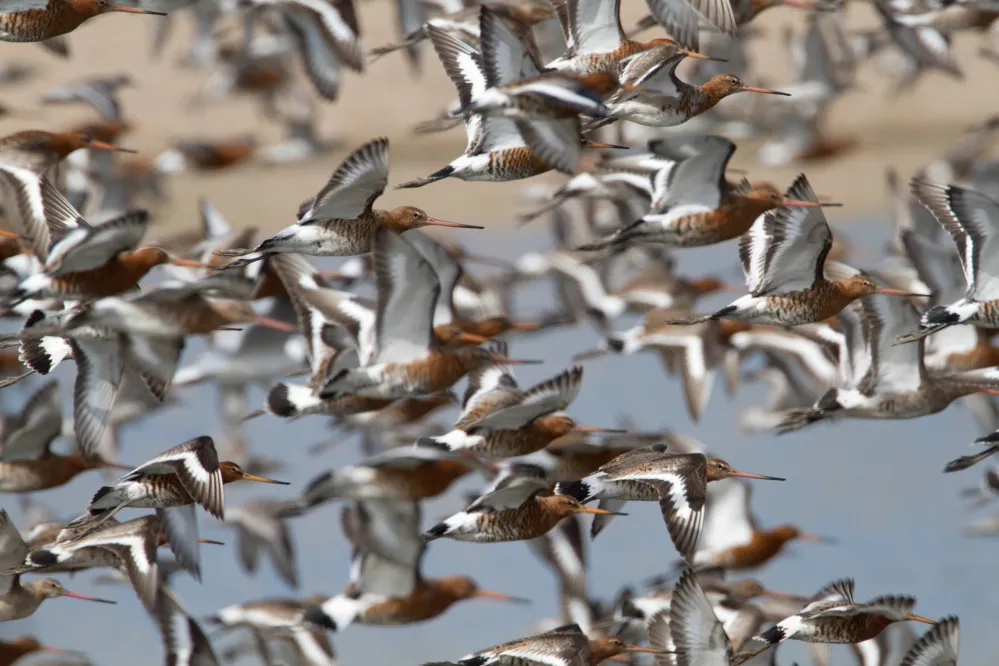
Other migrant waders, such as Whimbrel and Common Sandpiper, are also starting to appear, while Black-tailed Godwits on their way to Iceland can be seen in large numbers at coastal staging points, with smaller flocks also dropping into some inland sites.
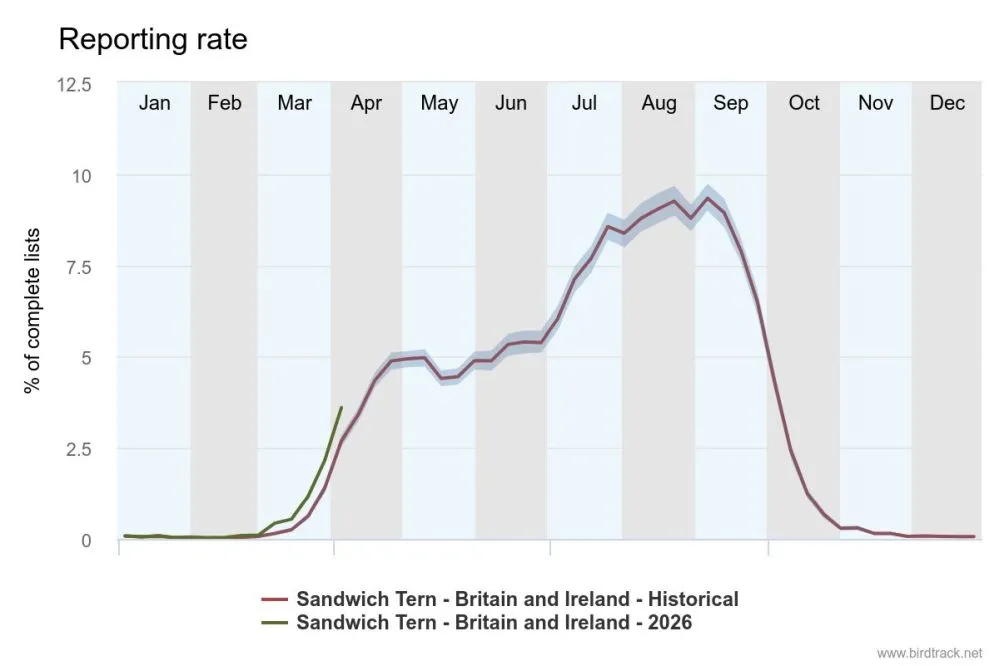
The first Common, Arctic and Little Terns have been reported in recent days, while Sandwich Terns were recorded on 3.6% of Complete Lists in the last week, having been arriving throughout March.
There has been a good early arrival of Cuckoo, with some birds already making it to Ireland and Scotland, and I expect the reporting rate for this week will be ahead of the historic curve when the results are in.
There have already been several Swifts seen, including one that reached North Uist on Wednesday, on what was an exceptionally warm day for early April. Reports of Swallows and House Martins are picking up and although the earlier-arriving Sand Martin is still being reported more frequently than other hirundines, I would expect Swallows to become the most frequently reported hirundine by this time next week.
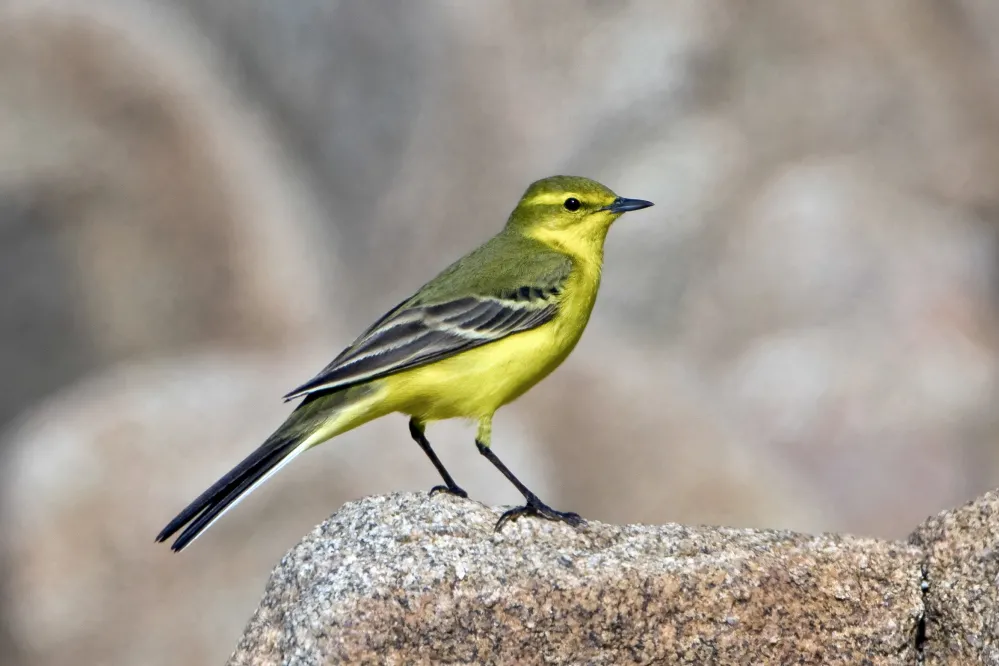
Tree Pipits have been widely reported from their breeding sites in the last few days and Yellow Wagtails, which always brighten up a spring day, have been appearing around wetlands.
Nightingales, which are very rarely detected on passage, have evidently arrived en masse to their breeding sites, with lots of reports of singing birds in their strongholds, particularly in Kent and Essex.
There has also been a clear uptick in reports of woodland specialists Redstart and Pied Flycatcher. Plenty of Redstarts have been seen on passage, both at the coast and inland, but Pied Flycatchers have largely moved through undetected, with most reports coming from breeding sites across the west of Britain, including several reports already from Scotland.
April-arriving warblers appear to be ahead of schedule, with a big arrival of Reed Warbler, Sedge Warbler and Whitethroat apparent in recent days. The first Sedge Warblers often arrive in late March, but this year’s arrival does appear to be ahead of schedule, with the species already appearing on 2.5% of Complete Lists last week. Reed Warblers typically arrive later, but here at BTO HQ in Thetford, there are already five singing males at our Nunnery Lakes reserve, where last year the first arrival was not until 13 April.
The more uncommon Grasshopper Warbler, with its distinctive reeling song, has also started to be reported. Populations of this species tend to fluctuate, but last spring saw a higher than average reporting rate in BirdTrack, so it will be interesting to see whether that repeats this year.
Of the commonest warblers, Willow Warblers have been arriving as expected, with the reporting rate rising to 14% in the most recent week from 3% in the previous week. Chiffchaff, appearing on 65% of Complete Lists during the last week, is currently the sixth most frequently reported species in BirdTrack. The flutey warbling song of the Blackcap has also become ubiquitous, with the reporting rate now at 37%.
Last week we predicted an increase in spring ‘overshoots’ – where species that typically breed further south fly beyond their usual breeding grounds – and this has also been apparent this week.
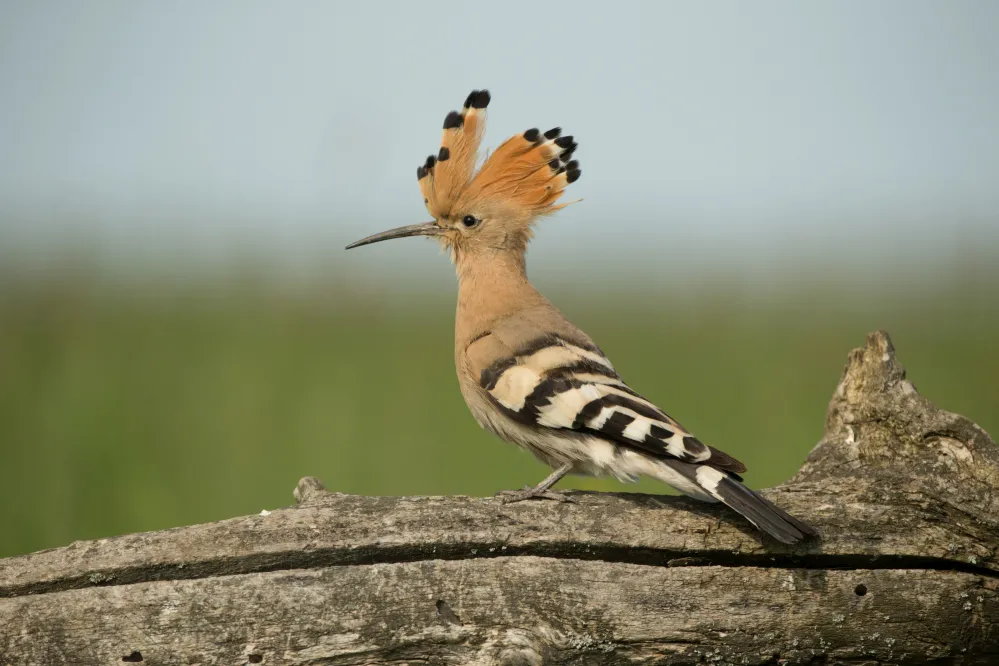
Hoopoe is generally the most numerous species in this category and there have been lots of reports in recent days, with a clear skew towards southern Ireland and south-west England, including five on St Martin’s, Isles of Scilly.
A whole range of other expected overshoots have been reported, including the first Black-winged Stilt of the year, a couple of Bluethroats, two Red-rumped Swallows at Spurn, Yorkshire, and several Serins. However, the place to be was Great Saltee Island in Wexford, Ireland, which recorded a Wryneck, a Woodchat Shrike and a Western Subalpine Warbler on Wednesday.
Looking to the week ahead, temperatures are expected to fall and arrivals of spring migrants may slow a little, but many species will no doubt continue to become more widespread. There’s a possibility that we could see some easterly winds over the next week and if that turns out to be the case then we would expect to see Little Gulls appearing over large lakes and reservoirs, perhaps some flocks of Ruff and maybe even the first Wood Sandpipers of the spring.
As always, thank you for adding your sightings to BirdTrack to help us monitor the spring migration and I wish you a good week of birding ahead.
Add your sightings to BirdTrack
Help us track the departures and arrivals of migrating birds by adding your sightings to BirdTrack. It’s free, quick and easy, and signing up also allows you to explore trends, reports and recent records in your area.
Author(s)

Tom Jordan