A notable increase in the number of volunteers taking part in the long-standing BTO/JNCC/RSPB Breeding Bird Survey (BBS), has resulted in greater coverage than ever before.
A major new report highlighting the results of the BBS, published this week, shows there are continued declines for many species, though positive outcomes for others.
BBS is the main scheme for monitoring the population changes of the UK’s common and widespread breeding birds, producing population trends for 119 species.
Thanks to the efforts of more than 2,800 volunteers, the greatest number of sites in the history of the scheme were surveyed during the 2025 breeding season, providing invaluable data for many of our nesting birds. The collated records combine to provide the most in-depth assessment of the state of the UK’s breeding birds.
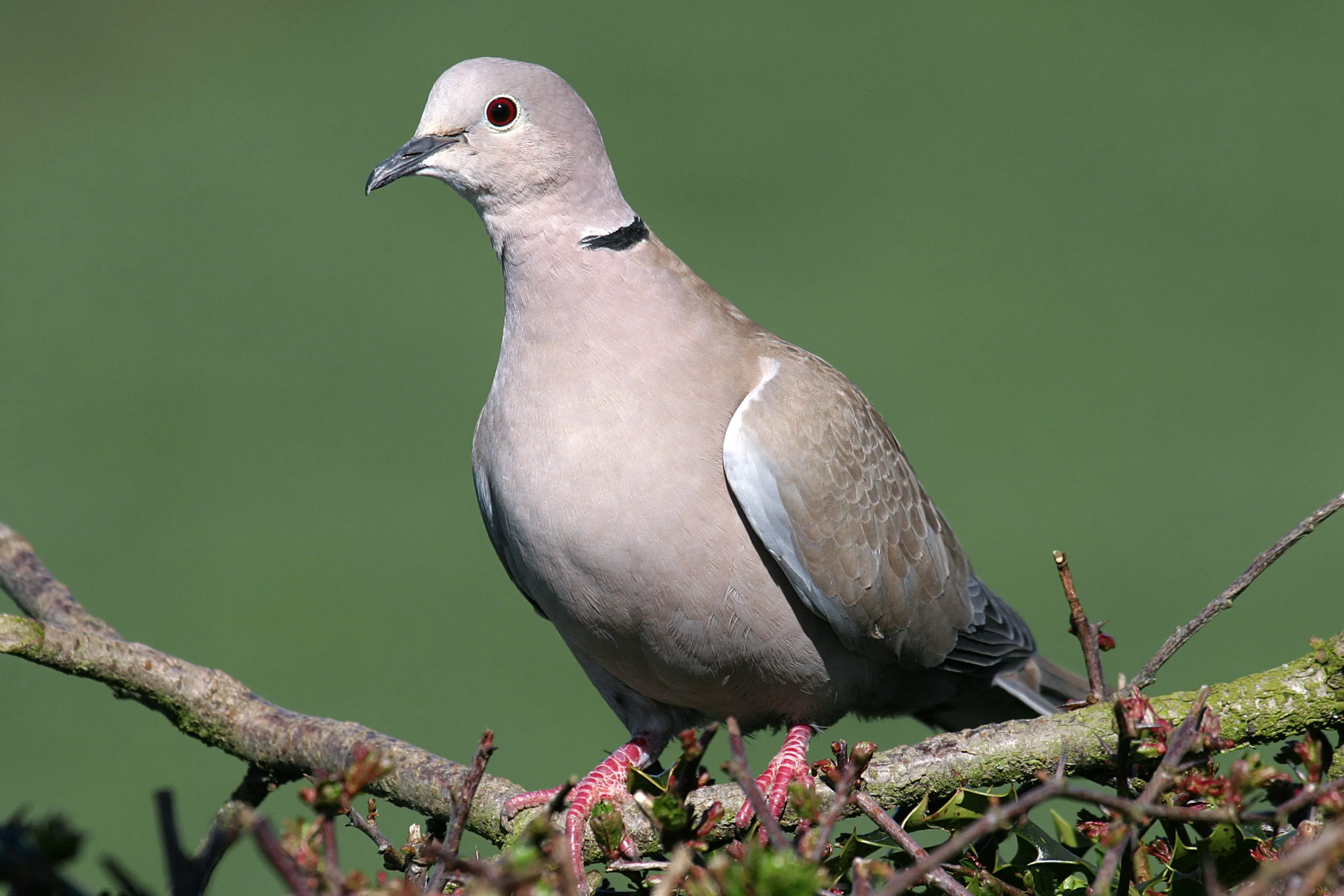
Among the many findings in the latest BBS report is the ongoing downturn in the fortunes for Collared Dove, a common and widespread bird throughout much of the UK. This familiar species, often found in urban and suburban areas, is a relatively recent coloniser to the UK having first bred here in the 1950s, after naturally spreading westwards across Europe. But now, decades after establishing itself as a popular resident of towns and gardens, things are changing. Since 2005, Collared Doves have declined by over 40%.
Scientists have linked this drop in numbers to the emergence of Trichomonosis, a virulent disease which has also caused devastating declines in such birds as Greenfinch and Chaffinch in recent years.
By contrast, the closely related Woodpigeon continues to thrive, with the latest figures showing an increase of 33% since the mid 1990s. Similarly, the Stock Dove, more readily found on farmland and around woodlands, is also doing well with numbers going up by 57% since 1995, the year from which trends can be measured.
Other species found to be on the up included Robin and Great Spotted Woodpecker, while both Blue and Great Tits, along with Bullfinch and Jay, have declined in the last 10 years in the UK overall, all after population growth in the 1990s and 2000s. Bullfinch and Jay highlight that a number of species are increasing in Scotland whilst decreasing in England. Even Goldfinch, whose population had boomed in the 1990s, has shown some declines in the southern quarter of Britain, with a 34% five-year decrease in London and 13% decline in south-east England. The report also reveals that another distinctive species, Green Woodpecker, has undergone notable declines throughout much of England, with a 35% decline between 2014 and 2024.
On a positive note, there is evidence that Song Thrush, a bird which has been a frequent headliner with widespread declines during the 1970s and 1980s, has turned something of a corner. This supreme songster has seen small but significant gains, with a 37% increase in the last 30 years. And it may be early days, but there is also a hint of positive change for the beleaguered Greenfinch too; after a near 70% decline between 2005 and 2020, the population has been stable over the last five years. In some parts of England, there is even a hint of an increase.
James Heywood, BBS National Organiser, said “2025 was the best year in terms of square coverage for the Breeding Bird Survey and we are extremely grateful to the nearly 3,000 volunteers for their efforts, particularly in Wales for taking up the mantle and boosting coverage here. This report highlights that even some very familiar common species are showing signs of decline and that we need to be vigilant. And with the UK and devolved nations all undergoing major changes to land management, particularly in respect of new or yet to be determined farming schemes and payments, it remains as important as ever to monitor our bird populations as indicators of our countryside’s health.”
Ethan Workman, Joint Nature Conservation Committee, said “Whilst the results from this record-breaking year of coverage show positive signs for a small number of well-loved UK species, overall, the story is one of decline with many woodland, farmland and wader populations continuing to face challenges. Twenty of the 26 Birds of Conservation Concern Red list species with reported BBS trends remain in long-term decline and none are increasing. The dedication of skilled BBS volunteers each year allows the production of important Official Statistics and Biodiversity Indicators, as well as forming a basis for academic research. These inform crucial conservation policy and action, that will hopefully help reverse these trends.”
Simon Wotton, RSPB Senior Conservation Science, said “Whilst some species are showing a welcome improvement, it's clear the effects of habitat loss and disease are taking a toll on even some of our most familiar birds such as Collared Doves. However, the increasing engagement with the survey is inspiring to see; it's thanks to these volunteers we are able to identify species in trouble and be proactive in our conservation action.”
The full report can be read here.