Chaffinch
Introduction
One of Britain & Ireland's commonest birds, the Chaffinch was recorded across 94% of the UK during the Bird Atlas 2007-11. It is mainly found in gardens and woodlands.
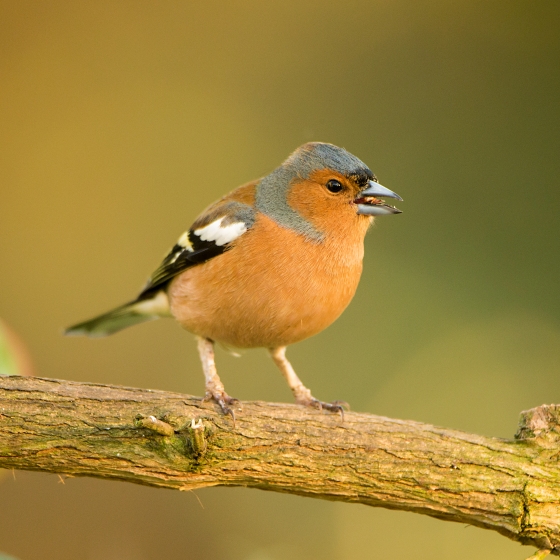
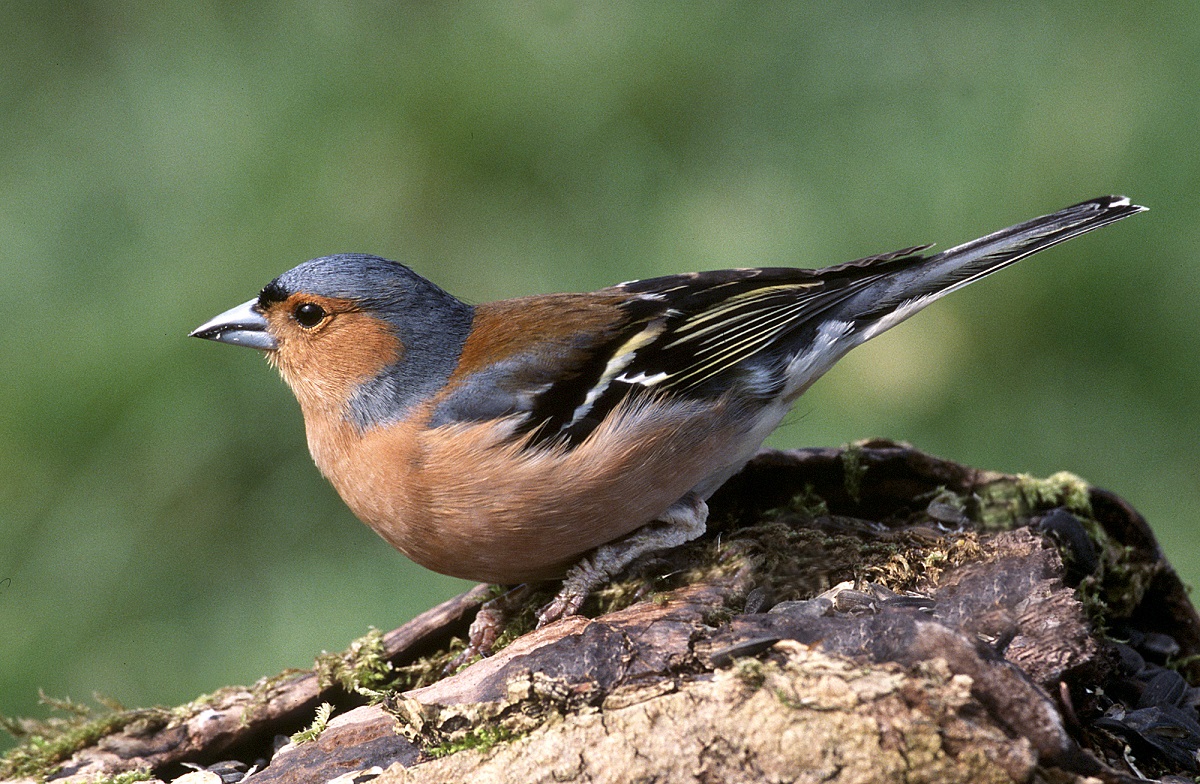
Chaffinches are present all year in Britain & Ireland. The male's pink, chestnut and blue-grey plumage with bright white wing bars make this species an attractive finch. The female is less colourful. Chaffinches are often seen at garden bird feeders and the species' distinctive song, descending the scale and ending with a flourish, can be heard in any suitable habitat throughout the breeding season.
UK Chaffinch breeding numbers increased by about a third between about 1970 and 2010, before falling sharply. BTO research has linked this decline to the disease Trichomonosis. In winter, the population swells with large numbers of migrants arriving from Fennoscandia. Chaffinches can form mixed flocks with other finches, exploiting the wild bird seed field-strips created by environmentally sensitive farming.
- Our Trends Explorer gives you the latest insight into how this species' population is changing.
Key Stats








Identification
ID Videos
This section features BTO training videos headlining this species, or featuring it as a potential confusion species.
Chaffinch & Brambling
Sparrows
#BirdSongBasics: Chaffinch and Starling
GBW: Chaffinch and Brambling
Songs and Calls
Song:
Call:
Young call:
Status and Trends
Conservation Status
Population Change
Chaffinch increased rapidly from the early 1970s until 2006, according to CBC/BBS and CES, but numbers seemed to stabilise for a period during the 1990s. The BBS map of change in relative density between 1994-96 and 2007-09 indicates that there were decreases over that period in a band from eastern Northern Ireland across Wales to Devon and Dorset, outweighed by increases elsewhere. However, decreases have occurred across all four countries of the UK since around 2010. Numbers across Europe have been broadly stable since 1980 (PECBMS: PECBMS 2020a>).
Distribution
The Chaffinch is one of the commonest birds in Britain & Ireland and was recorded breeding in 94% of all 10-km squares. It is absent only from parts of the Northern Isles, Outer Hebrides and a few west-coast squares in Ireland. The highest breeding densities in Ireland are found in Ulster, while in Britain they are in the lowlands of south, central and eastern England and on the upland edges in north England and Scotland.
Occupied 10-km squares in UK
2007/08–10/11
or view it on Bird Atlas Mapstore.
2008–11
or view it on Bird Atlas Mapstore.
European Distribution Map
Distribution Change
Up to 2007–11 there were only minor changes in distribution. More recently population declines owing to trichomonisis could have caused local losses.
Change in occupied 10-km squares in the UK
from 1981–84 to 2007–11
or view it on Bird Atlas Mapstore.
from 1968–72 to 2008–11
or view it on Bird Atlas Mapstore.
Seasonality
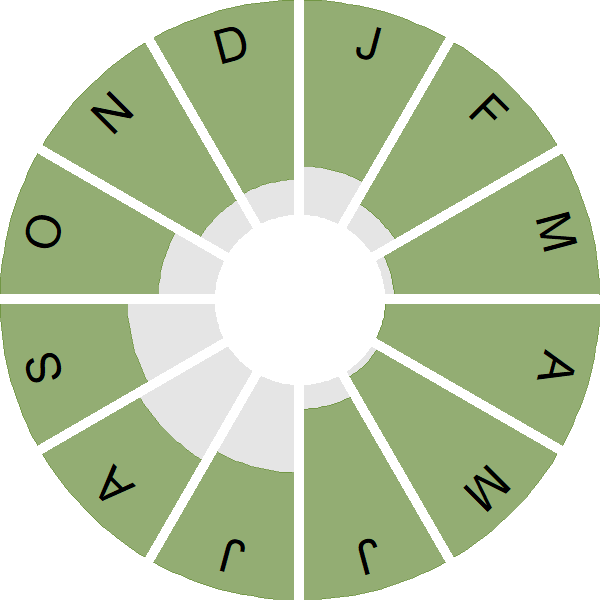
Chaffinch is recorded throughout the year, most often in spring when singing.
Weekly pattern of occurrence
The graph shows when the species is present in the UK, with taller bars indicating a higher likelihood of encountering the species in appropriate regions and habitats.

Habitats
Breeding season habitats
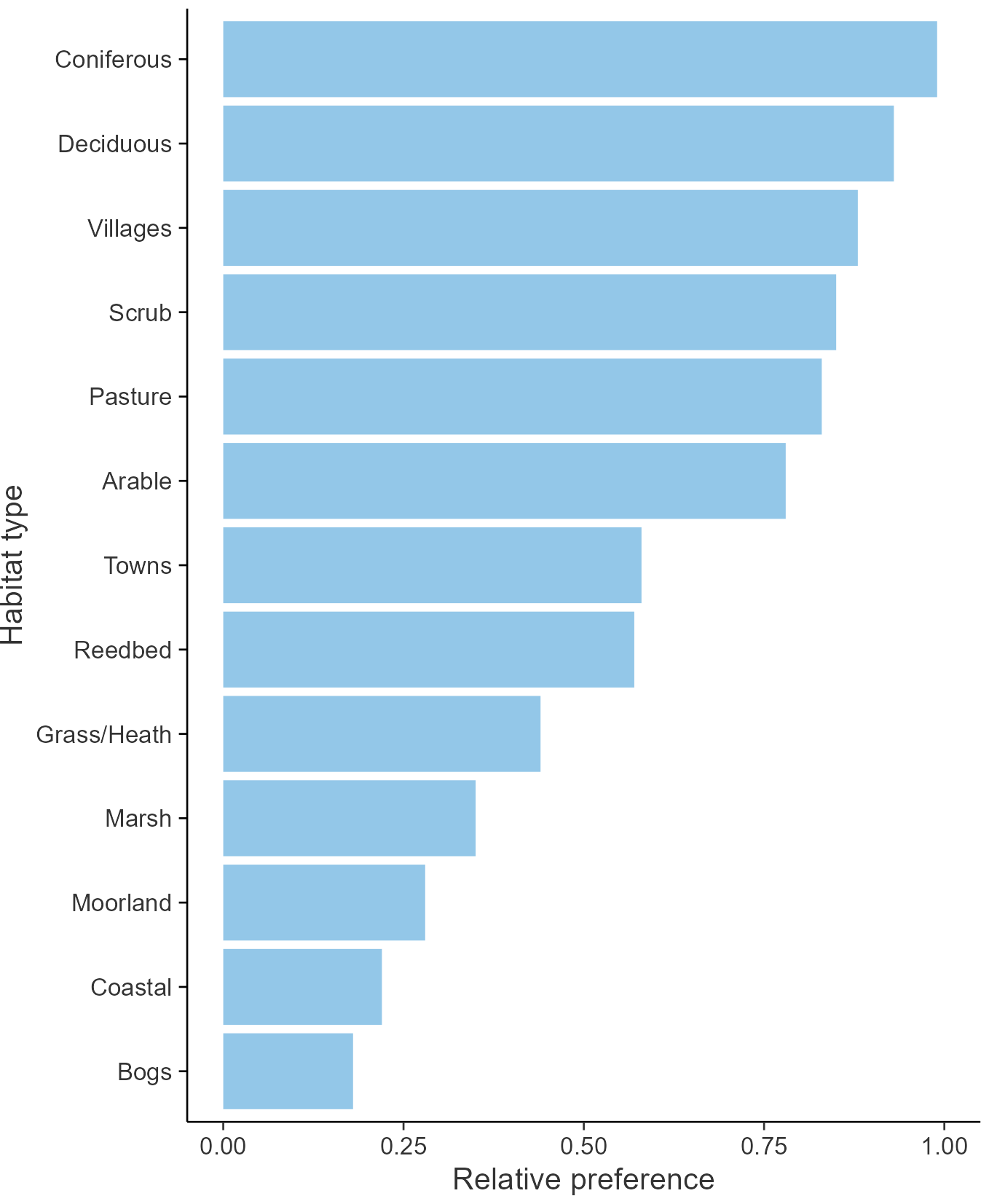
Relative frequency by habitat
The graph shows the habitats occupied in the breeding season, with the most utilised habitats shown at the top. Bars of similar size indicate the species is equally likely to be recorded in those habitats.
Movement
Britain & Ireland movement
Foreign locations of birds ringed or recovered in Britain & Ireland
Dots show the foreign destinations of birds ringed in Britain & Ireland, and the origins of birds ringed overseas that were subsequently recaptured, resighted or found dead in Britain & Ireland. Dot colours indicate the time of year that the species was present at the location.
- Winter (Nov-Feb)
- Spring (Mar-Apr)
- Summer (May-Jul)
- Autumn (Aug-Oct)

European movements
EuroBirdPortal uses birdwatcher's records, such as those logged in BirdTrack to map the flows of birds as they arrive and depart Europe. See maps for this species here.
The Eurasian-African Migration Atlas shows movements of individual birds ringed or recovered in Europe. See maps for this species here.
Biology
Productivity and Nesting
Nesting timing
Egg measurements
Clutch Size
Incubation
Fledging
Survival and Longevity
Survival is shown as the proportion of birds surviving from one year to the next and is derived from bird ringing data. It can also be used to estimate how long birds typically live.
View number ringed each year in the Online Ringing Report.
Lifespan
Survival of adults
Survival of juveniles
Biometrics
Wing length and body weights are from live birds (source).
Wing length
Body weight
Ring Size
Classification, names and codes
Classification and Codes
- Order: Passeriformes
- Family: Fringillidae
- Scientific name: Fringilla coelebs
- Authority: Linnaeus, 1758
- BTO 2-letter code: CH
- BTO 5-letter code: CHAFF
- Euring code number: 16360
Alternate species names
- Catalan: pinsà comú
- Czech: penkava obecná
- Danish: Bogfinke
- Dutch: Vink
- Estonian: metsvint
- Finnish: peippo
- French: Pinson des arbres
- Gaelic: Breacan-beithe
- German: Buchfink
- Hungarian: erdei pinty
- Icelandic: Bókfinka
- Irish: Rí Rua
- Italian: Fringuello
- Latvian: žubite, pinkis
- Lithuanian: paprastasis kikilis
- Norwegian: Bokfink
- Polish: zieba (zwyczajna)
- Portuguese: tentilhão
- Slovak: pinka obycajná
- Slovenian: šcinkavec
- Spanish: Pinzón vulgar
- Swedish: bofink
- Welsh: Ji-binc
- English folkname(s): Pink
Research
Causes of Change and Solutions
Causes of change
The drivers behind the long-term increases in the Chaffinch population are unclear, but it is likely that decreases in adult survival have caused the recent downturn. It is possible that the trichomonosis outbreak is responsible, but this is uncertain and the evidence for attributing the decreases to trichomonosis is less strong than that for the closely related Greenfinch.
Further information on causes of change
This relative stability was associated with a reduction in annual survival, which could be density-dependent (Siriwardena et al. 1999). There was also some evidence of improved breeding performance during the early years of population increase, with larger broods, fewer egg-stage nest failures, and more fledglings per breeding attempt, but these trends are now either cancelled out or reversed. Changes in adult survival now seem to be a greater contributor to annual population change (Robinson et al. 2014). The recent downturn has been linked to the widespread and severe outbreak of trichomonosis that began in 2005, being greatest in areas with a high incidence of the disease (Robinson et al. 2010b). However it is still unclear whether trichomonosis is the main driver behind the steeper downturn which began around 2012, or whether there may be other causes (Lawson et al. 2018). A study in Finland suggests that population declines resulting from the disease were less marked there for Chaffinch than for Greenfinch (Lehikoinen et al. 2013).
The trend towards earlier laying is at least partly explained by recent climate change (Crick & Sparks 1999). Chaffinches are well adapted to suburban and garden habitats, as well as to highly fragmented woodland and hedgerows, occurring less in the open-field, arable habitats that have been affected most by agricultural intensification, so it is possible that they have benefited by environmental changes from which other seed-eating passerines have suffered.
Information about conservation actions
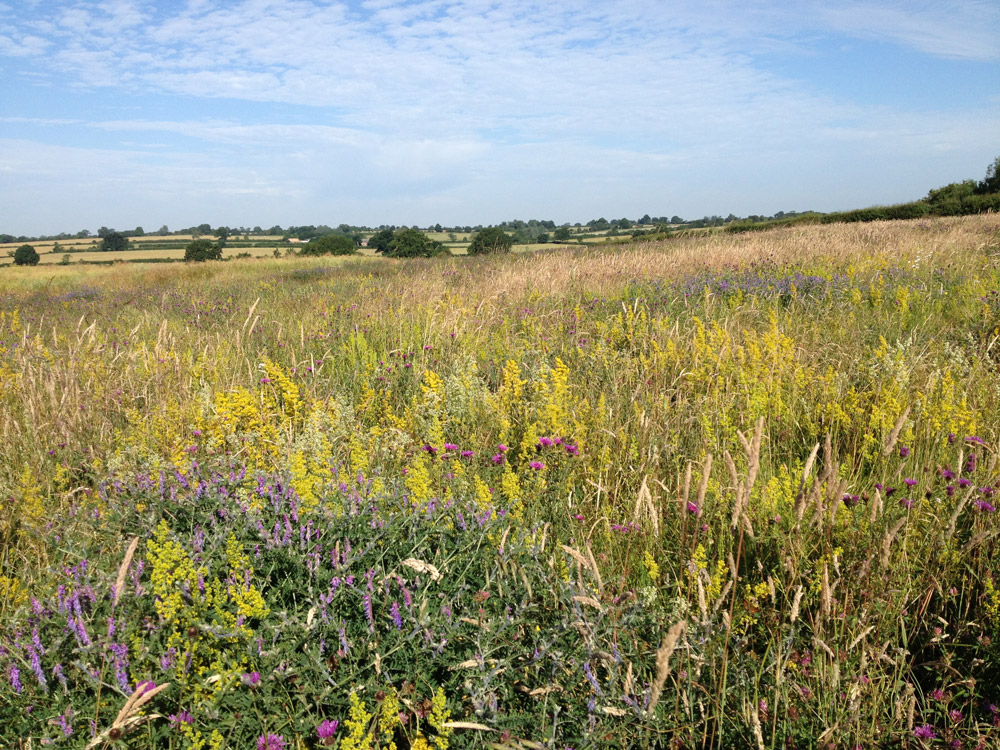
As Chaffinch is widespread and has been increasing until recently, no specific conservation actions have been proposed relating to this species. However, actions and policies aimed at helping other farmland species are also likely to benefit Chaffinches. These may include actions aimed at increasing food availability over winter (e.g. overwinter stubbles, wild bird seed or cover mixtures, set-aside, buffer strips or uncultivated margins) and those aimed at improving breeding habitat and food availability during the breeding season (e.g. management of hedgerows and reducing pesticide and herbicide use).
The direct provision of supplementary food in winter, both in gardens and on farmland as part of agri-environment schemes, may also help this species, although the potential benefits may need to be balanced against negative effects through disease transmission. Whether or not the recent population downturn is linked to occurrence of trichomonosis, which has not yet been proven, this disease is known to affect Chaffinches and hence hygiene precautions are important in gardens where food and water is being provided, and stopping feeding should be considered if birds with the disease are observed.
Publications (9)
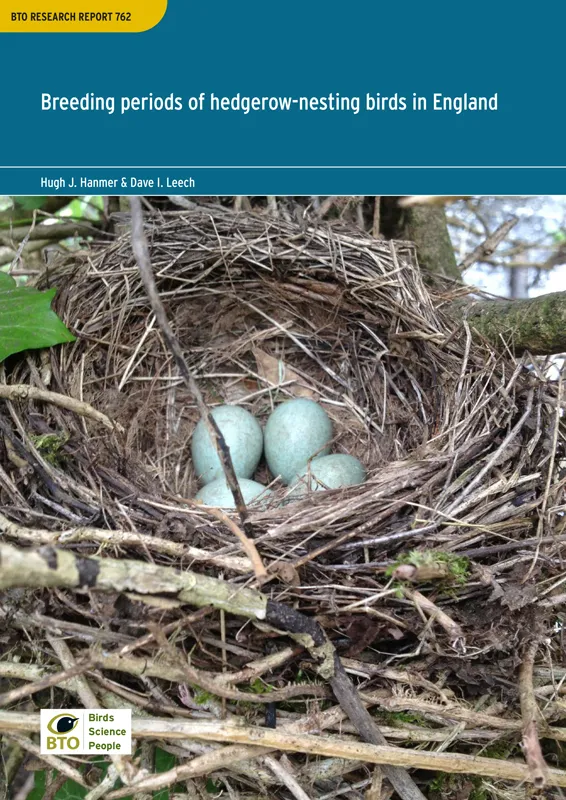
Breeding periods of hedgerow-nesting birds in England
Author:
Published: Spring 2024
Hedgerows form an important semi-natural habitat for birds and other wildlife in English farmland landscapes, in addition to providing other benefits to farming. Hedgerows are currently maintained through annual or multi-annual cutting cycles, the timing of which could have consequences for hedgerow-breeding birds. The aim of this report is to assess the impacts on nesting birds should the duration of the management period be changed, by quantifying the length of the current breeding season for 15 species of songbird likely to nest in farmland hedges. These species are Blackbird, Blackcap, Bullfinch, Chaffinch, Dunnock, Garden Warbler, Goldfinch, Greenfinch, Linnet, Long-tailed Tit, Robin, Song Thrush, Whitethroat, Wren and Yellowhammer.
05.03.24
BTO Research Reports
Evolution of female song and duetting in the Chaffinch (Fringilla) species complex
Author:
Published: 2023
24.01.23
Papers
Birds of Conservation Concern Wales 4: the population status of birds in Wales
Author:
Published: 2022
The latest review of the conservation status of birds in Wales. The report assessed all 220 bird species which regularly occur in Wales. There are now 60 species of bird on the Red List, with 91 on the Amber List and just 69 - less than a third of the total number of species - on the Green List. The latest review of the conservation status of birds in Wales comes 20 years after the first, when the Red List was less than half the length it is today. The report assessed all 220 bird species which regularly occur in Wales. There are now 60 species of bird on the Red List in Wales, with 91 on the Amber List and 69 on the Green List. The Birds of Conservation Concern in Wales report assesses the status of each species against a set of objective criteria. Data sources include the BTO/JNCC/RSPB Breeding Bird Survey and the BTO/RSPB/JNCC Wetland Bird Survey, as well as Bird Atlases and other BTO-led monitoring schemes and citizen science initiatives. These are used to quantify the changing status of the species’ Welsh population. The UK, European and global conservation status of the species is also considered, placing the Welsh population into a wider context. The Red ListSwift, Greenfinch and Rook – familiar breeding species in steep decline across the UK – are among the new additions to the Welsh Red List, which now also includes Purple Sandpiper, on account of a rapidly shrinking Welsh wintering population, and Leach’s Petrel, an enigmatic seabird in decline across its global range. These species now sit alongside well-known conservation priorities, such as Curlew, Hen Harrier and Turtle Dove as birds at risk of being lost from Wales for good. Uplands and woodlands Many of the species on the Red List are found in upland and farmland habitats. Starling, Tree Sparrow, Yellow Wagtail and Yellowhammer can no longer be found in much of Wales, while iconic species of mountain and moorland, such as Ring Ouzel, Merlin and Black Grouse, remain in serious trouble. Wales is well known for its populations of woodland birds; however, many of these – including Lesser Spotted Woodpecker, Willow Warbler and Spotted Flycatcher – also feature on the Red List. Goldcrest, which has seen its Welsh population shrink alarmingly in recent decades, is another new addition. On the coast The assessment for Birds of Conservation Concern Wales 4 took place before the impacts of avian influenza could be taken into account. Breeding seabird species have been struggling in Wales for many years, however, and most were already of conservation concern before the outbreak of this disease. Kittiwake, Puffin, Black-headed Gull, and Common, Arctic and Sandwich Tern remain on the Red List. Wales holds internationally significant numbers of breeding seabirds, making the decline of these colonies a global concern. The Amber ListDeclines in Wheatear, Garden Warbler and House Martin - all migrants which breed in Europe and winter in sub-Saharan Africa - mean these species have moved from the Green List to the Amber List. Many other ‘Afro-Palearctic' migrant species are also in decline, but the potential reasons for this, such as habitat loss and reduced availability of invertebrate prey, are not well understood. Closer to home, the declines in the Welsh Chaffinch population, linked to the disease trichomonosis, have seen the species Amber-listed. A number of other species have been placed on the Amber List because of the wider importance of their Welsh populations, which in each case make up more than half the UK total. Wales is home to more than three-quarters of the UK’s Choughs, for example, so recent declines are cause for concern. The nation’s breeding populations of Manx Shearwater, Pied Flycatcher, Goshawk and Hawfinch also account for more than half the UK total, as does its wintering population of Spotted Redshank. It’s not all bad news, though: some species now on the Amber List have moved up from the Red List, indicating some positive change in their population trends. These include Common Sandpiper, Great Black-backed Gull, Bullfinch, Goldcrest and Pied Flycatcher. The Green ListWhile the report contains much cause for alarm, several conservation success stories shine through. Red Kite was almost lost as a British bird during the first half of the 20th century, when only a handful of pairs remained in remote Welsh valleys. Since then, a sustained conservation effort has brought the species back from the brink. Wales is now home to more than 2,500 pairs of Red Kite and the species has now been moved to the Green List, reflecting this incredible change in fortunes. Song Thrush, Reed Bunting, Long-tailed Tit, Redwing and Kingfisher are among the other species to have gone Green, providing much-needed hope that things can go up as well as down.
06.12.22
Reports Birds of Conservation Concern
Habitat-use influences severe disease-mediated population declines in two of the most common garden bird species in Great Britain
Author:
Published: 2022
Infectious disease has been linked to population declines across multiple taxa, including birds, and it is important that we understand how anthropogenic factors, such as urbanisation and the provision of supplementary food at garden feeding stations, may influence its occurrence and impact.
06.09.22
Papers
The effects of a decade of agri-environment intervention in a lowland farm landscape on population trends of birds and butterflies
Author:
Published: 2022
Food production and wildlife conservation are often thought of as incompatible goals, and it is rare that conservation studies consider both economics and long-term changes in ecology. However, a decade-long study at a commercial arable farm in Buckinghamshire has found that agri-environment schemes significantly increased local bird and butterfly populations without damaging food production, offering hope for the UK’s farmland birds and butterflies.
01.08.22
Papers
The status of our bird populations: the fifth Birds of Conservation Concern in the United Kingdom, Channel Islands and Isle of Man and second IUCN Red List assessment of extinction risk for Great Britain
Author:
Published: 2021
Commonly referred to as the UK Red List for birds, this is the fifth review of the status of birds in the UK, Channel Islands and Isle of Man, published in December 2021 as Birds of Conservation Concern 5 (BOCC5). This updates the last assessment in 2015. Using standardised criteria, experts from a range of bird NGOs, including BTO, assessed 245 species with breeding, passage or wintering populations in the UK and assigned each to the Red, Amber or Green Lists of conservation concern. The same group of experts undertook a parallel exercise to assess the extinction risk of all bird species for Great Britain (the geographical area at which all other taxa are assessed) using the criteria and protocols established globally by the International Union for the Conservation of Nature (IUCN). This resulted in the assessment of 235 regularly occurring species (breeding or wintering or both), the total number assessed differing slightly from BOCC5 due to different rules on the inclusion of scarce breeders and colonisation patterns. The results of this second IUCN assessment (IUCN2) are provided in the same paper as BOCC5. Increasingly at risk This update shows that the UK’s bird species are increasingly at risk, with the Red List growing from 67 to 70. Eleven species were Red-listed for the first time, six due to worsening declines in breeding populations (Greenfinch, Swift, House Martin, Ptarmigan, Purple Sandpiper and Montagu’s Harrier), four due to worsening declines in non-breeding wintering populations (Bewick’s Swan, Goldeneye, Smew and Dunlin) and one (Leach’s Storm-petrel) because it is assessed according to IUCN criteria as Globally Vulnerable, and due to evidence of severe declines since 2000 based on new surveys on St Kilda, which holds more than 90% of the UK’s populations. The evidence for the changes in the other species come from the UK’s key monitoring schemes such as BTO/JNCC/RSPB Breeding Bird Survey (BBS) for terrestrial birds, the BTO/RSPB/JNCC Wetland Bird Survey (WeBS) for wintering populations and the Rare Breeding Bird Panel (RBBP) for scarce breeding species such as Purple Sandpiper. The IUCN assessment resulted in 108 (46%) of regularly occurring species being assessed as threatened with extinction in Great Britain, meaning that their population status was classed as Critically Endangered, Endangered, or Vulnerable, as opposed to Near Threatened or of Least Concern. Of those 108 species, 21 were considered Critically Endangered, 41 Endangered and 46 Vulnerable. There is considerable overlap between the lists but unlike the Red List in BOCC5, IUCN2 highlights the vulnerability of some stable but small and hence vulnerable populations as well as declines in species over much shorter recent time periods, as seen for Chaffinch and Swallow.
01.12.21
Reports Birds of Conservation Concern
Spatio-temporal dynamics and aetiology of proliferative leg skin lesions in wild British finches
Author:
Published: 2018
Leg lesions, more commonly known as ‘scaly leg’ or ‘tassel foot’ are growths on the legs of feet of finches. A study from the Zoological Society of London in collaboration with BTO, the Complutense University of Madrid and Linnaeus University, explores the causes, seasonality and distribution of one of the most notable diseases in wild birds in Britain. Leg lesions are one of the most commonly seen signs of ill health in British birds. Results from post-mortems on over a thousand finches have found that these leg lesions have two causes; a virus (Fringilla coelebs papillomavirus) and mites (Cnemidocoptes). The most frequently affected birds are Chaffinches but leg lesions have also been documented in other finch species. Weekly reports from BTO Garden BirdWatchers, as well as ad hoc sightings of disease from members of the public to Garden Wildlife Health, show that leg lesions in finches are widespread across the UK. However, reports of leg lesions increase during the winter period between November- March, at a time when we see an influx of Chaffinches from the continent, joining our breeding birds. The increase in migratory finches at this time might help to explain the increase in disease reporting rate in the winter months. We know that leg lesions, whilst distressing to see, often do not impede the birds and most of the time they behave normally, but in severe cases birds can become lame and will be increasingly vulnerable to predation. Currently there is no evidence that leg lesions pose a threat to conservation of wild finches. You can help reduce the spread of the disease in your garden by following good hygiene measures when feeding garden birds, such as regularly cleaning your feeders. For more information on how to prevent disease and to report disease in your garden see the Garden Wildlife Health website.
10.10.18
Papers
Passerines may be sufficiently plastic to track temperature-mediated shifts in optimum lay date
Author:
Published: 2016
19.05.16
Papers
An assessment of the potential benefits of additional stratification of BBS squares by habitat and accessibility to enhance the monitoring of rare species and habitats.
Author:
Published: 2016
Every year, volunteers across the UK take part in the BTO/RSPB/JNCC Breeding Bird Survey (BBS), recording breeding birds in randomly selected 1-km squares (stratified regionally by observer availability) to robustly monitor population trends of some UK bird species. However, the chances of randomly selected squares containing rarer bird species and the habitats of interest that only cover a small proportion of the landscape are low, limiting our ability to monitor population changes. The work reported here examines options for increasing coverage of rare species and of assemblages occupying certain habitats of interest within the BBS framework, by including additional strata based on habitat type. It also assesses the benefits and risks of including an additional stratum based on accessibility to increase volunteer uptake in large regions with low observer density and many inaccessible areas. Volunteer recruitment is often difficult in these regions because randomly selected unmonitored BBS squares may require long drives, difficult walks and over-night camping.
23.03.16
BTO Research Reports
More Evidence
More evidence from Conservation Evidence.com
Partners

Citing BirdFacts
If you wish to cite particular content in this page (e.g. a specific value) it is best to use the original sources as linked in the page. For a more general citation of the whole page please use: BTO (20XX) BirdFacts Species: profiles of birds occurring in the United Kingdom. BTO, Thetford (www.bto.org/birdfacts, accessed on xx/xx/xxxx).