Gulls’ feeding habits can prove controversial, as they continue to adapt to human environments.
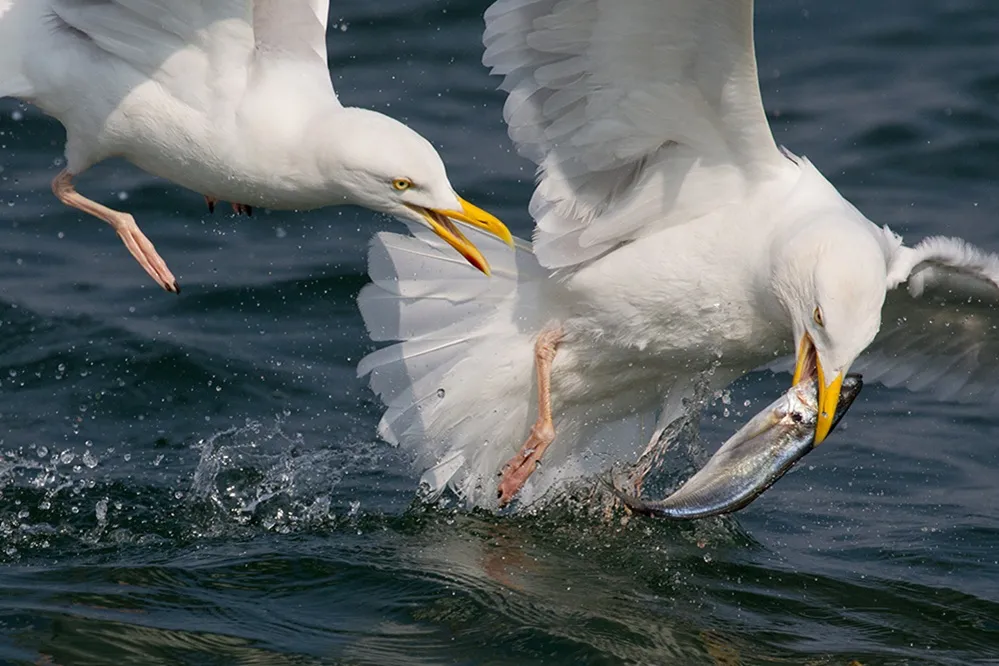
Scientists from the British Trust for Ornithology (BTO) have been tracking gulls in Scotland, to understand the foraging behaviours of these often-misunderstood seabirds.
Human activities are changing natural habitats globally. This can often put pressure on wildlife by, for example, altering how species find food.
Some species, such as gulls, are highly adaptable and have learnt to change their diets and take advantage of the food on offer in human-altered environments. However, this can often bring them into urban areas, as well as increasing competition between individuals of the same, and different, species when high-quality food sources become scarce.
Gulls would have traditionally fed on natural food found around our shores before adapting to human activities. When the UK’s fishing industry was more buoyant than it is today, gulls gathered en masse at harbours where fish discards were freely available in large quantities. Landfill sites too swiftly became easy pickings, providing tons of accessible human food waste for the hungry birds to sift through. As we continue to change the way we dispose of such edible waste, these birds must now adapt again if they are to survive.
Researchers from BTO were keen to understand the foraging habits of closely related but distinct gull species to see if, and how, their searches for food differed. The scientists attached GPS trackers to gulls at a nesting colony on the Isle of May, off Scotland’s east coast, to follow the birds’ movements when they went off in search of a meal, and to see if they were competing for the same food.
Three species were involved in the research
Great Black-backed Gull
The world’s largest gull. More likely to be seen on our coasts than at inland sites.
- Red-listed: UK Birds of Conservation Concern.
- Learn more about the Great Black-backed Gull.
Lesser Black-backed Gull
Familiar in a variety of habitats from coasts to fields and towns.
- Amber-listed: UK Birds of Conservation Concern.
- Learn more about the Lesser Black-backed Gull.
Herring Gull
The classic seaside ‘seagull’ often associated with stealing chips and ice creams, but are also partial to crabs and starfish found along the shore.
- Red-listed: UK Birds of Conservation Concern.
- Learn more about the Herring Gull.
Findings
The study found that while the three species did overlap in habitats, there were distinct differences in where the birds searched for their food.
Lesser Black-backed Gulls travelled further from the colony than the other two species, with Great Black-backed Gulls having the smallest foraging ranges, likely due to their formidable size and therefore greater competitive advantage. Herring and Great Black-backed Gulls showed a preference for landfill sites and coastal areas, including harbours. Although Lesser Black-backed Gulls also visited these habitats they primarily targeted agricultural areas.
The results suggest that if habitat loss and degradation continue, this could further negatively impact these declining gull species, despite their ability to feed on a range of foods in a range of habitats. Given that the gulls in this study largely favoured habitats linked to human activities, further changes such as landfill closures or altering coastal environments, could push the gulls to further seek out alternative, less preferred and lower quality food.
Competition for scarce foods will also likely increase, which may further negatively impact the gulls’ breeding success and survival, as well as exacerbate conflicts with human activities in alternative habitats.
Ultimately, it is hoped that the findings will inform gull management actions and help to mitigate conflict with humans.
Dr Nina O’Hanlon, Senior Research Ecologist at BTO Scotland, said, “We know that gulls can be very adaptable, but not all food sources meet their needs. When forced into suboptimal habitats, they may not find enough food to feed their chicks, or they may experience greater competition with other gulls searching for the same limited food. Our findings have allowed us to better understand how the foraging behaviours of different gull species could be impacted by habitat change, or how these birds might interact more with humans in future.”
Further reading
- Read the full paper Partial Niche Partitioning in Three Sympatric Gull Species Through Foraging Areas and Habitat Selection
- More about the UK Birds of Conservation Concern