Lesser Black-backed Gull
Introduction
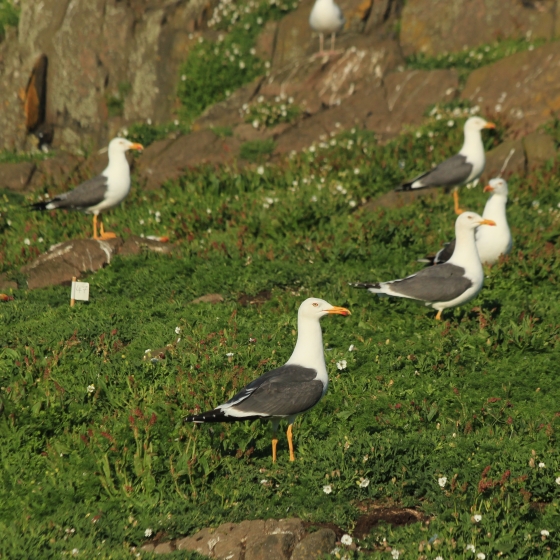
The Lesser Black-backed Gull, with its dark grey back and yellow legs, is as much at home in our towns and cities as it is along our wilder coast.
During the summer months the Lesser Black-backed Gull breeds in colonies on windswept, low-lying coastal islands but it also breeds on the flat roofs of city-centre buildings and industrial units.
Part of our breeding population heads south during the autumn to winter around the coasts of southern Spain, Portugal and north and west Africa. BTO research has demonstrated that the artificial reefs of offshore wind farms may have a positive effect on Lesser Black-backed Gull, providing them with new feeding opportunities.
Key Stats







Identification
ID Videos
This section features BTO training videos headlining this species, or featuring it as a potential confusion species.
Adult black-backed gulls
Songs and Calls
Song:
Call:
Status and Trends
Conservation Status
Population Change
The population of Lesser black-backed Gulls increased considerably between the 1969–70 Census and Seabird 2000 (1998–2002) with the number of coastal nesting pairs almost doubling (JNCC 2022). The full extent of this increase is unclear as inland nesting birds were not counted consistently prior to Seabird 2000, but Atlas data show that significant range increases in inland areas have occurred, suggesting that population increases have also occurred across inland colonies which are usually on rooftops. However, annual monitoring shows that substantial declines have occurred at coastal colonies since Seabird 2000 and, although increases appear to have continued at inland colonies, it is unclear how far these go towards compensating for the declines in coastal areas. The results from the Seabirds Count (2015–2021) are expected to help clarify the recent trend, although they are likely to remain subject to some uncertainty due to the difficulty in accurately counting gulls nesting on rooftops.
Distribution
As a breeding species, Lesser Black-backed Gulls are mostly coastal but an increasing tendency to nest on rooftops is allowing them to spread inland. In winter they can be found around the coast of Britain and Ireland, in the southeast interior of Ireland and throughout the lowlands of Britain.
Occupied 10-km squares in UK
2007/08–10/11
or view it on Bird Atlas Mapstore.
2008–11
or view it on Bird Atlas Mapstore.
European Distribution Map
Distribution Change
Since the 1980s there has been a major winter range expansion and population increase, with gains particularly notable in Ireland, where there has been a 55% expansion in range, and in Wales, southwest England and East Anglia as well as in Scotland.
Change in occupied 10-km squares in the UK
from 1981–84 to 2007–11
or view it on Bird Atlas Mapstore.
from 1968–72 to 2008–11
or view it on Bird Atlas Mapstore.
Seasonality
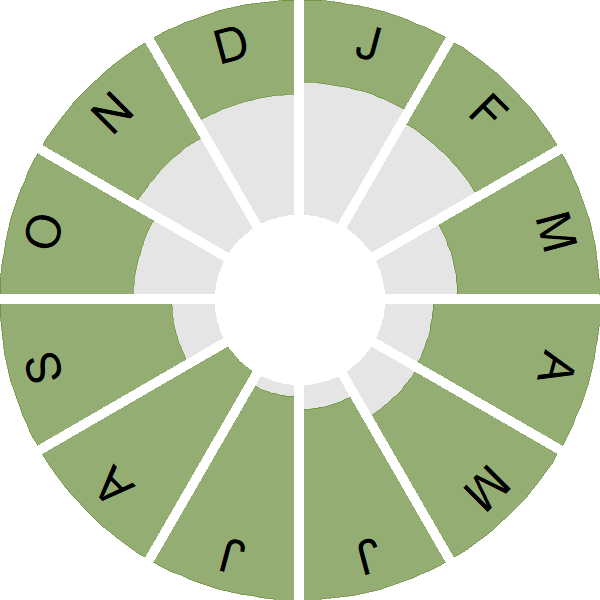
Lesser Black-backed Gulls are recorded throughout the year, though more often in the breeding season.
Weekly pattern of occurrence
The graph shows when the species is present in the UK, with taller bars indicating a higher likelihood of encountering the species in appropriate regions and habitats.

Habitats
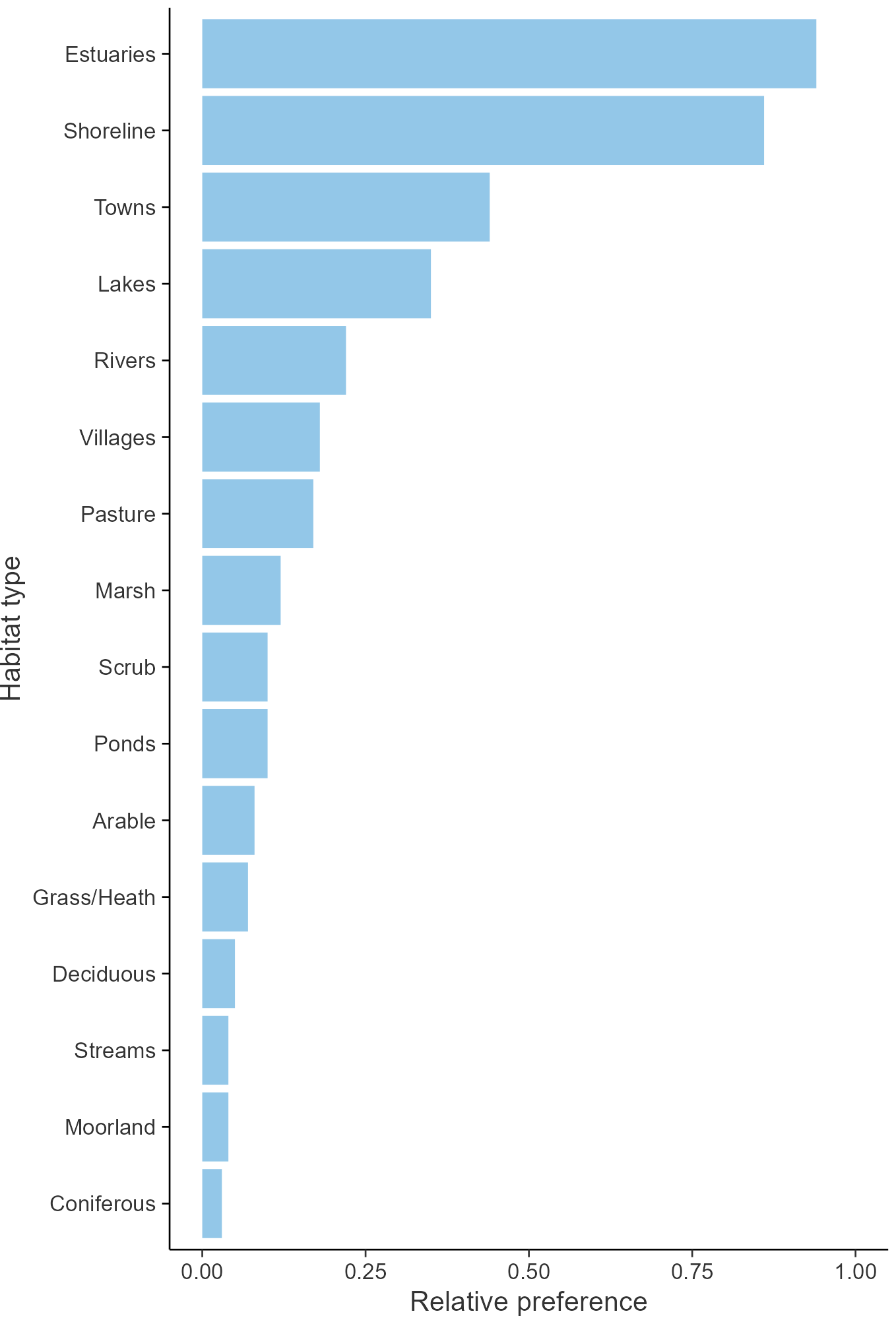
Breeding season habitats
Relative frequency by habitat
The graph shows the habitats occupied in the breeding season, with the most utilised habitats shown at the top. Bars of similar size indicate the species is equally likely to be recorded in those habitats.
Movement
Britain & Ireland movement
Foreign locations of birds ringed or recovered in Britain & Ireland
Dots show the foreign destinations of birds ringed in Britain & Ireland, and the origins of birds ringed overseas that were subsequently recaptured, resighted or found dead in Britain & Ireland. Dot colours indicate the time of year that the species was present at the location.
- Winter (Nov-Feb)
- Spring (Mar-Apr)
- Summer (May-Jul)
- Autumn (Aug-Oct)

European movements
EuroBirdPortal uses birdwatcher's records, such as those logged in BirdTrack to map the flows of birds as they arrive and depart Europe. See maps for this species here.
The Eurasian-African Migration Atlas shows movements of individual birds ringed or recovered in Europe. See maps for this species here.
Biology
Productivity and Nesting
Nesting timing
Egg measurements
Clutch Size
Survival and Longevity
Survival is shown as the proportion of birds surviving from one year to the next and is derived from bird ringing data. It can also be used to estimate how long birds typically live.
View number ringed each year in the Online Ringing Report.
Lifespan
Survival of adults
Biometrics
Wing length and body weights are from live birds (source).
Wing length
Body weight
Ring Size
Classification, names and codes
Classification and Codes
- Order: Charadriiformes
- Family: Laridae
- Scientific name: Larus fuscus
- Authority: Linnaeus, 1758
- BTO 2-letter code: LB
- BTO 5-letter code: LBBGU
- Euring code number: 5910
Alternate species names
- Catalan: gavià fosc
- Czech: racek žlutonohý
- Danish: Sildemåge
- Dutch: Kleine Mantelmeeuw
- Estonian: tõmmukajakas
- Finnish: selkälokki
- French: Goéland brun
- Gaelic: Farspag-bheag
- German: Heringsmöwe
- Hungarian: heringsirály
- Icelandic: Sílamáfur
- Irish: Droimneach Beag
- Italian: Zafferano
- Latvian: rengu kaija
- Lithuanian: silkinis kiras
- Norwegian: Sildemåke
- Polish: mewa zóltonoga
- Portuguese: gaivota-da-asa-escura
- Slovak: cajka tmavá
- Slovenian: rjavi galeb
- Spanish: Gaviota sombría
- Swedish: silltrut
- Welsh: Gwylan Gefnddu Fach
Research
Causes of Change and Solutions
Causes of change
The main drivers of the population changes were reviewed by Ross-Smith et al. (2014). They suggest that the growth population growth in the second half of the twentieth century was caused by several factors including better legal protection and their ability to adapt to new feeding opportunties (fisheries discards and anthropogenic sources of food) and to make use of urban sites which are largely predator free. Recent declines particularly at rural and coastal colonies are associated with reduced breeding success resulting from reduced feeding opportunties due to closure of landfill sites and a reduction in fisheries discards.
Publications (20)
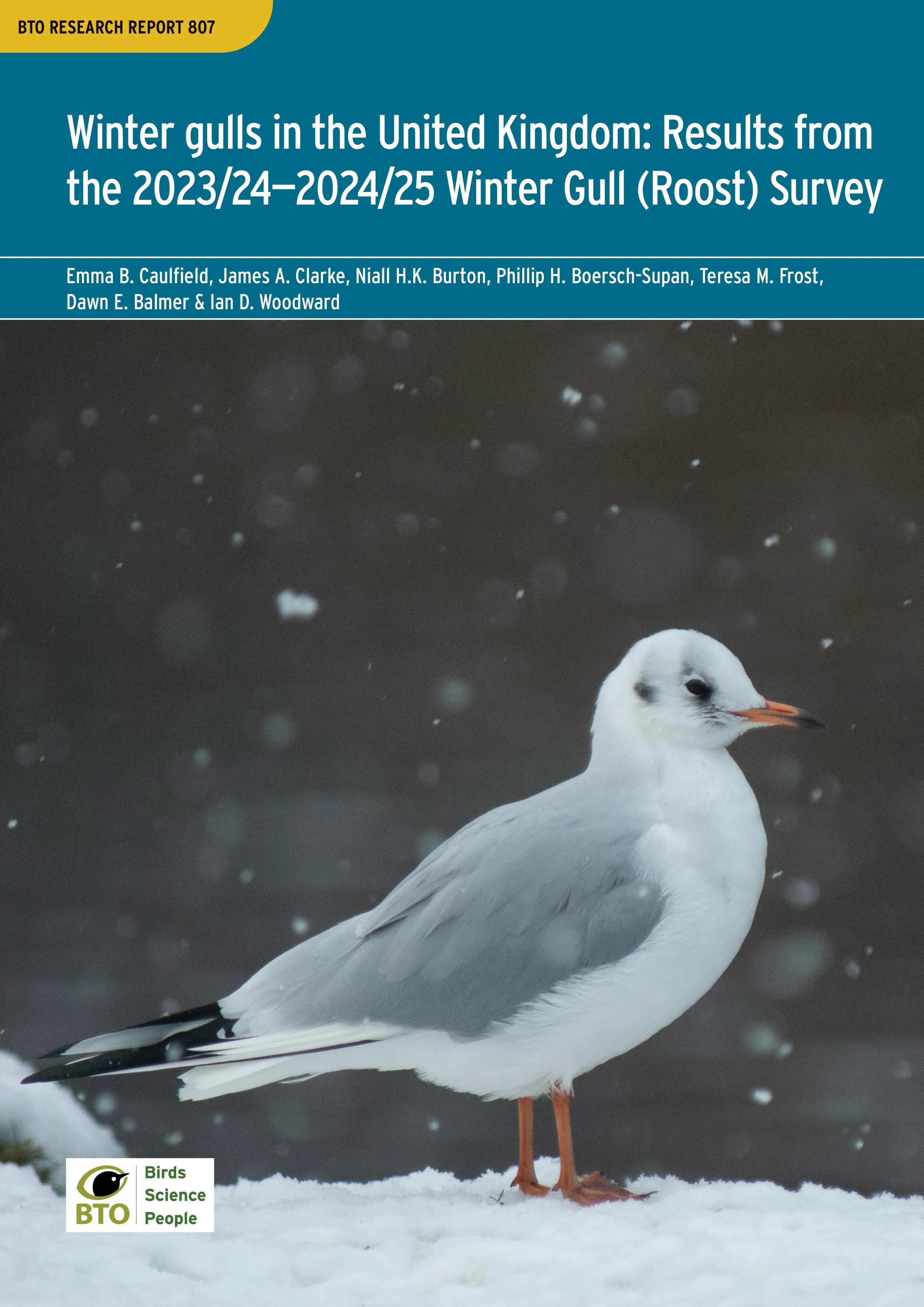
Winter gulls in the United Kingdom: Results from the 2023/24–2024/25 Winter Gull (Roost) Survey
Author:
Published: Winter 2026
This report presents updated population estimates for six gull species following the Winter Gull (Roost) Survey (WinGS) which was carried out during the 2023/24 and 2024/25 winters.
16.04.26
BTO Research Reports
Northern Ireland Seabird Report 2025
Author:
Published: 2026
This report is the published outcome of the work of the Northern Ireland Seabird Network — a network of volunteers, researchers and organisations — coordinated by the BTO Seabird Coordinator, and funded by NIEA. It contains detailed species accounts for the 22 breeding seabird species in Northern Ireland, as well as articles on a range of topics: Manx Shearwaters nesting on Rathlin Rathlin Island Breeding Seabird Census 2025 Tracking Lesser Black-backed Gulls on Lough Neagh Puffins return to Isle of Muck Outer Ards: 2025 Seabird Nesting Report Strangford Lough: 2025 Seabird Nesting Report Forthcoming seabird research work: ACCLIMATISE project
26.03.26
Reports Northern Ireland Seabird Report
Seabird Population Trends and Causes of Change: 1986–2024
Author:
Published: 2026
The annual report of the Seabird Monitoring Programme View and download the report Read the report online This report presents the latest seabird population trends in breeding abundance and productivity using data from the Seabird Monitoring Programme (SMP). It documents changes in the abundance and productivity of breeding seabird species in Britain and Ireland from 1986 to 2024. This report includes both inland and coastal populations and trends from the Channel Islands, England, Isle of Man, Northern Ireland, Scotland, Wales and the Republic of Ireland, which are presented where sufficient data are available. The results from this report are used more broadly to assess the health of the wider environment, to inform policy and for conservation action.
19.03.26
Reports SMP Report
Habitat selection of three gull species in response to sudden changes in human mobility
Author:
Published: 2025
17.12.25
Papers
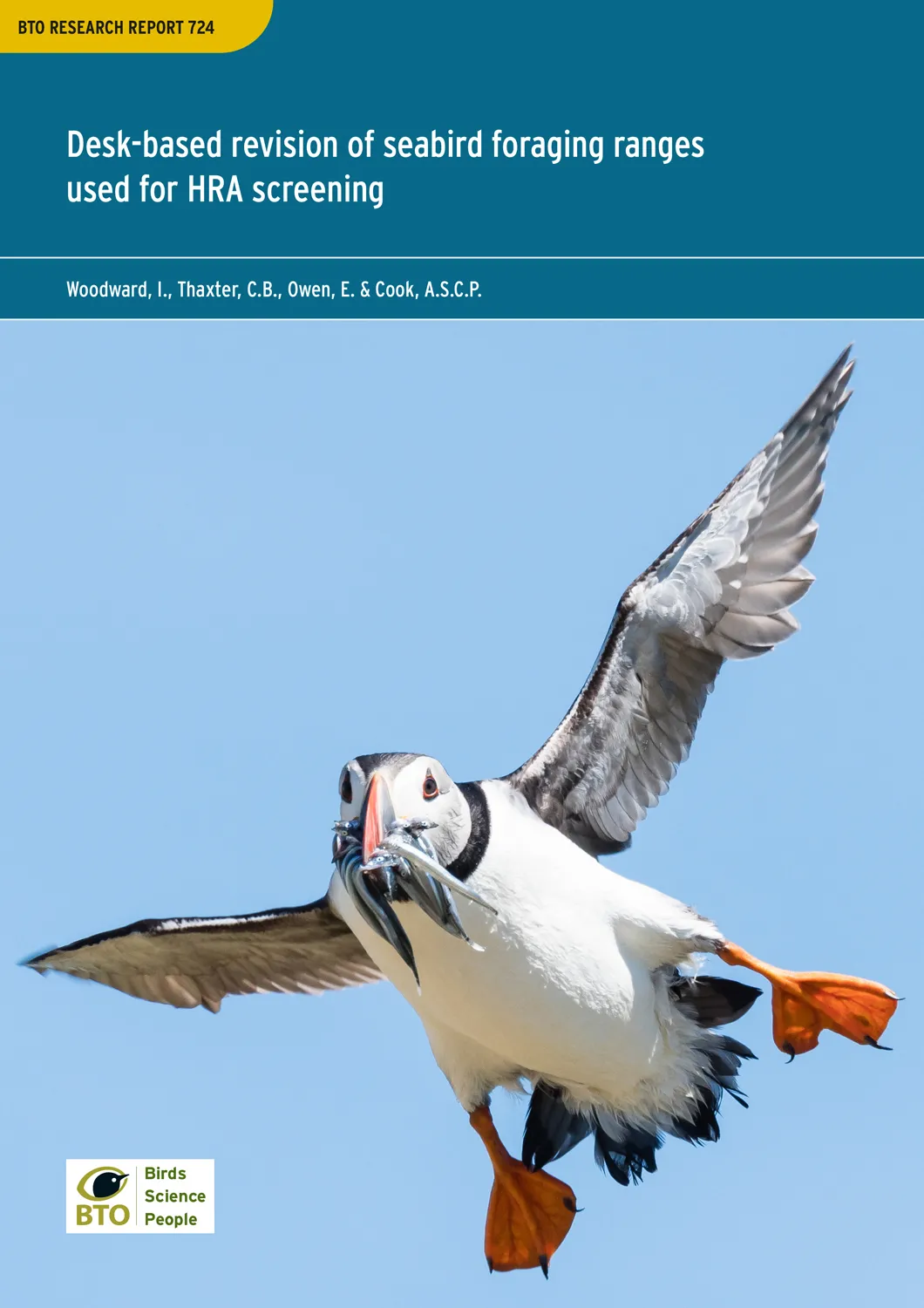
Desk-based revision of seabird foraging ranges used for HRA screening
Author:
Published: 2019
A key step in understanding the possible impacts of a proposed windfarm development is to identify potential interactions between seabird breeding colonies and the proposed development areas. Such interactions are typically assessed using generic information on foraging ranges, derived from academic studies. This report uses the latest data to provide updated estimates of foraging range, which will help to ensure that the best available information is available when new developments are being considered.
01.12.19
BTO Research Reports
Assessing the habitat use of Lesser Black-backed Gulls Larus fuscus from the Bowland Fells SPA in 2017 and 2018
Author:
Published: 2019
This report presents the results of GPS tracking of Lesser Black-backed Gulls (Larus fuscus) breeding at the Bowland Fells Site of Special Scientific Interest (SSSI) and Special Protection Area (SPA) in 2017 and 2018. The report builds on previous results from 2016. The aims of the study were to identify potential feeding areas and to quantify the amount of time spent by the gulls within the SPA boundary.
21.01.19
BTO Research Reports

Breeding and foraging habitat are important in determining foraging ranges of sympatric generalist species
Author:
Published: 2025
This study examines the foraging ranges of Herring Gulls and Lesser Black-backed Gulls during the breeding season to help identify and resolve potential human–wildlife conflicts.
07.10.25
Papers

Spatiotemporal differences in plastic biovectoring among three sympatric waterbirds
Author:
Published: 2025
31.07.25
Papers

The status of the UK’s breeding seabirds
Author:
Published: 2024
Five seabird species are added to the Birds of Conservation Concern Red List in this addendum to the 2021 update, bringing the total number of Red-listed seabird species to 10, up from six since seabirds were last assessed. The Amber List of seabirds moves from 19 to 14 species, and the Green List increases from one to two species.
29.09.24
Papers
Seabird Population Trends and Causes of Change: 1986–2023
Author:
Published: 2024
This report presents the latest seabird population trends in breeding abundance and productivity using data from the Seabird Monitoring Programme (SMP).The report documents changes in the abundance and productivity of breeding seabird species in Britain and Ireland from 1986 to 2023, and provides a detailed account of the 2021, 2022 and 2023 breeding seasons. This report includes both inland and coastal populations and trends from the Channel Islands, England, Isle of Man, Northern Ireland, Scotland, Wales and the Republic of Ireland, which are presented where sufficient data are available. The results from this report are used more broadly to assess the health of the wider environment, to inform policy and for conservation action.
21.11.24
Reports SMP Report
Leakage of plastics and other debris from landfills to a highly protected lake by wintering gulls
Author:
Published: 2024
Accumulation of plastic and waste contamination in the natural environment is a growing problem, but little is known of the role animals play in transporting plastics (a process known as ‘biovectoring’) particularly to inland waters and habitats. This study used diet sampling, population monitoring and GPS tracking data of Lesser Black-backed Gulls to monitor the transport of plastics and anthropogenic debris from landfills to an inland reservoir in Spain. The study, led by the Institut de Ciències del Mar and Estación Biológica de Doñana, CSIC, Spain, used diet samples collected in January 2022 at the Fuente de Piedra – an inland lake in Spain that is internationally important for biodiversity. Monthly counts of Lesser Black-backed Gulls were carried out to assess the numbers of birds present at the lake. GPS tracking data collected from studies across Northern Europe, including some led by BTO, were used over 12 ‘winters’, between January to March 2010–22, to understand the spatial movements of individual birds in the local region, coinciding with when birds are either on wintering grounds or on migration. The authors found that a high proportion (94%) of material regurgitated by gulls contained human-related material such as glass and textiles and 86% contained plastics, whereas only 1% plastic mass was present in faeces. Numbers of Lesser Black-backed Gulls at the lake were highest in January, peaking at a maximum count of 33,000 in January 2020. Agricultural habitats were most frequently used by gulls (88% time) as well as three landfill sites in the local area, with some landfills visited more than others, linked to use of bird deterrence measures. A total of 77% of the tracked birds visited at least one of the three landfills on a given day. The authors estimated that, on average, the annual deposition of plastic and other debris by the wintering gull population into the lake was 1,888 g per day, meaning that 400 kg of plastic were estimated to be deposited into the lake each winter, though only ca. 5 kg were from faeces. This study sheds new light on the importance of gulls for biovectoring within ecosystems, and the leakage of plastic and debris from landfills into inland waters. The plastics can accumulate in sediments and become incorporated into food webs, presenting a global contamination issue that needs addressing. The study further highlights the importance of adopting initiatives to tackle the problem, such as waste separation and plastic reduction measures, and bird-deterrence to reduce ingestion by birds at source.
01.04.24
Papers

Flight heights obtained from GPS versus altimeters influence estimates of collision risk with offshore wind turbines in Lesser Black-backed Gulls Larus fuscus
Author:
Published: 2023
In an effort to cut carbon emissions, many countries (including the UK) are constructing ever more offshore wind farms. Seabirds are at risk of colliding with the blades of offshore wind turbines, posing the potential for injury or death. However, the extent of this risk depends on several factors including how high the seabirds fly in relation to the area swept by turbine blades, the seabirds’ flight speeds, and any avoidance behaviour they undertake in response to either individual turbines or entire wind farms. Accurate understanding of these behavioural aspects of seabirds is important when assessing the potential population impact an offshore wind farm will have through so-called Collision Risk Models (CRMs). As previous BTO research has shown, bird-borne tracking devices are essential for shedding light on seabird flight behaviour. Different methods for gathering flight height information within tracking devices can influence the altitudes they produce, with implications for the collision estimates ultimately produced. This study compared the flight height altitudes produced from GPS and barometric altimeter data from tagged Lesser Black-backed Gulls to investigate this matter. Novel methods for calibrating GPS and altimeters were trialled to reduce error within the altitudes calculated by these methods as much as possible. The data were collected by attaching tracking devices to adult Lesser Black-backed Gulls captured while they were incubating their eggs at two breeding colonies (the Isle of May in Scotland and Havergate Island in England) in 2019 and 2020. Tags contained both GPS, which estimates a bird’s position using a network of satellites, and altimeters, which use air pressure measurements to estimate flight height. These two systems enabled flight heights obtained from either method to be compared. The results showed that altimeter data, when combined across years and colonies, produced higher flight heights than GPS data, and that this difference was more marked at higher sampling frequencies (e.g. one data point every 10 seconds) than at lower ones (e.g. one data point every five minutes). This in turn led to a greater number of collisions being predicted by CRMs for altimeter data than for GPS data. However, when GPS-altimeter data was split by sampling rate, year, and colony, flight heights from altimeters were not consistently higher, indicating local environmental conditions play a role influencing the accuracy of altitudes recorded. Tracking devices can provide information on flight height across a range of behaviours and environmental conditions. Improvement of calibration steps to account for the influence of the environment on tracking devices will help improve the accuracy of flight height information collected in future. This will increase confidence in the use of tracking devices in future assessments of collision risk and help to better predict mortality associated with wind farms. Forming a better understanding of the impacts of wind farms on seabirds will help ensure their appropriate development in future throughout the North Atlantic.
21.10.23
Papers

Urban and coastal breeding lesser black-backed gulls (Larus fuscus) segregate by foraging habitat
Author:
Published: 2022
A collaboration between BTO, Natural England and University of Exeter researchers used GPS-tracking technology to compare the movements and habitat use of Lesser Black-backed Gulls breeding at neighbouring coastal and urban colonies in Cumbria, northern England. The study found that the distance birds covered making foraging trips and the size of their 'home ranges' – the area that an individual bird uses on a daily basis during foraging, breeding and roosting activities – differed between the urban and coastal colonies and revealed a marked segregation in habitat choice.
11.07.22
Papers
Investigating avoidance and attraction responses in Lesser Black-backed Gulls Larus fuscus to offshore wind farms
Author:
Published: 2022
GPS tracking is a valuable tool for increasing our understanding of bird behaviour. In this study, researchers used tracking technology to investigate movements of Amber-listed Lesser Black-backed Gulls around offshore wind farms. Their results reveal a detailed picture of both avoidance of and attraction towards turbines in this species, which may be used to inform future collision risk assessments.
24.03.22
Papers

Development of a weak-link wing harness for use on large gulls (Laridae): methodology, evaluation and recommendations
Author:
Published: 2021
Research from BTO has investigated the ways in which to optimise long-term GPS tagging in large gulls, so that sufficient data are collected while birds' welfare needs are met.
31.12.21
Papers
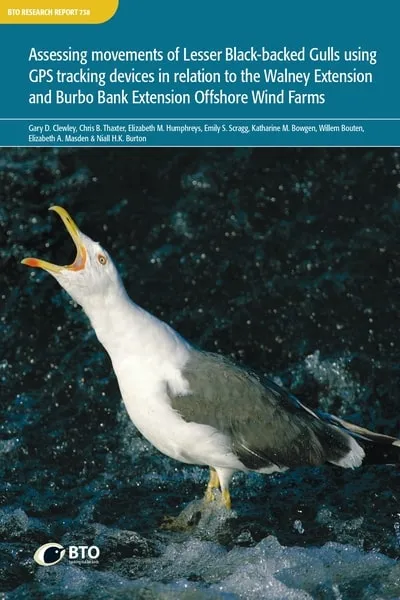
Assessing movements of Lesser Black-backed Gulls using GPS tracking devices in relation to the Walney Extension and Burbo Bank Extension Offshore Wind Farms
Author:
Published: 2021
Offshore wind farm developments form a major part of the UK government’s commitment to obtain 15% of the UK’s energy needs from renewable sources by 2020. However, there is concern over the potential detrimental effects that offshore developments may have on bird populations.
17.08.21
Reports
Avian vulnerability to wind farm collision through the year: insights from Lesser Black-backed Gulls (Larus fuscus) tracked from multiple breeding colonies
Author:
Published: 2019
BTO research shows that Lesser Black-backed Gulls are vulnerable to collisions with wind turbines whilst on migration and during the winter months, as well as during the breeding season.
10.09.19
Papers

Dodging the blades: new insights into three-dimensional space use of offshore wind farms by lesser black-backed gulls Larus fuscus
Author:
Published: 2018
Initial findings suggest that Lesser Black-backed Gulls in north-west England fly within wind farms, but may avoid wind turbines once there.
25.01.18
Papers

Assessing the habitat use of Lesser Black-backed Gulls (Larus fuscus) from the Bowland Fells SPA - ANNEX 1 - 2017 update
Author:
Published: 2018
This annex to BTO Research Report 694 (Clewley et al. 2016) presents a summary update for 2017 on the results of a GPS tracking study of Lesser Black-backed Gulls Larus fuscus breeding in the Bowland Fells Special Protection Area (SPA).
05.02.18
Reports
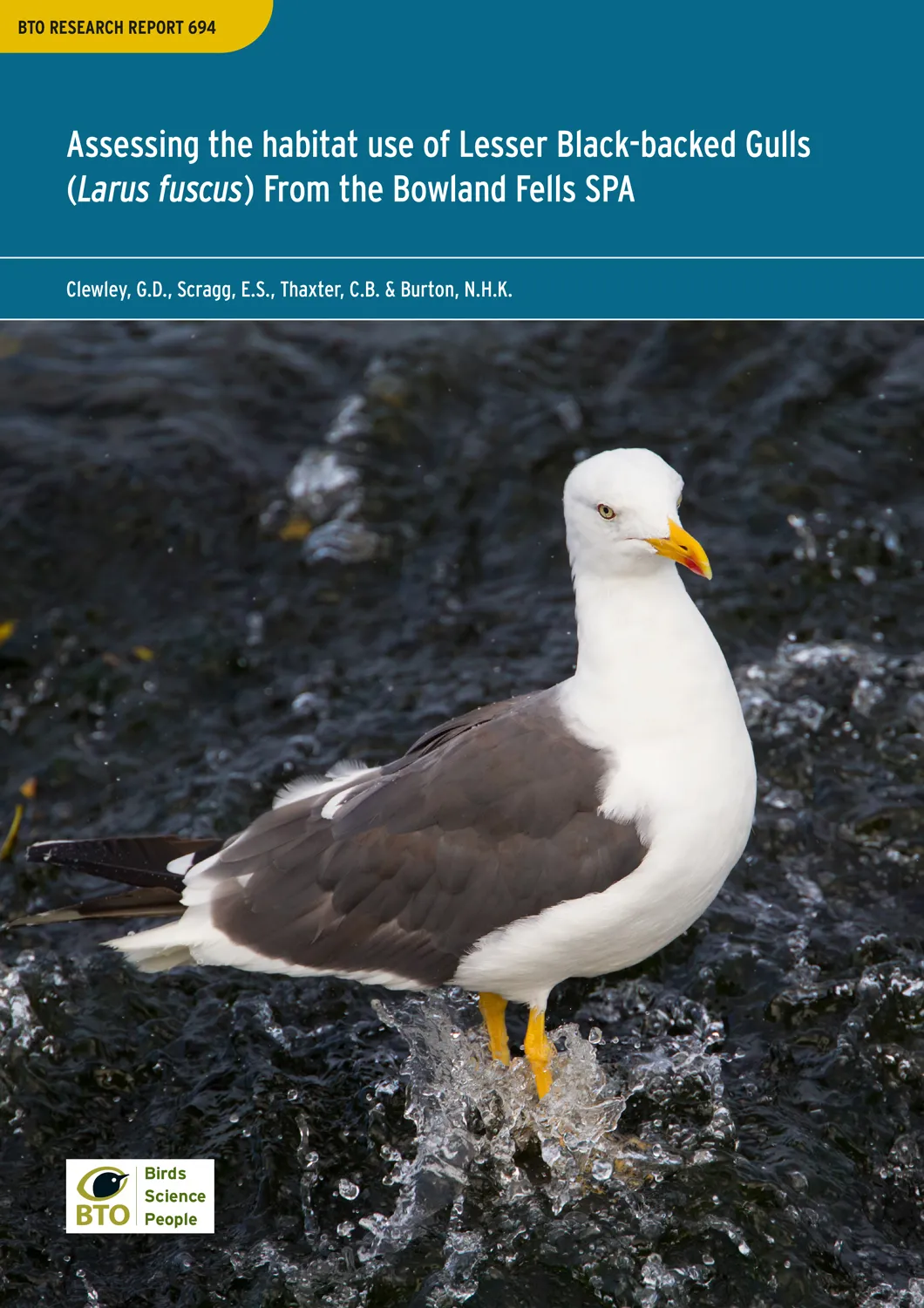
Assessing the habitat use of Lesser Black-backed Gulls (Larus fuscus) From the Bowland Fells SPA.
Author:
Published: 2017
This report investigates the habitat use of Lesser Black-backed Gulls Larus fuscus breeding within the Bowland Fells SPA.
20.09.17
BTO Research Reports
More Evidence
More evidence from Conservation Evidence.com
Partners




Citing BirdFacts
If you wish to cite particular content in this page (e.g. a specific value) it is best to use the original sources as linked in the page. For a more general citation of the whole page please use: BTO (20XX) BirdFacts Species: profiles of birds occurring in the United Kingdom. BTO, Thetford (www.bto.org/birdfacts, accessed on xx/xx/xxxx).