Herring Gull
Introduction
A quintessential sound of the seaside, the beautiful pearly-grey backed and pink-legged Herring Gull is perhaps one of our most familiar.
The Herring Gull feeds mainly on marine vertebrates and invertebrates, with Green Shore Crab being a particular favourite. It is an opportunist, however, and will eat a wide variety of food and can be found feeding in large congregations at refuse dumps, taking advantage of the food we throw away.
Once confined to the coast as a breeding bird, small numbers of Herring Gulls can now be found breeding far inland.
Key Stats







Identification
ID Videos
This section features BTO training videos headlining this species, or featuring it as a potential confusion species.
Adult black-backed gulls
Common Gull & Herring Gull
Songs and Calls
Song:
Call:
Status and Trends
Conservation Status
Population Change
The Herring Gull has declined considerably since the 1969–70 Census, with the coastal population falling by more than 50% by the time of Seabird 2000 (1998–2002). Annual monitoring suggests that further declines have occurred since Seabird 2000 and the results from the recent Seabirds Count (2015–21) are expected to confirm the severity of this decline in coastal breeding Herring Gulls (JNCC 2022). Small numbers breed inland, usually on rooftops, where they are difficult to survey; hence the status of the overall UK population is less clear. It is believed that these populations are increasing but still make up only a relatively small proportion of the UK population and that the increases in urban areas do not compensate for the declines elsewhere, but further assessment and future monitoring of urban populations is needed.
Distribution
Herring Gulls are widely distributed throughout lowland areas of Britain, with the highest concentrations near the coast. In Ireland, the distribution is more coastal.. In the breeding season the distribution is predominantly coastal, but the species readiness to nest on buildings has allowed it to colonise urban areas.
Occupied 10-km squares in UK
2007/08–10/11
or view it on Bird Atlas Mapstore.
2008–11
or view it on Bird Atlas Mapstore.
European Distribution Map
Distribution Change
Herring Gull breeding populations have declined significantly in size but few colonies have been completely lost. The breeding distribution change map implies that the greatest losses have been in coastal areas of western Ireland and western Scotland. Gains shown in urban areas are indicative of the divergence in trends between increasing urban and declining rural breeding populations.
Change in occupied 10-km squares in the UK
from 1981–84 to 2007–11
or view it on Bird Atlas Mapstore.
from 1968–72 to 2008–11
or view it on Bird Atlas Mapstore.
Seasonality
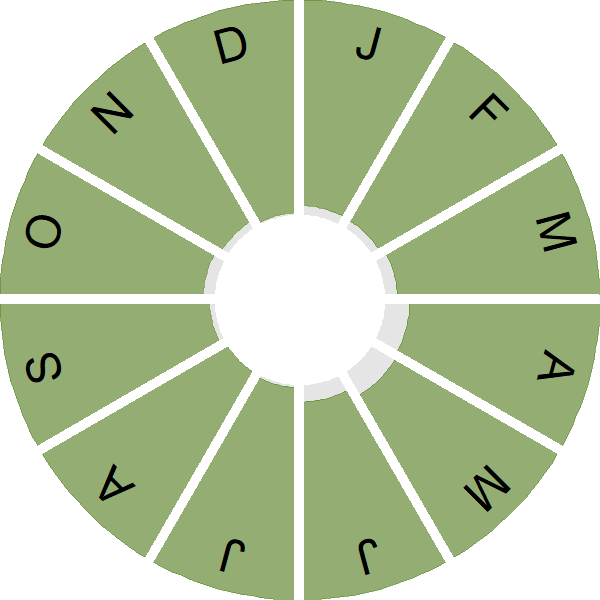
Herring Gulls are recorded throughout the year.
Weekly pattern of occurrence
The graph shows when the species is present in the UK, with taller bars indicating a higher likelihood of encountering the species in appropriate regions and habitats.

Habitats
Breeding season habitats
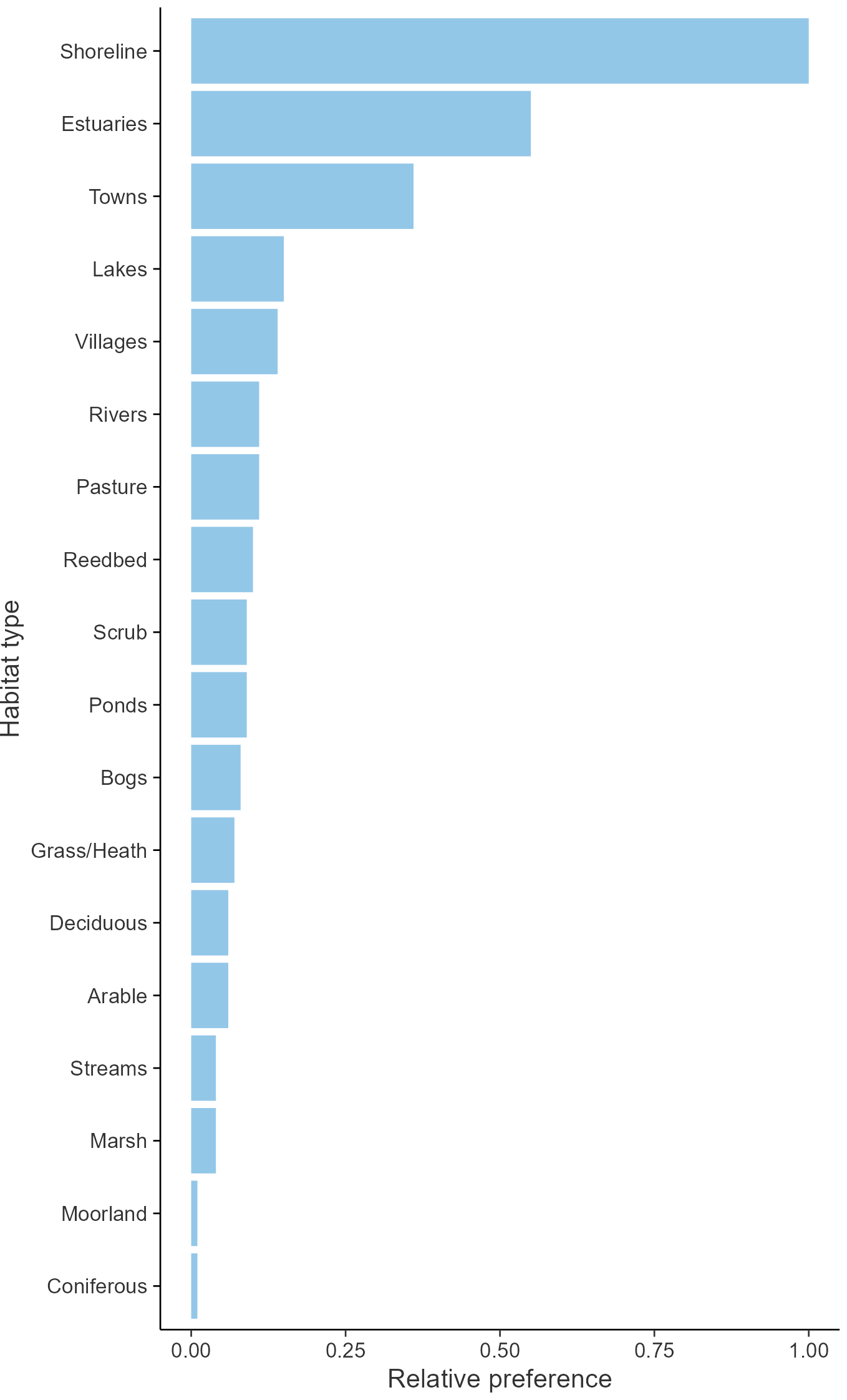
Relative frequency by habitat
The graph shows the habitats occupied in the breeding season, with the most utilised habitats shown at the top. Bars of similar size indicate the species is equally likely to be recorded in those habitats.
Movement
Britain & Ireland movement
European movements
EuroBirdPortal uses birdwatcher's records, such as those logged in BirdTrack to map the flows of birds as they arrive and depart Europe. See maps for this species here.
The Eurasian-African Migration Atlas shows movements of individual birds ringed or recovered in Europe. See maps for this species here.
Biology
Productivity and Nesting
Nesting timing
Egg measurements
Clutch Size
Survival and Longevity
Survival is shown as the proportion of birds surviving from one year to the next and is derived from bird ringing data. It can also be used to estimate how long birds typically live.
Lifespan
Survival of adults
Survival of juveniles
Biometrics
Wing length and body weights are from live birds (source).
Wing length
Body weight
Ring Size
Classification, names and codes
Classification and Codes
- Order: Charadriiformes
- Family: Laridae
- Scientific name: Larus argentatus
- Authority: Pontoppidan, 1763
- BTO 2-letter code: HG
- BTO 5-letter code: HERGU
- Euring code number: 5921
Alternate species names
- Catalan: gavià argentat de potes rosa
- Czech: racek stríbritý
- Danish: Sølvmåge
- Dutch: Zilvermeeuw
- Estonian: hõbekajakas
- Finnish: harmaalokki
- French: Goéland argenté
- Gaelic: Faoileag-an-sgadain
- German: Silbermöwe
- Hungarian: ezüstsirály
- Icelandic: Silfurmáfur
- Irish: Faoileán Scadán
- Italian: Gabbiano reale nordico
- Latvian: sudrabkaija
- Lithuanian: sidabrinis kiras
- Norwegian: Gråmåke
- Polish: mewa srebrzysta
- Portuguese: gaivota-argêntea
- Slovak: cajka striebristá
- Slovenian: srebrni galeb
- Spanish: Gaviota argéntea europea
- Swedish: gråtrut
- Welsh: Gwylan Penwaig
Research
Causes of Change and Solutions
Causes of change
The main drivers of the population changes are unclear. However, botulism is believed to be one important factor behind the declines which occurred between 1969–70 and Seabird 2000 (Mitchell et al. 2004), at a time when other seabird species including Lesser Black-backed Gull were increasing. Recent declines particularly at rural and coastal colonies may be associated with the factors that have affected other gull species: reduced breeding success resulting from reduced feeding opportunties due to closure of landfill sites and a reduction in fisheries discards (Mitchell et al. 2004; Bicknell et al. 2013). Increases in urban areas are likely to be driven by the fact that they provide both increased foraging opportunties and safe nesting sites that are relatively predator free in comparison with natural sites (Raven & Coulson 1997).
Publications (17)
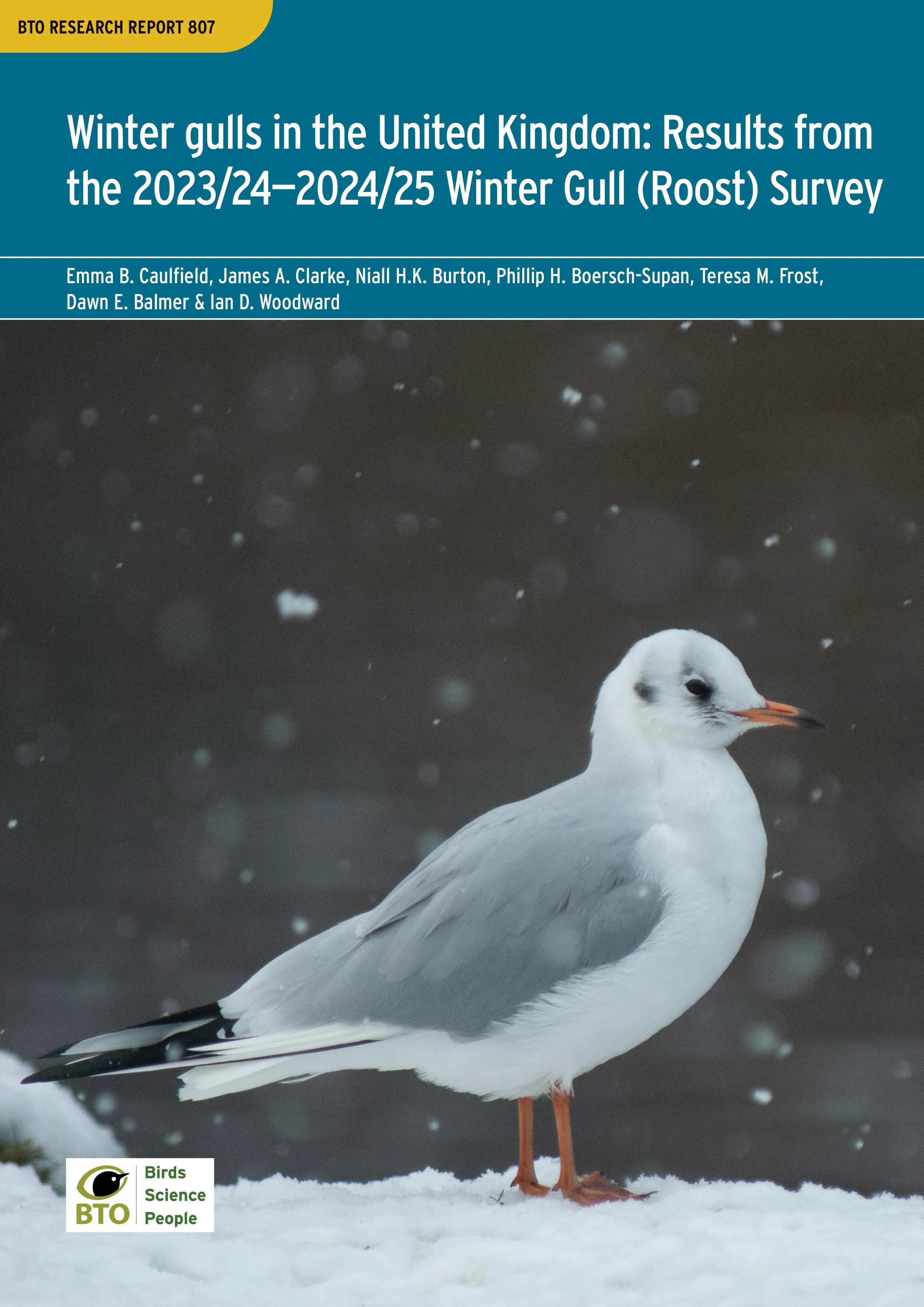
Winter gulls in the United Kingdom: Results from the 2023/24–2024/25 Winter Gull (Roost) Survey
Author:
Published: Winter 2026
This report presents updated population estimates for six gull species following the Winter Gull (Roost) Survey (WinGS) which was carried out during the 2023/24 and 2024/25 winters.
16.04.26
BTO Research Reports
Northern Ireland Seabird Report 2025
Author:
Published: 2026
This report is the published outcome of the work of the Northern Ireland Seabird Network — a network of volunteers, researchers and organisations — coordinated by the BTO Seabird Coordinator, and funded by NIEA. It contains detailed species accounts for the 22 breeding seabird species in Northern Ireland, as well as articles on a range of topics: Manx Shearwaters nesting on Rathlin Rathlin Island Breeding Seabird Census 2025 Tracking Lesser Black-backed Gulls on Lough Neagh Puffins return to Isle of Muck Outer Ards: 2025 Seabird Nesting Report Strangford Lough: 2025 Seabird Nesting Report Forthcoming seabird research work: ACCLIMATISE project
26.03.26
Reports Northern Ireland Seabird Report
Seabird Population Trends and Causes of Change: 1986–2024
Author:
Published: 2026
The annual report of the Seabird Monitoring Programme View and download the report Read the report online This report presents the latest seabird population trends in breeding abundance and productivity using data from the Seabird Monitoring Programme (SMP). It documents changes in the abundance and productivity of breeding seabird species in Britain and Ireland from 1986 to 2024. This report includes both inland and coastal populations and trends from the Channel Islands, England, Isle of Man, Northern Ireland, Scotland, Wales and the Republic of Ireland, which are presented where sufficient data are available. The results from this report are used more broadly to assess the health of the wider environment, to inform policy and for conservation action.
19.03.26
Reports SMP Report
Habitat selection of three gull species in response to sudden changes in human mobility
Author:
Published: 2025
17.12.25
Papers
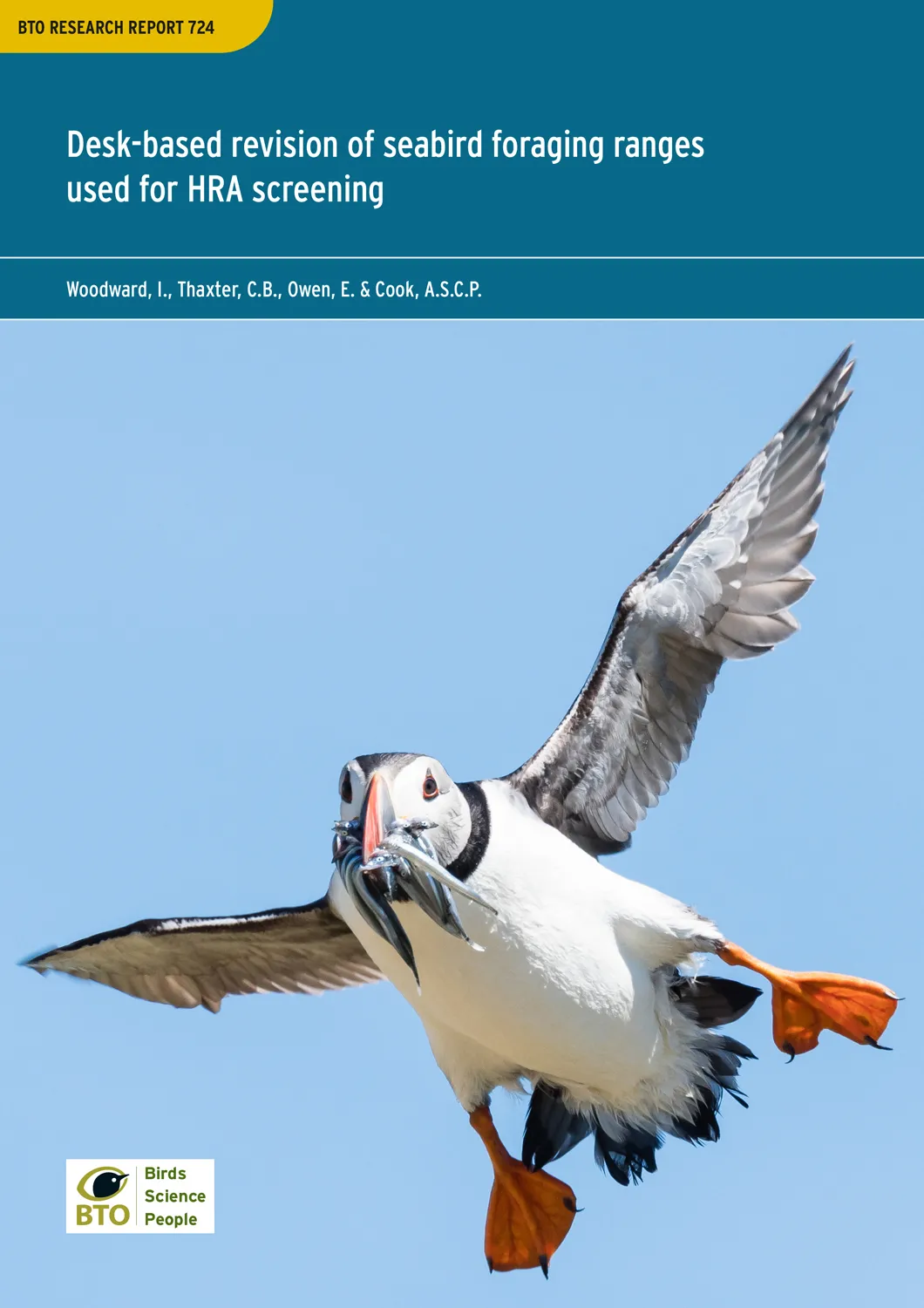
Desk-based revision of seabird foraging ranges used for HRA screening
Author:
Published: 2019
A key step in understanding the possible impacts of a proposed windfarm development is to identify potential interactions between seabird breeding colonies and the proposed development areas. Such interactions are typically assessed using generic information on foraging ranges, derived from academic studies. This report uses the latest data to provide updated estimates of foraging range, which will help to ensure that the best available information is available when new developments are being considered.
01.12.19
BTO Research Reports
Breeding and foraging habitat are important in determining foraging ranges of sympatric generalist species
Author:
Published: 2025
This study examines the foraging ranges of Herring Gulls and Lesser Black-backed Gulls during the breeding season to help identify and resolve potential human–wildlife conflicts.
07.10.25
Papers
The status of the UK’s breeding seabirds
Author:
Published: 2024
Five seabird species are added to the Birds of Conservation Concern Red List in this addendum to the 2021 update, bringing the total number of Red-listed seabird species to 10, up from six since seabirds were last assessed. The Amber List of seabirds moves from 19 to 14 species, and the Green List increases from one to two species.
29.09.24
Papers
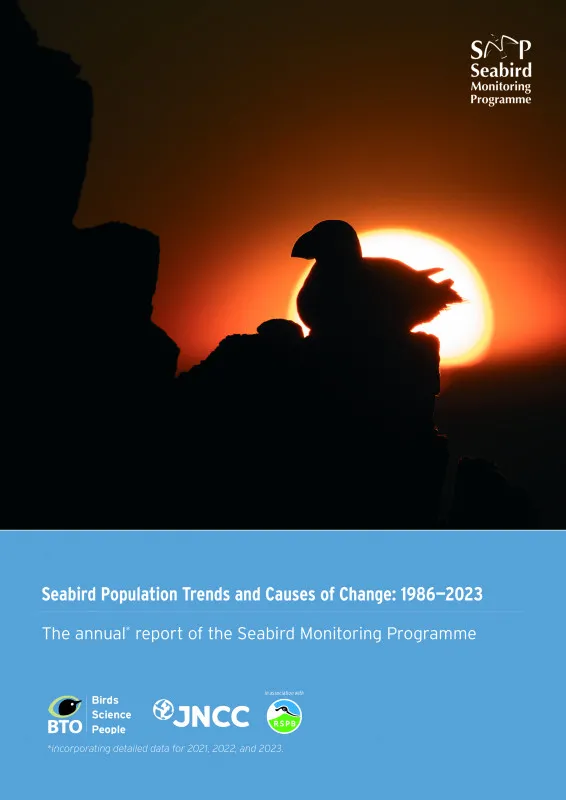
Seabird Population Trends and Causes of Change: 1986–2023
Author:
Published: 2024
This report presents the latest seabird population trends in breeding abundance and productivity using data from the Seabird Monitoring Programme (SMP).The report documents changes in the abundance and productivity of breeding seabird species in Britain and Ireland from 1986 to 2023, and provides a detailed account of the 2021, 2022 and 2023 breeding seasons. This report includes both inland and coastal populations and trends from the Channel Islands, England, Isle of Man, Northern Ireland, Scotland, Wales and the Republic of Ireland, which are presented where sufficient data are available. The results from this report are used more broadly to assess the health of the wider environment, to inform policy and for conservation action.
21.11.24
Reports SMP Report
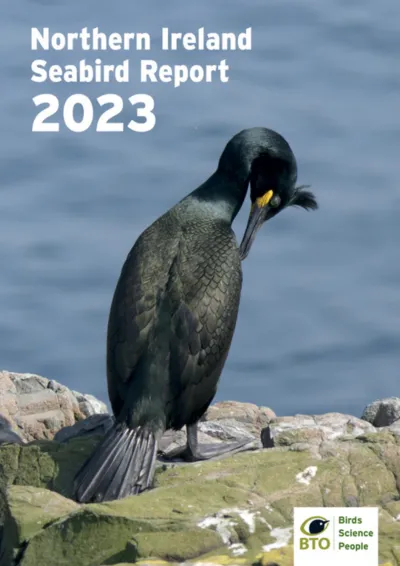
Northern Ireland Seabird Report 2023
Author:
Published: 2024
The report includes detailed information about the population trends and breeding success of seabirds in Northern Ireland, over the 2023 breeding season. Notably, Fulmar and Kittiwake populations are reported to be experiencing continued declines, while Guillemot, Common Gull and Herring Gull populations show increases at most breeding sites. Low productivity was reported in Black-headed Gulls, Sandwich Terns and Common Terns, likely due to the impacts of highly pathogenic avian influenza (HPAI). Although Black-headed Gulls make up the majority of confirmed HPAI mortality cases in Northern Ireland in 2023, other birds significantly affected include terns, Kittiwakes and auks. A contributor report about HPAI in Northern Ireland by Ronan Owens (Higher Scientific Officer, DAERA, NIEA) details developments in environmental organisations’ responses to HPAI in 2023, including cross-sector communication, improved surveillance and monitoring of HPAI impacts, and improved online systems for the public to report dead birds. Monitoring reports for Strangford Lough and the Outer Ards are included, as well as several additional contributor articles: Copeland gull censuses, by Roisin Kearney (Assistant Conservation Officer, RSPB). The Copeland Islands host one of the largest mixed gull colonies in Northern Ireland, with significant numbers of Lesser Black-backed Gulls and Herring Gulls. The annual gull census was established in 2018; the article details the refinement of the methodology to date as well as the census results so far. Manx Shearwater tracking, by Patrick Lewin (DPhil Student, OxNav, Dept. of Biology, University of Oxford). Tracking the Manx Shearwaters that breed on Lighthouse Island (one of the three Copeland Islands) began in 2007. The article describes the history of tracking Manx Shearwaters from Copeland, including recent advances in technology that have allowed the tracking of fledgling birds as well as adults of breeding age, and the impact of this research on the conservation of shearwaters. Puffin surveys on Rathlin, by Ric Else (Life RAFT Senior Research Assistant, RSPB). Rathlin Island hosts Northern Ireland’s largest seabird colony. The response of seabirds to the removal of introduced Ferrets and Brown Rats from Rathlin is currently being monitored, with a particular focus on Puffins. These birds are especially vulnerable to mammalian predators because of their burrow nests. The article describes the challenges associated with calculating a population estimate, monitoring productivity and mapping the distribution of this species, and how these are being addressed in seabird surveys on Rathlin.
15.04.24
Reports Northern Ireland Seabird Report
Development of a weak-link wing harness for use on large gulls (Laridae): methodology, evaluation and recommendations
Author:
Published: 2021
Research from BTO has investigated the ways in which to optimise long-term GPS tagging in large gulls, so that sufficient data are collected while birds' welfare needs are met.
31.12.21
Papers
Foraging habitat selection by breeding Herring Gull (Larus argentatus) from a declining coastal colony in the United Kingdom
Author:
Published: 2021
New research from BTO has used GPS tracking to investigate the feeding preferences of breeding Herring Gulls at a declining colony, and found that these birds are more likely to be foraging on Mussels than pilfering your lunch. Despite their fearsome reputation, breeding Herring Gull numbers are declining at many formerly important sites and this species has been on the Birds of Conservation Concern Red List since 2009. New research by BTO has used GPS tracking to investigate the movements of Herring Gulls breeding at South Walney, Cumbria. Declines at this well-studied colony mean breeding numbers are currently approximately a tenth of those counted in the late 1980s, when the colony peaked at approximately 11,000 apparently occupied nests. Approximately 75% of fixes from the GPS tags attached to the 24 individuals tracked came from intertidal and near-shore habitats, and in particular Mussel beds, when birds were away from the breeding colony. It is likely that birds were visiting these areas to feed. Previous studies of Herring Gulls breeding at South Walney had shown the importance of landfill as a food source, but local tips have since closed, likely contributing to the reduction in the colony's size. Interestingly, none of the tracked birds specialised in foraging in urban habitats, so are not likely to come into conflict with humans in this environment, where they can be perceived as a pest. However, the birds' specialisation on Mussel beds shows the importance of managing shellfisheries in a way that meets the needs of both humans and Herring Gulls in order to mitigate further declines at this colony.
25.08.21
Papers
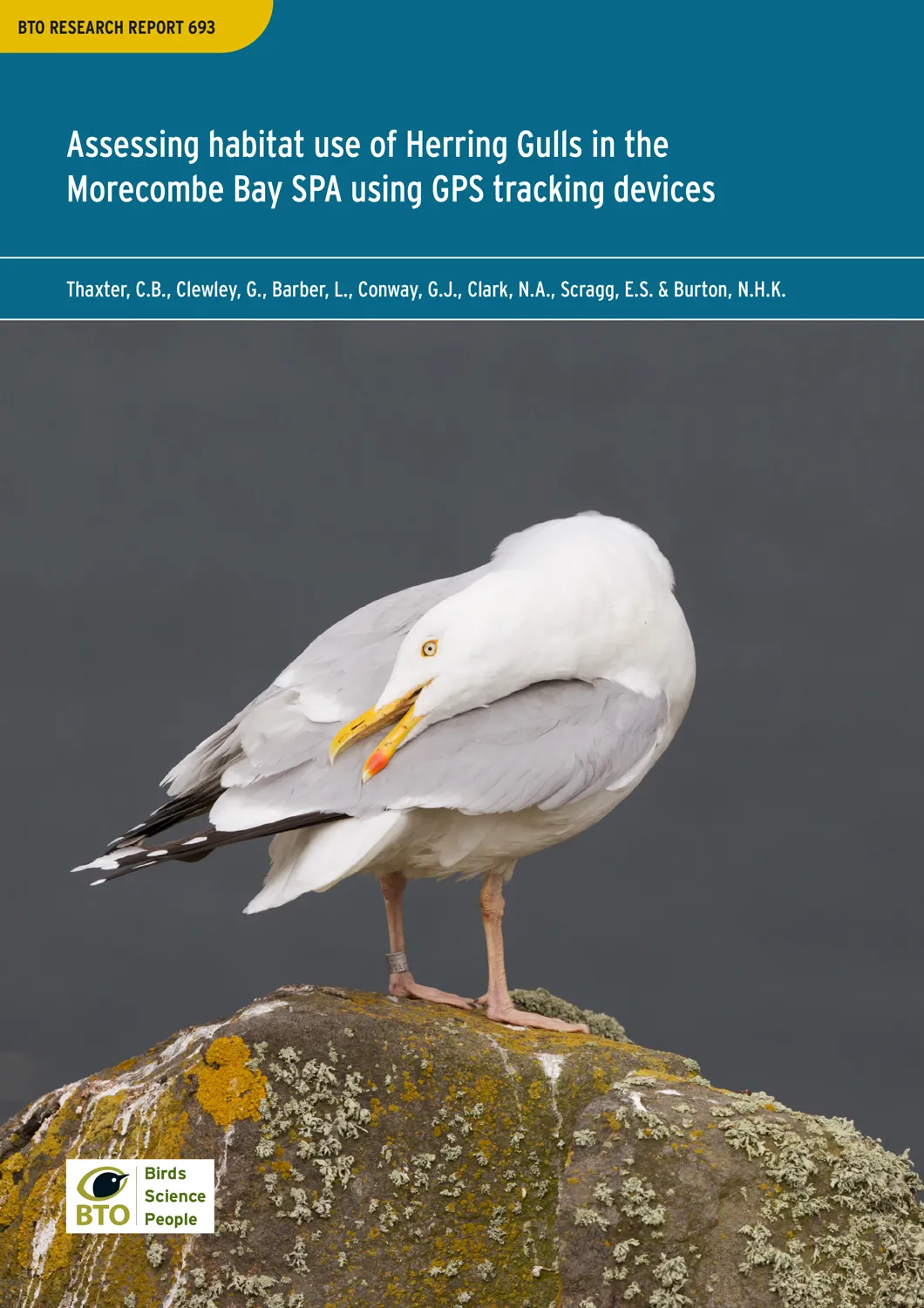
Assessing habitat use of Herring Gulls in the Morecambe Bay SPA using GPS tracking devices
Author:
Published: 2017
This report examines the movements and habitat use of Herring Gulls Larus argentatus breeding in the Morecombe Bay SPA.
01.05.17
BTO Research Reports
Urban Breeding Gull Surveys: A Survey Design Simulation
Author:
Published: 2017
This report builds on Ross et al. (2016) using computer simulations to examine how survey coverage affects the precision of population estimates. This work will provide a first step towards improving the population estimates of urban gulls, assuming surveys go ahead in the future. Includes annex: Results for Northwest England. To support delivery of the latest census of the breeding seabird population of Britain and Ireland, a previous Natural England commissioned report (Ross et al. 2016) reviewed the survey methods in order to make recommendations for the most cost-effective survey design for quantifying (urban) gull abundance in UK and Ireland. Within that report, recommendations were made on the expected necessary coverage, with reference to previous analogous bird surveys across similar geographic scales. This report builds on Ross et al. (2016) using computer simulations to examine how survey coverage affects the precision of population estimates. This work will provide a first step towards improving the population estimates of urban gulls, assuming surveys go ahead in the future.
12.06.17
Reports
Results from the first GPS tracking of roof-nesting Herring Gulls Larus argentatus in the UK
Author:
Published: 2016
13.07.16
Papers Ringing and Migration
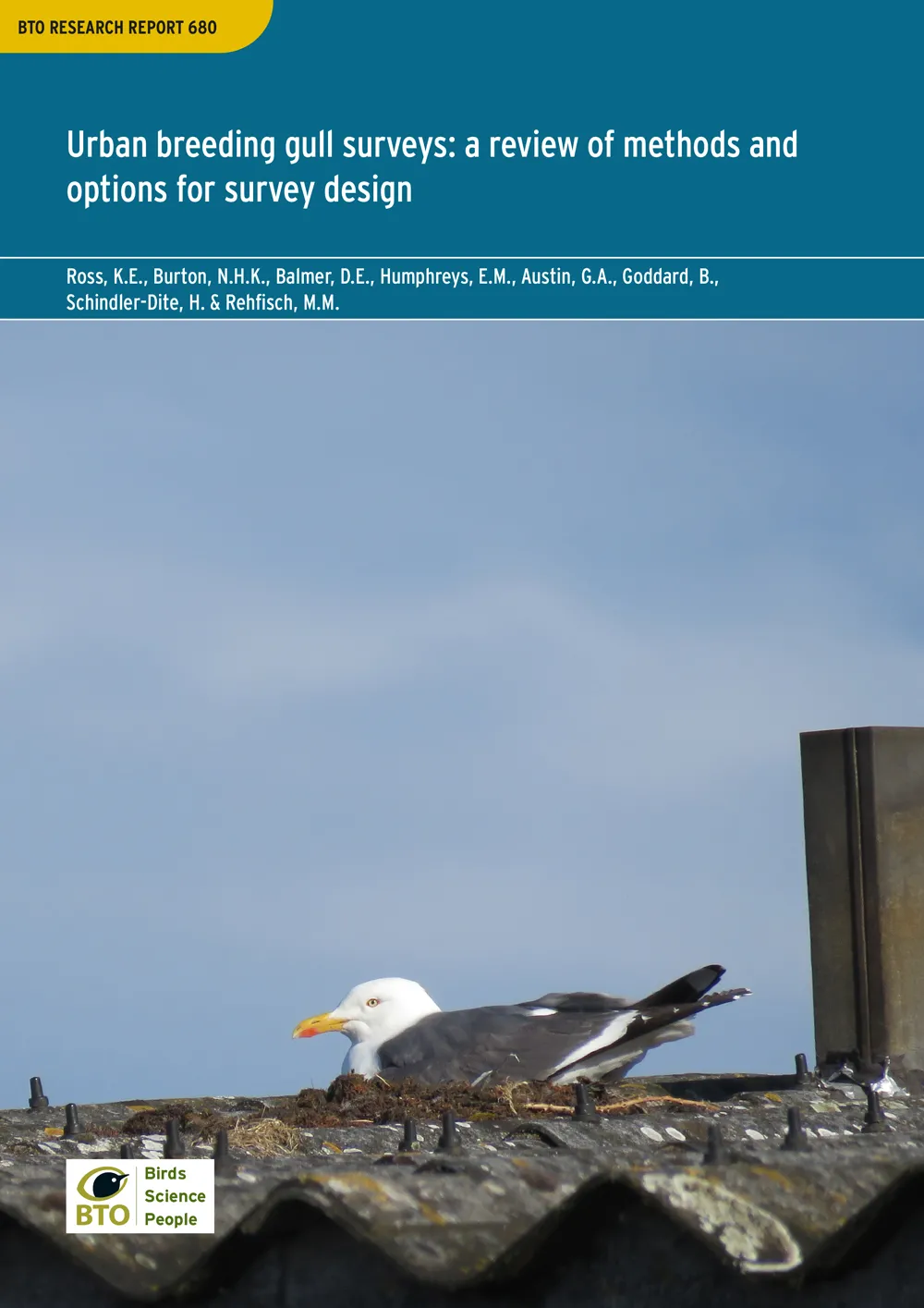
Urban breeding gull surveys: a review of methods and options for survey design
Author:
Published: 2016
This report was commissioned by Natural England to inform the design and implementation of future census efforts for breeding urban gulls, and to make recommendations for the most cost-effective survey strategy for delivering urban gull population estimates for the UK and Republic of Ireland, as well as any specified key sites.
07.06.16
BTO Research Reports
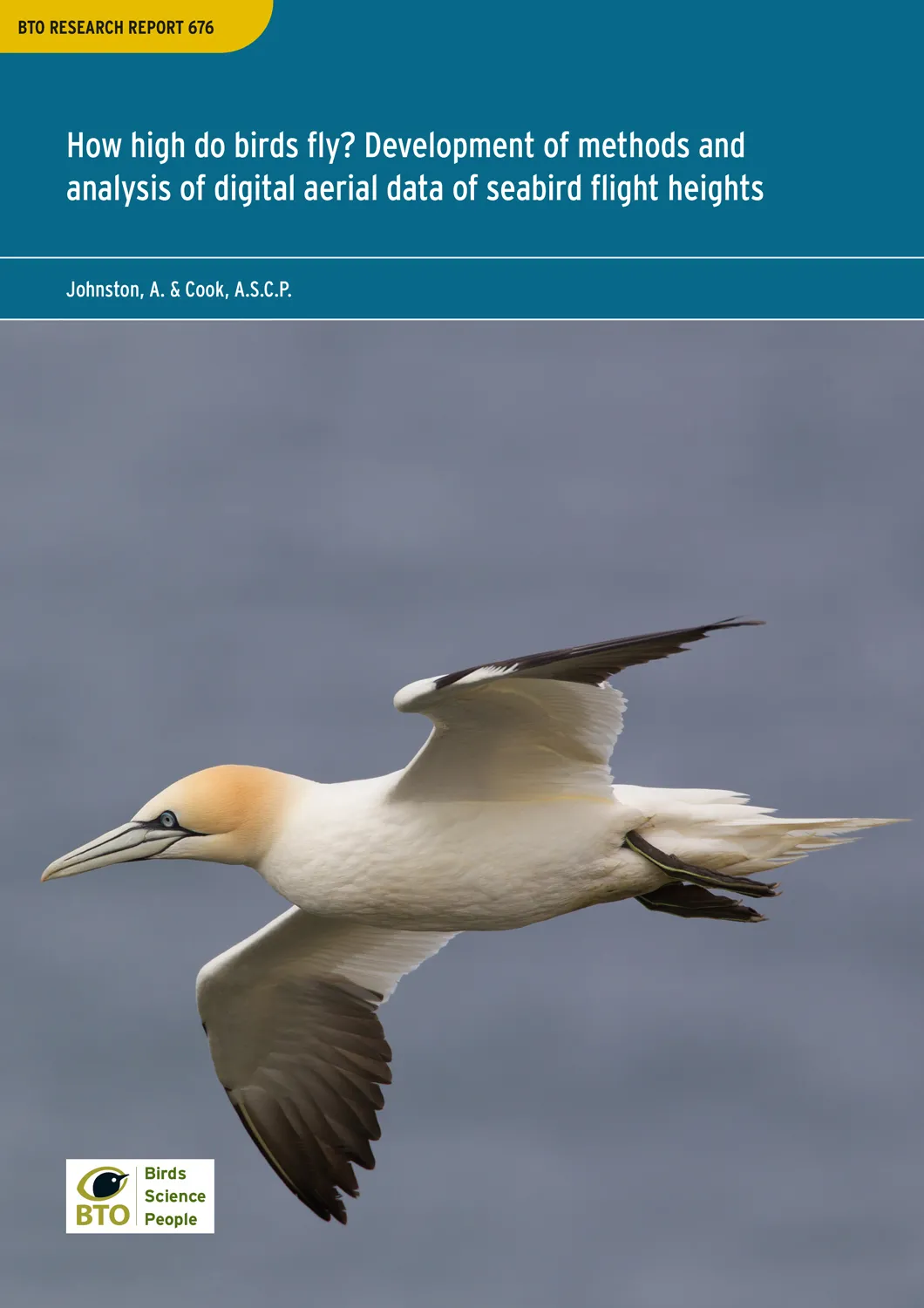
How high do birds fly? Development of methods and analysis of digital aerial data of seabird flight heights
Author:
Published: 2016
The purpose of this work was to develop a method for analysing digital aerial ornithology survey data, to derive species-specific flight heights. The focus of this work has been to develop an approach to analysis, rather than analysing a comprehensive dataset to derive generic flight height values. Although the project has been successful in developing such an approach to analysis, the BTO and Steering Group for the work emphasises that the values presented in this report are not intended to be used to inform assessments. Any party undertaking an ornithological collision risk assessment should seek advice from the relevant regulators and statutory nature conservation bodies on appropriate flight height values and avoidance rates to use. This report does not constitute such statutory advice.
16.03.16
BTO Research Reports
The avoidance rates of collision between birds and offshore turbines
Author:
Published: 2014
Report of work carried out by the British Trust for Ornithology in collaboration with the Environmental Research Institute on behalf of the Marine Scotland Science. Accurately estimating birds’ risk of collision with offshore wind turbines is a key part of the decision-making process for proposed renewable developments. However, the evidence base for quantifying the number of birds likely to avoid colliding with turbines is limited. Recent BTO-led work helping to fill this gap, improving the understanding of the impacts of offshore renewables on marine wildlife.
03.12.14
Reports Other reports
More Evidence
More evidence from Conservation Evidence.com
Partners


Citing BirdFacts
If you wish to cite particular content in this page (e.g. a specific value) it is best to use the original sources as linked in the page. For a more general citation of the whole page please use: BTO (20XX) BirdFacts Species: profiles of birds occurring in the United Kingdom. BTO, Thetford (www.bto.org/birdfacts, accessed on xx/xx/xxxx).