Spring migration at the end of April 2026.
Since the last migration blog two weeks ago, the spring migration has progressed significantly, with many of our summer migrants now widespread, later arriving species such as Swift starting to appear, and the earliest arriving species already starting to nest.
In the last fortnight the reporting rate for Chiffchaff has actually dropped slightly, although this can probably be explained by birds singing less and thus becoming less detectable as they start to nest. The reporting rate for Willow Warbler will probably also start to fall in England, but will peak later in Scotland, reflecting both the progression of arrivals from south to north and the fact that Willow Warbler is sadly being lost as a breeding species in parts of southern England.
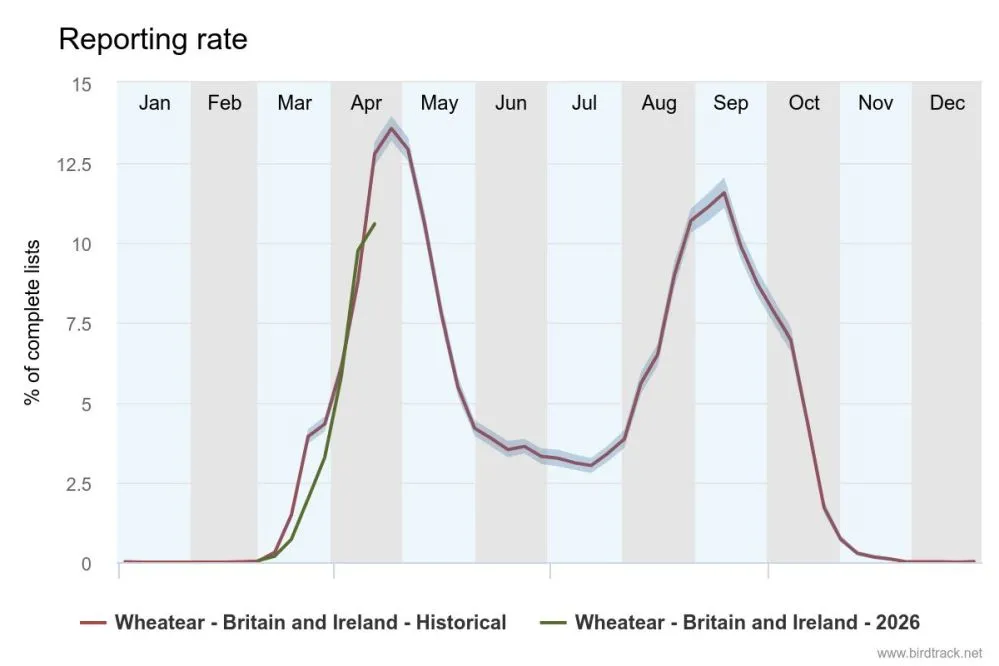
After a poor showing in March, the reporting rate for Wheatear caught up with the historic curve in the second week of April. If you haven’t seen a Wheatear yet this spring, there is still a good chance over the next week or so, both at the coast and inland, but after the first week of May it will be unusual to find a Wheatear away from their upland breeding areas.
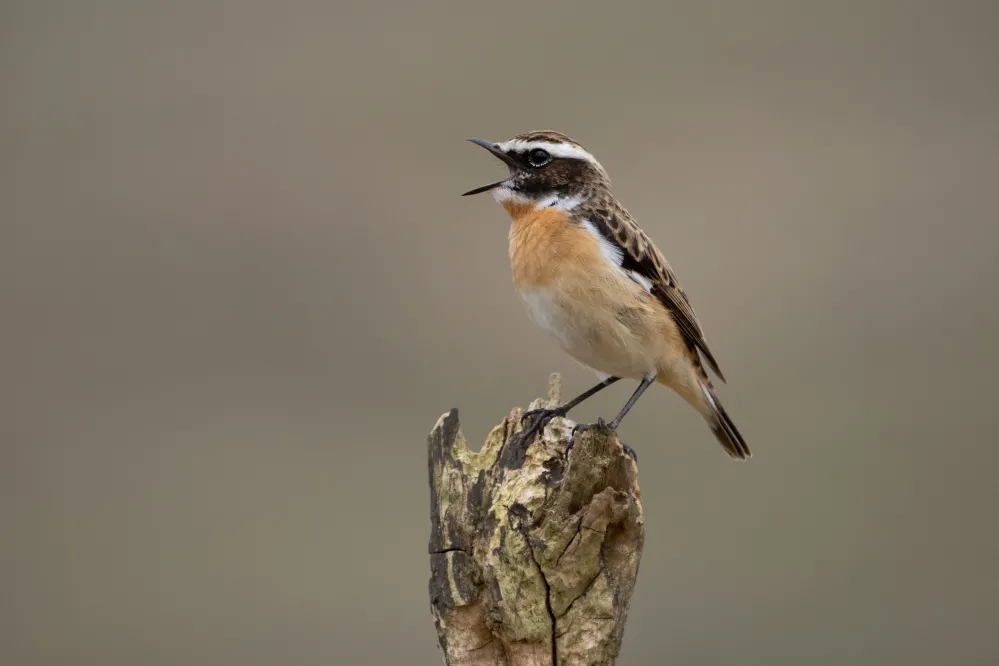
While Wheatear passage will soon be coming to an end, we are only now coming into the peak spring period for sightings of our other summer migrant chat, the Whinchat. Although Whinchats are seen a lot more frequently on autumn migration than in spring, between now and the middle of May you might be lucky enough to see a smart spring male, mostly likely perched on a fenceline or small bush in open habitats.
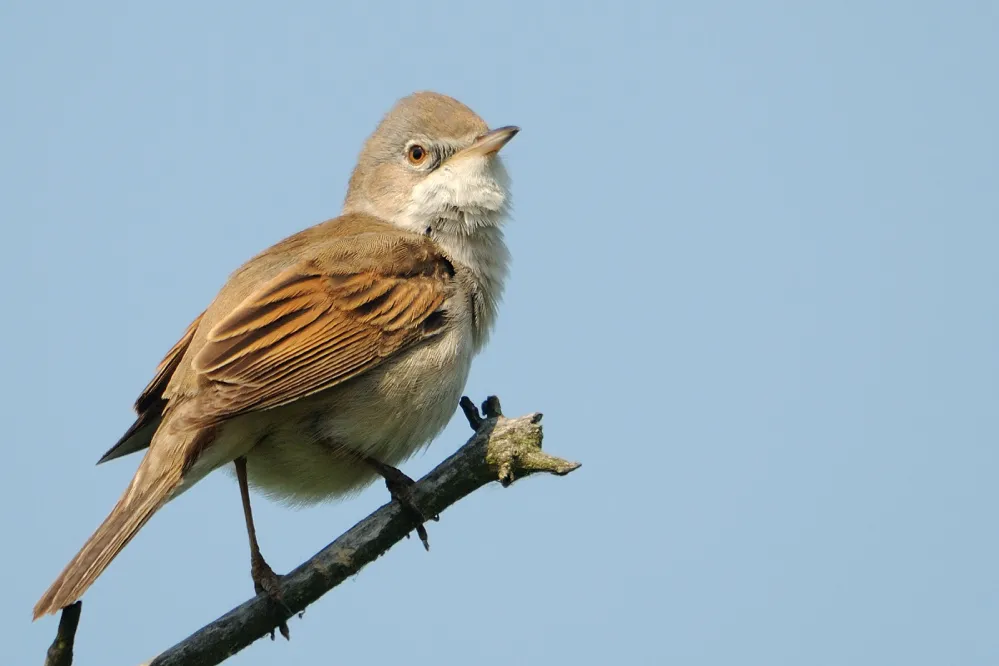
In the last blog we mentioned that Reed and Sedge Warblers had been early arriving and that has continued to be the case, with reporting rates for both still markedly ahead of the historic curve. Whitethroats have also arrived early, being recorded on 34% of Complete Lists in the last week, while the scarcer Lesser Whitethroat appears to be arriving more in line with historic patterns.
Now is also a good time to listen for the song of the Garden Warbler, which is unlikely to be found in gardens but is frequently heard from willow trees near water and other woodland and scrub habitats.
Pleasingly there has also been a decent early arrival of Cuckoo, which was recorded on 9% of Complete Lists last week. The reporting rate for Cuckoo doesn’t typically peak until mid May, so it will be interesting to see whether it remains ahead of the historic rate for the rest of the spring.
Swifts, one of our latest migrants to arrive in spring, have also started being seen, with the reporting rate already at 3% in the latest week. Early sightings of Swifts tend to be concentrated around wetlands, so look out for them in the coming days along with flocks of hirundines.
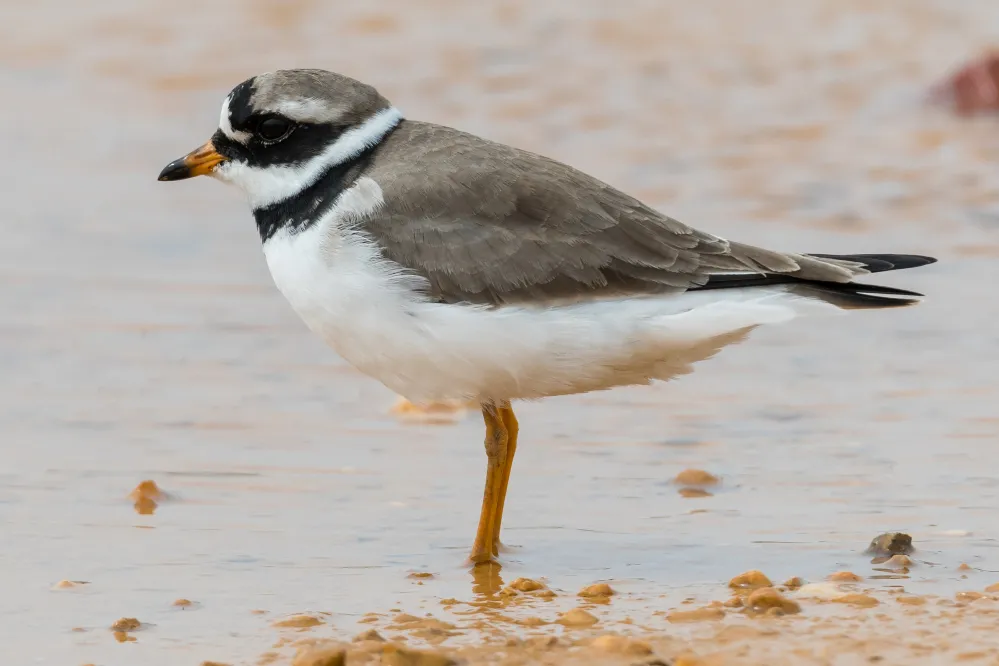
As well as the species coming to breed here in Britain and Ireland, we are now entering the most exciting period of the spring migration for passage migrants, particularly waders. In the last week there has been a big uptick in reports of species such as Whimbrel and Bar-tailed Godwit and as we head into May, we will be in the peak period for many other species, including Dunlin, Sanderling and Ringed Plover. While most of these waders do have important wintering populations here, during the spring we also see birds that have wintered further south passing through on the way to their breeding grounds in the Arctic.
Although wader passage is concentrated at the coast, many species will also migrate overland and can stop off at inland wetlands, particularly on days with rain. Earlier this week, a pair of Bar-tailed Godwits briefly visited the Nunnery Lakes reserve here at BTO HQ in Thetford, the first ever record for the reserve!
As spring passage picks up, birders on the south coast often turn their attention to seawatching at this time of year. Flocks of waders may be seen actively migrating over the sea during the coming weeks, joined by a whole range of other species, including wildfowl, divers, terns and skuas. The most prized species for south coast seawatchers is the Pomarine Skua and the first few sightings of this species have been made this week, ahead of the peak period in early May.
The next two weeks will likely be the most productive of the spring for birding, with migrant songbirds competing for territories and starting to breed, a range of passage migrants passing through and always the chance of a rarity or two. It’s also the time of year when species diversity peaks, with resident species, summer visitors, passage migrants and even a few late winter visitors often all found on the same day.
Thank you for adding your sightings to BirdTrack and I wish you good birding for the week ahead.
Add your sightings to BirdTrack
Help us track the departures and arrivals of migrating birds by adding your sightings to BirdTrack. It’s free, quick and easy, and signing up also allows you to explore trends, reports and recent records in your area.
Author(s)

Tom Jordan