Learn why juvenile birds look different to their adult parents, and how to identify some of the common juvenile birds you are likely to see in gardens and parks.
Why do juvenile birds look different to adults?
Many juvenile birds look different from their parents when they fledge, and there are good reasons as to why this difference might occur.
Camouflage and protection
Juvenile plumage may provide camouflage for the young bird, both in the nest and once it has fledged, helping to reduce predation. For example, an adult Robin’s bright red breast can make it very visible, but juveniles have brown speckled plumage that provides much better concealment.
Indicating social status
Also, many species use plumage colouration as a signal of social status, so if juvenile birds had adult plumage, it could result in territorial attacks. For example, male Blackcaps will defend their territory from other Blackcaps with a black crown. Juveniles have plumage that looks different to that of a breeding male (a brown cap instead of a black one), which reduces the levels of aggression directed towards youngsters while they are still growing.
When do juvenile birds develop adult plumage?
Eventually, juvenile birds moult and replace their feathers with adult ones. For most garden birds, this is done within their first year. However, the timing and extent of feather replacement will depend on the moult strategy of the species. A species’ moult strategy is influenced by when the species breeds and whether or not it is a migrant.
Most common garden species, such as finches, tits and thrushes, replace their downy body feathers with adult ones within several weeks of fledging, but retain their juvenile wing and tail feathers until they undergo their first ’complete’ moult after their first breeding season the following year. A handful, however, undergo their first complete moult soon after fledging, and acquire adult plumage within a few weeks of leaving the nest. These species include the Long-tailed Tit, House Sparrow and Starling.
Identifying common juvenile birds in gardens
The easiest way to identify a young bird is to wait and watch quietly from a safe distance. If you are patient, the parent birds will likely appear and are often more familiar than their offspring.
Some common garden birds that you may come across include:
Blue Tit
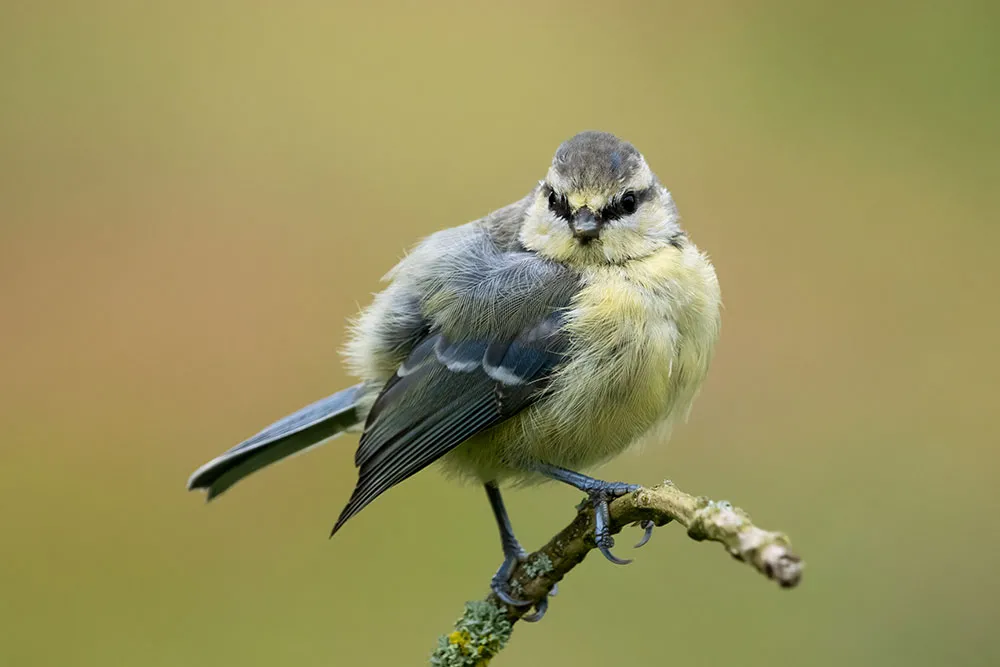
Recently fledged Blue Tits have pale yellow cheeks, which in adults are white. The other head markings and general plumage colour are less strongly marked in young birds. They will undergo a post-juvenile moult within weeks of leaving the nest, replacing their body feathers and some of the wing feathers.
Robin
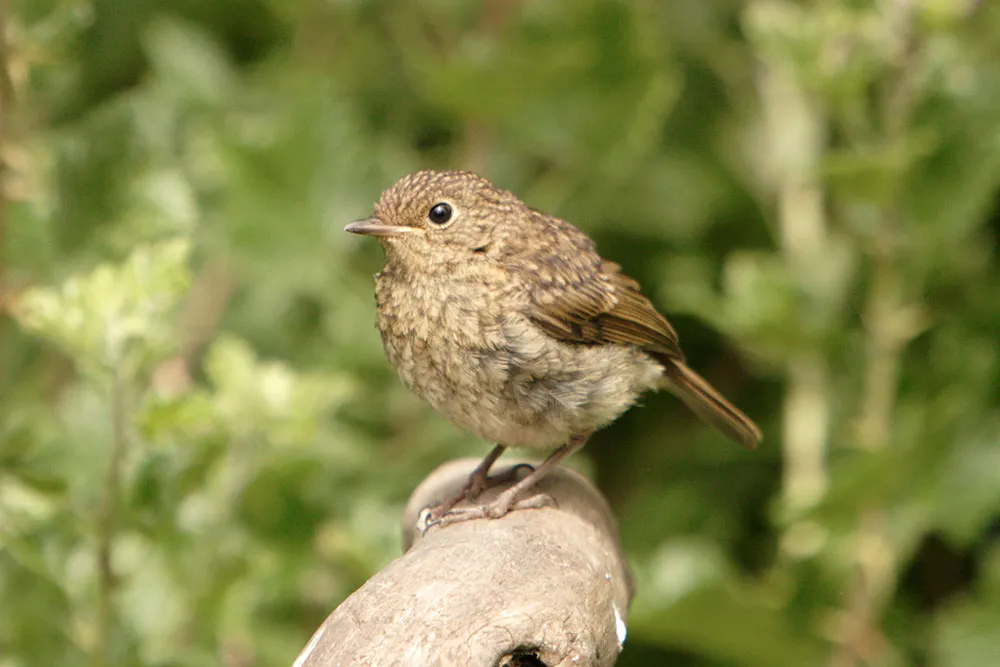
Young Robins initially have brown upper parts and breast speckled with dark brown, and no red breast. As their post-juvenile moult progresses through summer, the orange-red feathering of the breast starts to appear, as well as their pale belly. Even in juvenile plumage, though, the round shape, long legs and cocked head postures are characteristically ‘Robin’ in nature.
Blackbird
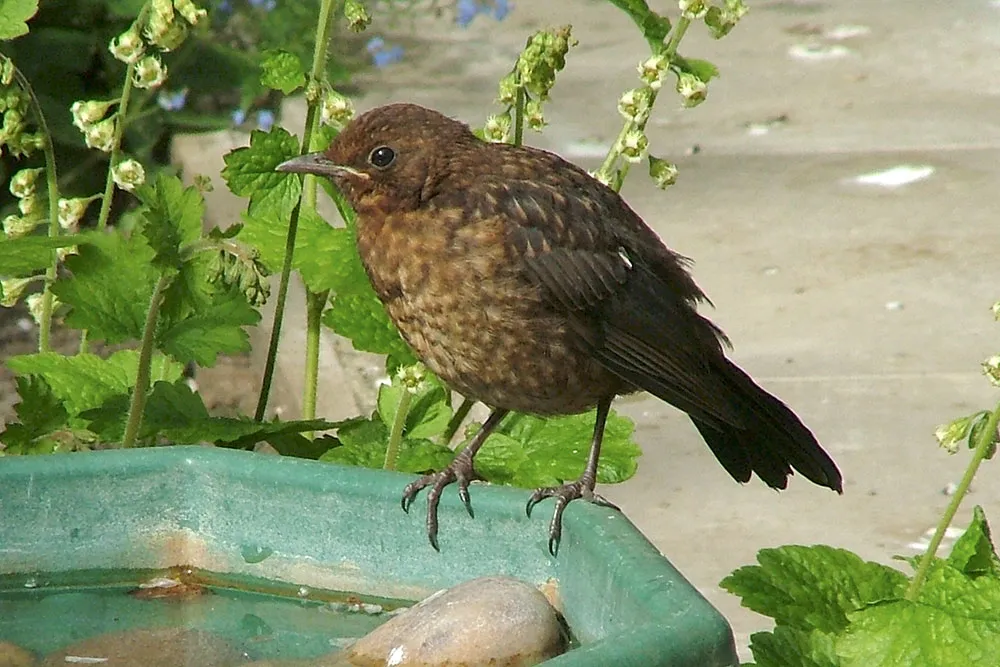
Juvenile Blackbirds have warm, speckled plumage that looks very different to both female and male adults. They replace all their body feathers in post-juvenile moult, but you can pick out young male Blackbirds throughout the following year, as they retain their brown wing feathers.
Starling
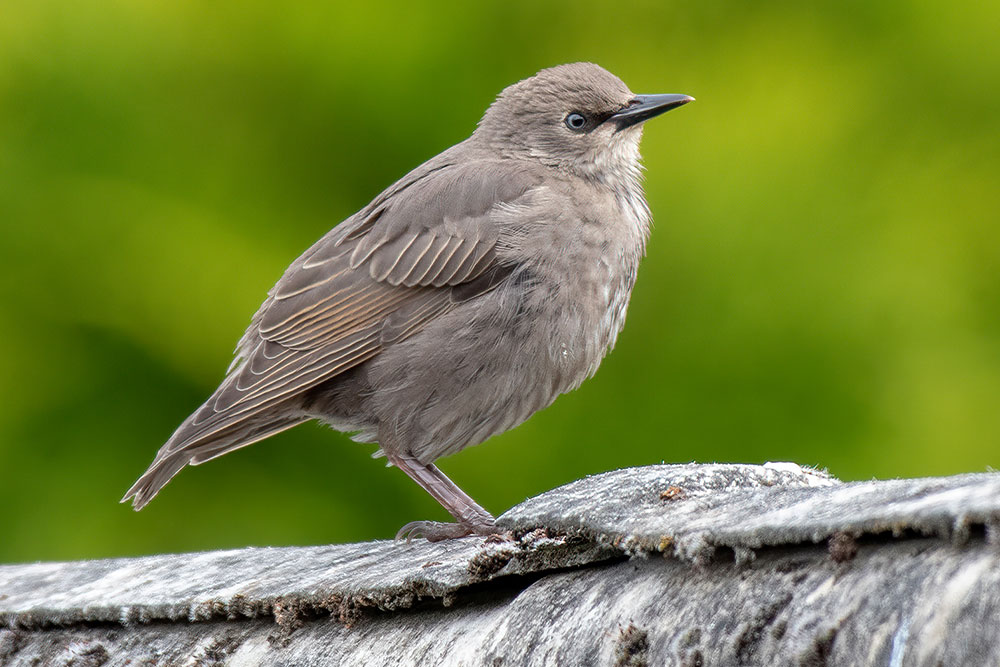
Young (newly-fledged) Starlings have grey-brown plumage. Their post-juvenile moult will occur sometime between the summer and winter, and replaces all their juvenile feathers with the dark, iridescent and spotty plumage of the adults. Sometimes, they retain some brown juvenile feathering, especially on the head, but they will have full adult plumage by March in time for the breeding season.
What to do if you find a baby bird
If, during the spring and summer, you come across a baby bird that looks like it's been abandoned, assess the situation before ‘rescuing‘ it. Chances are, it is still being looked after by its parents.
- If you are worried that it is in immediate danger or might be at risk from predation because it is on the ground, just lift it out of the way, placing it as close to where you found it as possible.
- If it is a nestling, with no or few feathers, and you can see the nest, then you can place it back in.
Only contact your local wildlife rehabilitation centre if you are completely sure that it has been abandoned or orphaned – you can determine this by watching from a distance to see if the parents come back.
Buying a nest box
BTO is proud to work in partnership with leading bird-care company Vine House Farm, with the shared aim of making a positive impact for birds.
- Please visit their website for high-quality nest boxes, bird houses, foods, feeders and more.