Read reviews of the books we hold in the Chris Mead Library, written by our in-house experts. A selection of book reviews also features in our members’ magazine, BTO News.
Featured review
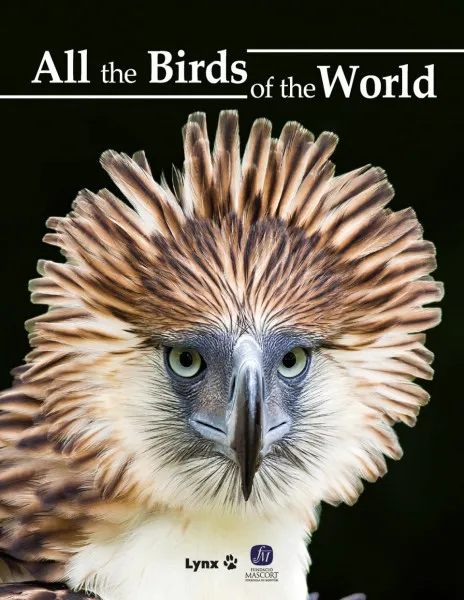
All the Birds of the World
Lynx have had a long-term project to produce an exhaustive guide to the birds of the world. It started out with the 17 volumes of the Handbook of the Birds of the World (1992–2013) which has family and species accounts for all birds. This was followed by the two volumes of the Illustrated Checklist of the Birds of the World (2014–2016). They have now published the third and final stage of this avian odyssey with this current book.
Search filters
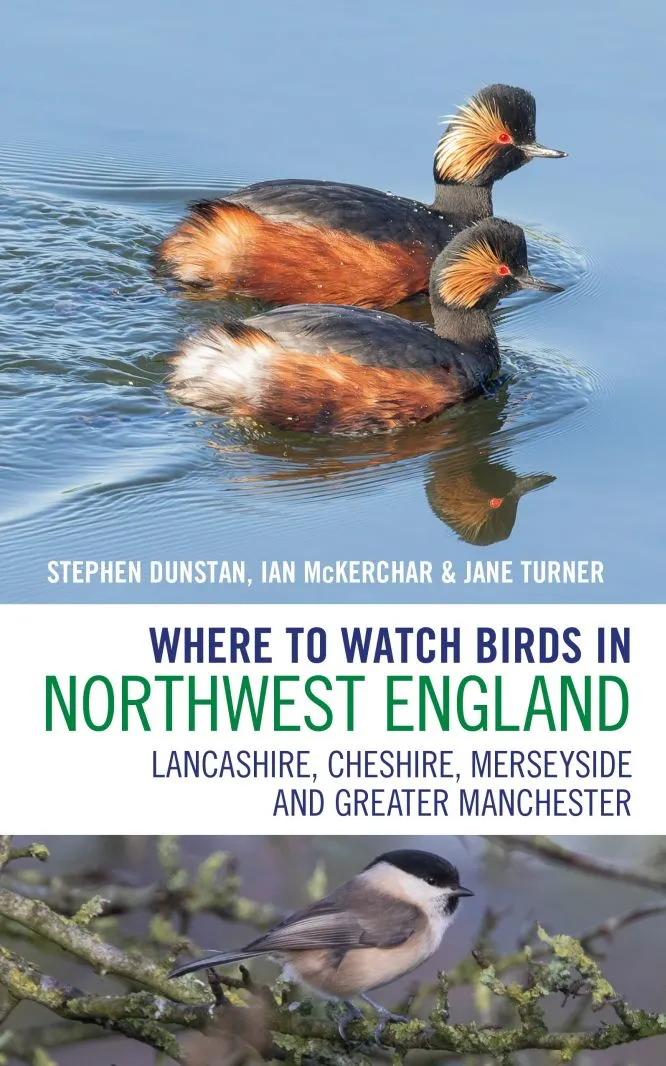
Where to Watch Birds in Northwest England
Author: Stephen Dunstan, Ian McKerchar and Jane Turner
Publisher: Christopher Helm, London
Published: 2026
The north-west region is blessed with a wide range of habitats – from large estuaries, reedbeds, lakes and reservoirs to upland moorland, and with it contains some excellent and renowned birding sites, such as Morecambe Bay, the Ribble, Mersey and Dee Estuaries, some of which hold tens of thousands of waterbirds, many in internationally important numbers providing incredible spectacles for visiting birders. Away from the coast, there are also other well-known sites like Leighton Moss, Woolston Eyes, Pennington Flash and Martin Mere hosting local speciality species such as Willow Tit and breeding Black-necked Grebe. As a birder growing up in north-west England, there were many sites I would visit on regular occasions, and although I have lived in East Anglia for the past 25 years, I still make the effort to visit some of these sites when I’m up the area seeing family. The previous incarnation of this book was an invaluable resource for a young, keen birder looking for places to go and this new updated book includes even more sites with a greater amount of detail on what to expect to see, and directions on how to get there, including what3words and grid references. Where to Watch Birds in Northwest England contains a comprehensive review of the region's significant birdwatching sites (and many lesser-known sites like my old local patch where a visit list of 15 species constitutes a good day!), providing all the information needed to get the most out of each site. This guide is an indispensable resource for any birder who lives in, or just visits, this bird-rich corner of northern England.
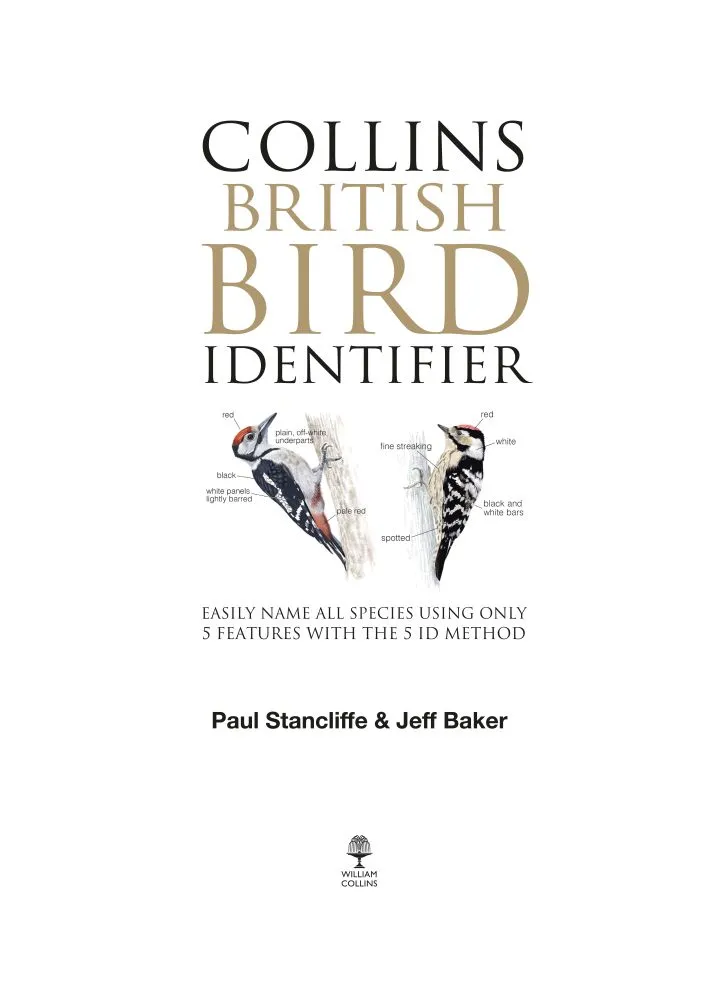
Collins British Bird Identifier
Author: Paul Stancliffe (author), Jeff Baker (illustrator)
Publisher: William Collins, London
Published: 2026
Like many active birders, I am something of a bibliophile and have a rather healthy (and ever-growing) collection of bird books. But when it comes to practical field guides, I tend to stick to the Collins edition, which has dominated the European field guide market since first published in 1999. So, what is this new guide, and how does it differ? And who, exactly, is it aimed at? Firstly, it does not present itself as a standard field guide. There is little text for the species covered, no maps, and no mention of vocalisations. Instead, it uniquely focuses on just five visible identification criteria that will, it is claimed, unequivocally confirm the identity of any bird seen. I have to say the illustrations by Jeff Baker are, overall, genuinely superb. These are furnished with ‘Peterson style’ markers to point out the most salient ID features, making for a rapid assessment of what to look for when faced with any bird. Paul Stancliffe has done an impressive job of homing in on just five key points for each species, and while the identity of some can clearly be solved in fewer, the very concept that all species on the UK list can, in theory, be identified by so few visible features is really quite revolutionary. Aside of my own impressions, I also wanted to gauge response from a selection of birdwatchers to see what they thought. I handed the book around to a group while I was guiding a bird tour earlier this year and asked them to put it to use, and to provide some feedback. A catchphrase of the two-week trip soon became “have you seen all five features?” when faced with any new or challenging bird. Overall, it went down well, though some questioned how long it would take for the clean white cover to look grubby after a few days in the field! In summary, I think it serves as a companion to your existing favourite field guide, or as one of the tour group said, ideal for keeping in the car for handy reference. Experienced birders will doubtless find it useful for reminding them of some of the more subtle differences between similar (and scarcer) species while beginners may find it helpful for learning the basic principals of how to go about identifying birds.
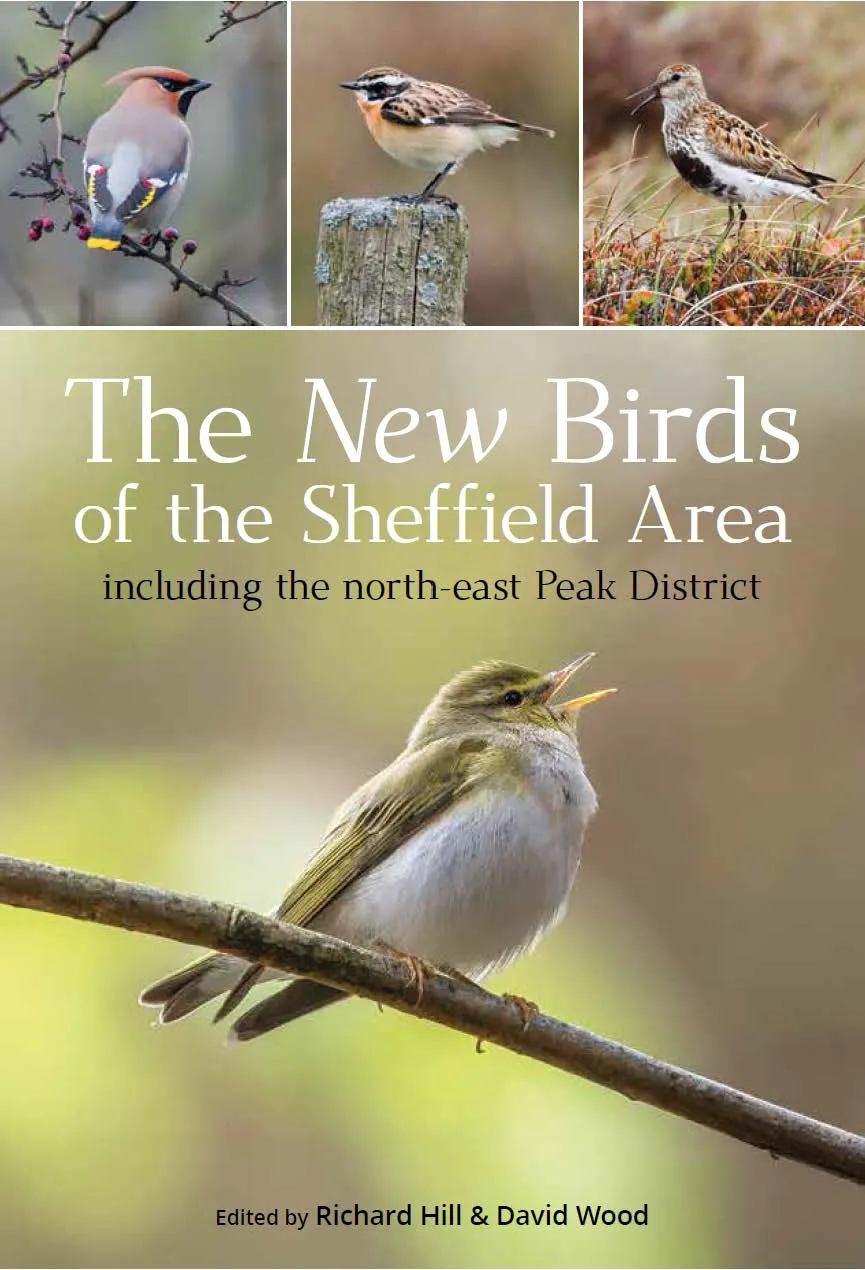
The New Birds of the Sheffield Area including the north-east Peak District
Author: Richard Hill and David Wood (eds)
Publisher: Gomer Press, Llandysul
Published: 2026
As the Regional Rep for Yorkshire (Southwest) and Yorkshire (Southeast) for the last decade, one of my ‘go-to’ books of reference has been the Sheffield Bird Study Group’s Breeding Birds of the Sheffield Area. This new volume, celebrating the 50th anniversary of this very active bird club, not only brings the story of birds in Sheffield and its surrounding countryside up to date, but also expands the perspective of the earlier volume across the whole year, to the past and across all species that have ever been recorded in the region. The volume is more than just a list of species’ records, however. It includes fascinating discussions of historical birding in South Yorkshire, a history of the Sheffield Bird Study Group and its origins, discussions of the region’s habitats and changing birding expectations across the seasons and an introduction to ringing in the Sheffield area. A range of contributors have been involved in the writing of the discussion chapters and even more in the compilation of the species’ accounts. The style of writing is well maintained throughout the volume. There are some excellent photographs of birds and habitats to illustrate the text, and some fine illustrations for species rarely seen in the region. The structure of each species’ entry is concise and consistent, with a general statement about the species leading into a short history of the species’ records in the area, both before and after the Sheffield Bird Study Group was established. If relevant, this concludes with a short statement about the winter and passage characteristics of the species. These species’ discussions contain very interesting lists of past observations, as well as general statements about distributions. I felt a few of these entries could have been enhanced using input from wider BTO surveys, like the Wetland Bird Survey, beyond that provided directly by members of the Group, but this is a minor quibble. Overall, the volume will be a useful reference for all birders in the greater Sheffield region, and the general species’ summaries will be of interest to a much wider audience. However, I did find considering all species, no matter how rare or common they are in the region, a bit confusing, in that the reader does not have an immediate feeling for the degree of rarity of any individual species locally without reading the entry. The older Breeding Birds volume will still be my first reference for understanding a species’ local distribution or the likelihood of finding a species in a locality. Nevertheless, this is a great celebration of the considerable achievements of a very successful regional bird club and a welcome addition to my birding bookshelf.
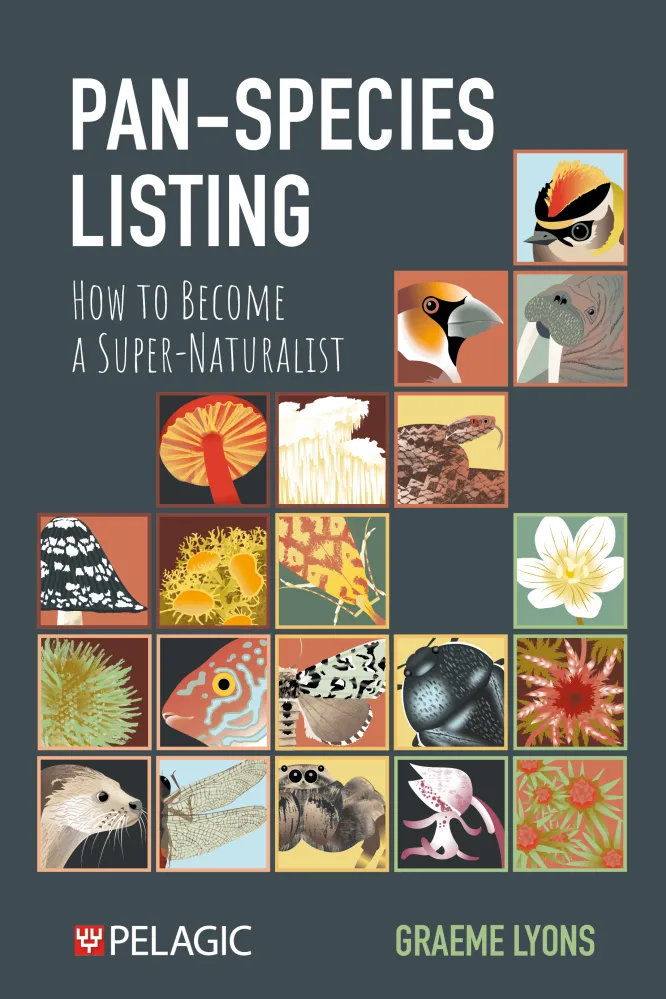
Pan-Species Listing: How to Become a Super-Naturalist
Author: Graeme Lyons
Publisher: Pelagic Publishing, London
Published: 2026
Pan-Species Listing: How to Become a Super-Naturalist is about a method to record your natural history sightings over a lifetime, looking at and recording all taxa, from birds to plants to invertebrates to fungi and everything in between, treating them all with equal value. In the book, Graeme Lyons attempts to cover every aspect of pan-species listing, introducing the concept and its history, before going through all taxonomic groups. This is in itself a monumental task, as each group gets their own run-down, a difficulty level, and a bibliography of useful texts, websites and Facebooks to tackle their identification. This alone makes the book a useful reference guide for those identifying invertebrates. Graeme also writes about his approach to fieldwork, itself a great guide to being a field naturalist, before turning to some broader ideas affecting the pan-species listing community, including demographics and neurodivergence. I found those sections particularly interesting, with Graeme doing a commendable job of sharing those voices which are still poorly represented in natural history, and the reasons why that might be and, in the case of neurodivergence, using his own experiences. It would have been an easy topic to avoid, but writing about who records wildlife and why they do it adds an extra human dimension to the book. Some find the listing element to be mercenary or even distasteful. Graeme does such a great job of sharing his enthusiasm to this approach, and also the value to biological recording, that I think most natural historians will find something of value in the pan-species listing approach, if not become a convert! One of the very few downsides may be the price point. While I believe you will get £39.99 worth of information from the book, to many this can feel like too much for a book of this sort, with a few people who I have recommended the book to having balked at the price. Hopefully this will come down in future editions! Overall, this is a great book for those who are fascinated by all wildlife, whether you are just starting to expand away from birds, or already experienced with multiple taxa.
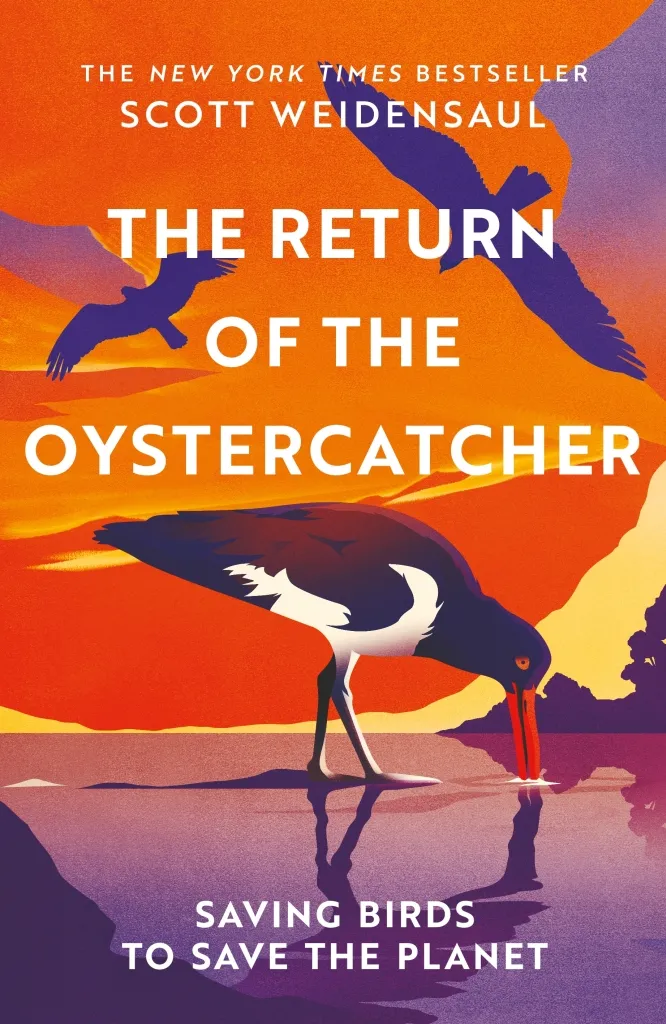
The Return of the Oystercatcher: Saving Birds to Save the Planet
Author: Scott Weidensaul
Publisher: Picador, London
Published: 2026
As a European birder, the title of this book may at first seem slightly baffling; what exactly are Oystercatchers returning from? However, the eponymous bird is in fact the American Oystercatcher, a species which, following near catastrophic declines in recent years, has shown encouraging signs of recovery. Of course, the reversal in fortunes enjoyed by this distinctive wader didn’t happen by chance. A great deal of work, and significant sums of money, went into halting a potentially precipitous crash. This rare win is one of sadly few true success stories in avian conservation. Scott Weidensaul is a rightly respected name in American ornithological literature, and in his latest book he travels far and wide in search of projects and people that are making, or attempting to make, notable changes to the often-calamitous state of many of the world’s birds and habitats. Scattered throughout the text, are the names of countless pioneering and inspiring people and organisations, doing all that they can to try to stem the tides of terminal decline. The author visits a suite of sites engaged in radical conservation work, from Sussex’s Knepp, to the mountains of Bulgaria, to Hawaii and the boreal forests of Canada, to North Atlantic seabird islands, and many more. While there is certainly an air of optimism coursing through the narrative, often delivered with Weidensaul’s dry wit, I couldn’t help but be constantly reminded of why these remarkable attempts to reclaim nature were needed in the first place. The facts are often grim. We have relentlessly and wilfully destroyed so much, and now as we attempt to redress the balance, new challenges just keep coming – all of them the result of human activity. It really never ends. This book, despite the writer’s warm, enthusiastic and accessible style, is barely uplifting, yet conversely, its pages are filled with hope.
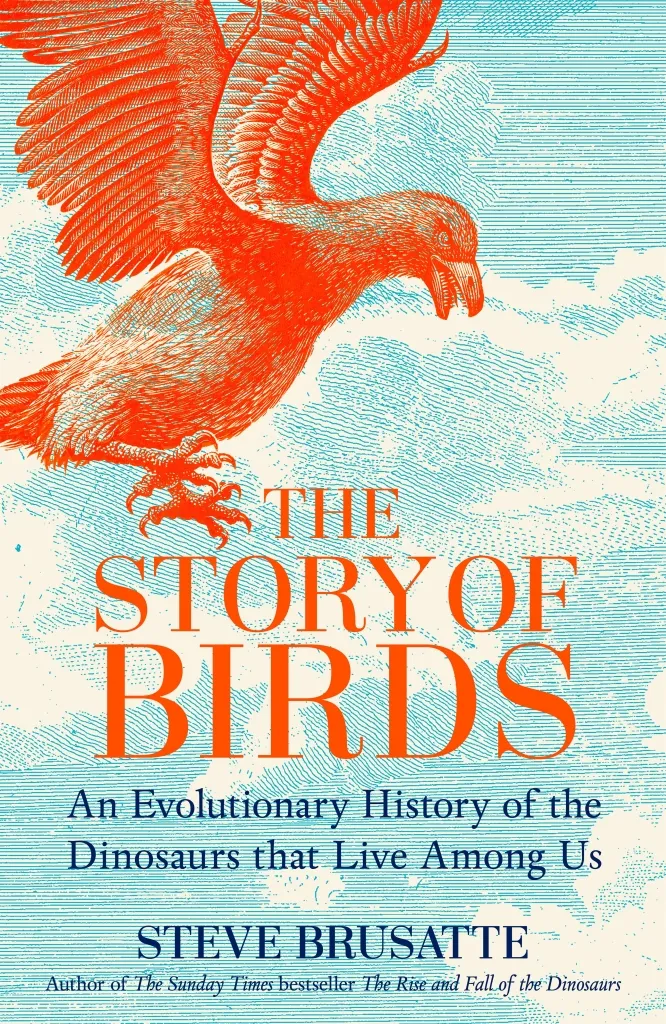
The Story of Birds: An Evolutionary History of the Dinosaurs that Live Among Us
Author: Steve Brusatte
Publisher: Picador, London
Published: 2026
The Story of Birds is just that – a chronological pass through the evolutionary history of birds – from their origins in the Jurassic, their diversification in the Cretaceous and explosion in the Tertiary. If The Story of Birds was a BTO Strategy Action Area, it would certainly be ‘Charting Change’. Steve Brusatte is presently one of the foremost palaeontologists working in the UK and has a skill in making this subject exciting and engaging. And he has history; this is the third in a series of books – all in a similar format – looking at the evolutionary history of a vertebrate group. First it was Dinosaurs (Brusatte’s particular area of expertise), then Mammals and now Birds. Whilst Dinosaurs and Birds being in separate books might give the impression that these are entirely separate groups, the central tenet and opening chapters of the book dispel any doubts you might have. Brusatte makes it abundantly clear that ‘Birds are dinosaurs’. That Blackbird pulling up worms in the park is the descendent of small, feathered Theropod dinosaurs. Indeed, and as an example of the personal and warm nature of Brusatte’s writing where stories of friends, colleagues and family are woven in throughout, Brusatte’s young son – when asked “what is your favourite dinosaur?” – replies “a penguin”. He has been well trained. And well trained you will feel when you read this book. After ‘Birds are dinosaurs’, one is taken through the origins of flight (chapter 2), the earliest bird groups (including the wonderfully named ‘Confusiornithids – chapter 3). Chapter 4 deals with the explosion of bird diversity and Chapters 7 and 8 – arguably the best – cover some truly remarkable birds; three metre tall, 700 kg ‘Demon Ducks’ and seabirds with a seven-metre wingspan and ‘false teeth’ just scratch the surface. The book ends with a nod to the troubled present (including BTO datasets) and a look to the future. There is little not to like about this book. It is meticulously researched, and anyone tempted to skip the ‘Notes’ section should think again – therein you will find the most up to date sources at the cutting edge of the subject. One small gripe I have surrounds the use of images. For a subject that is as much about relatedness as it is about the origin of bird-defining features, there is just one drawing of a family tree or ‘phylogeny’. The book could also have benefited from some high-quality colour plates, particularly given how some of the figures are some of the most important fossils ever discovered (the ‘Berlin specimen’ of Archaeopteryx no less). But perhaps this is a case of “ain’t broke, don’t fix it” – Brusatte’s other two books in the series do the same. On the subject of “ain’t broke”, the author is from Illinois, USA, and the language used is unashamedly American. If you don’t like your birds to be “awesome” and the evidence to be a “slam dunk”, then you might find this book a little grating. But if you can put that aside, you will be in for a real treat. As a former/failed palaeobiologist myself, I was really looking forward to reading The Story of Birds and it certainly didn’t disappoint. So much so, I have already started on another of Brusatte’s books: The Rise and Reign of the Mammals.
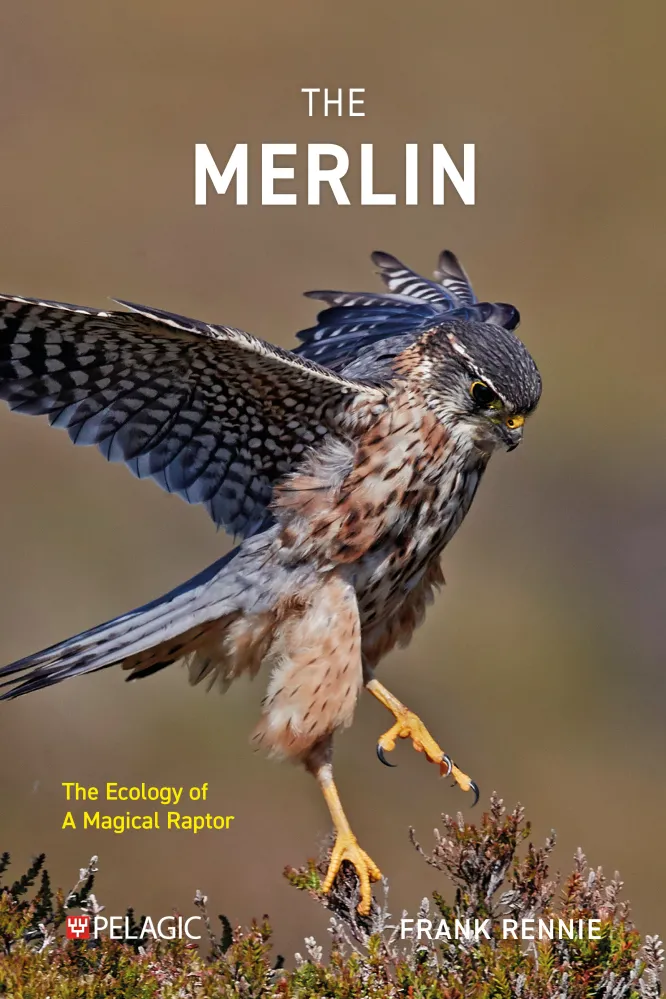
The Merlin: The Ecology of a Magical Raptor
Author: Frank Rennie
Publisher: Pelagic Publishing, London
Published: 2025
I spent just over a decade working at RSPB Lakenheath Fen in Suffolk, where our smallest falcon, the Merlin, overwinters. Birdwatchers used to come looking for them with high expectations. When people used to ask me for any tips for looking for this elusive species of falcon, I mostly used to tell them that by the time you have realised that you had been watching a hunting Merlin, it was long gone. Views of this species usually tend to be tantalisingly brief, so you had to be lucky to connect with one. This book provides a fascinating insight into a species that many birders based in the UK, including myself, probably don’t know too much about. Merlins are notoriously fearsome for their size, and will pursue their prey persistently in often low level displays of aerobatic mastery. If you are ever fortunate to encounter a perched bird, you can sometimes pass within a very short distance of it, as it glowers at you with disdain. What I enjoyed most about this book was how much of the content was drawn from in the field observations. This is especially impressive, given that monitoring such an elusive and mysterious raptor typically involves hour upon hour of watching a featureless and often birdless environment. One thing that fascinated me in particular was the section that listed prey items of Merlin. I knew that they mainly caught small birds in flight, especially larks and pipits in the UK. However, I didn’t know that they also fed on invertebrates, such as dragonflies. This is a behaviour that I have always associated more with the larger Hobby. Whilst on the subject of prey, another interesting, if challenging to read at times section, was about how frequently Merlins actually find themselves as prey for larger birds of prey. This includes species such as Peregrines, Hen Harriers, Goshawks and even Golden Eagles. This serves as a reminder that nature is often spectacular, but also can be brutal by human standards. Another section that fascinated me was about the link between Merlins and humans. Falconry is a well known pastime, and the Merlin was often known as the ‘Lady’s Falcon.’ Whilst this is perhaps not the most politically correct thing to say by today’s standards, it refers to the fact that ladies often flew Merlins, due to their small size. Regardless of their diminutive stature, I imagine it took someone of considerable experience to fly a Merlin, if watching one hunt is anything to go by, regardless of their sex! This informative book is mainly text, but there are also some high quality images included in it. If you would like to find out more about one of the most mysterious bird species that occurs regularly in the UK, I would recommend giving this a read.
The Waterlands: Follow a Raindrop from Source to Sea
Author: Stephen Rutt
Publisher: Elliott & Thompson, London
Published: 2026
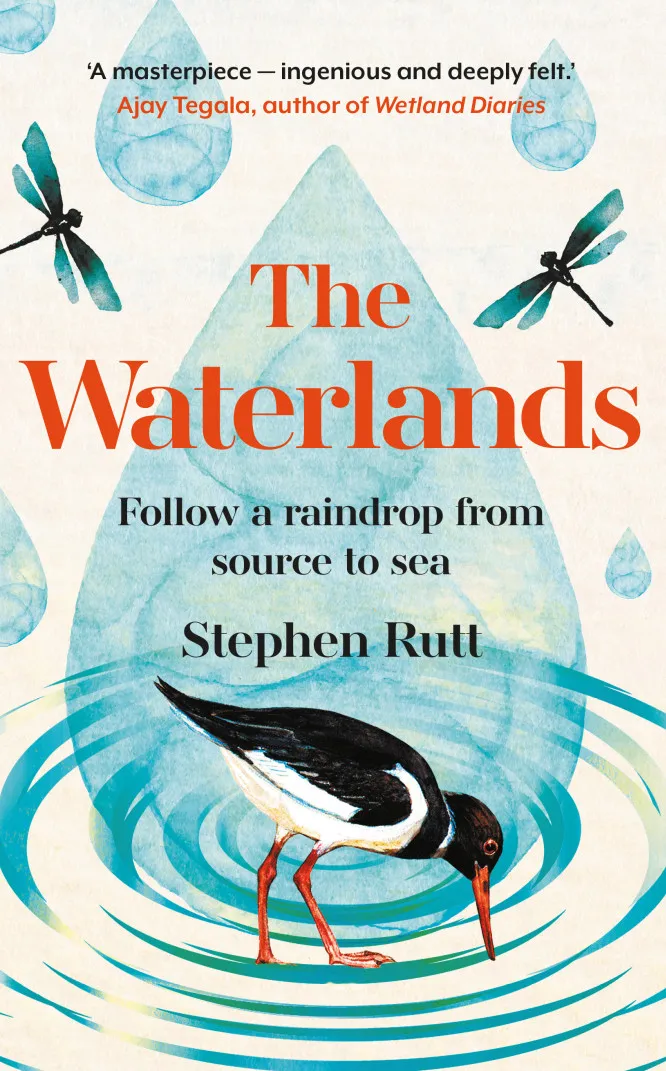
The premise of The Waterlands is following a raindrop from source to sea. However, that synopsis does the book, which takes the reader on a journey through different English and Scottish wetland landscapes (with various international examples also discussed in passing), a great disservice. The book has nine main chapters, each beginning with a short paragraph updating the reader on the fortunes of the raindrop, before diving into a comprehensive account of various waterlands, from the Flow Country in the far north to the River Test and other chalk streams in the south. Author Stephen Rutt, who explains his own relationship with water is complex following an upsetting early memory of falling into the River Cam, charts each waterscape’s creation long ago in deep geological time, and brings them bang up to date with the threats they face from pollution, over-abstraction, invasive species and climate change. We learn about the cultural value of various waterways, and how they have been used and abused by humans throughout history. At the end of each chapter, there is a brief dreamlike interlude of immersive nature writing, catapulting the reader into a water world moment. The book was completely engrossing, and I got caught up in the plight of each location. I found myself cheering on the restoration of Lakenheath Fen, the rescue of the Flow Country from the “arrogant power” of those who wanted to use it for economic gain, and I felt particularly indignant on behalf of the River Clyde and “the chemical hell” of its water. Stephen Rutt is a birdwatcher, and that shines through in his vivid depictions of his watery avian encounters. Overall, I found The Waterlands a beautiful and thought-provoking read – highly recommended.
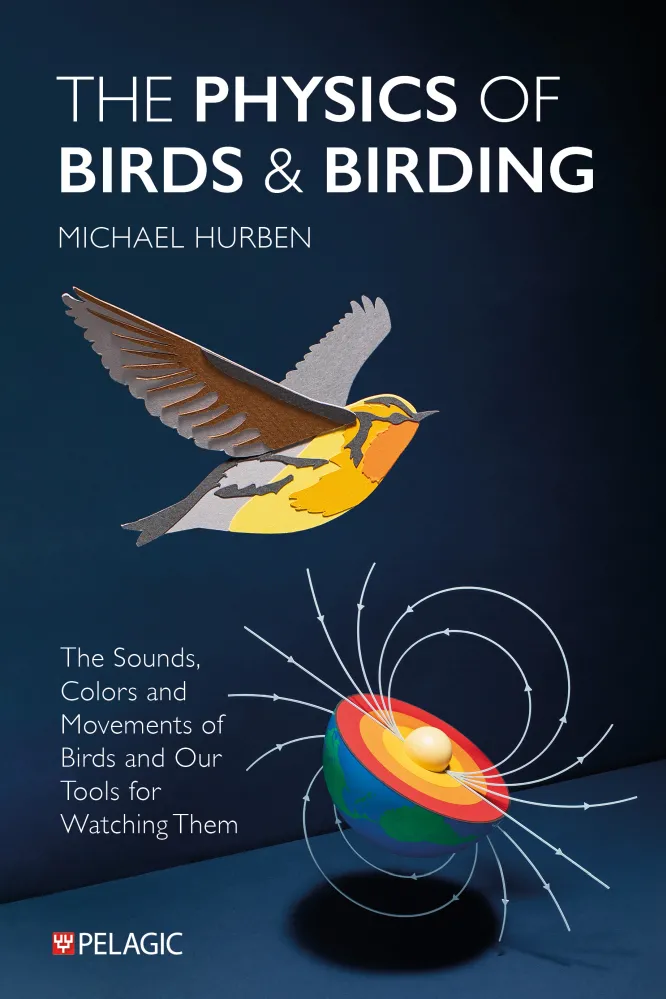
The Physics of Birds & Birding: The Sounds, Colors and Movements of Birds, and Our Tools for Watching Them
Author: Michael Hurben
Publisher: Pelagic Publishing, London
Published: 2025
The Physics of Birds & Birding uses birds as examples to explain how fundamental principles of physics shape what we see and hear. The book covers a wide range of topics, including classical mechanics (forces and motions), cell physiology (protein pumps), electromagnetic fields, waves and sound, colour (including the molecular origins of pigments), vision (how birds’ visual systems differ from ours) and aerodynamics of flight. It then connects these ideas to birding equipment such as binoculars and cameras, explaining the optics behind magnification, brightness, and resolution. It also covers acoustic recorders, showing how sound is captured, processed, and interpreted. As a result, this book will appeal most to scientifically-minded readers, as the links to birds are often quite tangential. That said, the final two chapters – on thermoregulation and flight – are more explicitly about birds, and in a field as vast and intensively studied as avian flight, the level of detail is pitched about right. Less successfully, some of the information elsewhere in the book is now dated. For example, the account of how raptors locate and target prey relies on earlier studies that have since been superseded, including ideas about spiral flight paths and the use of ultraviolet cues from vole trails. This material would have benefited from a brief update – something that could easily have been achieved with a modest review of more recent literature. Overall, the book treats birding as a starting point for exploring physics, rather than as a practical guide to observing birds in the field, and in doing so it effectively reveals the deeper connections that underpin the natural world. If you are comfortable with physics driving the narrative, then you will find this book an engaging read – it’s full of insights that will deepen a birder’s understanding and sense of wonder about the world around them.