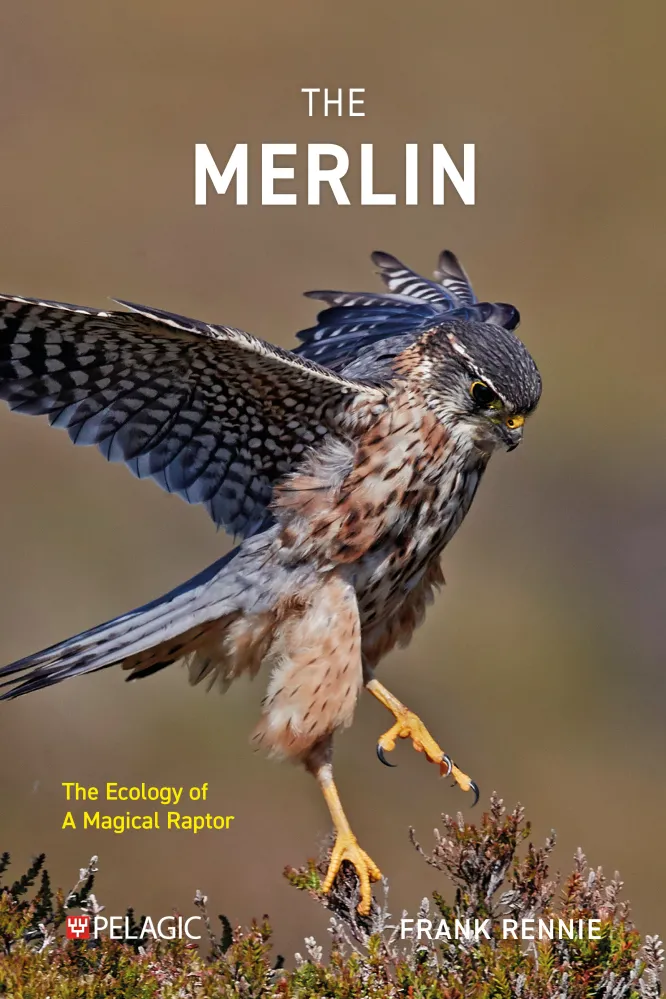
I spent just over a decade working at RSPB Lakenheath Fen in Suffolk, where our smallest falcon, the Merlin, overwinters. Birdwatchers used to come looking for them with high expectations. When people used to ask me for any tips for looking for this elusive species of falcon, I mostly used to tell them that by the time you have realised that you had been watching a hunting Merlin, it was long gone. Views of this species usually tend to be tantalisingly brief, so you had to be lucky to connect with one.
This book provides a fascinating insight into a species that many birders based in the UK, including myself, probably don’t know too much about. Merlins are notoriously fearsome for their size, and will pursue their prey persistently in often low level displays of aerobatic mastery. If you are ever fortunate to encounter a perched bird, you can sometimes pass within a very short distance of it, as it glowers at you with disdain.
What I enjoyed most about this book was how much of the content was drawn from in the field observations. This is especially impressive, given that monitoring such an elusive and mysterious raptor typically involves hour upon hour of watching a featureless and often birdless environment.
One thing that fascinated me in particular was the section that listed prey items of Merlin. I knew that they mainly caught small birds in flight, especially larks and pipits in the UK. However, I didn’t know that they also fed on invertebrates, such as dragonflies. This is a behaviour that I have always associated more with the larger Hobby.
Whilst on the subject of prey, another interesting, if challenging to read at times section, was about how frequently Merlins actually find themselves as prey for larger birds of prey. This includes species such as Peregrines, Hen Harriers, Goshawks and even Golden Eagles. This serves as a reminder that nature is often spectacular, but also can be brutal by human standards.
Another section that fascinated me was about the link between Merlins and humans. Falconry is a well known pastime, and the Merlin was often known as the ‘Lady’s Falcon.’ Whilst this is perhaps not the most politically correct thing to say by today’s standards, it refers to the fact that ladies often flew Merlins, due to their small size. Regardless of their diminutive stature, I imagine it took someone of considerable experience to fly a Merlin, if watching one hunt is anything to go by, regardless of their sex!
This informative book is mainly text, but there are also some high quality images included in it. If you would like to find out more about one of the most mysterious bird species that occurs regularly in the UK, I would recommend giving this a read.
Reviewed by

- Author: Frank Rennie
- Publisher: Pelagic Publishing, London
- Publication year: 2025
- ISBN: 9781784275556
- Format: SB
- Page count: 216
- RRP: £30.00
- Available from: NHBS