Merlin
Introduction
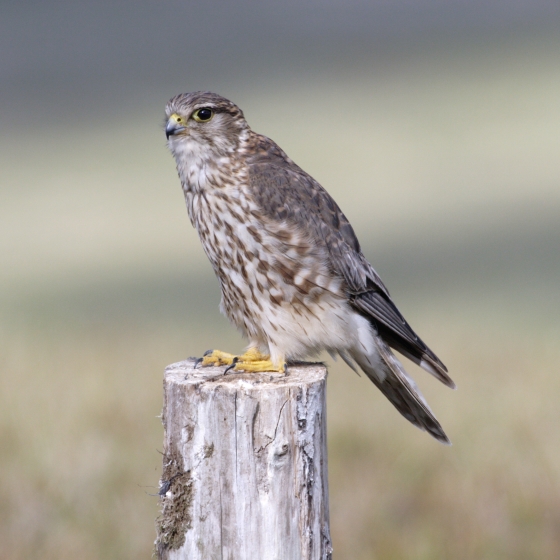
This small, dashing falcon, with the male blue-grey in colour and the female grey-brown, is one of our rarer breeding birds of prey.
The Merlin breeds during the summer months in our uplands, where it is estimated that there may be around 1,000 pairs.
During the winter months the upland breeding areas are vacated and at this time the Merlin can often be found frequenting saltmarshes, where it hunts small birds.
- Our Trends Explorer gives you the latest insight into how this species' population is changing.
Key Stats







Identification
ID Videos
This section features BTO training videos headlining this species, or featuring it as a potential confusion species.
Kestrel and Merlin
Peregrine
Songs and Calls
Call:
Alarm call:
Status and Trends
Conservation Status
Population Change
Having declined substantially over the past two centuries, Merlin shows indications of a recent doubling of UK population (Rebecca & Bainbridge 1998). Because of its recent population upturn, the species was moved from the red to the amber list in 2002. It remains much too scarce, however, for annual population monitoring via BBS: dedicated observers and specialised field methods are required, as described by Hardey et al. (2009).
A repeat survey of Merlin's British breeding status undertaken in 2008 found a non-significant decline of around 13% since the previous survey in 1993-94, with decline most noticeable in northern England (Ewing et al. 2011). The historical UK decline now warrants red rather than amber listing (Eaton et al. 2015).
Distribution
Breeding Merlins prefer uplands, especially heather-dominated moorland. They are most abundant on the Scottish islands, in the northern and eastern Highlands of Scotland, the north Pennines and in northwest Ireland. In winter many of these areas are vacated, with Merlins generally preferring low-lying areas in winter, except in Ireland where many of the same breeding areas remain occupied.
Occupied 10-km squares in UK
2007/08–10/11
or view it on Bird Atlas Mapstore.
2008–11
or view it on Bird Atlas Mapstore.
European Distribution Map
Distribution Change
Change in occupied 10-km squares in the UK
from 1981–84 to 2007–11
or view it on Bird Atlas Mapstore.
from 1968–72 to 2008–11
or view it on Bird Atlas Mapstore.
Seasonality
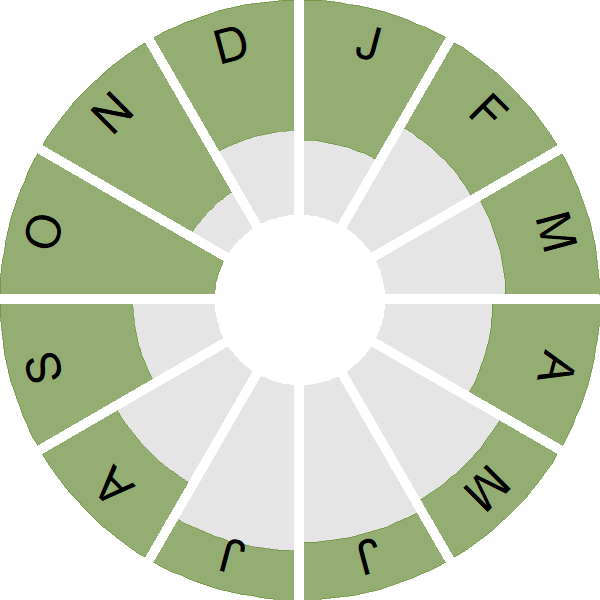
Merlins are recorded throughout the year but more obviously so during autumn migration.
Weekly pattern of occurrence
The graph shows when the species is present in the UK, with taller bars indicating a higher likelihood of encountering the species in appropriate regions and habitats.

Movement
Britain & Ireland movement
Foreign locations of birds ringed or recovered in Britain & Ireland
Dots show the foreign destinations of birds ringed in Britain & Ireland, and the origins of birds ringed overseas that were subsequently recaptured, resighted or found dead in Britain & Ireland. Dot colours indicate the time of year that the species was present at the location.
- Winter (Nov-Feb)
- Spring (Mar-Apr)
- Summer (May-Jul)
- Autumn (Aug-Oct)

European movements
EuroBirdPortal uses birdwatcher's records, such as those logged in BirdTrack to map the flows of birds as they arrive and depart Europe. See maps for this species here.
The Eurasian-African Migration Atlas shows movements of individual birds ringed or recovered in Europe. See maps for this species here.
Biology
Productivity and Nesting
Nesting timing
Egg measurements
Clutch Size
Incubation
Fledging
Survival and Longevity
Survival is shown as the proportion of birds surviving from one year to the next and is derived from bird ringing data. It can also be used to estimate how long birds typically live.
View number ringed each year in the Online Ringing Report.
Lifespan
Survival of adults
Survival of juveniles
Biometrics
Wing length and body weights are from live birds (source).
Wing length
Body weight
Ring Size
Classification, names and codes
Classification and Codes
- Order: Falconiformes
- Family: Falconidae
- Scientific name: Falco columbarius
- Authority: Linnaeus, 1758
- BTO 2-letter code: ML
- BTO 5-letter code: MERLI
- Euring code number: 3090
Alternate species names
- Catalan: esmerla
- Czech: dremlík tundrový
- Danish: Dværgfalk
- Dutch: Smelleken
- Estonian: väikepistrik
- Finnish: ampuhaukka
- French: Faucon émerillon
- Gaelic: Mèirneal
- German: Merlin
- Hungarian: kis sólyom
- Icelandic: Smyrill
- Irish: Meirliún
- Italian: Smeriglio
- Latvian: purva piekuns
- Lithuanian: paprastasis startsakalis
- Norwegian: Dvergfalk
- Polish: drzemlik
- Portuguese: esmerilhão
- Slovak: sokol kobec
- Slovenian: mali sokol
- Spanish: Esmerejón
- Swedish: stenfalk
- Welsh: Cudyll Bach
- English folkname(s): Stone Falcon
Research
Causes of Change and Solutions
Causes of change
The main causes of change are uncertain.
Further information on causes of change
Recent population increases may be associated with an increased use of forest edge as a nesting habitat (Parr 1994, Little et al. 1995, Rebecca 2011, Lusby et al. 2017). Breeding performance has tended to improve since the 1960s, probably linked to the declining influence of organochlorine pesticides (Crick 1993, Newton 2013). Hatching rates in the southeast Yorkshire Dales were consistently higher than had been recorded in earlier studies in Northumberland (Wright 2005). Submissions to the Rare Breeding Birds Panel fall well short of the estimated UK total population but show an minimum of 1.86 young fledged per occupied territory on average during 1996-2004 (Holling & RBBP 2007a), and a minimum of 1.53 young per territory on average during 2005-2008 (Holling & RBBP 2008, 2009, 2010a, 2010b). Full details of the minimum number of young fledged across all territories reported to the RBBP were not published after 2008, but where data are available productivity can be highly variable between years and particularly across different regions. In 2015, for example, no young fledged from 13 pairs in Meirionnydd and only one from 23 pairs in Northumberland, but 164 young fledged from 50 nests in a Durham study area, giving an overall average of 1.91 fledged young per nest across these three areas (Holling & RBBP 2017). A study in Ireland found that nest success was positively linked to the proportion of foraging habitat close to the nest site (Lusby et al. 2017). On Langholm moor in SW Scotland, Hen Harrier and Merlin numbers increased during periods of grouse moor management and more nesting attempts were successful; this was believed to be due to predator control (Ludwig et al. 2020a).
A decline observed during a thirty year (1984-2014) study in south-east Scotland was attributed to changes in land use management in the breeding area (Heavisides et al. 2017).
Information about conservation actions
The causes of change for this species are unclear and hence further research is needed before evidence-based conservation solutions can be proposed.
In the meantime, actions to maintain and, where appropriate, to restore foraging habitat in breeding areas would be prudent. A study in Ireland found that nest success was positively linked to the proportion of foraging habitat such as moorland, heathland, peat bogs and natural grassland close to the nest site (Lusby et al. 2017). Keepering that remains within the law can also benefit harrier populations by increasing their prey and reducing levels of their nest predators, especially crows and foxes (2020a).
Publications (2)
Birds of Conservation Concern Wales 4: the population status of birds in Wales
Author:
Published: 2022
The latest review of the conservation status of birds in Wales. The report assessed all 220 bird species which regularly occur in Wales. There are now 60 species of bird on the Red List, with 91 on the Amber List and just 69 - less than a third of the total number of species - on the Green List. The latest review of the conservation status of birds in Wales comes 20 years after the first, when the Red List was less than half the length it is today. The report assessed all 220 bird species which regularly occur in Wales. There are now 60 species of bird on the Red List in Wales, with 91 on the Amber List and 69 on the Green List. The Birds of Conservation Concern in Wales report assesses the status of each species against a set of objective criteria. Data sources include the BTO/JNCC/RSPB Breeding Bird Survey and the BTO/RSPB/JNCC Wetland Bird Survey, as well as Bird Atlases and other BTO-led monitoring schemes and citizen science initiatives. These are used to quantify the changing status of the species’ Welsh population. The UK, European and global conservation status of the species is also considered, placing the Welsh population into a wider context. The Red ListSwift, Greenfinch and Rook – familiar breeding species in steep decline across the UK – are among the new additions to the Welsh Red List, which now also includes Purple Sandpiper, on account of a rapidly shrinking Welsh wintering population, and Leach’s Petrel, an enigmatic seabird in decline across its global range. These species now sit alongside well-known conservation priorities, such as Curlew, Hen Harrier and Turtle Dove as birds at risk of being lost from Wales for good. Uplands and woodlands Many of the species on the Red List are found in upland and farmland habitats. Starling, Tree Sparrow, Yellow Wagtail and Yellowhammer can no longer be found in much of Wales, while iconic species of mountain and moorland, such as Ring Ouzel, Merlin and Black Grouse, remain in serious trouble. Wales is well known for its populations of woodland birds; however, many of these – including Lesser Spotted Woodpecker, Willow Warbler and Spotted Flycatcher – also feature on the Red List. Goldcrest, which has seen its Welsh population shrink alarmingly in recent decades, is another new addition. On the coast The assessment for Birds of Conservation Concern Wales 4 took place before the impacts of avian influenza could be taken into account. Breeding seabird species have been struggling in Wales for many years, however, and most were already of conservation concern before the outbreak of this disease. Kittiwake, Puffin, Black-headed Gull, and Common, Arctic and Sandwich Tern remain on the Red List. Wales holds internationally significant numbers of breeding seabirds, making the decline of these colonies a global concern. The Amber ListDeclines in Wheatear, Garden Warbler and House Martin - all migrants which breed in Europe and winter in sub-Saharan Africa - mean these species have moved from the Green List to the Amber List. Many other ‘Afro-Palearctic' migrant species are also in decline, but the potential reasons for this, such as habitat loss and reduced availability of invertebrate prey, are not well understood. Closer to home, the declines in the Welsh Chaffinch population, linked to the disease trichomonosis, have seen the species Amber-listed. A number of other species have been placed on the Amber List because of the wider importance of their Welsh populations, which in each case make up more than half the UK total. Wales is home to more than three-quarters of the UK’s Choughs, for example, so recent declines are cause for concern. The nation’s breeding populations of Manx Shearwater, Pied Flycatcher, Goshawk and Hawfinch also account for more than half the UK total, as does its wintering population of Spotted Redshank. It’s not all bad news, though: some species now on the Amber List have moved up from the Red List, indicating some positive change in their population trends. These include Common Sandpiper, Great Black-backed Gull, Bullfinch, Goldcrest and Pied Flycatcher. The Green ListWhile the report contains much cause for alarm, several conservation success stories shine through. Red Kite was almost lost as a British bird during the first half of the 20th century, when only a handful of pairs remained in remote Welsh valleys. Since then, a sustained conservation effort has brought the species back from the brink. Wales is now home to more than 2,500 pairs of Red Kite and the species has now been moved to the Green List, reflecting this incredible change in fortunes. Song Thrush, Reed Bunting, Long-tailed Tit, Redwing and Kingfisher are among the other species to have gone Green, providing much-needed hope that things can go up as well as down.
06.12.22
Reports Birds of Conservation Concern
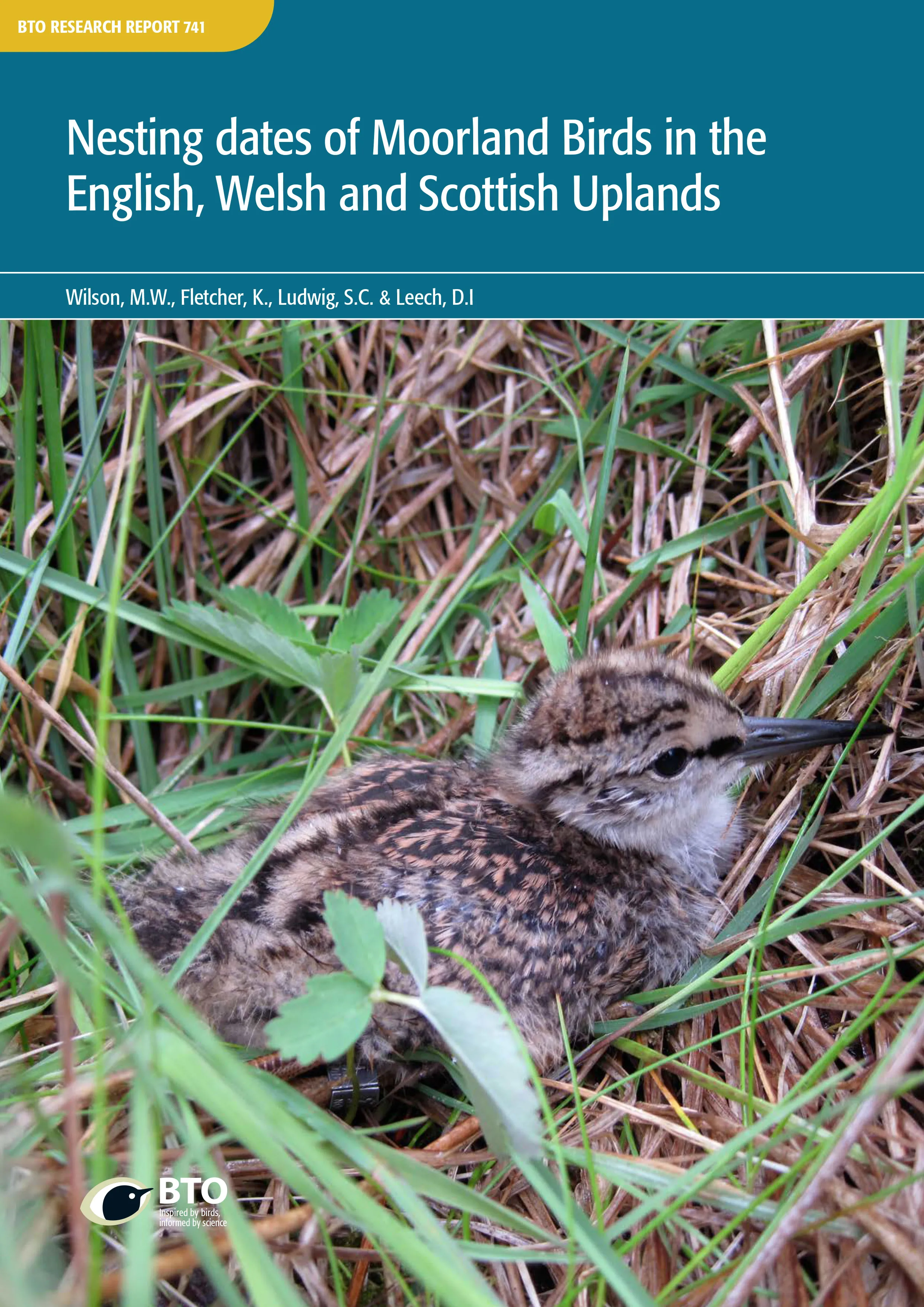
Nesting dates of Moorland Birds in the English, Welsh and Scottish Uplands
Author:
Published: 2022
Rotational burning of vegetation is a common form of land management in UK upland habitats, and is restricted to the colder half of the year, with the time period during which burning may be carried out in upland areas varying between countries. In England and Scotland, this period runs from the 1st October to 15th April, but in the latter jurisdiction, permission can be granted to extend the burning season to 30th April. In Wales, this period runs from 1st October to 31st March. This report sets out timing of breeding information for upland birds in England, Scotland and Wales, to assess whether rotational burning poses a threat to populations of these species, and the extent to which any such threat varies in space and time.
17.02.22
BTO Research Reports
More Evidence
More evidence from Conservation Evidence.com
Partners




Citing BirdFacts
If you wish to cite particular content in this page (e.g. a specific value) it is best to use the original sources as linked in the page. For a more general citation of the whole page please use: BTO (20XX) BirdFacts Species: profiles of birds occurring in the United Kingdom. BTO, Thetford (www.bto.org/birdfacts, accessed on xx/xx/xxxx).