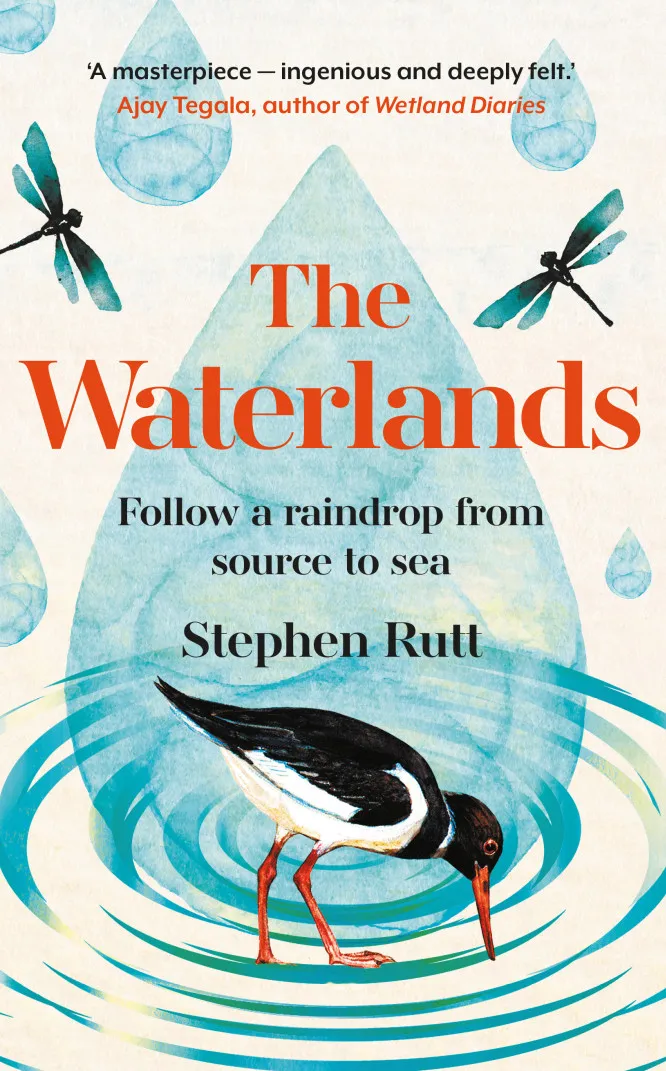
The premise of The Waterlands is following a raindrop from source to sea. However, that synopsis does the book, which takes the reader on a journey through different English and Scottish wetland landscapes (with various international examples also discussed in passing), a great disservice.
The book has nine main chapters, each beginning with a short paragraph updating the reader on the fortunes of the raindrop, before diving into a comprehensive account of various waterlands, from the Flow Country in the far north to the River Test and other chalk streams in the south. Author Stephen Rutt, who explains his own relationship with water is complex following an upsetting early memory of falling into the River Cam, charts each waterscape’s creation long ago in deep geological time, and brings them bang up to date with the threats they face from pollution, over-abstraction, invasive species and climate change. We learn about the cultural value of various waterways, and how they have been used and abused by humans throughout history. At the end of each chapter, there is a brief dreamlike interlude of immersive nature writing, catapulting the reader into a water world moment.
The book was completely engrossing, and I got caught up in the plight of each location. I found myself cheering on the restoration of Lakenheath Fen, the rescue of the Flow Country from the “arrogant power” of those who wanted to use it for economic gain, and I felt particularly indignant on behalf of the River Clyde and “the chemical hell” of its water. Stephen Rutt is a birdwatcher, and that shines through in his vivid depictions of his watery avian encounters. Overall, I found The Waterlands a beautiful and thought-provoking read – highly recommended.
Reviewed by

- Author: Stephen Rutt
- Publisher: Elliott & Thompson, London
- Publication year: 2026
- ISBN: 9781783969319
- Format: Softback
- Page count: 272
- RRP: £16.99
- Available from: NHBS