Forget ‘five gold rings’, how about 866,000 alloy ones?
A new report from the British Trust for Ornithology (BTO) highlights the latest findings from wild bird ringing activities across the UK and Ireland.
Volunteer ornithologists have been catching and ringing wild birds in Britain and Ireland for over a century, revealing extraordinary insights into how long they live and how far they move, helping us to understand the drivers behind population and distribution changes.
The newly published BTO Ringing and Nest Recording Report shows that in 2024, licensed bird ringers caught and ringed a total of 865,934 wild birds. Each bird’s ring has a unique number inscribed, and if re-caught or sighted alive, or indeed discovered dead, this allows researchers to work out how long the average individual lives, and whether their lifespans are increasing or decreasing over time.
Dr Ellie Leech, Head of the British and Irish Ringing Scheme, says, “We also get information on how far birds move, be it just down the road for a typical House Sparrow, or all the way down to Africa for Swallows and Nightingales. The number of young birds caught each summer also documents how successfully species are breeding, and again, whether this has changed over time. None of this would be possible without the hard work and dedication of our 3,000 licensed bird ringers, for which we are hugely grateful.”
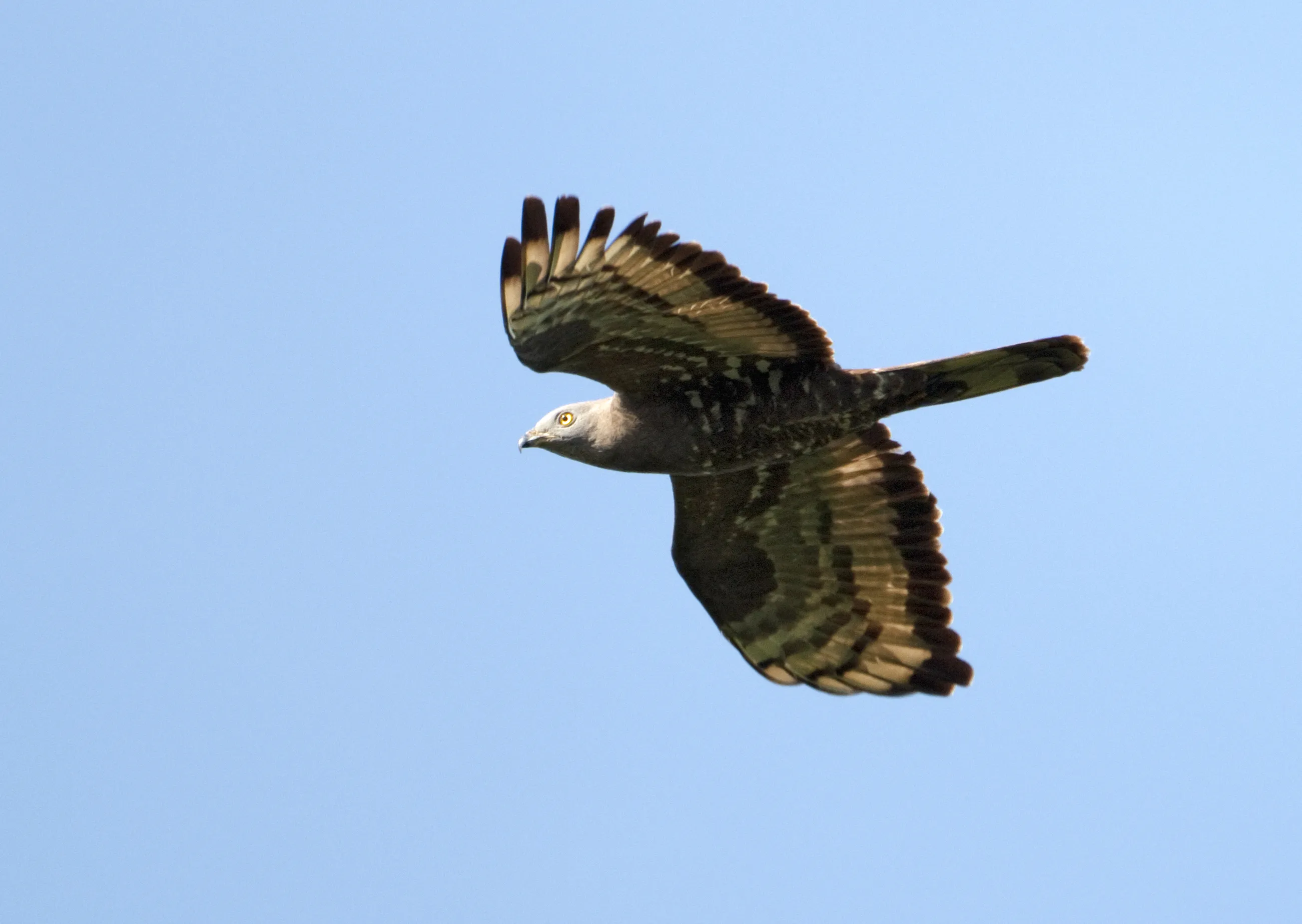
New longevity records set in 2024 include Britain’s oldest known Honey-buzzard, ringed in August 2006 and still going strong in 2024. The rare and secretive bird of prey, which migrates from tropical Africa to breed in Europe, was seen just 38 km away from where it was originally ringed as a nestling almost two decades earlier, demonstrating just how site-faithful these birds can be.
Notable bird longevity records (up to 2024)
| Great Black-backed Gull | 30 years, 4 days (average lifespan 14 years) |
| Greylag Goose | 20 years, 1 month, 28 days (average lifespan 8 years) |
| Woodpigeon | 19 years, 8 months, 16 days (average lifespan 3 years) |
| Little Egret | 18 years, 3 months, 26 days (average lifespan 5 years) |
| Honey-buzzard | 18 years, 10 days (average lifespan 9 years) |
| Siskin | 10 years, 2 months 24 days (average lifespan 2 years) |
The latest report also shows that 2024 was a bumper year for Siskins. These small, attractive finches breed in the UK, but numbers increase, to varying degrees, every winter as Continental migrants cross the North Sea to spend the relatively milder winter months here. 2024 was an ‘influx year’ and bird ringers caught and ringed a remarkable 63,815 Siskins across the UK, the highest number ever recorded. Among birds caught in the UK were Siskins previously ringed as far away as Murmansk (Russia) and the Czech Republic.
Top five species ringed in 2024
| Blue Tit | 104,603 |
| Siskin | 63,815 |
| Chiffchaff | 55,374 |
| Blackcap | 52,320 |
| Great Tit | 50,881 |
Dr Rob Robinson, the report’s lead author, says, “The British and Irish Ringing Scheme has now been in operation for over 100 years, and the data that volunteer bird ringers provide have never been more important. In addition to the direct impacts of habitat loss and climatic change, birds are facing a suite of emerging diseases, such as avian influenza, which affects many species, trichomonosis, that is having the greatest impact on finches, and the Usutu virus, which is affecting Blackbirds. Without the detailed information gained by catching and ringing birds, we would have far less understanding of what the future might hold and how we can help our wildlife.”
- BTO asks members of the public who may find or see ringed birds to report their sightings online at: www.ring.ac
- Read the summary of ringing totals for Britain & Ireland in 2024 at: www.bto.org/ringing-report
- BTO manages the ongoing British and Irish Bird Ringing Scheme and ensures support and training for all licensed ringers.