Published today, the latest BTO/JNCC/RSPB Breeding Bird Survey (BBS) report shows positive news for a range of birds including Firecrest, Marsh Harrier and Cuckoo.
However, the Report also reveals worrying declines for familiar woodland and garden species such as Chaffinch and Bullfinch. The latest data also show that some farmland birds that have experienced long-term declines, like Yellowhammer and Yellow Wagtail, continue to struggle.
BBS is the main scheme for monitoring the population changes of the UK’s common and widespread breeding birds, producing population trends for 119 species. Of the 119 species monitored by BBS in the UK, 43 have decreased since 1995, the first year from which trends can be calculated, while 36 have increased.
The species with the greatest declines include Turtle Dove, which has seen its numbers plummet by 98% and Willow Tit which has declined by 90%. Little Egret, a recent colonist, continues to increase with its numbers booming by 2,726% during the same time period while Red Kite has grown by a massive 2,464% thanks to successful reintroduction programmes across the UK. Not far behind is Ring-necked Parakeet (up by 2,406% in 28 years), an invasive non-native species that is expanding out of London into several other cities in the UK. Despite an overall trend of declines for many of our breeding wild birds, the latest surveys reveal good news for a number of species.
Reduced to a single breeding pair in the UK in the 1970s, the Marsh Harrier, an impressive bird of prey of wetlands, has made a startling recovery in recent decades with estimates of 448 nesting pairs in 2022*, and the numbers recorded on BBS squares increasing by 244% since 1995. Similarly, the tiny Firecrest continues its impressive colonisation and has increased, primarily in southern England, by over 240% in just 10 years.
Cuckoos, while struggling in many lowland parts of the UK, are faring much better in the uplands and across Scotland according to the latest BBS Report. In Scotland, the population has increased by 67% since BBS was launched in 1994. In the same period, Cuckoos have declined by around a third across the UK overall, with the greatest losses in England which has experienced declines of around 71%.
Birds associated with wooded habitats continue to be in trouble with a number of once common and widespread species showing alarming trends. In just five years, Bullfinch numbers have fallen by almost 24% across the UK while Chaffinch, also a familiar garden and hedgerow bird, has declined by close to 40% in the last 10 years. Over the last five years the declines in England have been even more stark, with Bullfinches undergoing a notable decline of nearly 40%, while Chaffinch numbers dropped by almost a third in the same time period, having been impacted by the disease Trichomonosis.
Many species of farmland bird have been showing clear signs of decline in recent decades and unfortunately there appears to be little in the way of improvement for many of the affected species.
Whilst there is some cause for optimism for some farmland species, with Skylark increasing by nearly 20% and Corn Bunting by 38% in the last decade – albeit from relatively low numbers compared to what they once were in the 1960s – other species continue to decline.
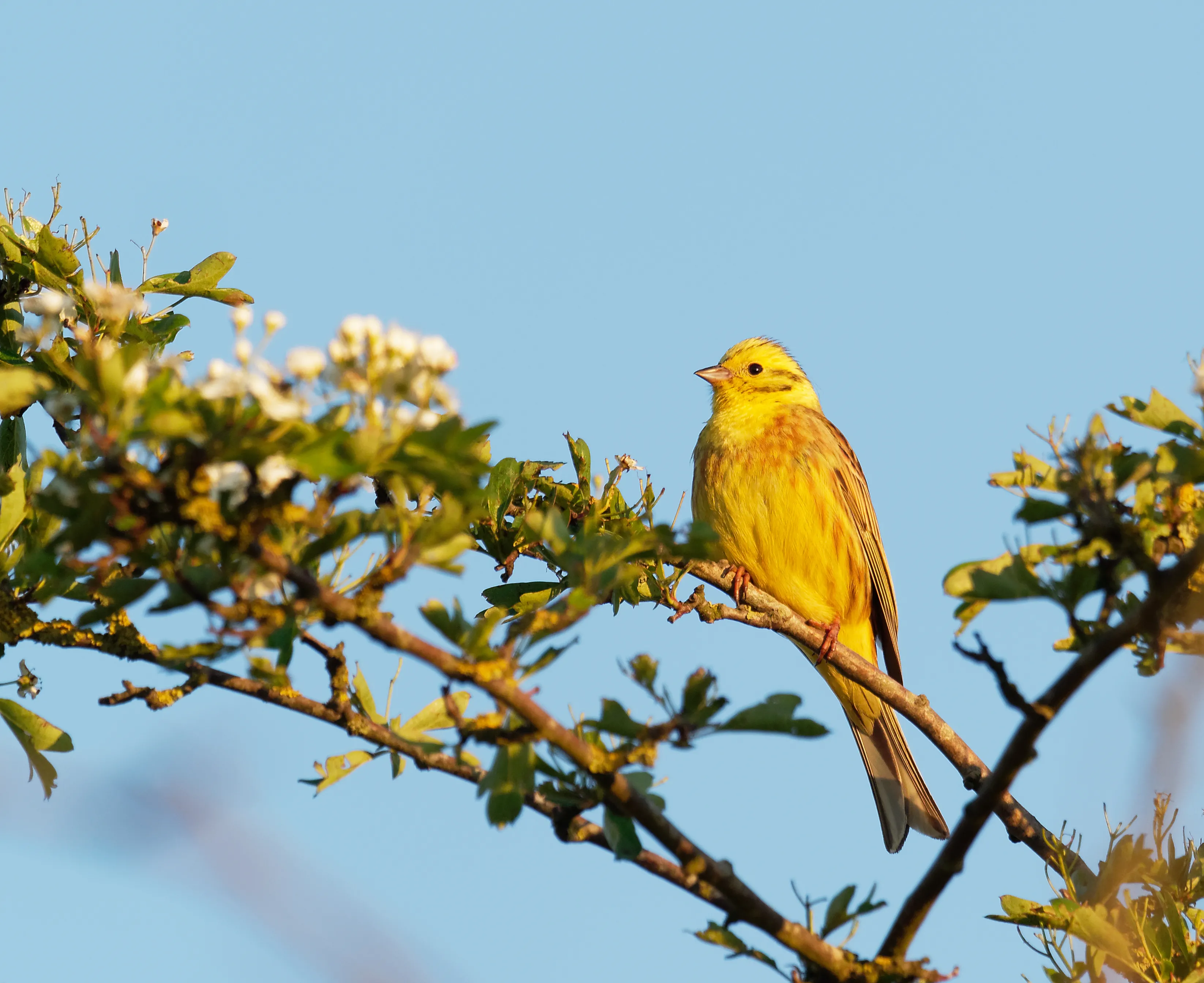
Yellowhammer and Yellow Wagtail, both once a common sight across many areas of the UK, are continuing to disappear from much of our agricultural landscape. Yellowhammer has suffered UK-wide declines of around a third since 1995 and two thirds since the mid-1960s. The figure in Wales is even more concerning with a 75% drop in numbers since 1995. In the same period, Yellow Wagtail has crashed by more than half in England and there are signs of yet more decline in recent years, with numbers falling by a fifth in the period 2018 to 2023.
The report also reveals that numbers of Blackbird, one of our most familiar garden songbirds, have dropped by 10% in England over the past decade. The London area has been particularly hard hit with Blackbirds there likely impacted by Usutu virus in recent years. However, the overall declines are closer to 4% over the same period across the UK, thanks to notable increases in Wales and especially Northern Ireland where numbers have gone up by a remarkable 40% in the last 10 years.
Dr James Heywood, BBS National Organiser, said, “Every year these statistics show good and bad news stories for our birds. That we can do so at all is a testament to the dedication and commitment of thousands of volunteer birdwatchers up and down the country and who deserve enormous thanks. It is especially gratifying that the 2024 season saw BBS achieving its best coverage since pre-COVID (2019). The recent declines of some of our woodland birds are worrying and demand our attention, not least as they come on the back of decades of decline for our farmland species. But the recent – albeit moderate – increases in species like Cuckoo and Skylark do offer some hope.”
Dr Paul Woodcock, Joint Nature Conservation Committee, said, “These results highlight both successes and challenges for UK bird populations. While species like the Marsh Harrier show encouraging recoveries, the concerning declines in woodland and farmland birds emphasise why ongoing monitoring is essential. These long-term surveys provide the evidence base that underpins effective conservation action, allowing us to identify which species need help, where efforts should be focused, and whether interventions are working. The dedicated work of thousands of volunteer birdwatchers across the country doesn’t just track numbers – it provides the scientific foundation for protecting the future of our birds and their habitats.”
Dr Simon Wotton, RSPB Senior Conservation Science, said, “The UK’s wildlife is better studied than in any other country in the world and what the data are telling us is that the UK's bird species are mostly in long term decline. This latest report once again shows that our farmland and woodland birds are in a particularly precarious position. What is clear, is that progress to protect our species and habitats has not been sufficient and yet we know we urgently need to restore nature now.”