Bird migration peaks in May 2026.
As we approach the middle of May most of our spring migrants have now overwhelmingly arrived into Britain and Ireland, in fact it was earlier this week that the last of the BTO-tagged Cuckoos arrived back in Norfolk. For many of these species, particularly our various migrant warblers, BirdTrack reporting rates peak around the middle of May, before declining as the summer approaches. This is not because most of these birds will be leaving us soon, but really because they are most detectable when males are busy singing to attract a mate and defend a territory, before they focus their efforts on raising young.
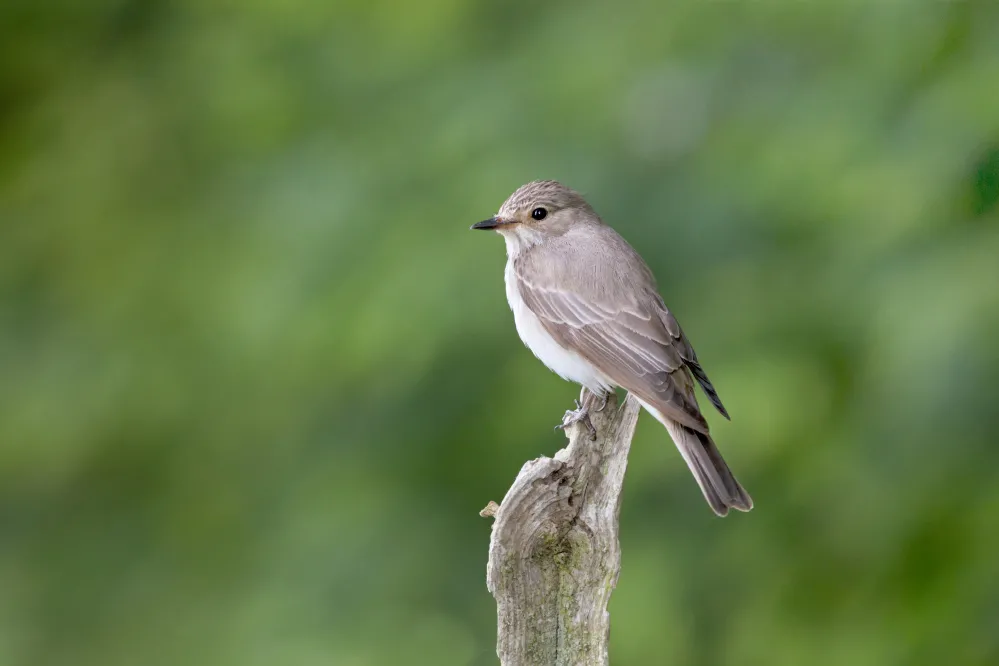
As we mentioned last week, a few species are typically later arriving, including the Spotted Flycatcher. Over the last week there has been a wave of records of this species, which should be back at most of its breeding sites by the end of the month. Nightjars have also started to be reported from heathlands and clearfell sites, with more arrivals expected in the coming weeks.
One of our scarcest breeding raptors, Honey-buzzard, will likely start arriving within the next week, before late May sees the main arrival of our last regular spring migrant, Quail.
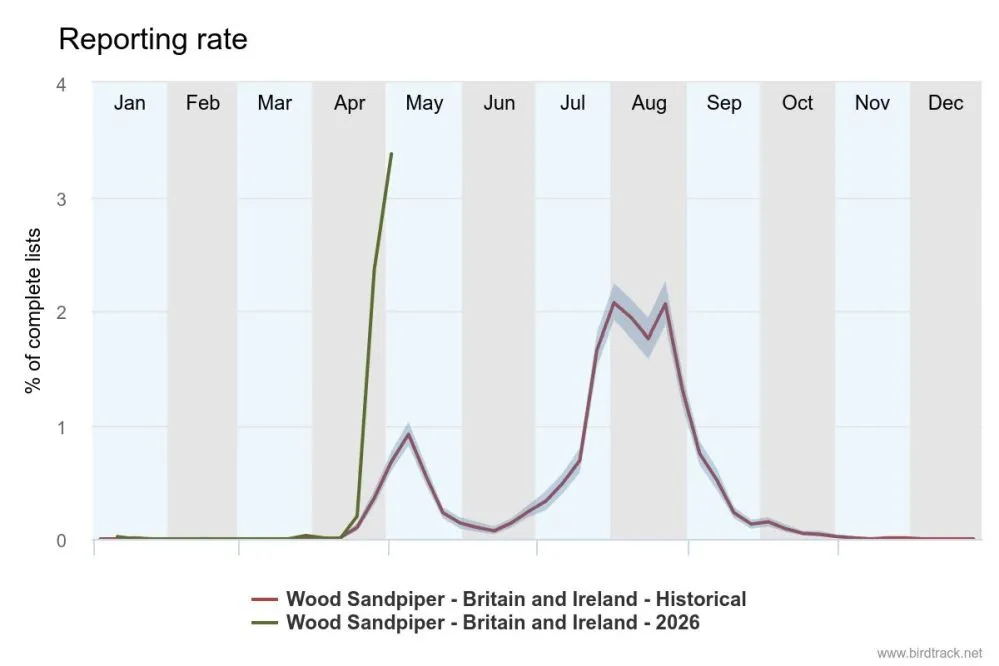
However, while many spring migrants settle down to breed here in Britain and Ireland, passage migrants are still passing through on their way further north, particularly waders. Following the influx of Wood Sandpipers in late April, the BirdTrack reporting rate reached 3.4% in the last week, well above the norm for this usually scarce species.
This week has also seen a spike in records of another scarce migrant wader, Temminck’s Stint. Unlike most passage waders, this species is seen more often in spring than autumn, but is always very uncommon, usually seen singly or in pairs creeping around the edges of shallow pools.
Wader passage will continue for the rest of the month, with species like Sanderling, Ringed Plover and Grey Plover still yet to reach the peak of their spring passage through Britain. With many waders breeding around the Arctic, these birds must time their arrival on the tundra to exploit the late and short summers there, with their breeding season not beginning until many British-breeding birds are already coming to the end of their breeding season.
Skuas are another family of birds that may be seen on passage well into May. We have mentioned a few times the spring passage of Pomarine Skuas east through the English Channel, but this species also migrates up the western side of the British Isles, along with the Long-tailed Skua. May in the Outer Hebrides is a good time and place to witness this migration spectacle and the first sightings have come in this week, including 35 Long-tailed Skuas passing Aird an Runair, North Uist on Thursday, 8 May.
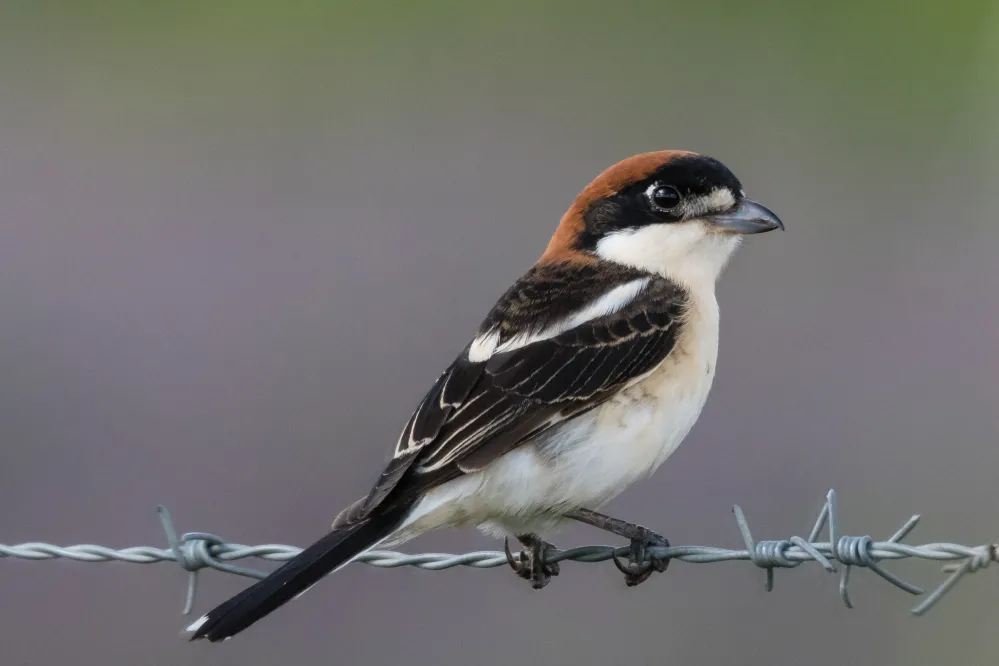
Although conditions have turned a little colder this week, there have continued to be many records of spring ‘overshoots’, with various more typically European species being found here. Among these, there continue to be many reports of Black-winged Stilts, with some likely to settle down and breed now, while this week has also seen multiple reports of Golden Orioles, Woodchat Shrikes, a flock of 13 Bee-eaters in Norfolk, and much else!
As always, thank you for adding your sightings to BirdTrack to help us monitor the spring migration and I wish you a good week of birding.
Add your sightings to BirdTrack
Help us track the departures and arrivals of migrating birds by adding your sightings to BirdTrack. It’s free, quick and easy, and signing up also allows you to explore trends, reports and recent records in your area.
Author(s)

Tom Jordan