Bird migration at the start of May 2026.
It’s been another busy week of migration, with a spell of easterly winds resulting in some interesting movements of birds through Britain. As we have often mentioned in the migration blog, easterly winds are always exciting for birders as they can result in birds that are migrating to the east of Britain ‘drifting’ westwards.
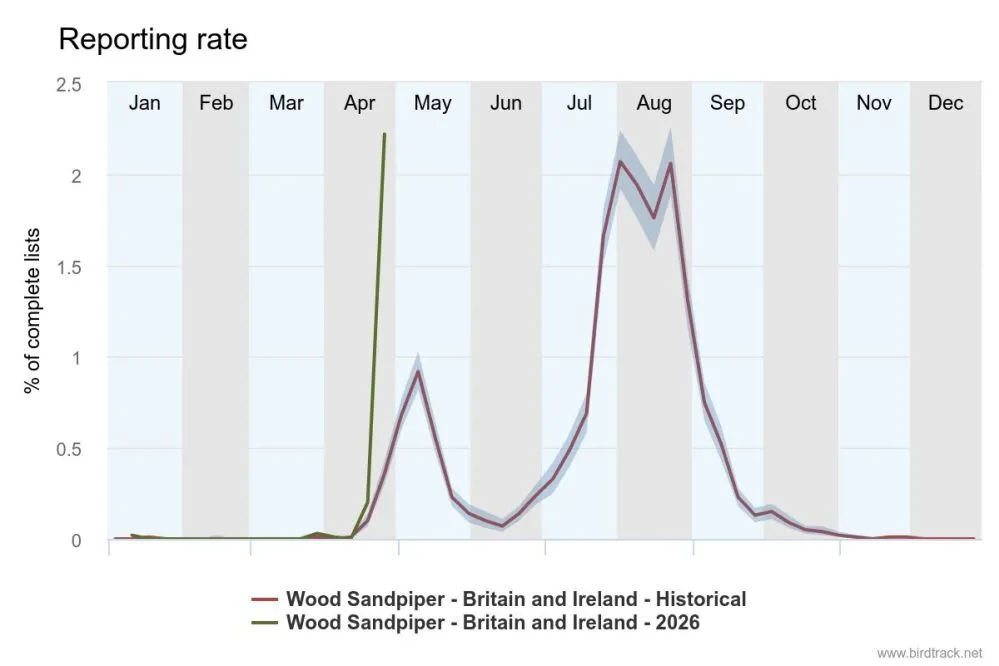
One of the classic drift migrants of late April and May is Wood Sandpiper. Generally quite a scarce passage migrant in Britain and Ireland, it can occur in larger numbers when conditions are favourable and that has certainly been the case over the last week, with single birds and even small flocks dropping into many wetlands across the country. The BirdTrack reporting rate for the latest week reached 2.2%, about six times higher than the historic average for this week, and I expect the reporting rate to be even higher when the results are in for this week.
Another species strongly associated with easterly winds in spring is Black Tern and there has also been a nice influx of these, particularly last Friday (24 April), when flocks were seen at many lakes and reservoirs across the country. Particularly high counts were 46 at Abberton Reservoir, Essex, and 38 at Livermere, Suffolk, but there were evidently many hundreds of birds across the country on that day, with continued sightings since.
There has also been a spike in the reporting rate for Little Gull, with some birds being seen over wetlands across the country, as well as some good coastal passage, particularly at Dungeness, Kent, which recorded 1,467 Little Gulls heading up the English Channel on 25 April. On the same day, Dungeness also recorded over 6,000 Common/Arctic Terns on the move, while there have also been some good days for sightings of the Pomarine Skua, including 33 past Dungeness on Thursday, 30 April.
As well as the aforementioned Wood Sandpiper, many other waders are coming into the peak of their migration period now. One species that can be quite conspicuous at this time of year is Whimbrel. A smaller relative of the Curlew, with a shorter bill and distinctively striped head, Whimbrels are mostly seen at the coast but may also be seen inland on migration. Often the first sign of a Whimbrel is its very distinctive rippling whistle call, so listen out for that, especially if you are walking at the coast.
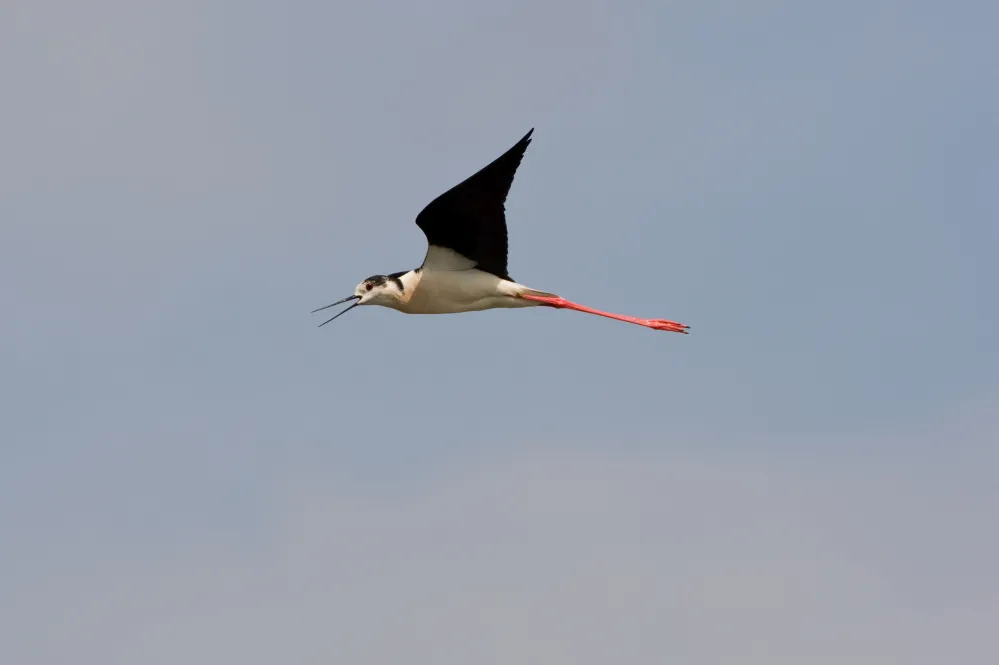
Of the rarer species seen this week, there has been a good number of Black-winged Stilts found in recent days, including a flock of seven that landed on a beach on St Agnes, Isle of Scilly, on 26 April. This very elegant long-legged wader would probably be best described as a ‘colonising breeder’ as it is now regularly breeding in England, although numbers seem to fluctuate from year to year, so it will be interesting to see how many of the birds found this week attempt to breed.
Most of our migrant songbirds are now well arrived into Britain and Ireland, with reedbeds full of the chuntering of Reed and Sedge Warblers, scrubby areas home to Whitethroats and the occasional Lesser Whitethroat, and Blackcaps and Garden Warblers providing good opportunity to compare their songs.
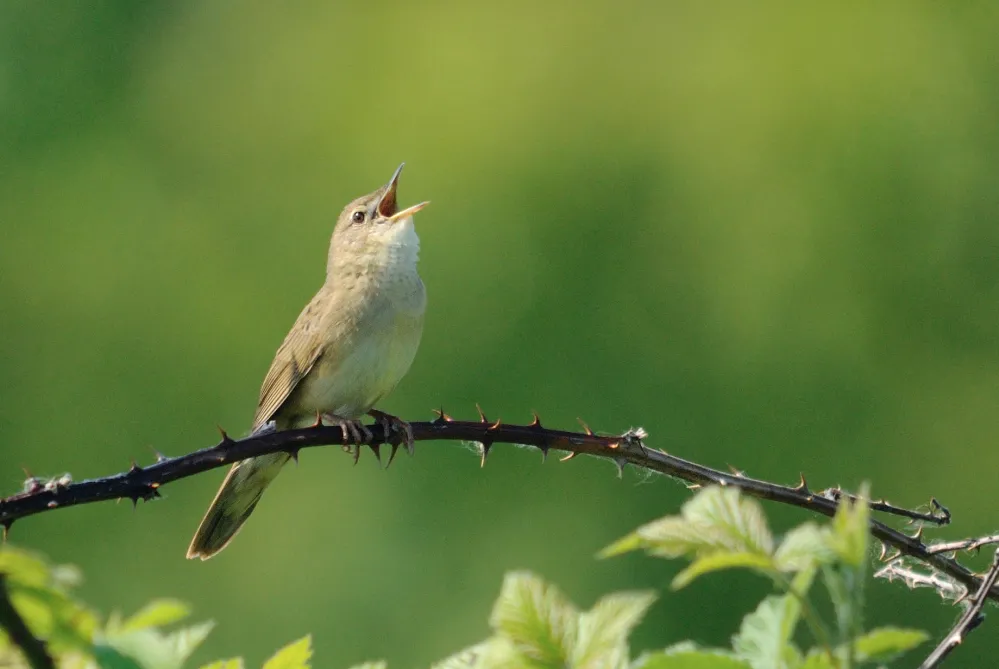
Cuckoos are one of our most charismatic spring migrants and it continues to look like a good year for them, with the reporting rate in the latest week reaching nearly 15%, above the historic average. It also seems like a reasonably good year for one of our most elusive summer visitors, Grasshopper Warbler, which is rarely seen but may be heard given its distinctive ‘reeling’ song, usually at dawn and dusk.
There are still a few of our latest arriving species yet to come in, the most common being the Spotted Flycatcher. There have already been some sightings in recent days, but I would expect reports to increase a lot over the coming fortnight. Nightjar is another typical May arrival and by this time next week the first churring males may have been reported from its favoured heathland and clearfell habitats.
Looking to the week ahead, the forecast is suggesting a mix of conditions, but likely some more rain compared to the sunny weather of this week. Any rainy days will be a good moment to look for migrants pausing their migration, particularly waders and terns stopping off at inland lakes and reservoirs. May is also the peak month for spring rarities, so now is the moment to find something unusual on your patch!
As always, thank you for adding your sightings to BirdTrack to help us monitor the spring migration, and I wish you a good week of birding ahead.
Add your sightings to BirdTrack
Help us track the departures and arrivals of migrating birds by adding your sightings to BirdTrack. It’s free, quick and easy, and signing up also allows you to explore trends, reports and recent records in your area.
Author(s)

Tom Jordan