Black Guillemot
Introduction
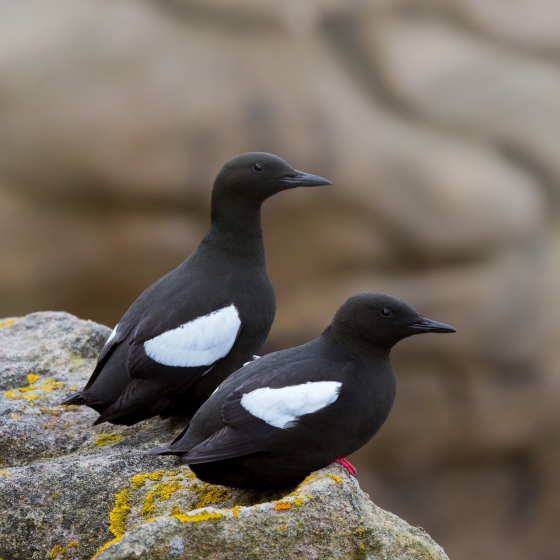
Found around the rocky coasts of Ireland and north-west Britain, this distinctive little seabird has a sharp black bill and scarlet feet.
In summer the Black Guillemot is all black, save for prominent white wing patches. In winter the plumage becomes almost white below with upperparts barred black-and-white. It is one of our smaller auks, only slightly larger than a Puffin and it has a thin whistling call.
The Black Guillemot is one of our most sedentary seabirds, only moving a short distance offshore in winter. The provision of nest boxes sited within harbour walls has helped this species.
Key Stats







Identification
ID Videos
This section features BTO training videos headlining this species, or featuring it as a potential confusion species.
Winter Auks
Songs and Calls
Call:
Other:
Status and Trends
Conservation Status
Population Change
Black Guillemots nest within rock crevices rather than in the open amongst other seabirds within cliff nesting colonies, and hence they are difficult to survey and counts were incomplete during the initial Seabird Census in 1969–70. The population remained broadly stable between the 1985–88 Census and Seabird 2000 (1998–2002) and annual data from the Seabird Monitoring Programme suggest it has been stable subsequently. Results from the recent Seabirds Count (2015–2021) are expected to offer a more comprehensive assessment of the recent trends (JNCC 2022).
Distribution
Black Guillemots are highly sedentary and their principal range in both seasons is the coasts of Ireland, Anglesey, the Isle of Man and northern and western Scotland. In winter there are additional scattered records along the coasts of the North Sea and southwest and southern England, perhaps reflecting limited dispersal away from breeding areas.
Occupied 10-km squares in UK
2007/08–10/11
or view it on Bird Atlas Mapstore.
2008–11
or view it on Bird Atlas Mapstore.
European Distribution Map
Distribution Change
Breeding range change is most noticeable in the west of Scotland when compared with both of the previous atlases, with losses predominating in the Outer and Inner Hebrides, but striking gains are shown in the inner north Clyde area and on the east side of the Kintyre Peninsula.
Change in occupied 10-km squares in the UK
from 1981–84 to 2007–11
or view it on Bird Atlas Mapstore.
from 1968–72 to 2008–11
or view it on Bird Atlas Mapstore.
Seasonality
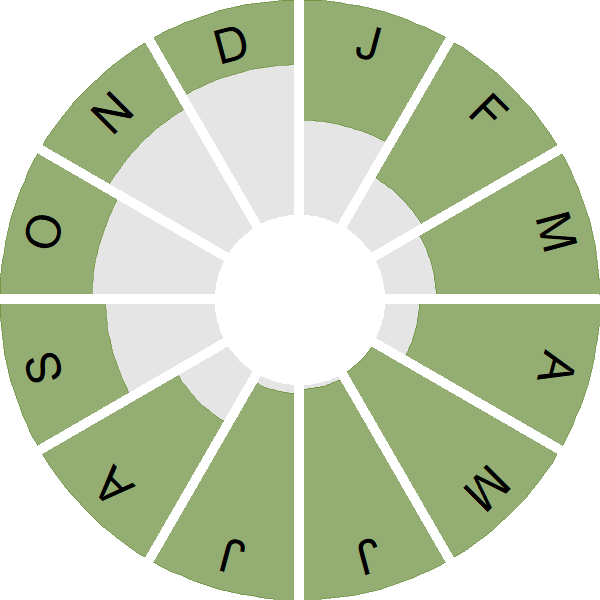
Black Guillemots are recorded throughout the year, though more consistently during summer at suitable coastal breeding sites.
Weekly pattern of occurrence
The graph shows when the species is present in the UK, with taller bars indicating a higher likelihood of encountering the species in appropriate regions and habitats.

Movement
Britain & Ireland movement
Foreign locations of birds ringed or recovered in Britain & Ireland
Dots show the foreign destinations of birds ringed in Britain & Ireland, and the origins of birds ringed overseas that were subsequently recaptured, resighted or found dead in Britain & Ireland. Dot colours indicate the time of year that the species was present at the location.
- Winter (Nov-Feb)
- Spring (Mar-Apr)
- Summer (May-Jul)
- Autumn (Aug-Oct)

European movements
EuroBirdPortal uses birdwatcher's records, such as those logged in BirdTrack to map the flows of birds as they arrive and depart Europe. See maps for this species here.
The Eurasian-African Migration Atlas shows movements of individual birds ringed or recovered in Europe. See maps for this species here.
Biology
Productivity and Nesting
Nesting timing
Egg measurements
Clutch Size
Survival and Longevity
Survival is shown as the proportion of birds surviving from one year to the next and is derived from bird ringing data. It can also be used to estimate how long birds typically live.
View number ringed each year in the Online Ringing Report.
Lifespan
Survival of adults
Biometrics
Wing length and body weights are from live birds (source).
Wing length
Body weight
Ring Size
Classification, names and codes
Classification and Codes
- Order: Charadriiformes
- Family: Alcidae
- Scientific name: Cepphus grylle
- Authority: Linnaeus, 1758
- BTO 2-letter code: TY
- BTO 5-letter code: BLAGU
- Euring code number: 6380
Alternate species names
- Catalan: somorgollaire alablanc
- Czech: alkoun obecný
- Danish: Tejst
- Dutch: Zwarte Zeekoet
- Estonian: krüüsel
- Finnish: riskilä
- French: Guillemot à miroir
- Gaelic: Gearra-glas
- German: Gryllteiste
- Hungarian: fekete lumma
- Icelandic: Teista
- Irish: Foracha Dhubh
- Italian: Uria nera
- Latvian: melnais alks
- Lithuanian: paprastoji taiste
- Norwegian: Teist
- Polish: nurnik (zwyczajny)
- Portuguese: airo-d'asa-branca
- Slovak: svištún zrkadlový
- Slovenian: crna njorka
- Spanish: Arao aliblanco
- Swedish: tobisgrissla
- Welsh: Gwylog Ddu
Research
Causes of Change and Solutions
Causes of change
Unlike other auks, Black Guillemots tend to remain close to their breeding colonies when foraging and the stable trend suggests that conditions have remained reasonably favourable over the last 30 or 40 years. However, knowledge of the breeding ecology is limited in comparison to many other seabird species and therefore further knowledge of this species would be valuable in order to understand possible threats.
Publications (7)
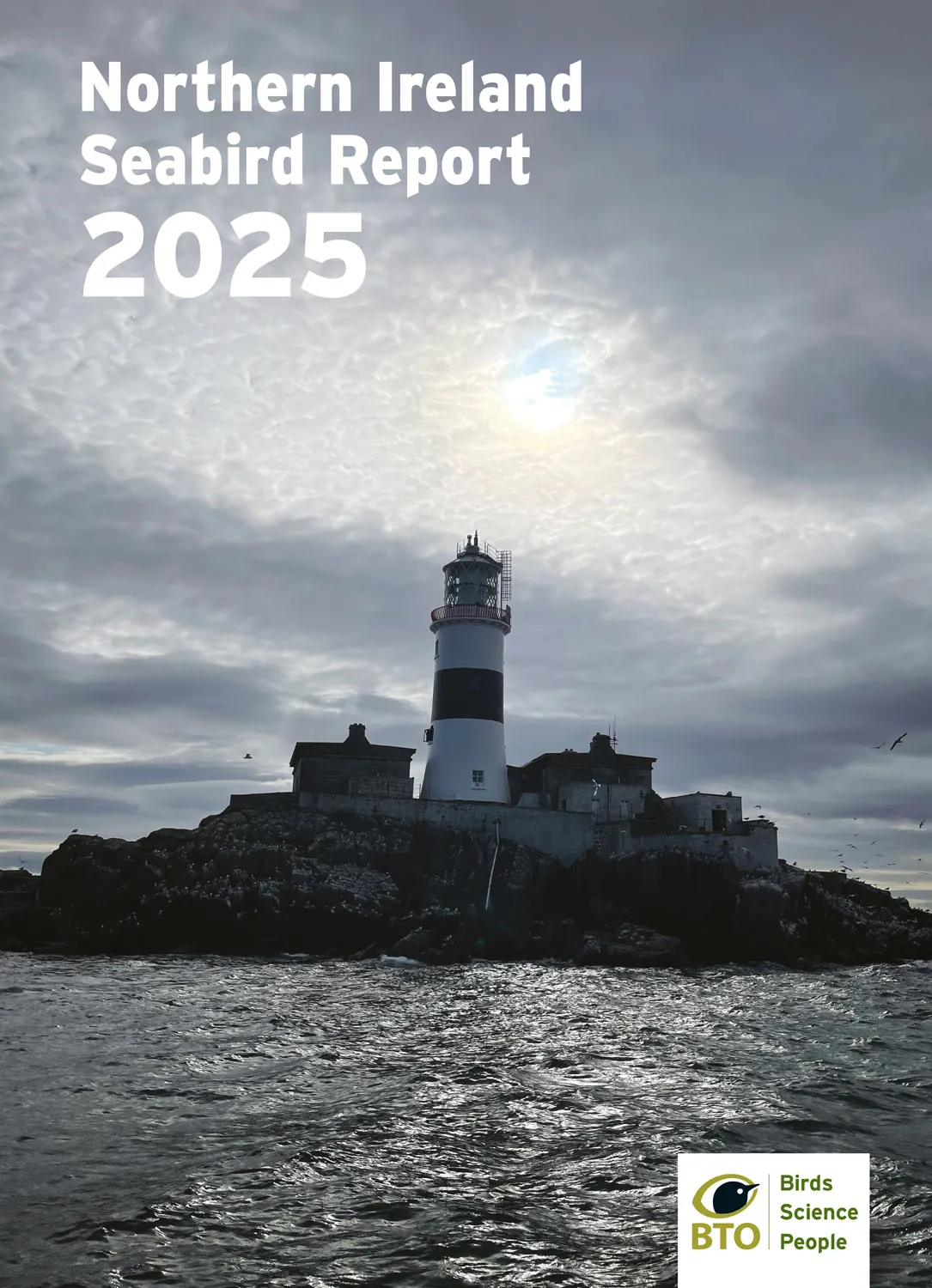
Northern Ireland Seabird Report 2025
Author:
Published: 2026
This report is the published outcome of the work of the Northern Ireland Seabird Network — a network of volunteers, researchers and organisations — coordinated by the BTO Seabird Coordinator, and funded by NIEA. It contains detailed species accounts for the 22 breeding seabird species in Northern Ireland, as well as articles on a range of topics: Manx Shearwaters nesting on Rathlin Rathlin Island Breeding Seabird Census 2025 Tracking Lesser Black-backed Gulls on Lough Neagh Puffins return to Isle of Muck Outer Ards: 2025 Seabird Nesting Report Strangford Lough: 2025 Seabird Nesting Report Forthcoming seabird research work: ACCLIMATISE project
26.03.26
Reports Northern Ireland Seabird Report
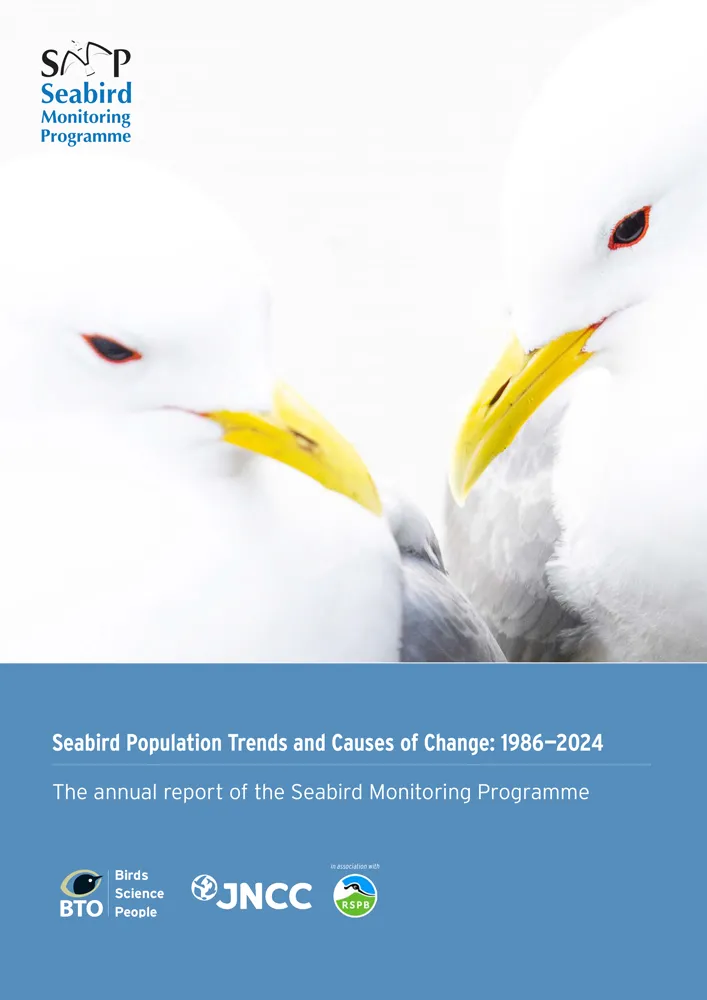
Seabird Population Trends and Causes of Change: 1986–2024
Author:
Published: 2026
The annual report of the Seabird Monitoring Programme View and download the report Read the report online This report presents the latest seabird population trends in breeding abundance and productivity using data from the Seabird Monitoring Programme (SMP). It documents changes in the abundance and productivity of breeding seabird species in Britain and Ireland from 1986 to 2024. This report includes both inland and coastal populations and trends from the Channel Islands, England, Isle of Man, Northern Ireland, Scotland, Wales and the Republic of Ireland, which are presented where sufficient data are available. The results from this report are used more broadly to assess the health of the wider environment, to inform policy and for conservation action.
19.03.26
Reports SMP Report
Combining temperature-depth recorder and GPS data improves identification of foraging habitat in diving seabirds
Author:
Published: 2025
14.10.25
Papers
The status of the UK’s breeding seabirds
Author:
Published: 2024
Five seabird species are added to the Birds of Conservation Concern Red List in this addendum to the 2021 update, bringing the total number of Red-listed seabird species to 10, up from six since seabirds were last assessed. The Amber List of seabirds moves from 19 to 14 species, and the Green List increases from one to two species.
29.09.24
Papers
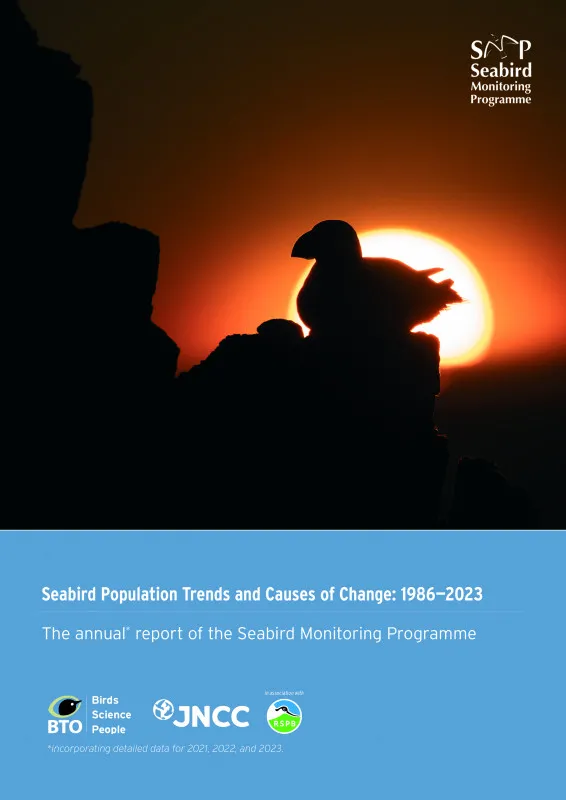
Seabird Population Trends and Causes of Change: 1986–2023
Author:
Published: 2024
This report presents the latest seabird population trends in breeding abundance and productivity using data from the Seabird Monitoring Programme (SMP).The report documents changes in the abundance and productivity of breeding seabird species in Britain and Ireland from 1986 to 2023, and provides a detailed account of the 2021, 2022 and 2023 breeding seasons. This report includes both inland and coastal populations and trends from the Channel Islands, England, Isle of Man, Northern Ireland, Scotland, Wales and the Republic of Ireland, which are presented where sufficient data are available. The results from this report are used more broadly to assess the health of the wider environment, to inform policy and for conservation action.
21.11.24
Reports SMP Report
Seabird abundances projected to decline in response to climate change in Britain and Ireland
Author:
Published: 2023
Britain and Ireland support globally-important numbers of breeding seabirds, but these populations are under pressure from a suite of threats, including marine pollution, habitat loss, overfishing and highly pathogenic avian influenza. Climate change introduces additional threats, the magnitude of which is uncertain in the future, making it difficult to plan how to apportion conservation efforts between seabird species. Predicting how species’ numbers could change under different climate change scenarios helps clarify their future vulnerability to extinction, and thus assists in conservation planning.
05.12.23
Papers
Behavioural responses of non-breeding waterbirds to marine traffic in the near-shore environment
Author:
Published: 2022
Marine traffic is increasing globally, but there has been little research investigating the impact of this disturbance, particularly for non-breeding populations in near-shore environments. This study observed the behaviour of 11 seabird species in response to winter ferry passage around Orkney, increasing the evidence base available to inform impact assessments, planning and policy in the marine environment.
02.09.22
Papers
More Evidence
More evidence from Conservation Evidence.com
Partners




Citing BirdFacts
If you wish to cite particular content in this page (e.g. a specific value) it is best to use the original sources as linked in the page. For a more general citation of the whole page please use: BTO (20XX) BirdFacts Species: profiles of birds occurring in the United Kingdom. BTO, Thetford (www.bto.org/birdfacts, accessed on xx/xx/xxxx).