As of January 2026, the Winter Bird Survey is now closed to new participants. We have left some of the information about the survey and what skills you might need to take part below, particularly if you are considering your own winter bird surveys.
For that, you might like to read our guidance on bird monitoring at a local scale, which takes you through some of the considerations of how to design a survey.
What skills do I need to take part?
You need to be able to identify all the bird species that are likely to be encountered in your 1-km survey square during the non-breeding season. You also need to be comfortable in your ability to estimate the numbers and species composition of potentially large flocks, particularly of passerines on farmland.
The Winter Bird Survey methodology is based on that of the BTO/JNCC/RSPB Breeding Bird Survey. In essence, it involves counting all of the birds that you see or hear (including adults, juveniles and birds in flight) while walking two 1-km lines across the square.
You can record any live mammals sighted during your survey visits, but this component of the survey is optional. If you wish to record mammals, you will need to be confident of your ability to identify various deer species, Red Fox, Rabbit, Brown Hare, etc.
Guidance and support
All Winter Bird Survey volunteers will have access to resources on survey methodology, data entry and visit planning.
We also have a range of Bird ID videos which cover potential ‘confusion species’, including winter finches, buntings, thrushes, birds of prey and more.
How much time does it take?
You will need to undertake up to four survey visits over the winter period:
- Visit 1 – in late September or October
- Visit 2 – in December
- Visit 3 – in January
- Visit 4 – in February
Ideally, you will make all four visits to your survey square. However, we welcome participation from volunteers who are only able to do two or three visits, provided those visits cover at least Visit 1 and one of Visit 2 or Visit 3.
Survey sites are pre-selected from a list of random 1-km squares, so it is likely that you will need to drive to your square.
A full winter season will require approximately 12–14 hours of time, for travel, surveying and data entry:
- Each visit, not including travel time, should take somewhere between 90 minutes to 2 hours.
- Assuming 45 minutes total travel and around 45 minutes of data entry, the total time commitment per visit is around 3–3.5 hours.
Collecting data from your survey square
What to record
While walking the two transects through your survey square, you should record:
- All birds – juveniles and adults – that you see and hear, against one of three coarse distance bands (0–25m, 25–100m and >100m). Birds in flight are recorded separately.
- Simple habitat information, focused on measuring farmland habitat.
- Optionally, sightings of live mammals.
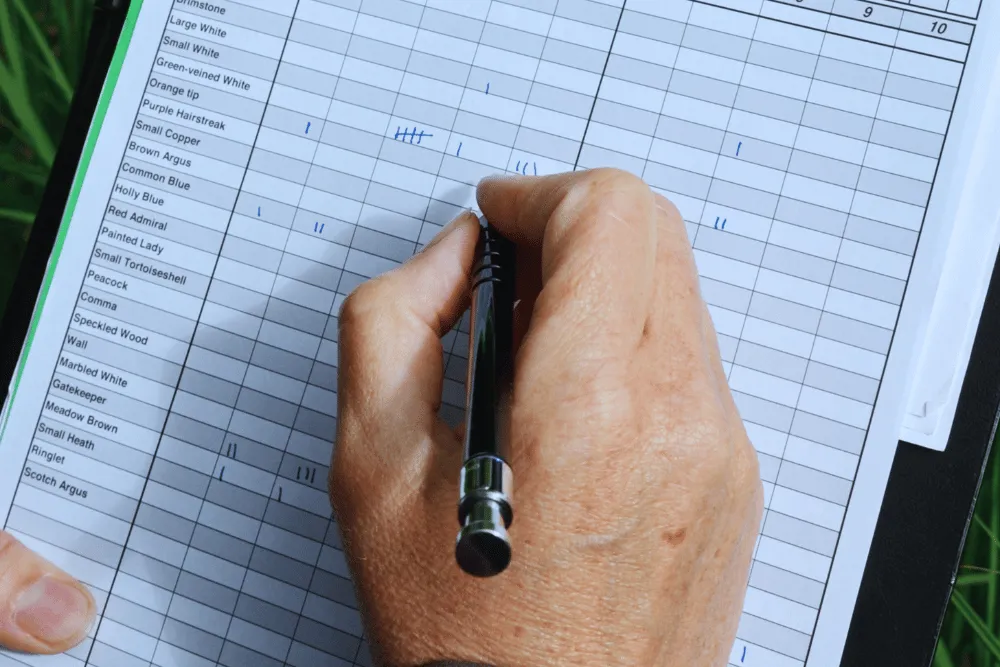
You will be able to download and print forms for survey recording, or request paper copies to be sent to you via post.
- Learn more about what to record for the Winter Bird Survey.
Submitting your data
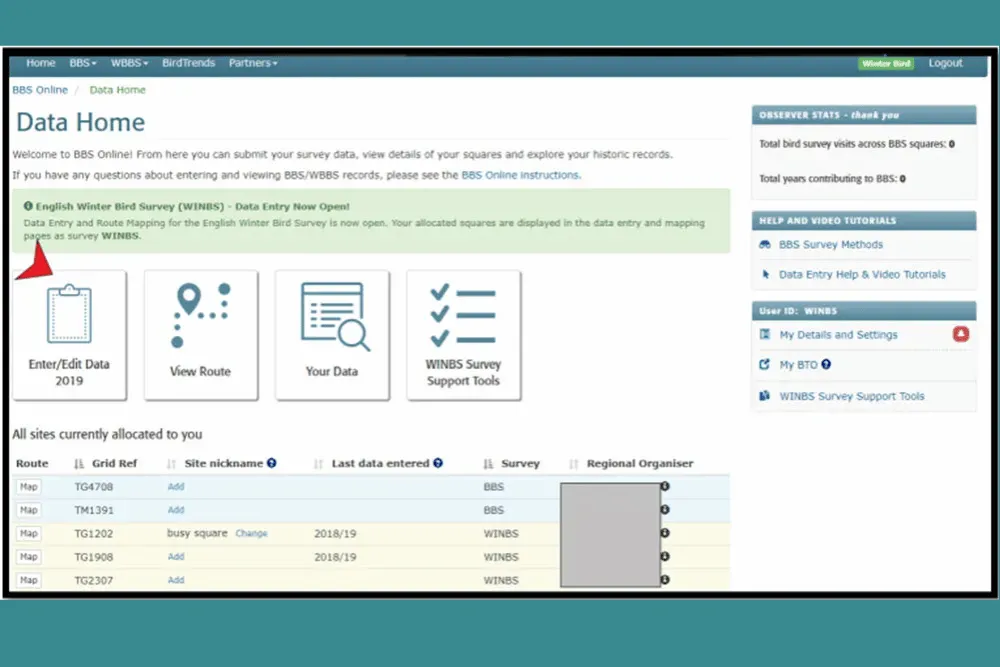
We encourage volunteers to enter their own counts using the BBS Online web application. Guidance and support are available to help you with this if needed.
- Learn more about how to submit your Winter Bird Survey data.
Exploring data
Participants will be able to view previous counts on their square (from the 2018/19 survey) via the BBS Online web application.
Resources
Forms, instructions and guidance
- View and download all the Winter Bird Survey forms and instructions.
Essential reading for volunteers
- We recommend you read BTO’s guidance for volunteer fieldworkers before starting your surveys.
- You should also read the BTO Code of Conduct, which all survey participants are expected to adhere to.
We acknowledge that some squares in remote or mountainous areas will simply not be possible to survey, especially in the winter months. However, for anyone considering it, we recommend reading these guides on safety in the mountains, particularly in winter:
Requesting a square
- After you have signed up (via MyBTO), you can request a square to survey in the BBS app.
Planning your visit
What to consider before your first Winter Bird Survey site visit.
Recording
How and what to record on your survey visits, plus survey forms, instructions and guidance.
Submitting your data
Guidance and support for Winter Bird Survey data entry, including how to use BBS Online.