Passive acoustic monitoring (PAM) provides a means of collecting data on birds, as well as other species. BTO is already using this technology to gather valuable data on populations, as well as undertaking projects to explore the potential of this emerging technology to deliver other much-needed information.
Please note: the BTO Acoustic Pipeline has moved to a new location.
Understanding distribution and activity
Through the surveys that we support with passive acoustic monitoring, we are able to improve knowledge and understanding of species distribution and activity, covering a range of taxonomic groups, including birds, bats, small terrestrial mammals and insects.
The resulting robust datasets provide an evidence base that can then be used to inform better decision-making processes and to test the effectiveness of conservation interventions. The use of acoustic monitoring can be particularly useful for species that are rare or unexpected in the survey area, or that are traditionally regarded as too difficult to identify (such as bats in the genera Myotis or Nyctalus).
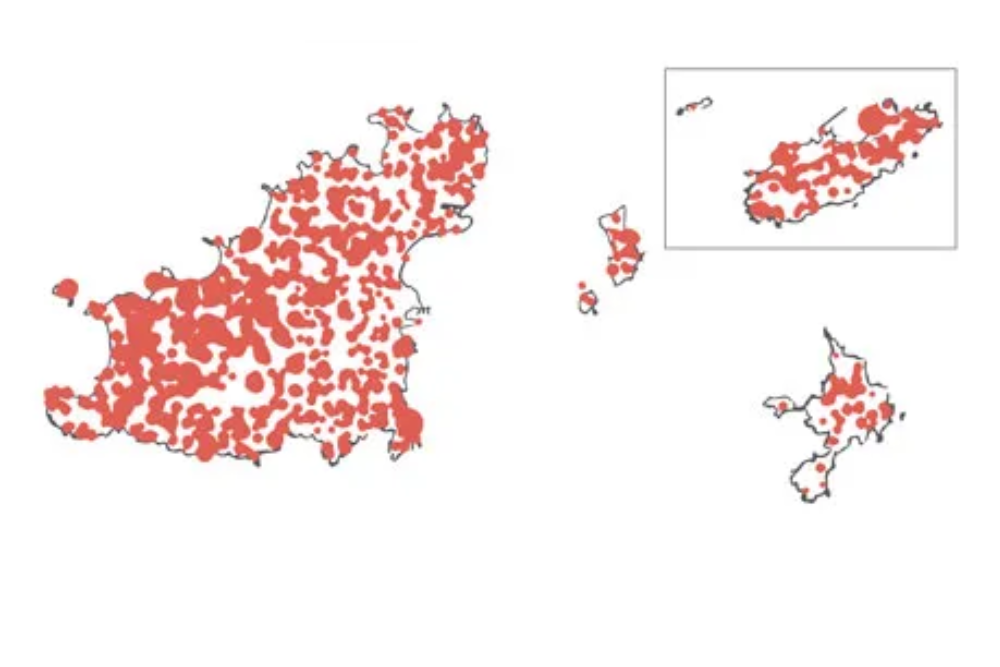
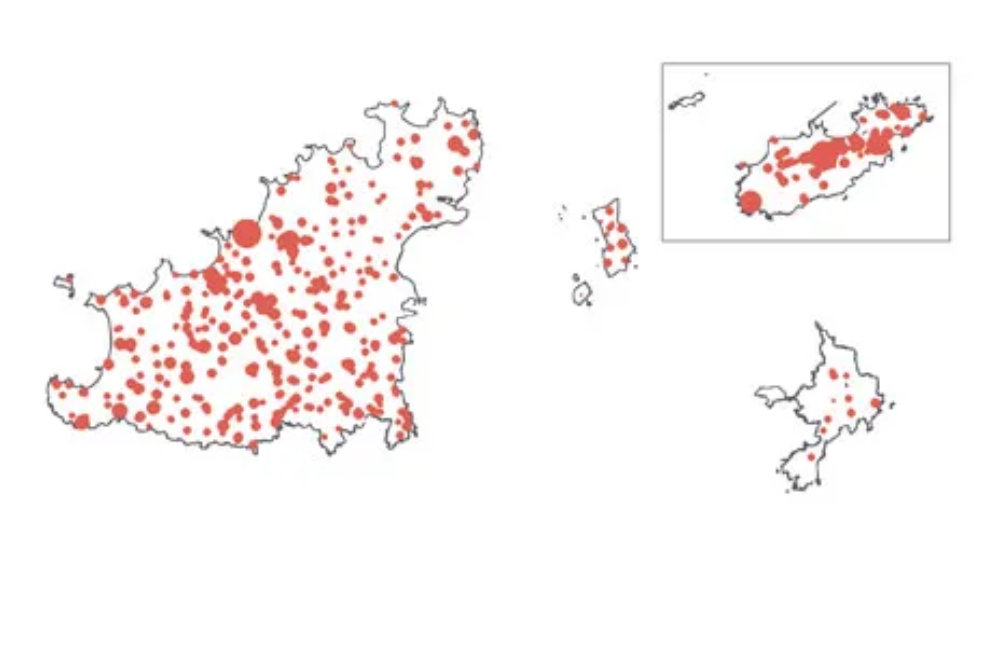
The Norfolk Bat Survey, for example, fundamentally changed our understanding of bat populations across the county of Norfolk, demonstrating how volunteers can enable large-scale acoustic monitoring, and providing robust data to inform planning decisions at a landscape scale. A similar project in southern Scotland was able to assess the risk to bat populations posed by wind farm development. The Bailiwick Bat Survey provides a great example of how to leverage the power of passive acoustic monitoring and a network of citizen scientists to deliver much-needed information on species of conservation importance.
Distribution of Brown and Grey Long-eared Bats in the Bailiwick of Guernsey, as revealed by passive acoustic monitoring
Grey Long-eared Bat
Brown Long-eared Bat
Securing proof of breeding
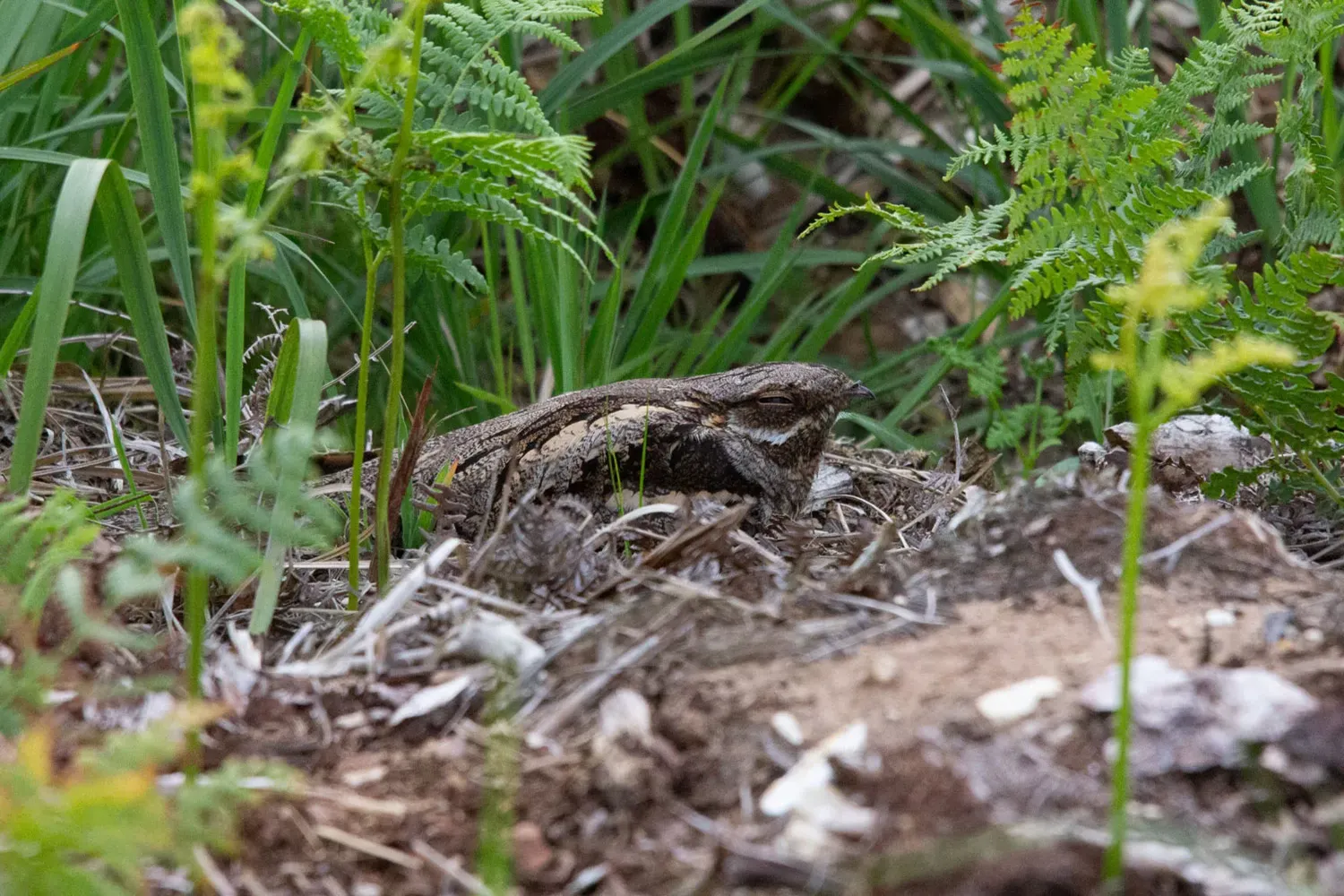
As BTO research demonstrates, passive acoustic monitoring can help us to secure breeding evidence for scarce or difficult to survey species, such as Lesser Spotted Woodpecker and Nightjar.
Surveying Nightjars is difficult and their nocturnal behaviour requires dedicated night-time field surveys, which can be tricky in remote areas. Passive acoustic monitoring can be a useful tool to help in Nightjar monitoring, as programmable audio recorders can be deployed in the daytime and left to record for extended periods. Software, such as BTO’s Acoustic Pipeline, can then be used to efficiently scan the many hours of collected audio, automatically searching for Nightjar vocalisations.
But what if we want to understand more than simply whether there was a Nightjar present? Can we say whether Nightjars are paired or even nesting, just based on passively collected sounds? A BTO blog, Inferring Nightjar behaviour from acoustic signals, picks up the story ...
Testing conservation interventions
Acoustic monitoring approaches provide an opportunity to test the effectiveness of conservation interventions, from local scale projects through to wider landscape approaches. BTO staff have, for example, been involved in research examining the biodiversity benefits of agri-environment schemes interventions, including work on bats and bush-crickets, and rewilding initiatives.
Rewilding is a dynamic, unpredictable process that can challenge the monitoring approaches used to track changes at more traditional nature conservation sites. Although rewilding sites collect data and can demonstrate ecological, social and economic changes to a certain extent, there is, as yet, no framework that lays out the most appropriate, measurable metrics for monitoring rewilding progress. Passive acoustic monitoring provides an opportunity to baseline and monitor changes in biodiversity at sites, securing measures of change across key species and taxa.
By piloting the use of passive acoustic monitoring at Rewilding Britain member sites, BTO has been able demonstrate the suitability of the technology, both in collecting robust data for individual species and for community soundscapes. This work is ongoing, but hugely promising. The results from some of the individual projects are available as BTO research reports, including:
Monitoring change in numbers
Acoustic monitoring could make a significant contribution to monitoring change in species’ populations, particularly in situations where participation in surveys like the BTO/JNCC/RSPB Breeding Bird Survey (BBS) is limited by the local availability of skilled bird surveyors – e.g. in the Scottish uplands.
In 2023, generous funding from Mark Constantine and Ken and Linda Smith enabled us to carry out pilot work to understand how acoustic monitoring data compare with those from more traditional approaches. We asked BBS volunteers in Scotland to help by deploying acoustic recorders on their BBS squares during the early season visit and collecting them on the late season visit. Over 2,000 hours of recordings were secured and processed. Comparison of these data with BBS data from the same sites is now informing decisions about how we might use and develop this tool to improve our monitoring capability.
Developing acoustic monitoring tools
BTO staff have developed a suite of tools to support and enable individuals and organisations to use passive acoustic monitoring. These include both acoustic classifiers – the software that is used to identify species from their calls – and the supporting framework for handling, processing, identifying and storing recordings. These are brought together through the BTO Acoustic Pipeline, which is used across the globe in conservation, management and site assessment, providing a smooth and easy end-to-end workflow, with free support from our in-house experts. Free or scalable paid plans with bespoke data management options are available.
Support our work
Acoustic monitoring is a powerful, unique and insightful approach that gives us a fresh perspective and new information about our ecosystems. Your donation will help us unlock the potential of acoustic monitoring for birds and develop even more effective tools and impactful conservation.