Publications

Publications

BTO create and publish a variety of important articles, papers, journals and other publications, independently and with our partners, for organisations, government and the private sector. Some of our publications (books, guides and atlases) are also available to buy in our online shop.

Search settings

Order by
Partners
Region
Science topic
Type
Publication Group

The State of the UK's Birds 2016

Author:

Published: 2017

The main theme of The State of the UK’s Birds report (SUKB) 2016 is the latest Birds of Conservation Concern 4 list – BoCC4 published in 2015 - and the species whose status has changed. The increase in the Red list by 15 species is due to problems in all habitats including farmland, woodland and coasts but most notably in uplands with five new upland species moving onto the red list.One of these is Curlew. The UK supports 27% of the global population, and the long-term trend shows a 64% decline from 1970 to 2014. This, combined with the bird's global status of Near Threatened, suggests that the Curlew is one of the most pressing bird conservation priorities in the UK. “The BTO is working with others on a programme of research to understand the causes of Curlew decline and guide potential management solutions. This involves analyses of long-term data collected by thousands of volunteers, using novel tracking technology to study the needs of individual birds, and working with local enthusiasts to inform the recovery of local populations” - James Pearce-Higgins, Director of Science, BTO Upland birds Whinchat, another largely upland species monitored by the BBS shows a 53% decline during the last two decades. As an Afro-Palearctic migrant, this species is part of another group for which there is particular concern. Threats and pressures during migration and on the wintering grounds need to be considered alongside the impact of changes in upland habitats in the UK. More unexpected perhaps, is that Grey Wagtail has moved from the Amber list to the Red list. Alongside declines in Common Sandpiper and Dipper, this raises wider concerns about species associated with upland streams and rivers. The other two upland species to show marked declines are Merlin and Dotterel, the latter a montane species likely to affected negatively by climate change and grazing pressure. Scarce and rare breeding species As well as the annual update of changes in widespread breeding species based mainly on the BBS, SUKB 2016 once again includes a summary of trends in scarce and rare breeding species, drawn mainly from the annual reports of the Rare Breeding Bird Panel (RBBP) and the SCARABBS programme of periodic surveys. Of the 91 species reported on in the most recent RBBP report covering 2014, 71 were assessed by BoCC4. Eight species showed an improvement in status (including Woodlark, Bearded Tit and Chough, which joined the Green list), with conservation action to maintain suitable reed beds helping the populations of species such as Bittern recover. Five species, Pochard, Slavonian Grebe, Merlin, Dotterel and Black Redstart moved onto the Red list. The remaining 20 of the 91, not assessed by BoCC4, are those which are not considered to be a regular component of the UK’s avifauna. This may be because they breed only occasionally (eg. European Bee-eater), or indeed have never bred, but from time-to-time visiting individuals exhibit breeding behaviour (eg. Great Reed Warbler). The RBBP logs such occurrences, as it may be that they represent a precursor to future colonisation, such as the first Little Egrets that displayed to each other in the early 1990s, before first breeding in 1996 and the subsequent population explosion. The importance of volunteer data Thousands of dedicated volunteers contributed to the data used throughout most of this report. Data used to calculate UK population trends and related research. Over 2,600 volunteers participated in the Breeding Bird Survey in 2016 alone, one of many surveys highlighted in the report. This particular survey provides annual population trends for 111 species, including upland species such as Curlew, Whinchat and Grey Wagtail. At a smaller, but equally as important scale, the 258 volunteers who contribute to the Waterways Breeding Bird Survey allow monitoring on those species specific to waterways, such as Common Sandpiper and Dipper and cover almost 300 sites annually. Who produces the report SUKB is produced by a coalition of three non-governmental organisations (NGOs) – the RSPB, BTO and the WWT – and the UK Government’s statutory nature conservation agencies – Natural Resources Wales (NRW), Natural England (NE), the Department of Agriculture, Environment and Rural Affairs, Northern Ireland (DAERA), Scottish Natural Heritage (SNH) and the Joint Nature Conservation Committee (JNCC).

11.04.17

Reports State of the UK's Birds

Read Online

Effects of deer on woodland structure revealed through terrestrial laser scanning

Author:

Published: 2017

Terrestrial laser scanning (TLS) captures the three‐dimensional structure of habitats. Compared to traditional methods of forest mensuration, it allows quantification of structure at increased resolution, and the derivation of novel metrics with which to inform ecological studies and habitat management. Lowland woodlands in the UK have altered in structure over the last century due to increased abundance of deer and a decline in management. We compared whole‐canopy profiles between woodlands with high (>10 deer km−2) and low deer density (c. 1 deer km−2), and in stands with and without records of management interventions in the last 20 years, providing a test case for the application of TLS in habitat assessment for conservation and management. Forty closed‐canopy lowland woodlands (height range 16·5–29·4 m) were surveyed using TLS in two regions of the UK, divided into areas of high‐ and low‐deer abundance, and between plots which had been recently managed or were unmanaged. Three‐dimensional reconstructions of the woodlands were created to document the density of foliage and stem material across the entire vertical span of the canopy. There was a 68% lower density of understorey foliage (0·5–2 m above‐ground) in high‐deer woodlands, consistent in both regions. Despite this, total amounts of foliage detected across the full canopy did not differ between deer density levels. High‐deer sites were 5 m taller overall and differed in the distribution of foliage across their vertical profile. Managed woodlands, in contrast, exhibited relatively minor differences from controls, including a lower quantity of stem material at heights from 2 to 5 m, but no difference in foliage density. All main effects were replicated equally in both regions despite notable differences in stand structures between them. Synthesis and applications. Terrestrial laser scanning allows ecologists to move beyond two‐dimensional measures of vegetation structure and quantify patterns across complex, heterogeneous, three‐dimensional habitats. Our findings suggest that reduction of deer populations is likely to have a strong impact on woodland structures and aid in restoring the complex understorey habitats required by many birds, whereas management interventions as currently practiced have limited and inconsistent effects.

11.04.17

Papers

A global threats overview for Numeniini populations: synthesising expert knowledge for a group of declining migratory birds

Author:

Published: 2017

Curlew, with their characteristic downward-curved bill and call evoking the wild British countryside, is a unique and much loved species. But these calls may not be echoing across our skies forever, and the problem is in no way confined to our shores. Seven out of the 13 wader species in the Numeniini (curlew and godwit) tribe are Near Threatened, Globally Threatened or Critically Endangered. This tribe’s ground-nesting habits (making them susceptible to predation), and long, perilous migrations across the globe leave them especially vulnerable. Numeniini also tend to favour specialist habitats, making them likely to decline further as these habitats disappear. Collaborative research led by the BTO identifies the main reasons for these declines and suggests conservation measures that could be implemented to halt them. The study synthesised expert knowledge to determine the severity of various threats both in the breeding and non-breeding sites of the birds across all the major global flyways. Threats differed between the breeding sites and non-breeding sites, and also between different populations of the same species across the globe. This is most likely due to the fact that populations are scattered across continents, with large distances between breeding and non-breeding sites meaning that the habitats in these areas and the issues affecting them can be very different. The factor with the greatest impact on population was the increase of large-scale development on important habitats, particularly in East Asia, Europe and the Americas, but climate change, hunting, pollution and the rise of intensive agriculture may also contribute to the decline. Numeniini populations face the greatest number of non-breeding threats in the East Asian-Australasian Flyway, especially those associated with coastal reclamation. Threats on the breeding grounds were greatest in Central and Atlantic Americas, East Atlantic and West Asian flyways. The planet’s growing human population means many of these threats have noticeably increased in scale and severity in recent years. The authors identified three three priority actions associated with monitoring and research: monitoring breeding population trends, deploying tracking technologies to identify migratory connectivity, and monitoring land-cover change across breeding and non-breeding areas. Two further priority actions focused on conservation and policy responses: identifying and effectively protecting key non-breeding sites across all flyways (particularly in the East Asian- Australasian Flyway), and implementing successful conservation interventions at a sufficient scale across human-dominated landscapes for species’ recovery to be achieved. If implemented urgently, these measures in combination could to alter the current population declines of many Numeniini species and provide a template for the conservation of other groups of threatened species. While it is essential to strike a balance between people's economic needs and those of Numeniini, the future of the tribe depends on an international effort to invest in research, monitoring and targetted conservation action.

01.03.17

Papers

View this paper online

Northern Ireland Seabird Report 2016

Author:

Published: 2017

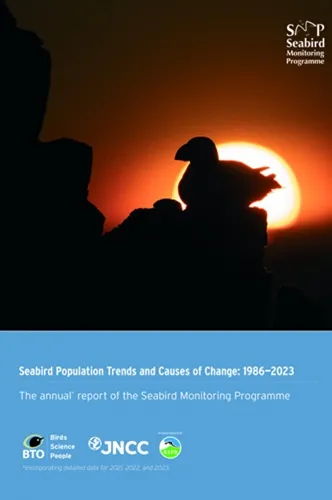
This is the fourth edition of the Northern Ireland Seabird Report, covering 2016. This report is the published outcome of the work of the BTO NI Seabird Coordinator, and the activities of the evolving Northern Ireland Seabird Network of volunteers and organisations, such as National Trust, Ulster Wildlife and the RSPB, that have provided data for 2016 and previous years. This 2016 report on breeding seabirds in Northern Ireland is like the preceding reports. We have kept the detail from previous years, even where data have changed little since our last report. It is important that this report represents a summary of current species knowledge, and that reference to other, earlier, reports is not necessary. In this approach we are taking a similar stance to JNCC and their online Seabird Monitoring Programme (SMP) report and this is doubtless the best way to present such a report. As in previous years several articles have been submitted for inclusion in the report. These articles provide further detail on the monitoring in Northern Ireland, and highlight some of the exciting seabird research being undertaken. We are very grateful to the authors for giving their time to produce these articles. We would like to thank everyone who has contributed to this report and, additionally, encourage more people to join the Seabird Network. Naturally, a summary such as this does not report all data but all records collected are of real value in understanding our local seabirds. The report is only as robust as the data we are aware of, so if you have seabird population data, either recent or historic, then please share it with us, and JNCC, for the benefit of seabirds in Northern Ireland.

01.03.17

Reports Northern Ireland Seabird Report

Read Online

Predicting the likely impact of urbanisation on bat populations using citizen science data, a case study for Norfolk, UK

Author:

Published: 2017

Urbanisation is one of the fastest growing forms of land use globally and one of the largest human impacts on the planet. Urban development is a severe and increasing threat to native biodiversity. However, in Britain, there is also demand for new housing and therefore new homes are being built. New research led by the BTO has quantified the effect of new housing on the distribution and activity of bats. This work was based on data from the Norfolk Bat Survey, where members of the public have been borrowing passive detectors to collect data on Norfolk's bats since 2013. This Survey has achieved extensive survey coverage of both urban and rural areas, with about 20% of the county surveyed over the first three years of the project. For each bat species recorded, BTO scientists modelled activity abundance and distribution in relation to habitat, human population and other variables that are likely to influence bats. These models were used to create predictive maps of the bats in Norfolk. Data from the Norfolk County Council on housing plans for the next 10 years were then incorporated to investigate how these predictions would change under the increase in housing. The results showed that the existing housing plans are expected to reduce the abundance and distribution of all bat species currently found in Norfolk. At the 1-km square level these effects were quite severe in some cases. However at a country-wide level, only an extra 0.5% of Norfolk would be built on under new housing plans and consequently bat range and abundance is only expected to decrease by a maximum of 1-2% over this period. The study also explored the influence of mitigation measures; building on habitat least preferred by bats first and siting new houses in areas with fewer bats, or areas with bat species more tolerant to humans. These measures reduced the negative effect of housing for the majority of species, however, different bat species have different needs and requirements and consequently three species did worse under the mitigation scenarios. Mitigation measures will need to be targeted towards particular species of conservation concern to have the desired effect. The techniques used in this study could be usefully adopted for other species or scenarios at a time when wildlife is coming under ever greater pressure from our expanding towns and cities.

21.02.17

Papers