Citation
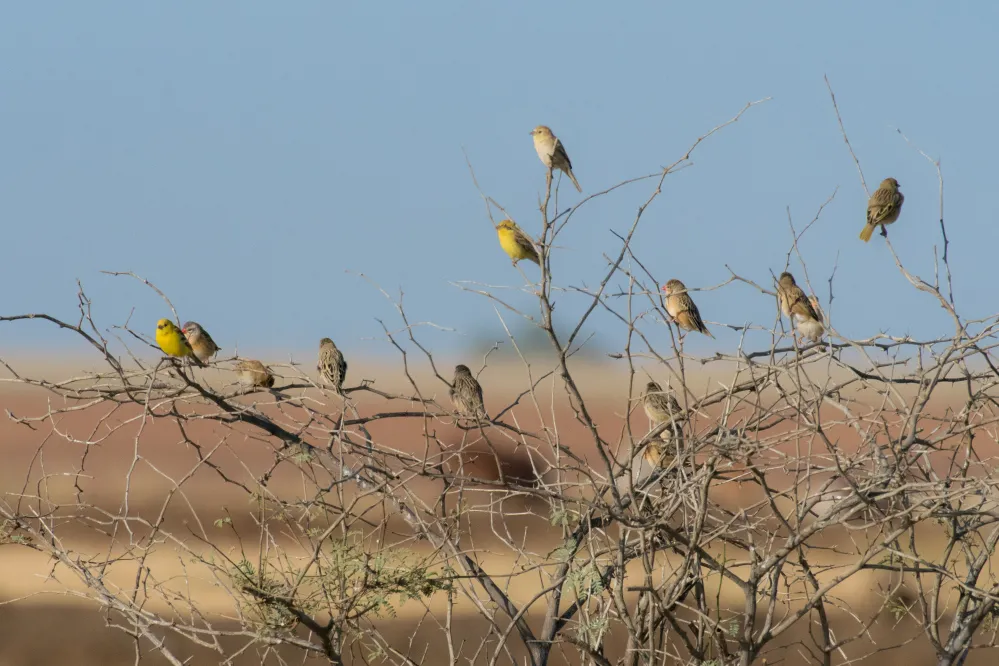
Overview
A continent-wide review highlights both the progress and gaps in bird monitoring across Africa.
In more detail
While many countries run monitoring schemes, these are often fragmented and depend on volunteers whose recruitment and retention remain challenging. Robust, ecosystem-level monitoring is rare, with most programmes focusing on specific species or sites. The study identifies major constraints, including limited numbers of skilled volunteers or professional staff, lack of skilled analysts in many countries, inconsistent use of data in policy, and insecure funding. The paper calls for a more coordinated and strategic approach to ensure monitoring better supports conservation and sustainable development.
Abstract
Biodiversity monitoring is essential to inform the state of wildlife populations, and the impacts of environmental change, conservation intervention, and sustainable development policies and actions. We review the current state of bird monitoring across Africa using public questionnaires and semi-structured interviews. We received 87 questionnaire responses from 46 (of 54) countries and, additionally, 24 in-depth interviews were carried out. Multiple data collection methods were reported with total counts of individuals being most frequent, but all-species surveys, essential for quantifying ecosystem health, were restricted to bird atlases and Common Bird Monitoring (CBM) projects in Kenya, Uganda, and Botswana. Data collection relied largely on volunteers, but their motivation, recruitment, training, and retention is a continuing challenge. The most sustainable programmes were driven by clear policy objectives (e.g. waterbird monitoring under the Ramsar Convention or the Convention on the Conservation of Migratory Species), monitoring of individual groups (e.g. raptors, vultures, bustards), specific threatened species, and where clear national priorities had been set within government agencies. Use of monitoring data by governments in country biodiversity reports or National Biodiversity Species Action Plans (NBSAPs) varied widely and, for many countries, simply did not exist. A lack of skilled analysts and a comprehensive approach to data curation and ownership were identified as major limitations. A more strategic approach to funding and monitoring is needed, whereby smaller funders collaborate to reduce costs associated with applying for small amounts of money, and bird (and biodiversity) monitoring is explicitly integrated with sustainable development goals to exploit broader funding streams.
Staff author(s)


This project would be nothing without the responses, in questionnaires and interviews, of many African ornithologists and those outside the continent with a passion for African ornithology; our thanks to these. Thanks also to the Joint Nature Conservation Committee (JNCC) for commissioning and guiding this work, the UK’s Department for Environment, Food & Rural Affairs (Defra) for supporting workshops, and Nigel Collar for many helpful comments.