Citation
Abstract
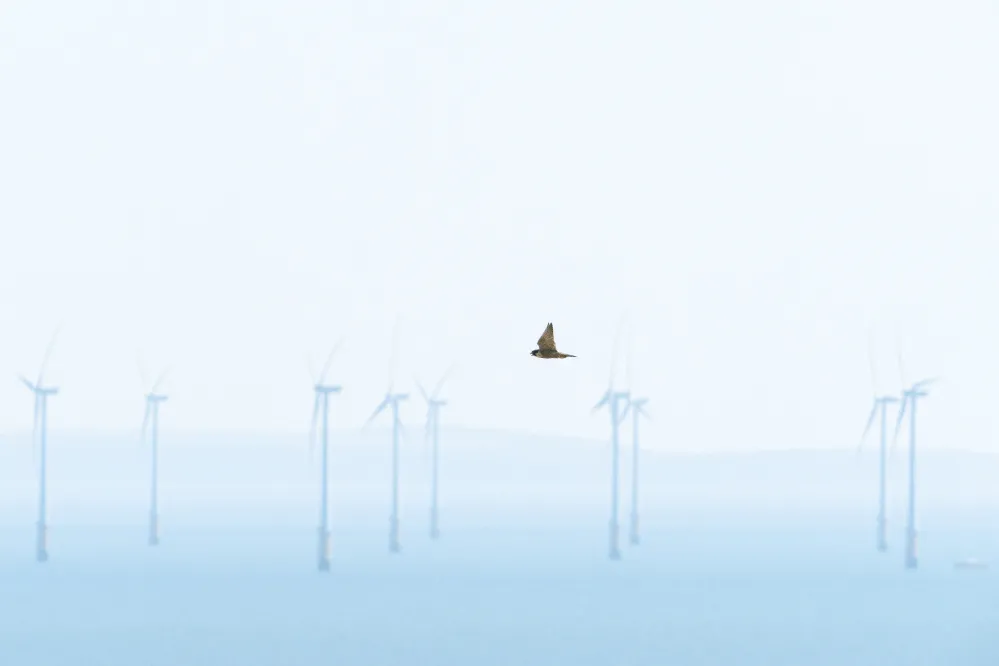
Although the rapid expansion of wind energy is essential for achieving carbon net zero targets, it may conflict with ecological objectives aimed at conserving and enhancing biodiversity. Birds in general are susceptible to colliding with wind turbines, and the impact of these structures may be especially significant for certain species. By examining how birds acquire, process and respond to environmental information, we propose a new collision mitigation approach that integrates sensory ecology with gaze strategy, flight behaviour and natural avoidance mechanisms. To enhance collision avoidance, we propose investigating blade patterns that alter the optic flow perceived by birds—the dynamic visual contrast resulting from their movement through the environment. Empirical behavioural research is now needed to assess the effectiveness of these designs. Given the diversity of affected species and environments, there may be no universal solution, and mitigations must also take account of the practical implications for developers and manufacturers. Our aim is to inspire and guide new research towards bio-informed solutions that protect wildlife without inhibiting clean energy generation.
Staff author(s)

This project has received funding from the European Research Council (ERC) under the European Union’s Horizon 2020 research and innovation programme (grant agreement no. 682501). This paper was also supported by funding from gifts in wills to the British Trust for Ornithology (BTO) for which we are extremely grateful. Additional funding was provided by the Biotechnology and Biological Research Council (BBSRC) grant to S.J.P. and G.K.T. (grant no. CBR01610).