Autumn bird migration comes to a close in 2025.

Back in the first migration blog of this autumn we made the point that autumn migration could be said to start in June, as this is when we see the first southbound waders passing through Britain. The first to appear are usually Green Sandpipers returning from the forest bogs of Fennoscandia, often only a few days after we see the last spring migrants in the form of Sanderling and Ringed Plover heading north to the Arctic tundra. But when does autumn end?
Nearly all of our summer visitors are now long gone, with most heading south during August and September. There are some species that are mostly summer visitors to Britain and Ireland that can be seen here in winter, but the birds that make up these wintering populations are generally different individuals to the ones that breed here. For example, we know from ringing records that Blackcaps seen here in the winter mostly come from Germany and the Low Countries, while most wintering Chiffchaffs probably also originate from the Continent. These birds also occupy different habitats to our breeding populations, with Blackcaps overwhelmingly using garden bird feeders to survive, while Chiffchaffs are mostly found around urban streams and sewage works, where insect prey is easier to find.
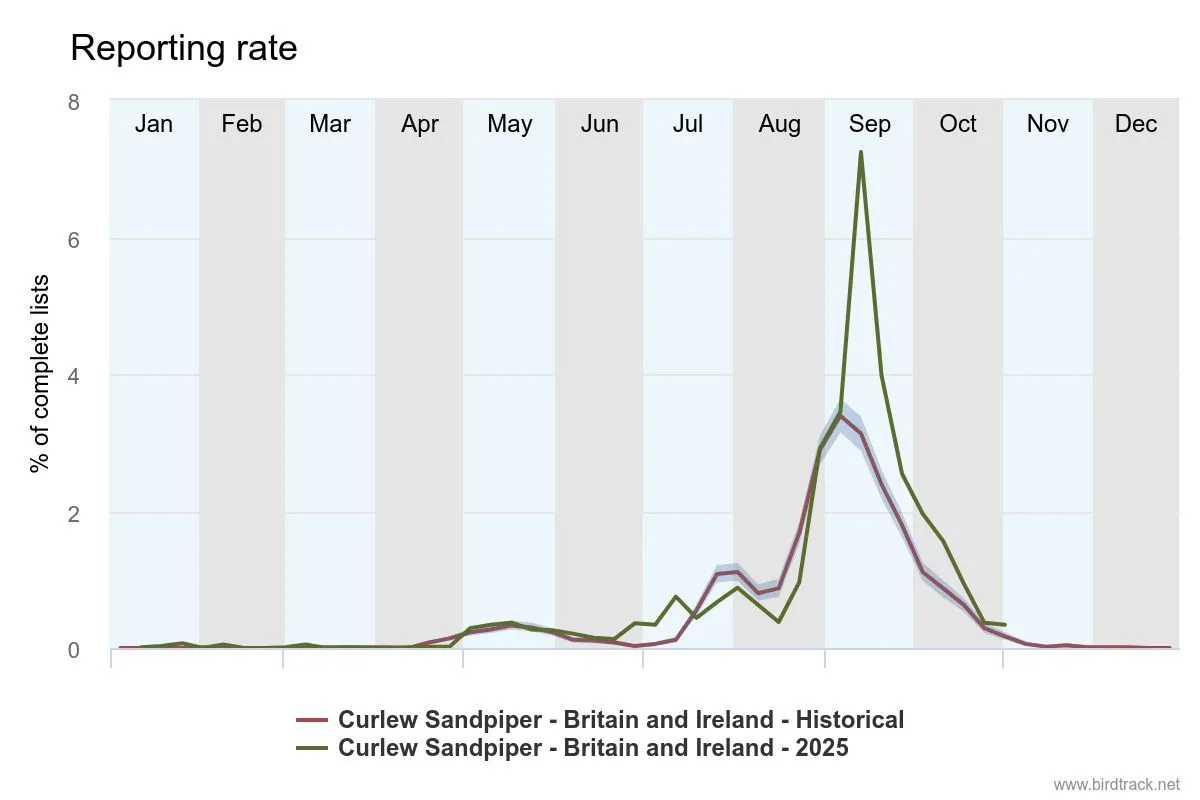
Movements of birds that we see mostly or only on passage have also largely concluded for the year, having peaked between August and October. Most of these species breed to the east of Britain but follow autumn migration routes that take them south-west across northern Europe rather than directly south. Generally it wasn’t a great year for sightings of these species, as we didn’t see any sustained periods of the easterly winds that lead to westward ‘drift’ in their migration, but the exception was Curlew Sandpiper, which in mid September was recorded on about one in every 14 Complete Lists submitted to BirdTrack, more than double the usual reporting rate for the time of year. However, more periods of strong westerly winds did make it a good autumn for passage seabirds on our western coasts, for example Grey Phalaropes appeared in good numbers as they travelled from the Arctic to winter at sea off West Africa.
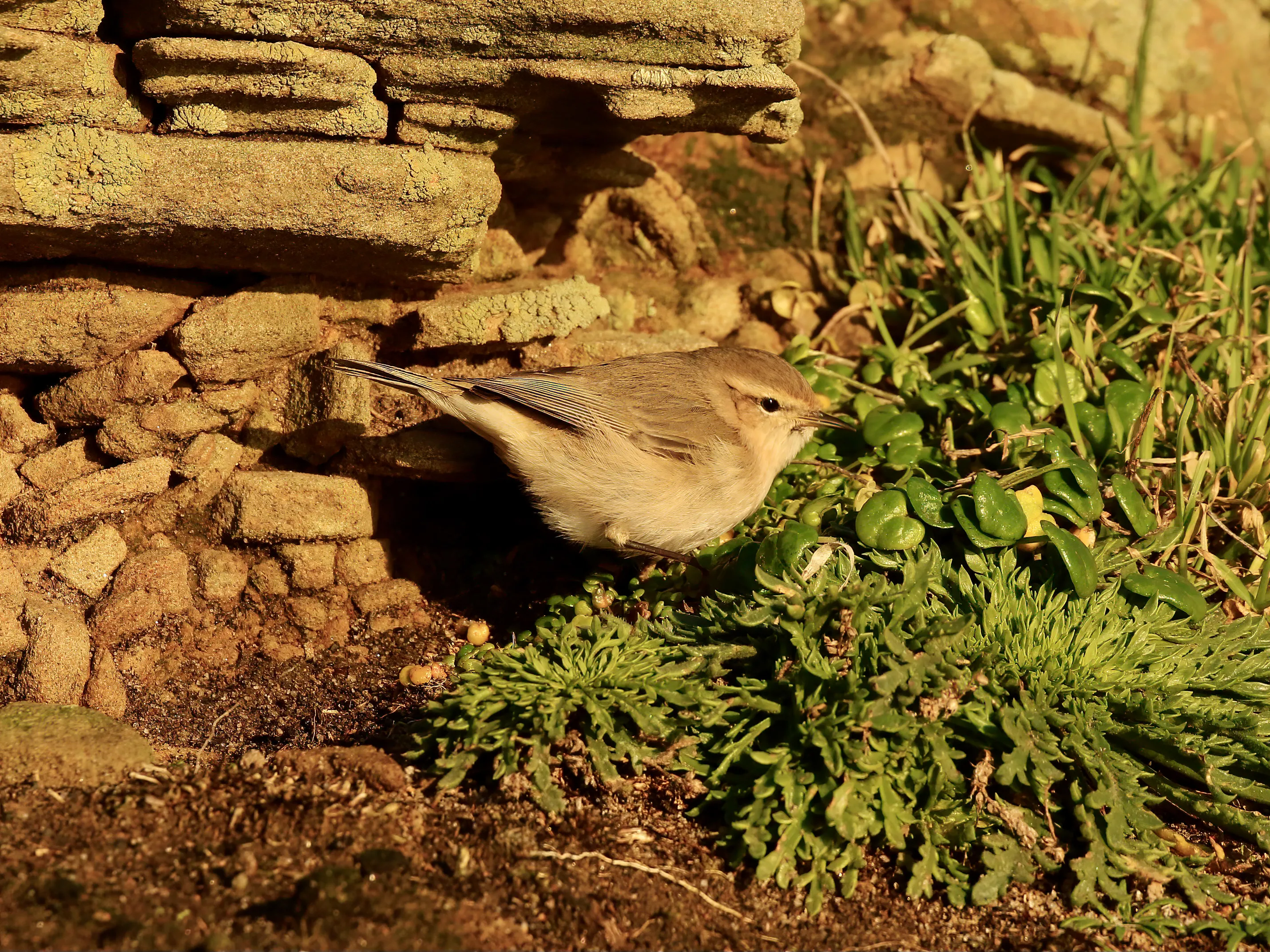
Winter visitors typically arrive a bit later than most summer migrants depart, with most species starting to arrive in September before a peak of arrivals in October. However, big ‘falls’ of migrants can still take place in November, particularly of species like Blackbird, Fieldfare and Goldcrest, while the main arrival of wintering Woodcock takes place in November, as mentioned in last week’s blog. Vagrants can also still occur in November, with Pallid Swift, Desert Wheatear and Dusky Warbler being particularly likely candidates. Several of the former have been found in recent days, having drifted north on the southerly winds when attempting to depart their Mediterranean breeding grounds.
However, birds’ adaptation to climate change has meant that defining the end of the arrival period for winter visitors is now harder than ever. A major development in recent years has been the growth of what we call short stopping, meaning that birds that would traditionally migrate to Britain to escape harsher conditions further north and east are now staying closer to their breeding grounds. This has been particularly the case in wildfowl, for example the UK’s wintering population of Bewick’s Swan declined by 96% between the winters of 1997/98 and 2022/23. As well as the decline in the number of birds wintering here, species like Bewick’s Swan are also visiting for shorter periods, with first arrival dates becoming later and some birds not arriving until January.
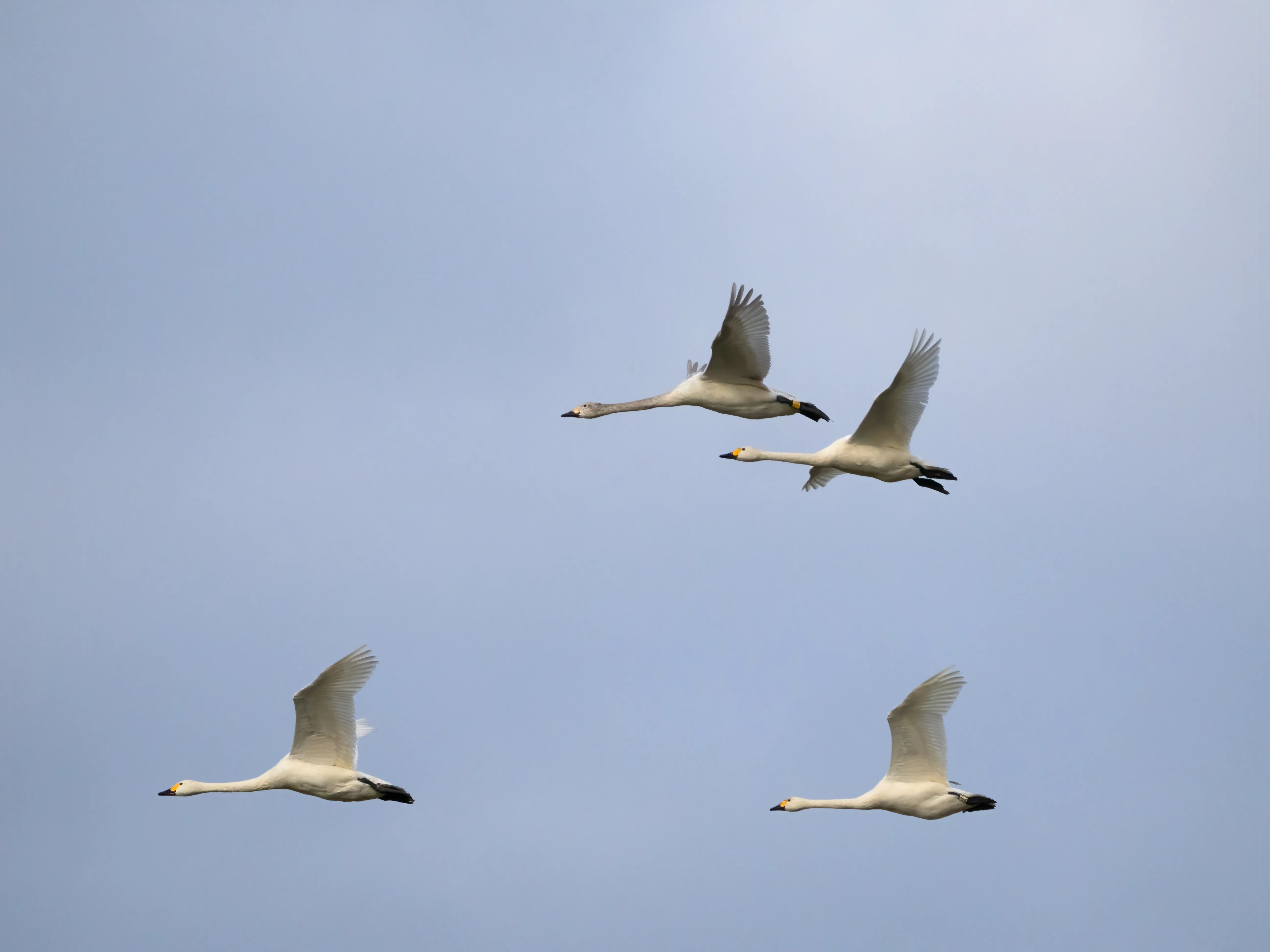
One could debate what exactly constitutes migration and whether all bird movements should be included in this term, but what’s not in doubt is that there will be birds on the move all through the winter. Even species that are generally sedentary will undertake shorter movements, for example Dartford Warblers will turn up on coastal saltmarshes and chalk downland during the winter, while Woodlarks are also known to move to farmland during the winter, before returning to heathland and clearfell habitats for the breeding season. Cold snaps will result in both local and longer distance movements of birds, with species like Redwing and Fieldfare moving into gardens, Snipe and Jack Snipe congregating around natural springs where the ground is unfrozen, and wildfowl such as the aforementioned Bewick’s Swan moving here from the Continent.
As the main period of autumn migration draws to a close, this will be the last weekly Migration Blog of this year, but we will continue to provide occasional updates over the winter. If there are any easterly winds in the next couple of weeks, we could still see a fall of migrants on the east coast, while any northerly winds from the Arctic should produce more Little Auks and perhaps some Iceland and Glaucous Gulls. It will also be interesting to see how many Waxwings arrive in the coming weeks and whether the weather on the Continent is cold enough for wildfowl like Bewick’s Swan and European White-fronted Goose to make the journey here.
I would like to thank everyone who has submitted their sightings to BirdTrack during the course of this autumn, as it’s through these data that we are able to explore the patterns and trends that we have in the migration blog. Please keep your sightings coming and I wish you a good winter of birding.
Add your sightings to BirdTrack
Help us track the departures and arrivals of migrating birds by adding your sightings to BirdTrack. It’s free, quick and easy, and signing up also allows you to explore trends, reports and recent records in your area.
Author(s)

Tom Jordan