Woodcock
Introduction
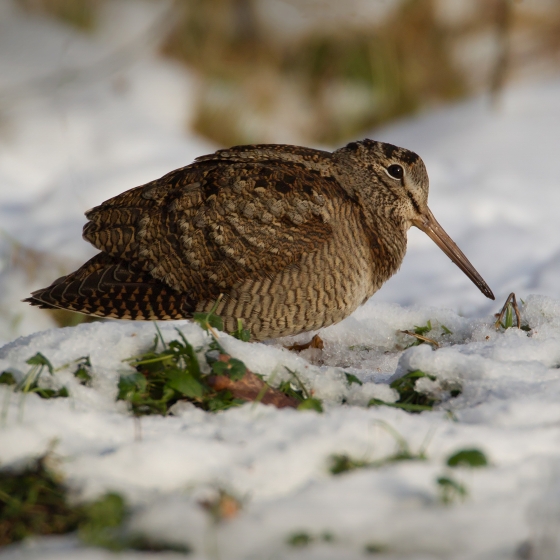
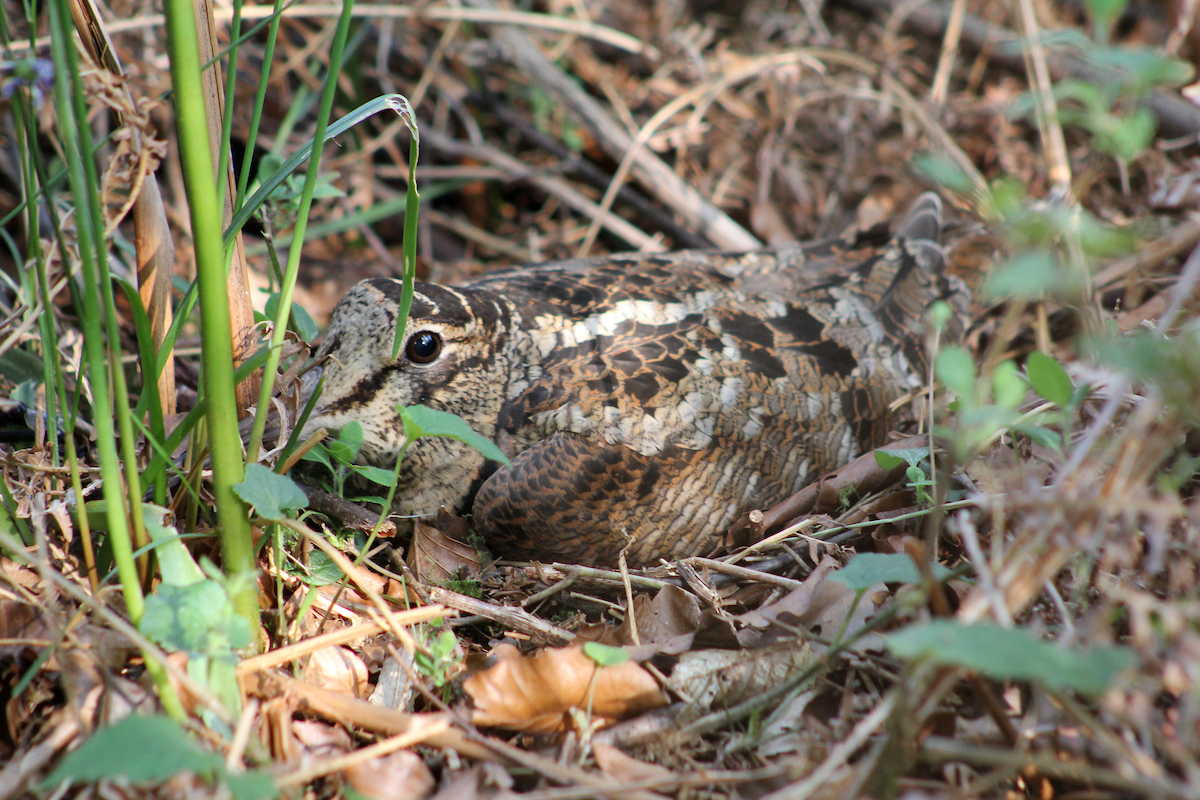
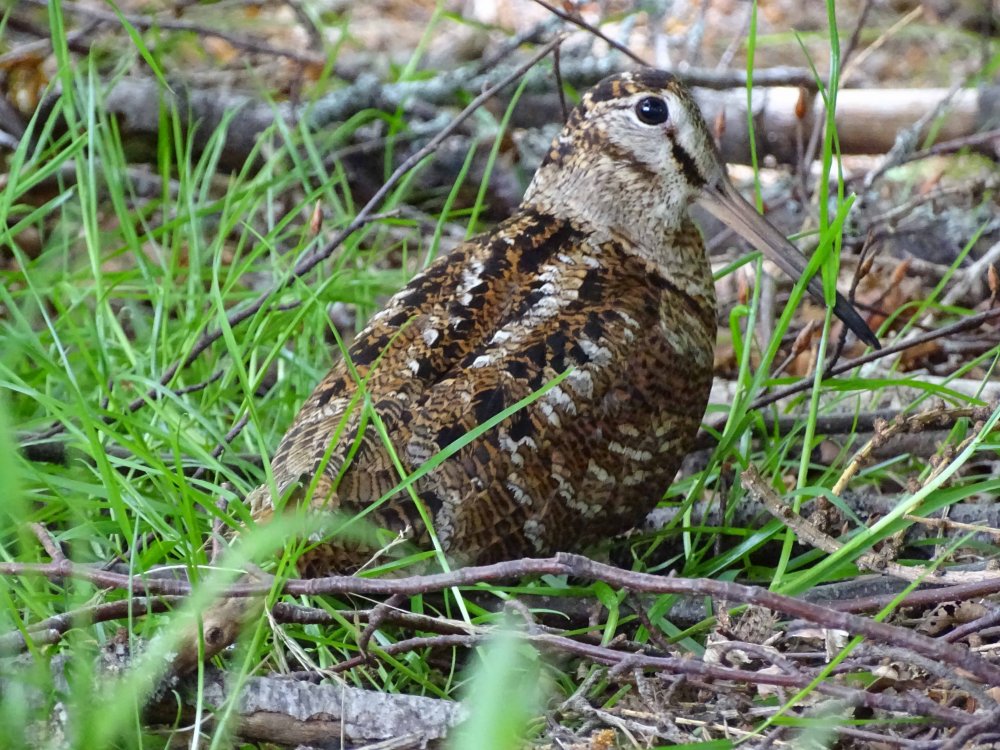
Although a wading bird, the cryptically marked Woodcock is predominantly a bird of woodlands, emerging at night to feed in adjacent fields.
Breeding Woodcock are best detected by their 'roding' display, given at dusk and involving birds flying in straight lines above their territories while emitting a grunting call. Atlas data indicate a long-term decline in the breeding population, but core data on changes in the status of the species come from periodic surveys.
In winter there is a strong arrival of Woodcock from the Continent, thought to increase numbers in Britain & Ireland five-fold. Recent ringing and tracking studies have shown that some individuals originate from quite far east. Areas of highest abundance in winter are in North Ireland and north-west Scotland.
Key Stats








Identification
ID Videos
This section features BTO training videos headlining this species, or featuring it as a potential confusion species.
Common and Jack Snipe
Songs and Calls
Song:
Status and Trends
Conservation Status
Population Change
The Woodcock declined rapidly and significantly on CBC plots for the three decades up to 2000. Because CBC did not include many coniferous forests and its plots were concentrated in lowland Britain, however, it is not certain how clearly this trend represented the whole UK population at that time. Range contractions, that might have had the same cause as the decline in abundance, were recorded concurrently with part of the CBC decline (Gibbons et al. 1993). BBS is inefficient at recording this scarce, mainly crepuscular species, and cannot continue the index series.
The first special survey aimed at monitoring the UK's breeding Woodcock took place in 2003 and provided a new baseline population estimate for monitoring that was much higher than previously thought (Hoodless et al. 2009). It is important to note, though, that the upward revision of the population estimate is due to new methodology and carries no information about population trends. A repeat survey of breeding Woodcocks conducted by BTO volunteers in spring 2013 found a decline of 29% since 2003 (Heward et al. 2015), which is line with the loss of occupied 10-km squares, also 29%, between 1988-91 and 2008-11 (Balmer et al. 2013).
Through the decline in its UK breeding range, the species moved from amber to being red listed in the latest review (Eaton et al. 2015). The CBC decline had been discounted in 2009 as a reason for the species' amber listing (BoCC3), which rested on the breeding declines recorded across Europe, especially European Russia (BiE04). Annual numbers shot in the UK, which include winter visitors from some declining populations in Europe (generally considered stable), had increased around threefold since 1945 and were running at a historically high level in the early 2000s; however data since 2006 are not shown on the gamebag trend graph.
Distribution
Breeding Woodcocks are absent from many of the Scottish islands, much of central and southwest England and large swathes of Wales, western Ireland and the Channel Islands. In autumn there is a large influx of Woodcocks from the Continent, leading to a much wider winter distribution throughout Britain and much of Ireland.
Occupied 10-km squares in UK
2007/08–10/11
or view it on Bird Atlas Mapstore.
2008–11
or view it on Bird Atlas Mapstore.
European Distribution Map
Distribution Change
Woodcock breeding range has contracted markedly and now stands at less than half its 1960s extent, supporting other evidence of a gradual population decline.
Change in occupied 10-km squares in the UK
from 1981–84 to 2007–11
or view it on Bird Atlas Mapstore.
from 1968–72 to 2008–11
or view it on Bird Atlas Mapstore.
Seasonality
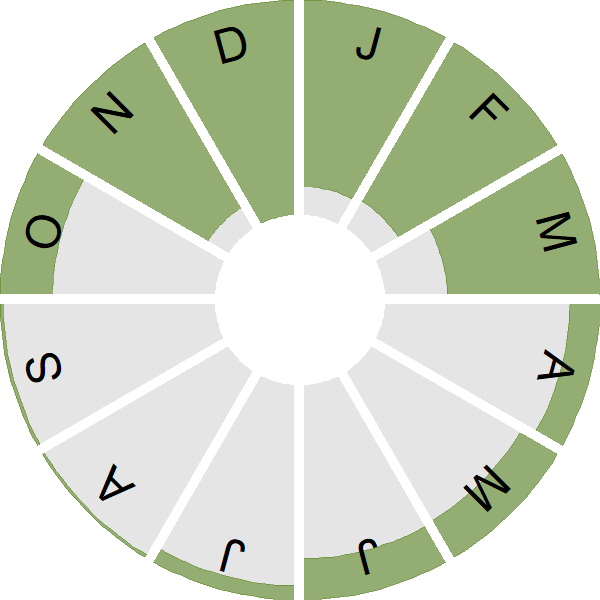
Woodcocks are recorded most often in winter and during spring roding season; records decrease in late summer and early autumn when birds are moulting and less likely to be flushed.
Weekly pattern of occurrence
The graph shows when the species is present in the UK, with taller bars indicating a higher likelihood of encountering the species in appropriate regions and habitats.

Movement
Britain & Ireland movement
Foreign locations of birds ringed or recovered in Britain & Ireland
Dots show the foreign destinations of birds ringed in Britain & Ireland, and the origins of birds ringed overseas that were subsequently recaptured, resighted or found dead in Britain & Ireland. Dot colours indicate the time of year that the species was present at the location.
- Winter (Nov-Feb)
- Spring (Mar-Apr)
- Summer (May-Jul)
- Autumn (Aug-Oct)

European movements
EuroBirdPortal uses birdwatcher's records, such as those logged in BirdTrack to map the flows of birds as they arrive and depart Europe. See maps for this species here.
The Eurasian-African Migration Atlas shows movements of individual birds ringed or recovered in Europe. See maps for this species here.
Biology
Productivity and Nesting
Nesting timing
Egg measurements
Clutch Size
Survival and Longevity
Survival is shown as the proportion of birds surviving from one year to the next and is derived from bird ringing data. It can also be used to estimate how long birds typically live.
View number ringed each year in the Online Ringing Report.
Lifespan
Survival of adults
Survival of juveniles
Biometrics
Wing length and body weights are from live birds (source).
Wing length
Body weight
Ring Size
Classification, names and codes
Classification and Codes
- Order: Charadriiformes
- Family: Scolopacidae
- Scientific name: Scolopax rusticola
- Authority: Linnaeus, 1758
- BTO 2-letter code: WK
- BTO 5-letter code: WOODC
- Euring code number: 5290
Alternate species names
- Catalan: becada eurasiàtica
- Czech: sluka lesní
- Danish: Skovsneppe
- Dutch: Houtsnip
- Estonian: metskurvits
- Finnish: lehtokurppa
- French: Bécasse des bois
- Gaelic: Coileach-coille
- German: Waldschnepfe
- Hungarian: erdei szalonka
- Icelandic: Skógarsnípa
- Irish: Creabhar
- Italian: Beccaccia
- Latvian: sloka
- Lithuanian: eurazine slanka
- Norwegian: Rugde
- Polish: slonka (zwyczajna)
- Portuguese: galinhola
- Slovak: sluka hôrna
- Slovenian: sloka
- Spanish: Chocha perdiz
- Swedish: morkulla
- Welsh: Cyffylog
Research
Causes of Change and Solutions
Causes of change
Various possible causes of the Woodcock's decline have been suggested, but there is no strong hypothesis as yet.
Further information on causes of change
Recreational disturbance, the drying out of natural woodlands, overgrazing by deer, declining woodland management, and the maturation of new plantations are possible causes of the Woodcock's decline, but there is no strong hypothesis as yet (Fuller et al. 2005). Woodcock are more likely to be found in larger woods and those further from urban areas with a mix of habitat types, with birch woods preferred and beech less favoured (Heward et al. 2018).
Information about conservation actions
The causes of the decline in Woodcock are uncertain, but a reduction in the intensity of management of woodlands and overgrazing by deer could both have contributed (Fuller et al. 2005; Hoodless & Hirons 2007); hence actions to control deer and increase the scrub and field layers may benefit this species.
Recent research suggests that the rate of decline is lower in large continuous woodlands (Heward et al. 2015) and that Woodcock are more likely to be found in larger woods further from urban areas (Heward et al. 2018). Therefore, a landscape scale approach which preserves larger woodlands and protects them from fragmentation may also be important. The same research suggests that birch woodlands are preferred and beech is less favoured (Heward et al. 2018).
Publications (4)
Population and distribution change of Eurasian Woodcocks Scolopax rusticola breeding in the UK: results from the 2023 ‘Breeding Woodcock Survey’
Author:
Published: 2024
Although the Woodcock is one of the world’s most abundant wading birds, Britain’s resident population has been declining since at least the end of the 1960s. Periodic Woodcock surveys began in 2003 and have been repeated in 2013 and 2023. This paper reports on the latest of these surveys.
21.05.24
Papers
Habitat correlates of Eurasian Woodcock Scolopax rusticola abundance in a declining resident population
Author:
Published: 2018
Woodcock, along with many other woodland bird populations, have been in long-term decline. Habitat change has been indicated as a possible cause for some species, but evidence is sparse for others, including Woodcock, due to an incomplete knowledge of their habitat requirements, which we can now examine. National BTO/GWCT Woodcock surveys undertaken in 2003 and 2013 provided data from 807 and 823 randomly selected 1 km squares, respectively. Woodcock counts were compared with a range of landscape-scale habitat variables as well as local habitat measures recorded by surveyors, using generalised linear mixed models. Habitat variables were measured at a variety of spatial scales using ring buffers, however high correlation between scales limits interpretation. The results show that, at large landscape scales, breeding Woodcock abundance was correlated with total woodland area and woodland type. Woodcock were more abundant in woods containing a more heterogeneous mix of woodland habitat types and in woods further from urban areas. On a smaller spatial scale, Woodcock were less likely to be found at sites dominated by Beech and more likely to occur in woods containing Birch. The Woodcock’s association with large, heterogeneous woods and the apparent attractiveness of certain woodland types present the most relevant topics for future research into the role of habitat change in long-term declines.
23.06.18
Papers
Current status and recent trend of the Eurasian Woodcock Scolopax rusticola as a breeding bird in Britain
Author:
Published: 2015
Results from the 2013 Woodcock Survey show that breeding numbers and breeding range have both declined considerably since the previous survey in 2003. The rate of decline varied regionally but was least pronounced in areas that contained large tracts of continuous woodland. The latest Woodcock Survey, undertaken in 2013 by BTO and GWCT, has provided an updated breeding population estimate and an assessment of breeding range change, since the first survey in 2003. In addition, recent trends in breeding numbers were measured using annual counts data since 2003. The Woodcock is currently ‘amber-listed’ as a species of conservation concern, resulting from recent moderate declines within Europe and Russia. However, the actual scale of these changes is uncertain owing to a lack of accurate data due to the nocturnal habits and cryptic behaviour of the bird. A bespoke survey methodology is required to assess numbers accurately, using the number of ‘roding’ flight passes to estimate the number of individuals. Roding happens at dawn and dusk, when male Woodcock fly large circuits and call to advertise their presence to receptive females. . In 2013 counts were undertaken during May–June at 834 randomly selected British sites. The breeding population was estimated at 55,241 males (95% CL: 41,806–69,004), representing a 29% decline since 2003. The percentage of wooded survey squares occupied by Woodcock decreased from 47% in 2003 to 37% in 2013. Annual counts from occupied sites monitored between 2003 and 2013 also indicate a decrease in abundance of 40% during the 10 year period. Breeding distribution data from BirdAtlas 2007–11 indicates that range extent in Britain contracted by 31% since 1988–91 and 56% since 1968–72. The decline in range and breeding numbers is considerable and most severe in the south and west of Britain. The greatest decreases have occurred in locations containing small tracts of fragmented woodland, while regions with large areas of continuous woodland have experienced the least change. Further research is required to fully understand the reasons for the Woodcock decline, which may be associated with changes in woodland structure, perhaps though management practices or rising deer numbers. Little is currently known about breeding productivity, over-winter survival and the potential impact of hunting. Please consider surveying a local site and contribute to the annual survey, which is essential for monitoring further changes to this charismatic and declining species.
15.10.15
Papers Bird Study
More Evidence
More evidence from Conservation Evidence.com
Partners




Citing BirdFacts
If you wish to cite particular content in this page (e.g. a specific value) it is best to use the original sources as linked in the page. For a more general citation of the whole page please use: BTO (20XX) BirdFacts Species: profiles of birds occurring in the United Kingdom. BTO, Thetford (www.bto.org/birdfacts, accessed on xx/xx/xxxx).