A look at bird migration on Halloween 2025.

Since the last blog migration has stalled somewhat, with the return of westerly winds bringing wetter conditions to Britain and Ireland and limiting migration across the North Sea. However, a few days with more northerly winds have produced some interesting arrivals, while some birds will still battle on with their migration in suboptimal conditions.
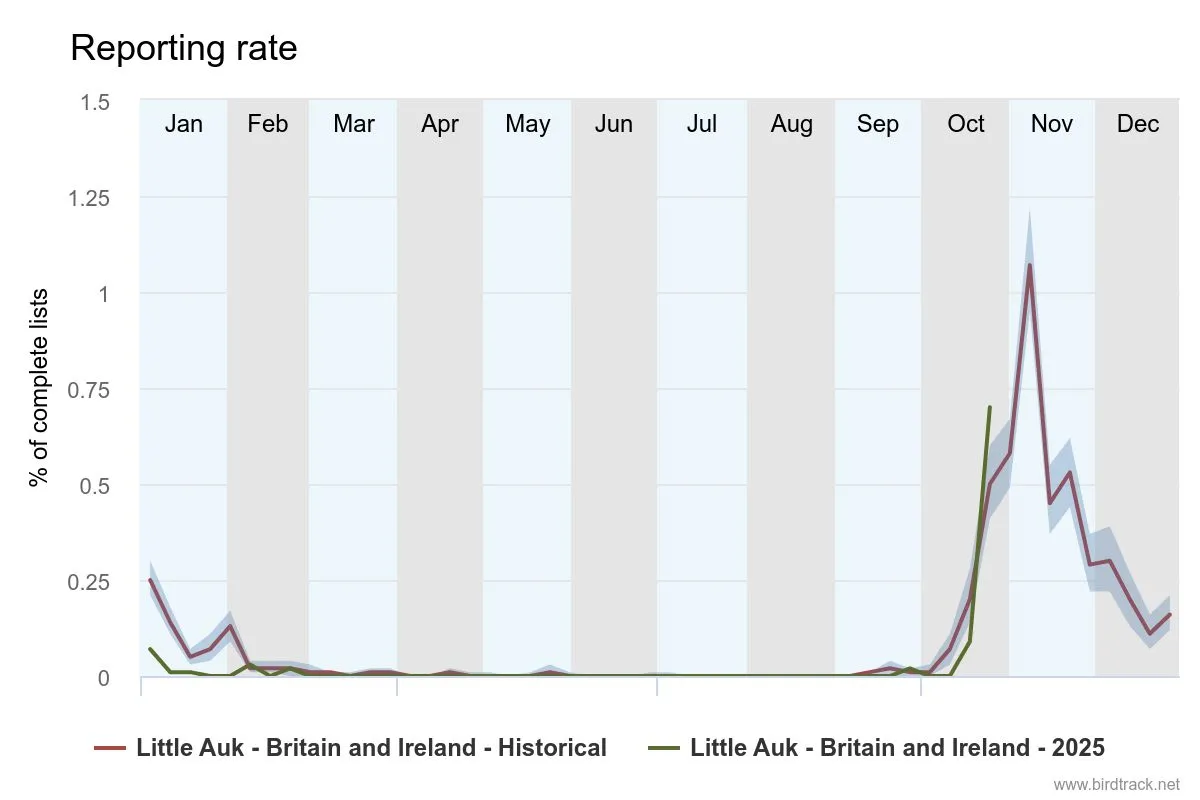
One species which is strongly associated with cold northerly winds in late October is the Little Auk. This tiny Starling-sized auk (the family of birds containing Guillemots, Razorbills and Puffins) breeds mostly on Svalbard and spends the winter in the northern North Sea, but variable numbers are seen in Britain and Ireland each year with a peak in November. There were a good number of sightings on the east coast over last weekend and the early part of this week, pushing the BirdTrack reporting rate for the species above the historical average.
Also coming from the north has been a small influx of northern Long-tailed Tits to Shetland. Tits are generally not migratory and this subspecies of Long-tailed Tit is a vagrant rather than a regular migrant, with these individuals probably coming from Norway. It can be told from our British subspecies by its pure white head, as shown in this very smart individual photographed on Shetland earlier this week.
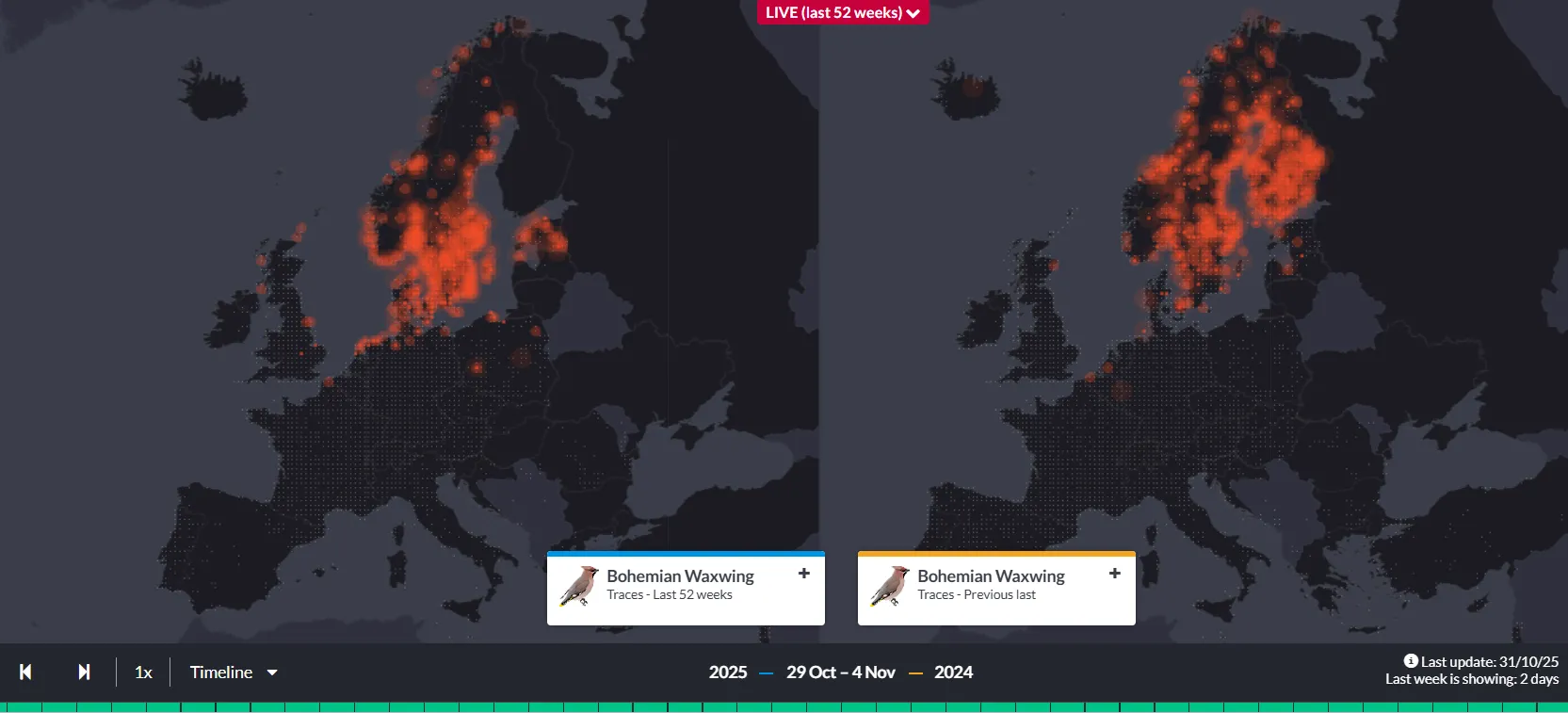
Waxwing is always one of the most sought after regular British birds and there have been quite a few sightings in the last week, particularly on Orkney and Shetland, although a few have also made it further south. Waxwing is an irruptive species, moving in search of food, and the numbers that reach Britain and Ireland each winter vary depending on the berry crop further east in Fennoscandia. The EuroBirdPortal is a great project that brings together data from bird recording platforms across Europe to map the weekly occurrence of different species across Europe and can help us predict whether this will be a ‘Waxwing winter’. The map on the left below shows records of Waxwings over the last two weeks, while the map on the right shows records in the equivalent weeks in 2024. Although the maps are not directly comparable, as we don’t have the latest data from Finland, it’s clear that there are already more Waxwings further south and west this year, particularly in southern Scandinavia, so this may be a sign that this winter could at least be better for Waxwings here than last year!
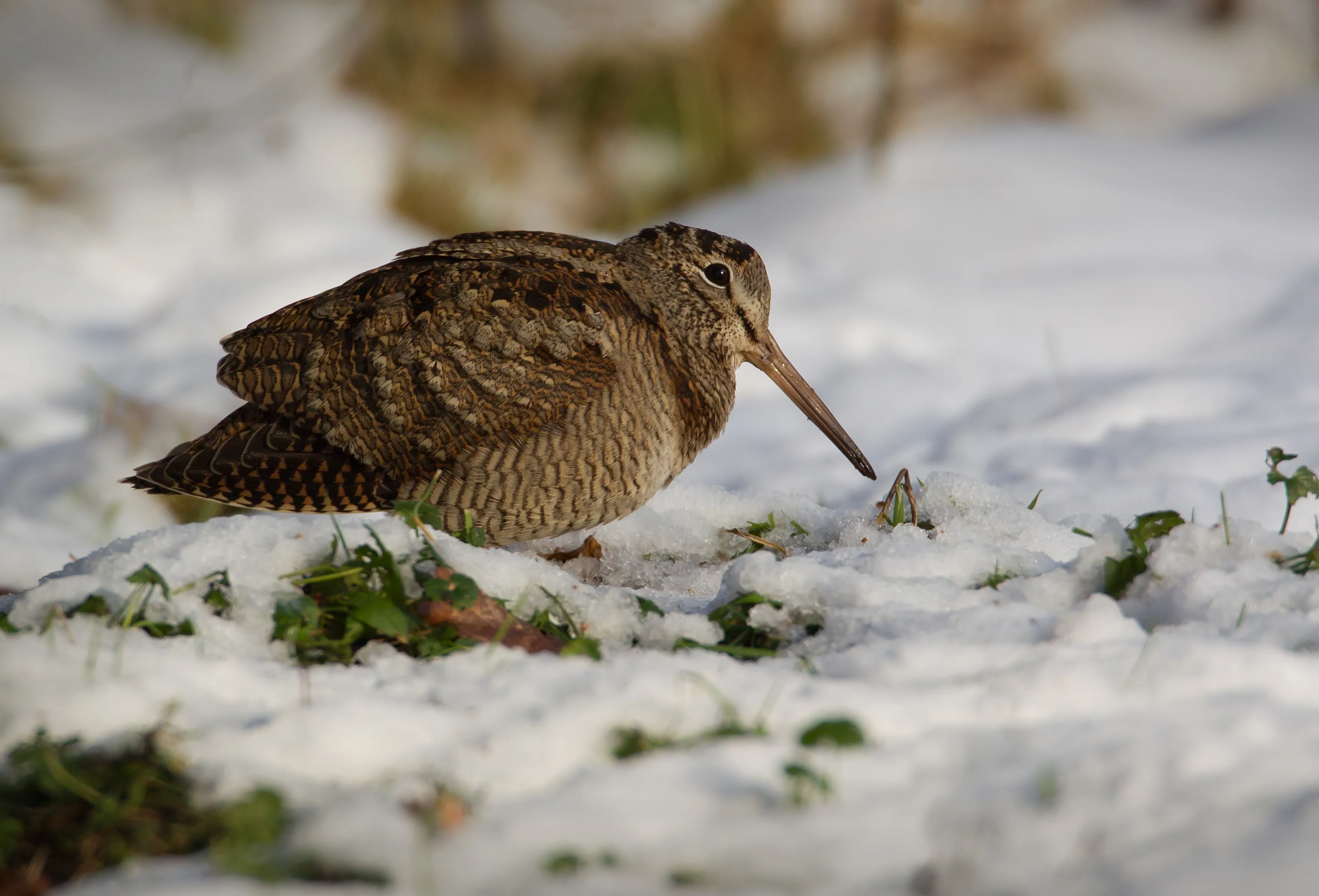
As we enter November the peak arrival and departure periods for many species are coming to an end, but there are some species where arrivals of wintering birds peak in this month. Woodcock is one of these species, with large numbers set to arrive from Russia over the coming weeks to supplement our much smaller resident population. Next week will see the ‘Woodcock Moon’ – the first full moon of November – which is often said to coincide with arrivals of Woodcock, although this association is probably coincidental, with no evidence that the phase of the moon is itself a factor in the Woodcock’s migration timing. Sadly, Woodcocks are rather prone to colliding with buildings while migrating over urban areas. If you do come across a Woodcock that has been the victim of a building strike, we would really appreciate it if you could report this to us, either through the dead and sick bird reporting tool in the BirdTrack app or by emailing woodcock@bto.org. These data will be analysed as part of a project to understand these incidents and the impact on migrating Woodcock.
Another November phenomenon is large movements of Woodpigeons across Britain. Woodpigeon may not get much attention as a species and many people probably don’t realise that it is migratory at all, but it can actually provide one of the best visible migration spectacles in this country. Over the last week there have been many reports of big movements of Woodpigeon, with the highest being 231,000 heading south-west over Portskewett, Gwent, on 27 October. The question of where all these birds are going is one that has still not been fully resolved, but there have been many ringing records showing British Woodpigeons wintering in France, so it’s clear that at least some are migrating to the European Continent.
Looking to the week ahead it looks like we will see a predominantly westerly to southerly airflow, which will limit new arrivals from the east or the north. However, birds that have arrived over the previous weeks will be moving through the country now and we are still in the period where birds may turn up anywhere before they settle into more stable winter territories, so keep checking your local patch for the chance of something more unusual passing through.
As always I wish you a good week of birding and don’t forget to add your sightings to BirdTrack!
Add your sightings to BirdTrack
Help us track the departures and arrivals of migrating birds by adding your sightings to BirdTrack. It’s free, quick and easy, and signing up also allows you to explore trends, reports and recent records in your area.
Author(s)

Tom Jordan