Puffin
Introduction
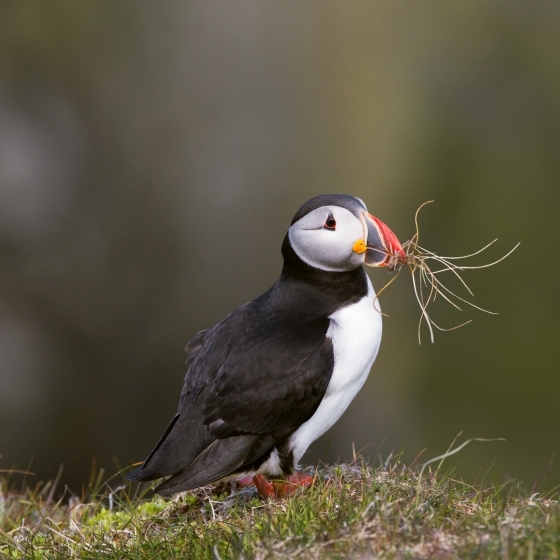
The most familiar, and some would say charismatic, of our breeding auks, the Puffin is also the most localised in its British breeding range.
Puffins are predominantly burrow-nesters using sites within short grassy swards, often located on sloping ground above cliffs. Although many of these burrows will have been excavated by the Puffins themselves, they are not averse to taking over burrows from Rabbits or Manx Shearwaters.
Our Puffins spend the winter at sea, with ringing data suggesting an extensive wintering range, extending over the eastern Atlantic, south to north-west Africa and with some individuals venturing into the Mediterranean Sea.
Key Stats






Identification
ID Videos
This section features BTO training videos headlining this species, or featuring it as a potential confusion species.
Winter Auks
Songs and Calls
Song:
Status and Trends
Conservation Status
Population Change
The number of Puffins breeding in the UK increased by 37% between 1969–70 and Seabird 2000 (1998–2002). However, a large decline at two of the largest colonies (Farne Islands and the Isle of May) occurred between 2003 and 2008/09. It is unclear, however, whether these declines are representative of the wider UK population; the recent Seabirds Count (2015–2021) should help confirm and quantify the magnitude of any national population decline.
Distribution
The bulk of Britain & Ireland's Puffins breed in the Northern Isles, St Kilda, along the North Sea coast south to Yorkshire, in southwest Wales and in western Ireland. In winter they are mostly pelagic and a scattering of records around the coast mainly relate to autumn records and storm-blown individuals.
Occupied 10-km squares in UK
2007/08–10/11
or view it on Bird Atlas Mapstore.
2008–11
or view it on Bird Atlas Mapstore.
European Distribution Map
Distribution Change
Change in occupied 10-km squares in the UK
from 1981–84 to 2007–11
or view it on Bird Atlas Mapstore.
from 1968–72 to 2008–11
or view it on Bird Atlas Mapstore.
Seasonality
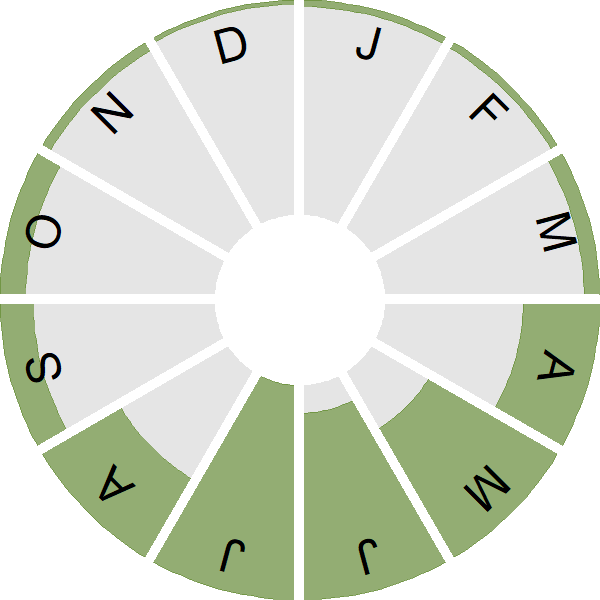
Puffins are mostly recorded during the breeding season from suitable coastal breeding areas, arriving from March onwards. They depart cliffs quickly and are rarely seen during autumn migration or in winter.
Weekly pattern of occurrence
The graph shows when the species is present in the UK, with taller bars indicating a higher likelihood of encountering the species in appropriate regions and habitats.

Movement
Britain & Ireland movement
Foreign locations of birds ringed or recovered in Britain & Ireland
Dots show the foreign destinations of birds ringed in Britain & Ireland, and the origins of birds ringed overseas that were subsequently recaptured, resighted or found dead in Britain & Ireland. Dot colours indicate the time of year that the species was present at the location.
- Winter (Nov-Feb)
- Spring (Mar-Apr)
- Summer (May-Jul)
- Autumn (Aug-Oct)

European movements
EuroBirdPortal uses birdwatcher's records, such as those logged in BirdTrack to map the flows of birds as they arrive and depart Europe. See maps for this species here.
The Eurasian-African Migration Atlas shows movements of individual birds ringed or recovered in Europe. See maps for this species here.
Biology
Productivity and Nesting
Nesting timing
Egg measurements
Clutch Size
Survival and Longevity
Survival is shown as the proportion of birds surviving from one year to the next and is derived from bird ringing data. It can also be used to estimate how long birds typically live.
View number ringed each year in the Online Ringing Report.
Lifespan
Survival of adults
Biometrics
Wing length and body weights are from live birds (source).
Wing length
Body weight
Ring Size
Classification, names and codes
Classification and Codes
- Order: Charadriiformes
- Family: Alcidae
- Scientific name: Fratercula arctica
- Authority: Linnaeus, 1758
- BTO 2-letter code: PU
- BTO 5-letter code: PUFFI
- Euring code number: 6540
Alternate species names
- Catalan: fraret atlàntic
- Czech: papuchalk severní
- Danish: Lunde
- Dutch: Papegaaiduiker
- Estonian: lunn e. põhjalunn
- Finnish: lunni
- French: Macareux moine
- Gaelic: Buthaid
- German: Papageitaucher
- Hungarian: lunda
- Icelandic: Lundi
- Irish: Puifín
- Italian: Pulcinella di mare
- Latvian: Atlantijas tuklitis
- Lithuanian: atlantinis mormonas
- Norwegian: Lunde
- Polish: maskonur (zwyczajny)
- Portuguese: papagaio-do-mar
- Slovak: mníšik bielobradý
- Slovenian: mormon
- Spanish: Frailecillo atlántico
- Swedish: lunnefågel
- Welsh: Pâl
- English folkname(s): Londoner
Research
Causes of Change and Solutions
Causes of change
The reasons for the population increases between 1969–70 and Seabird 2000 are not known (JNCC 2022). Productivity was low between 1998 and 2013 and this may have contributed to declines, with food shortages and high levels of rainfall causing flooding of burrows both being implicated (JNCC 2022). An Icelandic study found a strong correlation between Puffin breeding productivity and local sea surface temperatures (which can affect prey abundance) (Hansen et al. 2021), and it is likely that UK colonies are also being affected by changes to sea surface temperatures caused by climate change. Prey shortages result in longer foraging ranges and lower productivity which ultimately leads to declines (Fayet et al. 2021). The population may also be affected by survival and it is believed that a 'wreck' in the winter of 2013/14 following several severe storms may have had a substantial effect on the Puffin populations at some UK sites (JNCC 2022).
Publications (11)
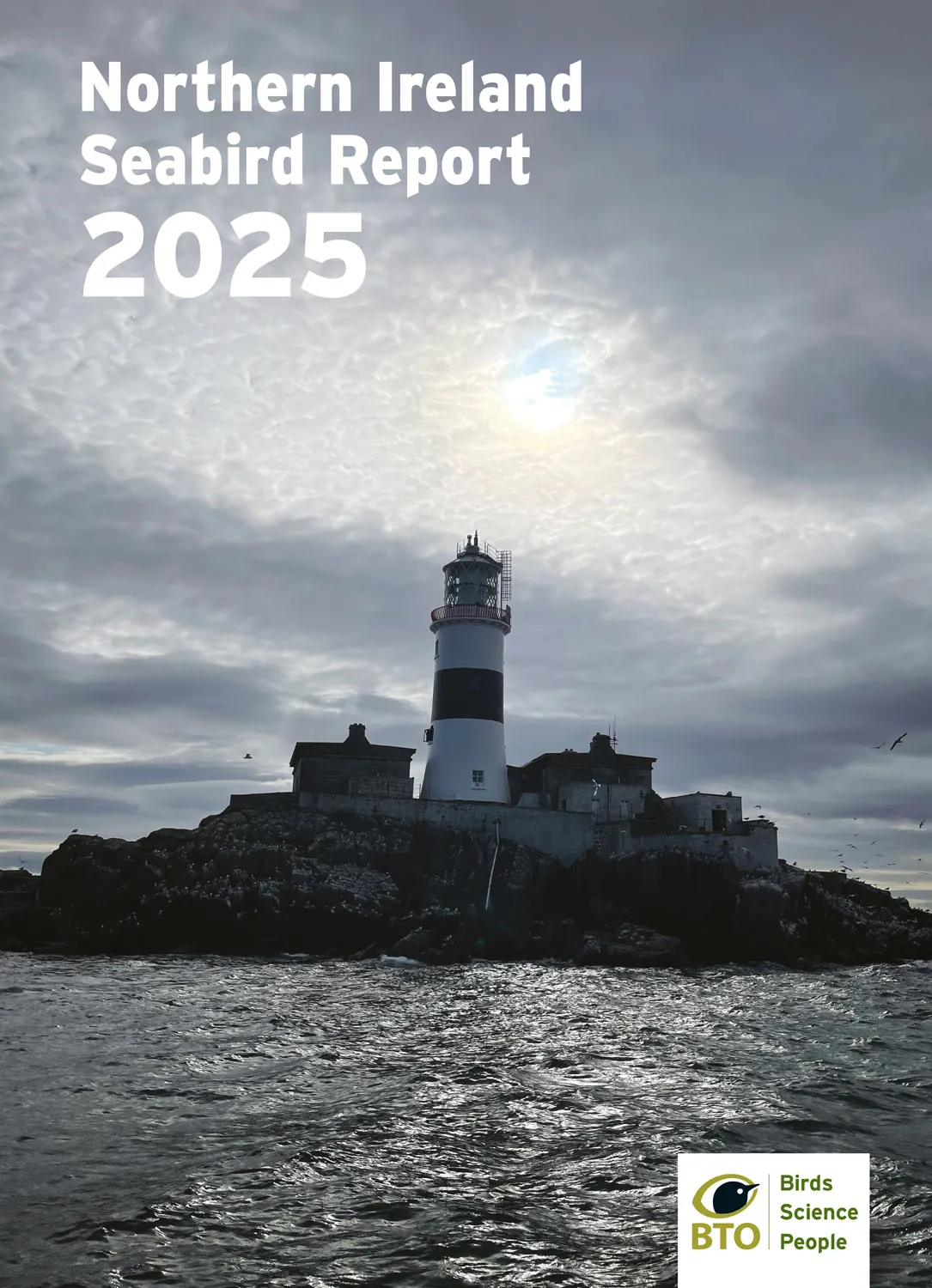
Northern Ireland Seabird Report 2025
Author:
Published: 2026
This report is the published outcome of the work of the Northern Ireland Seabird Network — a network of volunteers, researchers and organisations — coordinated by the BTO Seabird Coordinator, and funded by NIEA. It contains detailed species accounts for the 22 breeding seabird species in Northern Ireland, as well as articles on a range of topics: Manx Shearwaters nesting on Rathlin Rathlin Island Breeding Seabird Census 2025 Tracking Lesser Black-backed Gulls on Lough Neagh Puffins return to Isle of Muck Outer Ards: 2025 Seabird Nesting Report Strangford Lough: 2025 Seabird Nesting Report Forthcoming seabird research work: ACCLIMATISE project
26.03.26
Reports Northern Ireland Seabird Report
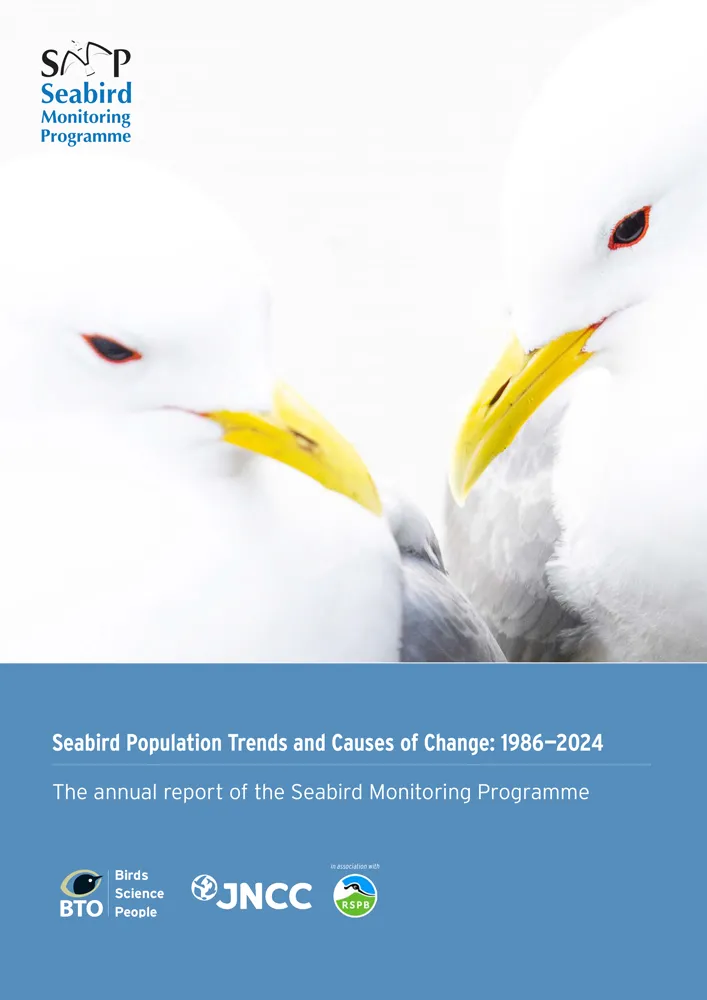
Seabird Population Trends and Causes of Change: 1986–2024
Author:
Published: 2026
The annual report of the Seabird Monitoring Programme View and download the report Read the report online This report presents the latest seabird population trends in breeding abundance and productivity using data from the Seabird Monitoring Programme (SMP). It documents changes in the abundance and productivity of breeding seabird species in Britain and Ireland from 1986 to 2024. This report includes both inland and coastal populations and trends from the Channel Islands, England, Isle of Man, Northern Ireland, Scotland, Wales and the Republic of Ireland, which are presented where sufficient data are available. The results from this report are used more broadly to assess the health of the wider environment, to inform policy and for conservation action.
19.03.26
Reports SMP Report
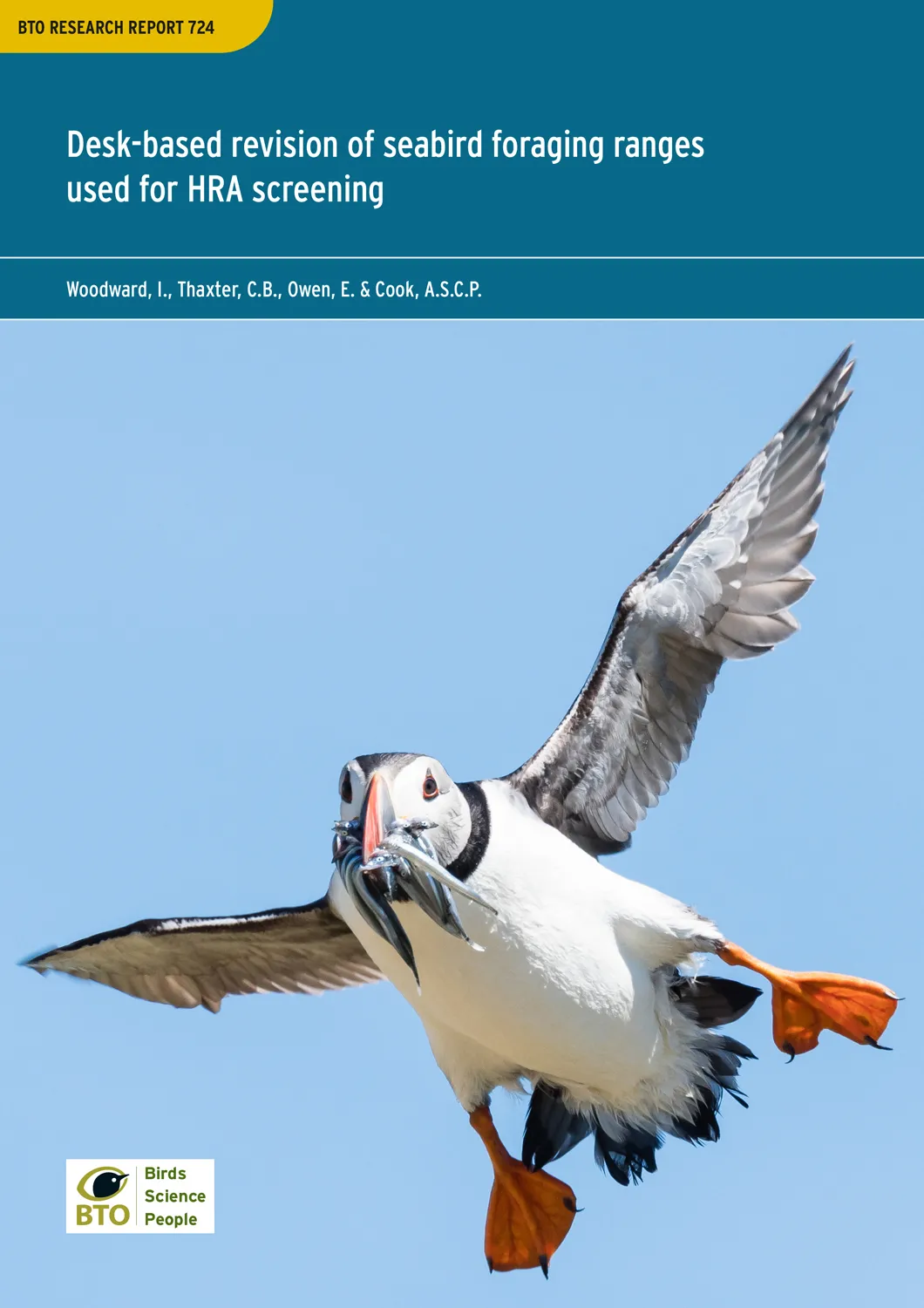
Desk-based revision of seabird foraging ranges used for HRA screening
Author:
Published: 2019
A key step in understanding the possible impacts of a proposed windfarm development is to identify potential interactions between seabird breeding colonies and the proposed development areas. Such interactions are typically assessed using generic information on foraging ranges, derived from academic studies. This report uses the latest data to provide updated estimates of foraging range, which will help to ensure that the best available information is available when new developments are being considered.
01.12.19
BTO Research Reports
The status of the UK’s breeding seabirds
Author:
Published: 2024
Five seabird species are added to the Birds of Conservation Concern Red List in this addendum to the 2021 update, bringing the total number of Red-listed seabird species to 10, up from six since seabirds were last assessed. The Amber List of seabirds moves from 19 to 14 species, and the Green List increases from one to two species.
29.09.24
Papers
Seabird Population Trends and Causes of Change: 1986–2023
Author:
Published: 2024
This report presents the latest seabird population trends in breeding abundance and productivity using data from the Seabird Monitoring Programme (SMP).The report documents changes in the abundance and productivity of breeding seabird species in Britain and Ireland from 1986 to 2023, and provides a detailed account of the 2021, 2022 and 2023 breeding seasons. This report includes both inland and coastal populations and trends from the Channel Islands, England, Isle of Man, Northern Ireland, Scotland, Wales and the Republic of Ireland, which are presented where sufficient data are available. The results from this report are used more broadly to assess the health of the wider environment, to inform policy and for conservation action.
21.11.24
Reports SMP Report
The value of seabird foraging ranges as a tool to investigate the impact of offshore wind farms
Author:
Published: 2024
A study led by BTO uses data from GPS tracking and other research to identify the likelihood of seabirds of 27 species interacting with areas off sea earmarked for 41 new offshore wind farms around the UK.
30.05.24
Papers

Northern Ireland Seabird Report 2023
Author:
Published: 2024
The report includes detailed information about the population trends and breeding success of seabirds in Northern Ireland, over the 2023 breeding season. Notably, Fulmar and Kittiwake populations are reported to be experiencing continued declines, while Guillemot, Common Gull and Herring Gull populations show increases at most breeding sites. Low productivity was reported in Black-headed Gulls, Sandwich Terns and Common Terns, likely due to the impacts of highly pathogenic avian influenza (HPAI). Although Black-headed Gulls make up the majority of confirmed HPAI mortality cases in Northern Ireland in 2023, other birds significantly affected include terns, Kittiwakes and auks. A contributor report about HPAI in Northern Ireland by Ronan Owens (Higher Scientific Officer, DAERA, NIEA) details developments in environmental organisations’ responses to HPAI in 2023, including cross-sector communication, improved surveillance and monitoring of HPAI impacts, and improved online systems for the public to report dead birds. Monitoring reports for Strangford Lough and the Outer Ards are included, as well as several additional contributor articles: Copeland gull censuses, by Roisin Kearney (Assistant Conservation Officer, RSPB). The Copeland Islands host one of the largest mixed gull colonies in Northern Ireland, with significant numbers of Lesser Black-backed Gulls and Herring Gulls. The annual gull census was established in 2018; the article details the refinement of the methodology to date as well as the census results so far. Manx Shearwater tracking, by Patrick Lewin (DPhil Student, OxNav, Dept. of Biology, University of Oxford). Tracking the Manx Shearwaters that breed on Lighthouse Island (one of the three Copeland Islands) began in 2007. The article describes the history of tracking Manx Shearwaters from Copeland, including recent advances in technology that have allowed the tracking of fledgling birds as well as adults of breeding age, and the impact of this research on the conservation of shearwaters. Puffin surveys on Rathlin, by Ric Else (Life RAFT Senior Research Assistant, RSPB). Rathlin Island hosts Northern Ireland’s largest seabird colony. The response of seabirds to the removal of introduced Ferrets and Brown Rats from Rathlin is currently being monitored, with a particular focus on Puffins. These birds are especially vulnerable to mammalian predators because of their burrow nests. The article describes the challenges associated with calculating a population estimate, monitoring productivity and mapping the distribution of this species, and how these are being addressed in seabird surveys on Rathlin.
15.04.24
Reports Northern Ireland Seabird Report
Seabird abundances projected to decline in response to climate change in Britain and Ireland
Author:
Published: 2023
Britain and Ireland support globally-important numbers of breeding seabirds, but these populations are under pressure from a suite of threats, including marine pollution, habitat loss, overfishing and highly pathogenic avian influenza. Climate change introduces additional threats, the magnitude of which is uncertain in the future, making it difficult to plan how to apportion conservation efforts between seabird species. Predicting how species’ numbers could change under different climate change scenarios helps clarify their future vulnerability to extinction, and thus assists in conservation planning.
05.12.23
Papers
Birds of Conservation Concern Wales 4: the population status of birds in Wales
Author:
Published: 2022
The latest review of the conservation status of birds in Wales. The report assessed all 220 bird species which regularly occur in Wales. There are now 60 species of bird on the Red List, with 91 on the Amber List and just 69 - less than a third of the total number of species - on the Green List. The latest review of the conservation status of birds in Wales comes 20 years after the first, when the Red List was less than half the length it is today. The report assessed all 220 bird species which regularly occur in Wales. There are now 60 species of bird on the Red List in Wales, with 91 on the Amber List and 69 on the Green List. The Birds of Conservation Concern in Wales report assesses the status of each species against a set of objective criteria. Data sources include the BTO/JNCC/RSPB Breeding Bird Survey and the BTO/RSPB/JNCC Wetland Bird Survey, as well as Bird Atlases and other BTO-led monitoring schemes and citizen science initiatives. These are used to quantify the changing status of the species’ Welsh population. The UK, European and global conservation status of the species is also considered, placing the Welsh population into a wider context. The Red ListSwift, Greenfinch and Rook – familiar breeding species in steep decline across the UK – are among the new additions to the Welsh Red List, which now also includes Purple Sandpiper, on account of a rapidly shrinking Welsh wintering population, and Leach’s Petrel, an enigmatic seabird in decline across its global range. These species now sit alongside well-known conservation priorities, such as Curlew, Hen Harrier and Turtle Dove as birds at risk of being lost from Wales for good. Uplands and woodlands Many of the species on the Red List are found in upland and farmland habitats. Starling, Tree Sparrow, Yellow Wagtail and Yellowhammer can no longer be found in much of Wales, while iconic species of mountain and moorland, such as Ring Ouzel, Merlin and Black Grouse, remain in serious trouble. Wales is well known for its populations of woodland birds; however, many of these – including Lesser Spotted Woodpecker, Willow Warbler and Spotted Flycatcher – also feature on the Red List. Goldcrest, which has seen its Welsh population shrink alarmingly in recent decades, is another new addition. On the coast The assessment for Birds of Conservation Concern Wales 4 took place before the impacts of avian influenza could be taken into account. Breeding seabird species have been struggling in Wales for many years, however, and most were already of conservation concern before the outbreak of this disease. Kittiwake, Puffin, Black-headed Gull, and Common, Arctic and Sandwich Tern remain on the Red List. Wales holds internationally significant numbers of breeding seabirds, making the decline of these colonies a global concern. The Amber ListDeclines in Wheatear, Garden Warbler and House Martin - all migrants which breed in Europe and winter in sub-Saharan Africa - mean these species have moved from the Green List to the Amber List. Many other ‘Afro-Palearctic' migrant species are also in decline, but the potential reasons for this, such as habitat loss and reduced availability of invertebrate prey, are not well understood. Closer to home, the declines in the Welsh Chaffinch population, linked to the disease trichomonosis, have seen the species Amber-listed. A number of other species have been placed on the Amber List because of the wider importance of their Welsh populations, which in each case make up more than half the UK total. Wales is home to more than three-quarters of the UK’s Choughs, for example, so recent declines are cause for concern. The nation’s breeding populations of Manx Shearwater, Pied Flycatcher, Goshawk and Hawfinch also account for more than half the UK total, as does its wintering population of Spotted Redshank. It’s not all bad news, though: some species now on the Amber List have moved up from the Red List, indicating some positive change in their population trends. These include Common Sandpiper, Great Black-backed Gull, Bullfinch, Goldcrest and Pied Flycatcher. The Green ListWhile the report contains much cause for alarm, several conservation success stories shine through. Red Kite was almost lost as a British bird during the first half of the 20th century, when only a handful of pairs remained in remote Welsh valleys. Since then, a sustained conservation effort has brought the species back from the brink. Wales is now home to more than 2,500 pairs of Red Kite and the species has now been moved to the Green List, reflecting this incredible change in fortunes. Song Thrush, Reed Bunting, Long-tailed Tit, Redwing and Kingfisher are among the other species to have gone Green, providing much-needed hope that things can go up as well as down.
06.12.22
Reports Birds of Conservation Concern
Factors influencing the survival of Puffins Fratercula arctica at a North Sea colony over a 20-year period
Author:
Published: 1997
01.01.97
Papers
An experimental study of reduced parental effort and future reproductive success in the puffin, Fratercula arctica
Author:
Published: 1998
01.01.98
Papers
More Evidence
More evidence from Conservation Evidence.com
Partners
Citing BirdFacts
If you wish to cite particular content in this page (e.g. a specific value) it is best to use the original sources as linked in the page. For a more general citation of the whole page please use: BTO (20XX) BirdFacts Species: profiles of birds occurring in the United Kingdom. BTO, Thetford (www.bto.org/birdfacts, accessed on xx/xx/xxxx).