The latest on bird migration in early October 2025.
After an autumn that has been dominated by quite strong westerly winds, we finally saw a change in the weather recently with a few days of easterly winds. This brought a nice mix of migrants to the east coast.
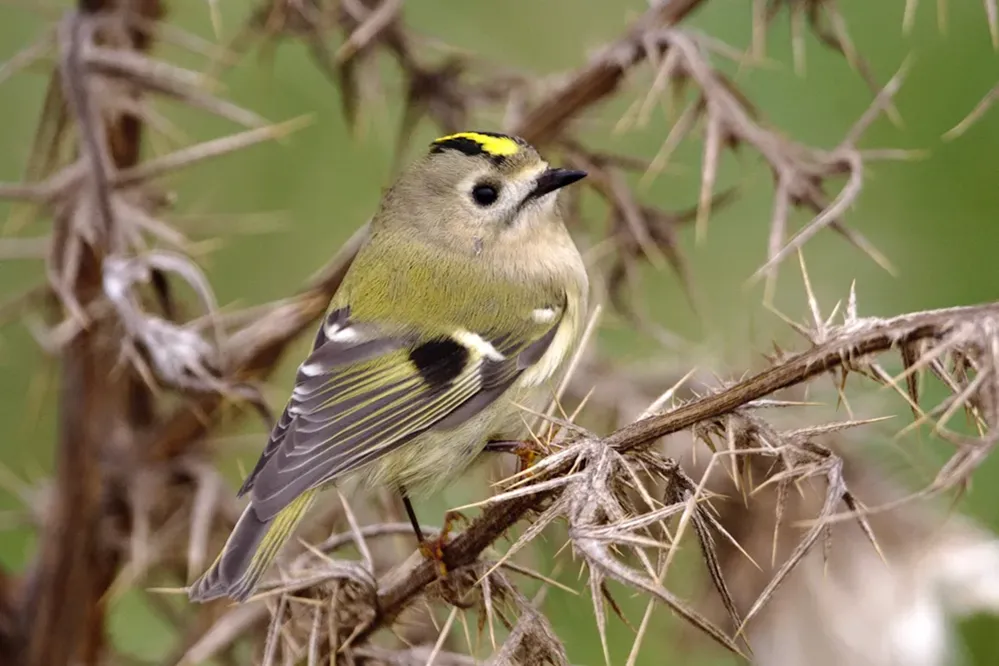
Starting with the common species, Goldcrests arrived in number at some sites, with 260 at Spurn and 185 at Flamborough Head (both East Yorkshire) on 26 September. Goldcrest is the joint smallest British bird, weighing about the same as a 20p coin, yet every autumn several million somehow make the journey across the North Sea from Fennoscandia, often arriving exhausted on our beaches and headlands before finding more typical habitats to spend the winter in.
Arrivals of thrushes have been fairly modest in size, but there has been an increase in the reporting rate for Redwing and Song Thrush. There’s also been an increase in reports of Brambling, another winter visitor from Fennoscandia. October is a good month to find this more orangey cousin of the Chaffinch, and it’s worth trying to learn the distinctive call, which will often reveal the presence of a Brambling amongst a flock of Chaffinches.
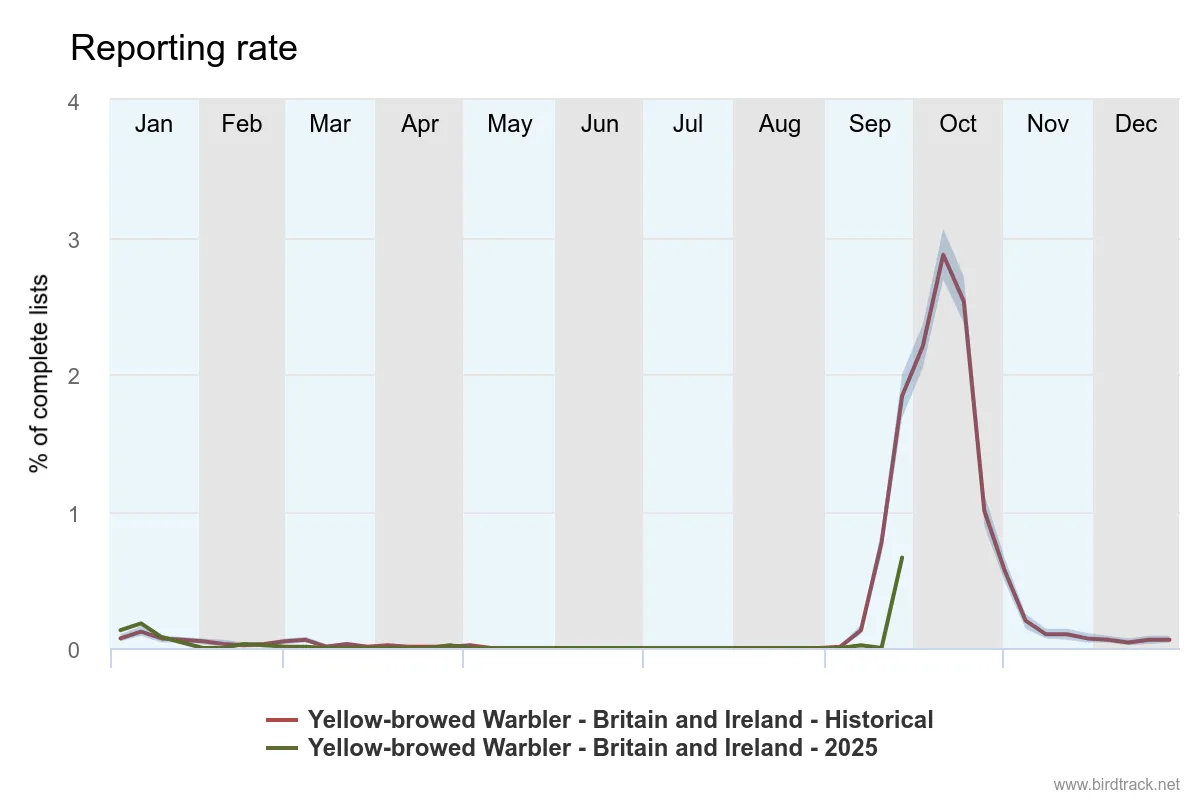
As predicted in the last blog, scarcer species have also arrived, including the first wave of Yellow-browed Warblers. Reports of this small, stripey warbler have been less frequent this autumn than the average for recent years, but small numbers should continue passing through for the rest of October, so there is always a chance of catching up with one. Red-breasted Flycatcher, another scarce migrant, tends to peak in late September to early October and there have been a good number of sightings over the past week, including three on Holy Island, Northumberland, on 28 September.
A whole range of much rarer vagrants from the east have occurred over the last week, including a Siberian Thrush and a Black-faced Bunting in Shetland, a White’s Thrush in Orkney, a Yellow-browed Bunting in Dorset, Brown Shrikes in Yorkshire and on St Kilda, an Isabelline Shrike in Norfolk and a Paddyfield Warbler on the Isles of Scilly. Some vagrants from North America have also been found, including a Swainson’s Thrush in Donegal, a Grey-cheeked Thrush in Devon and a Red-eyed Vireo on Barra, plus a range of American waders.
Even away from coastal hotspots there are always signs of migration taking place at this time of year. Over the past week I’ve encountered Chiffchaffs almost everywhere I’ve been, with even urban parks and gardens being alive with their ‘hweet’ and ‘sweeoo’ calls. Looking to the skies, I’ve also noticed House Martins and Swallows on the move and big counts have been recorded by some migration watchers, for example 31,300 House Martins were counted flying over Dorking, Surrey, on 26 September. I’ve also noted high flying finches on a regular basis, mostly Siskins, but also a few Redpolls and Crossbills, which is a typical feature of late autumn as these species search for better feeding opportunities.
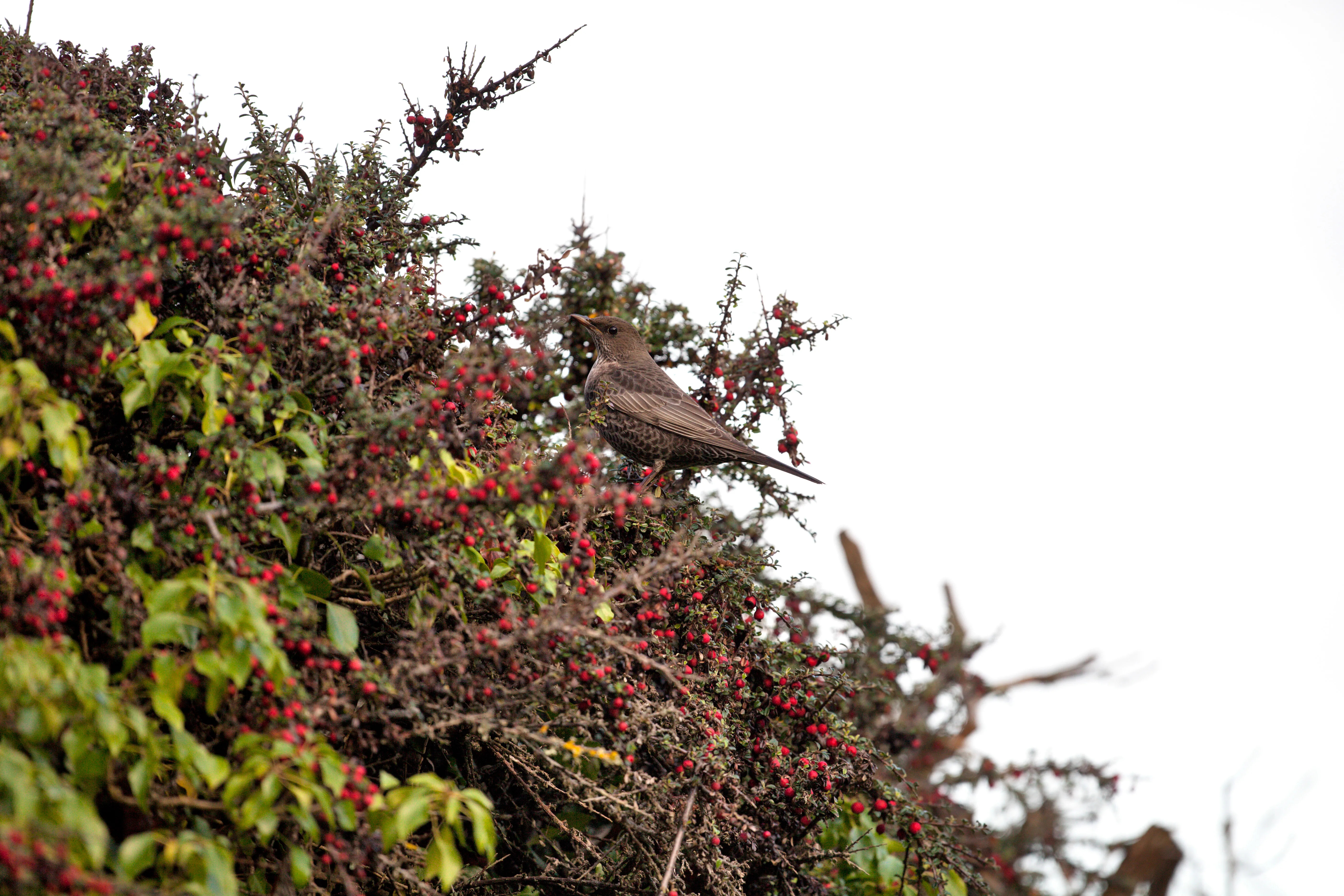
One species where the inland birders may even be at a slight advantage to those at coastal hotspots is Ring Ouzel. This species is one of our last summer migrants to depart, with the reporting rate peaking around the second week of October, although passage at this time of year will involve a mix of British-breeding birds and migrants from Fennoscandia. Although Ring Ouzels are always scarce, they show a high level of site fidelity in their autumn stopover sites, which does make it easier to find them. In southern England they often favour large hills on chalk downland, where they will spend a few days gorging themselves on berries before continuing their migration. Now is exactly the moment to be looking for them, so it’s worth checking out any location where they have been seen in previous years.
Looking to the week ahead, strong westerly winds are set to return in the coming days and there is no sign of an easterly airflow for the foreseeable future. While this will be a disappointment to east coast birders, there is still plenty to look out for and we can expect some more seabird sightings in the west. It’s already been a very good year for species like Grey Phalarope and Sabine’s Gull and I would expect more to be found in the coming days, with a chance of some even making it to inland lakes and reservoirs.
As always I wish you a good week of birding and don’t forget to add your sightings to BirdTrack to help us monitor this autumn’s migration.
Add your sightings to BirdTrack
Help us track the departures and arrivals of migrating birds by adding your sightings to BirdTrack. It’s free, quick and easy, and signing up also allows you to explore trends, reports and recent records in your area.
Author(s)

Tom Jordan