Spring migration as March 2026 draws to a close.
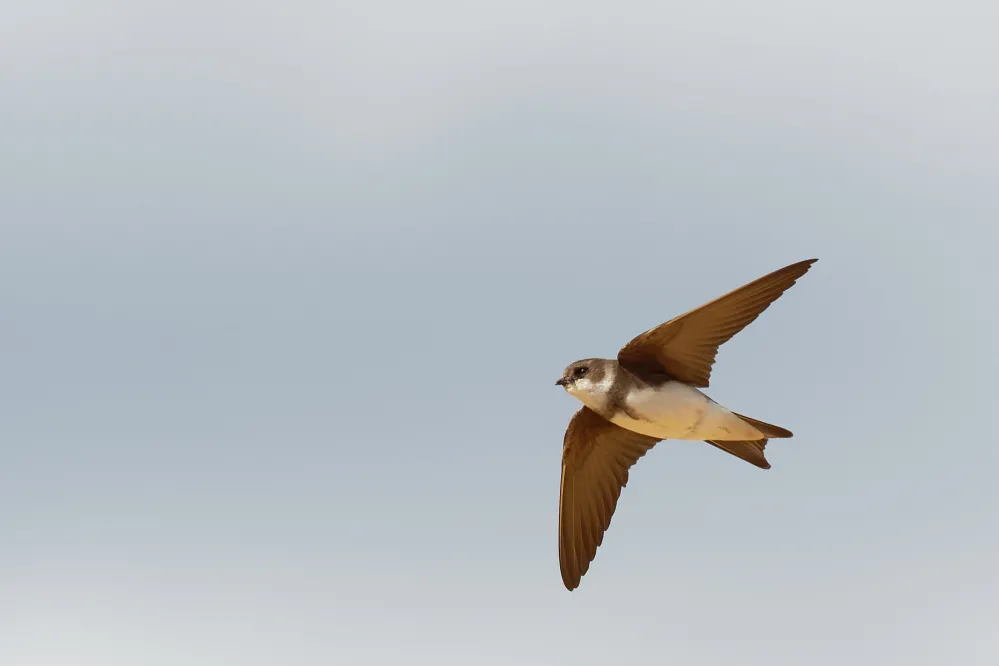
After last week’s sunny spell, this week has generally been more overcast with the occasional shower. While these conditions might not be as pleasant to be out in, they can lead to migrating birds pausing their journeys and so it’s not been a surprise to see an increase in reports of Sand Martins and the occasional Swallow and House Martin feeding over water bodies in recent days.
Of the commonest migrants, Chiffchaffs have continued to arrive, with the weekly reporting rate in BirdTrack now at 54%. Willow Warblers have also started to be reported more frequently, with nearly 200 reports received already, although as mentioned last week, the main arrival will take place in April.
Given their similar appearances, Chiffchaff and Willow Warbler can be challenging to distinguish, but there are several features to look out for, which are explored in our identification video. One key feature is the wing structure, with Willow Warbler having relatively longer flight feathers, making them appear longer winged. This is not a coincidence, but a reflection of the species’ evolution as a longer distance migrant wintering south of the Sahara, whereas Chiffchaffs primarily winter around the Mediterranean.
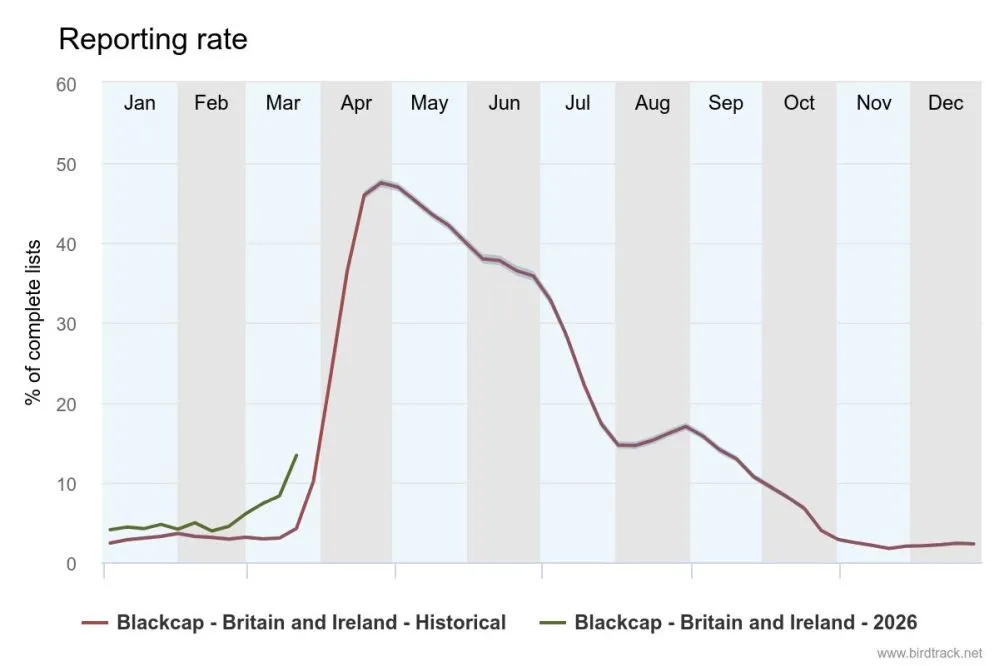
Another of our commonest summer migrants, Blackcap, has also evidently been arriving, with the weekly reporting rate increasing to 13%. Over the next two weeks the Blackcap’s flutey song will become a feature of woodlands and scrub across Britain and Ireland, whereas the similar-sounding Garden Warbler won’t start arriving until the second half of April.
Wheatear is a classic early migrant that is often seen in March, however once again the reporting rate – just shy of 2% in the latest week – has been below average for the time of year. Sadly this has become a theme in recent years – BTO/JNCC/RSPB Breeding Bird Survey data show a 26% decline between 2013 and 2023 and it appears this decline in the breeding population is affecting the frequency of reports during spring passage.
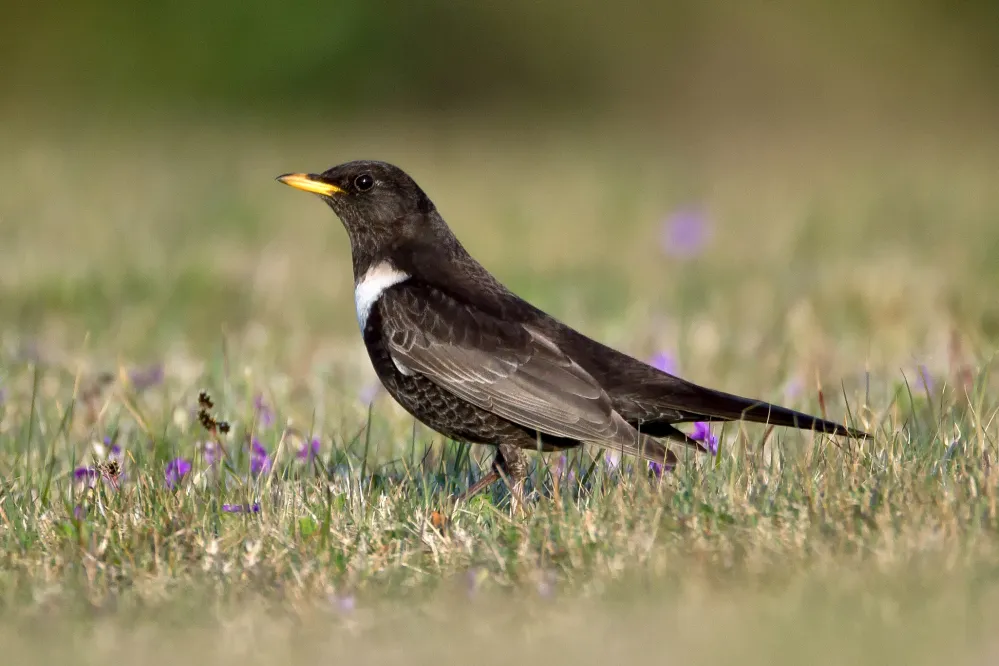
A more uncommon species that has started to appear is Ring Ouzel. A localised breeder in upland Britain, Ring Ouzels are only seen on passage in most of the country and tend to favour more elevated land on migration as well. April is the main month for sightings on spring passage, so look out for any reports in your area.
While there haven’t been any major rarities or influxes of unexpected species, the last week has also seen an increase in sightings of ‘overshooting’ migrants that are normally limited to Continental Europe. Most numerous has been Hoopoe, with about twelve individuals reported in the last week, while there have also been a few sightings of species such as Purple Heron, Black Kite, Bluethroat and Serin.
As March comes to an end, the spring migration is still building up, but the trend towards earlier arrivals that we have observed in recent years has generally continued, with reporting rates for typical March arrivals, such as Sand Martin, Little Ringed Plover, Chiffchaff and Blackcap, ahead of the historic pattern. Scarcer species such as Garganey, Osprey and Ring Ouzel have also been trickling in and the first spring overshoots have turned up.
April is the month when the spring migration will really get going, with all the aforementioned species becoming more numerous and widespread, while others not yet mentioned will appear. Over the last few days we’ve received first reports of some typical April arrivals, including Sedge Warbler, Tree Pipit, Redstart and Yellow Wagtail and this list will keep growing over the next few weeks.
As always, thank you for adding your sightings to BirdTrack – over 800,000 during March so far – and please keep them coming to help us keep track of the spring migration.
Add your sightings to BirdTrack
Help us track the departures and arrivals of migrating birds by adding your sightings to BirdTrack. It’s free, quick and easy, and signing up also allows you to explore trends, reports and recent records in your area.
Author(s)

Tom Jordan