Spring migration starts to draw to a close in late May 2026.
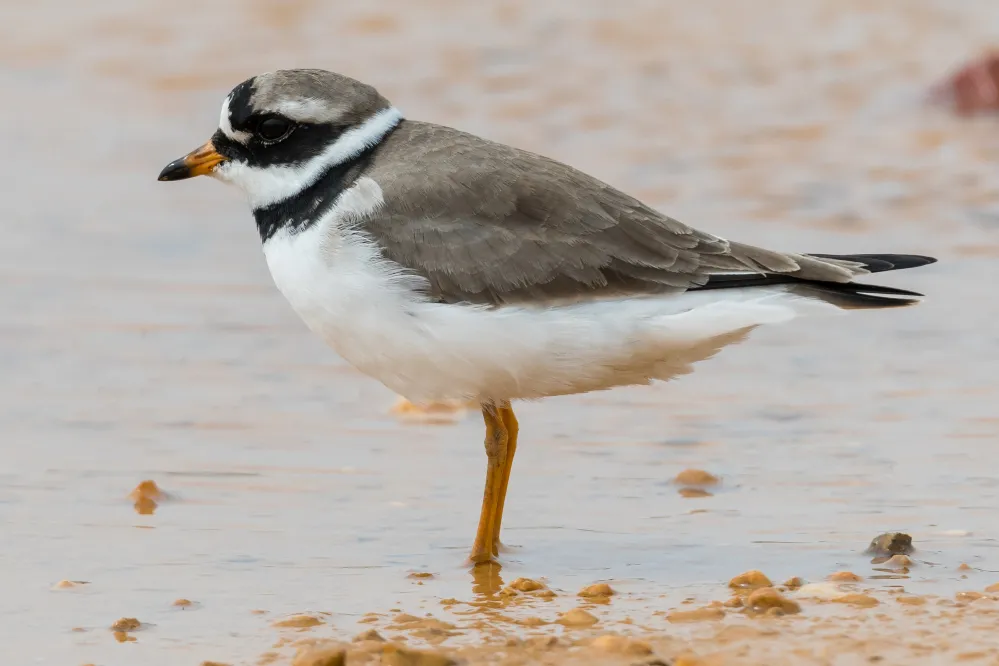
With the end of May approaching, we are now coming toward the end of the spring migration period, but for the time being there are still lots of birds on the move.
Principal among the late spring migrants are Arctic-bound waders, with populations that breed furthest north generally the last to pass through Britain and Ireland. Over the last week or so we have seen a particular spike in reports of Ringed Plover and Sanderling, including many sightings at inland sites, as well as from their more typical coastal habitats.
Both these species are common winter visitors to Britain and Ireland, and in the case of Ringed Plover also breed here, but the birds passing through now are likely to have spent the winter further south, particularly around the coast of West Africa. Ringed Plover provides a good example of a phenomenon known as ‘leapfrogging’, where some individuals of a species both winter further south and breed further north, undertaking long distance migrations which see them ‘leapfrog’ other populations of the same species that make smaller movements.
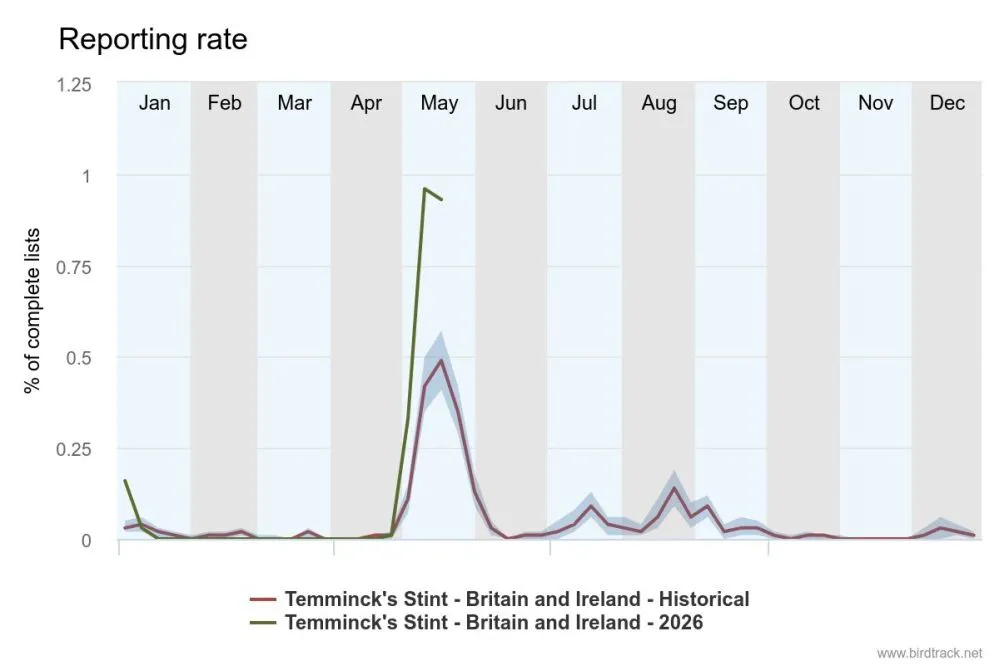
Of the more uncommon migrant waders, it has continued to be a good spring for Temminck’s Stint, with the BirdTrack reporting rate over the past two weeks more than double the average for the same weeks in previous weeks. The last week has also seen the first reports of the year of Red-necked Phalarope, with a couple of birds on passage seen in England as well as the first arrival on Fetlar, Shetland, the main breeding site in Britain for this species, which mostly breeds further north around the Arctic.
Mid-May has also produced some notable passage of Long-tailed and Pomarine Skuas in Scotland. The best day was 12 May, when 308 Long-tailed Skuas and 73 Pomarine Skuas passed Aird an Runair, North Uist, with smaller numbers observed elsewhere. These included several sightings of birds taking the known but rarely observed ‘Great Glen route’, which seems some Long-tailed Skuas crossing the Scottish Highlands overland.
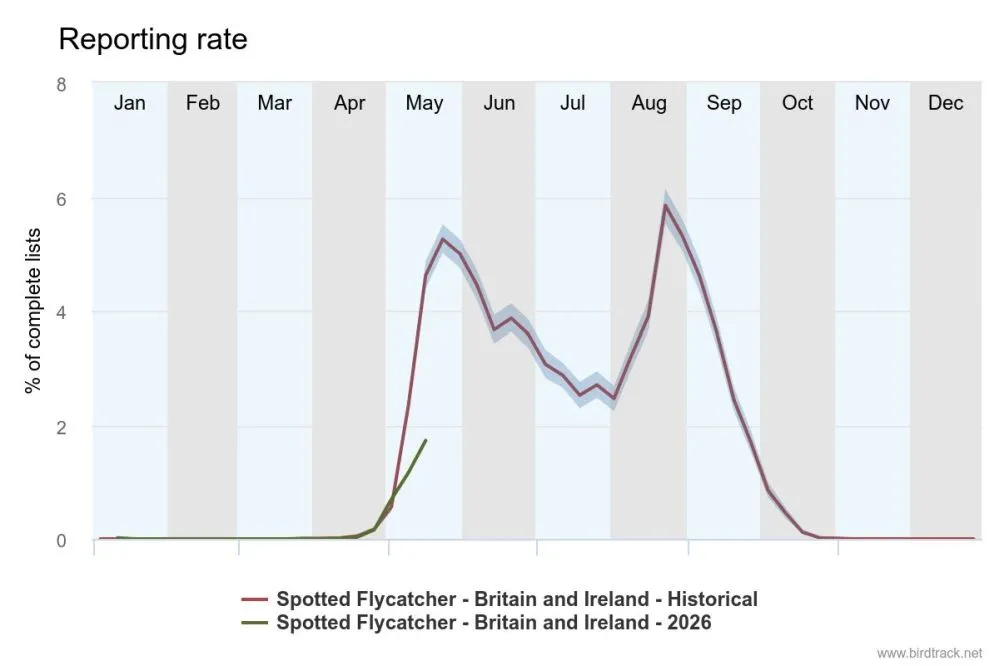
Passerine migration is now largely over, with most songbirds busy nesting, but as we have mentioned in other recent blogs, Spotted Flycatcher is a more typical May arrival. Although reports have been widespread, the BirdTrack reporting rate has so far been some way behind other recent years. It may be that this is the result of the relatively cold weather during May so far, so we could see an increase in arrivals with the warmer spell now beginning.
The second half of May is often a great time of year for scarce ‘drift migrants’, these primarily being species with more eastern distributions that are migrating into Fennoscandia at this time of year, but can ‘drift’ westwards if there are easterly winds. Although there have not been any major arrivals so far, the last week has seen more reports of these species. As ever, Fair Isle in Shetland has been the best place in the British Isles for this, with the last week alone producing a Great Snipe, a Thrush Nightingale, up to four Bluethroats, two Icterine Warblers, a Red-backed Shrike, a Short-toed Lark and a Red-throated Pipit!
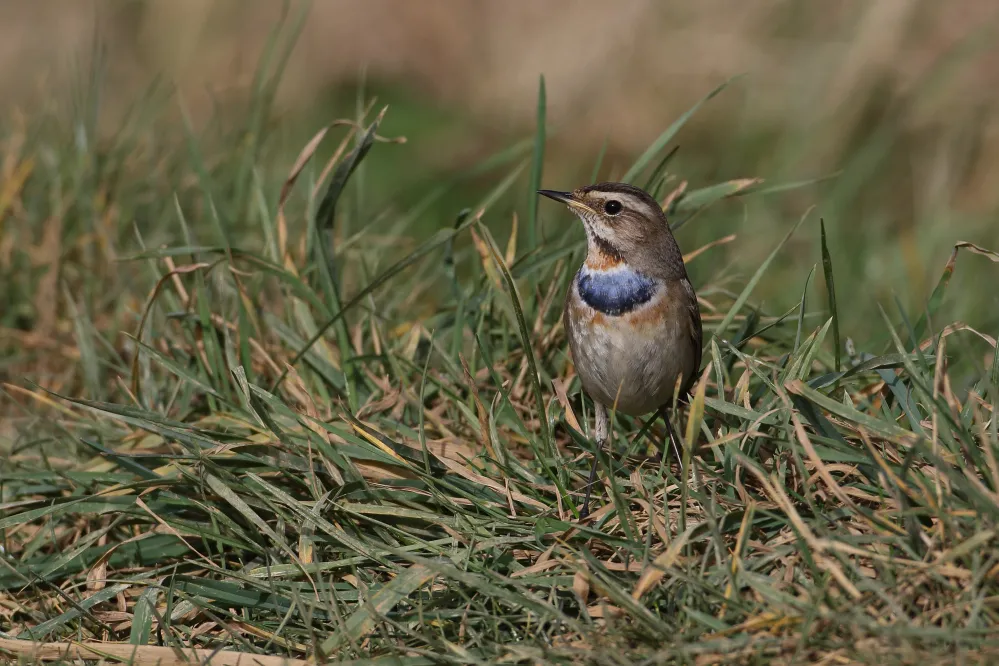
Currently conditions don’t look too promising for arrivals of this nature, but any easterly winds over the next fortnight are likely to produce more records of these species, plus others such as Greenish Warbler, Red-breasted Flycatcher and Common Rosefinch, and perhaps something rarer!
Add your sightings to BirdTrack
Help us track the departures and arrivals of migrating birds by adding your sightings to BirdTrack. It’s free, quick and easy, and signing up also allows you to explore trends, reports and recent records in your area.
Author(s)

Tom Jordan