Citation
In more detail
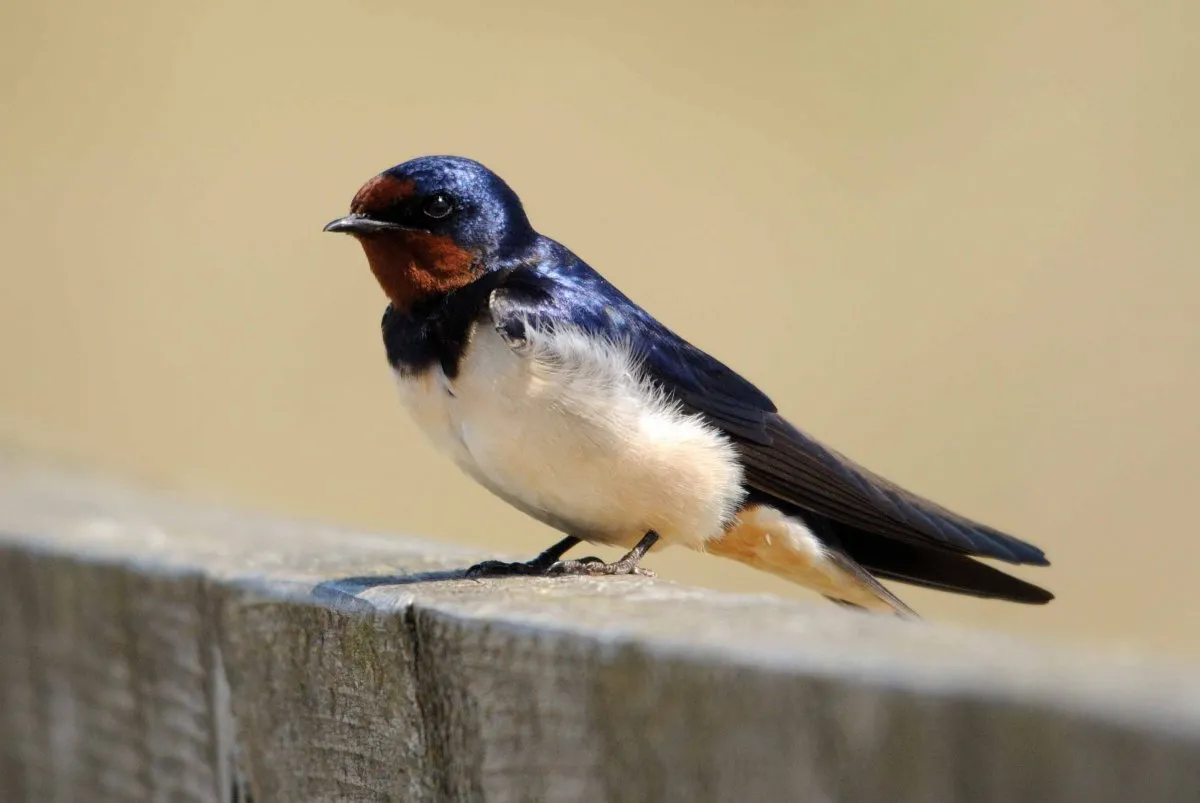
Data collected by volunteer citizen scientists have been used to show how the timing of bird migration to and from the UK has changed since the 1960s. The spring arrival dates for 11 of 14 common migrants have got significantly earlier, with six species, including Swallow, House Martin and Chiffchaff, coming back to breed more than 10 days earlier than they used to. Species that advanced their timing of arrival also showed the most positive trends in abundance over this period.
BTO ecologists, led by Stuart Newson, compared data from the Inland observation points summary survey, which ran from 1962–1966, with information collected from 2002 to 2011 via Migration Watch and BirdTrack. The change in spring arrival across species equated to an advance of 0.22 days per year on average. In addition to the early arrival, four species were found to depart for their wintering grounds significantly later than previously. As a consequence of earlier arrival and for some species later departure, nine of 14 species spent significantly longer in the UK in the 2000s than in the 1960s.
These changes in bird migration are likely to be a response to warming on the birds’ UK breeding grounds. The extended stays in the UK may have benefitted some species in allowing birds to lay more than one clutch, when they previously would not have had time to attempt to raise an extra brood because conditions were not suitable. Studies such as this are important in understanding how birds can adapt to climate change, and the effect of their response to their population dynamics at a time when many species are in decline and effective conservation measures are being sought.
Abstract
The timing of migration is one of the key life-history parameters of migratory birds. It is expected to be under strong selection, to be sensitive to changing environmental conditions and to have implications for population dynamics. However, most phenological studies do not describe arrival and departure phenologies for a species in a way that is robust to potential biases, or that can be clearly related to breeding populations. This hampers our ability to understand more fully how climate change may affect species’ migratory strategies, their life histories and ultimately their population dynamics. Using generalized additive models (GAMs) and extensive large-scale data collected in the UK over a 40-year period, we present standardized measures of migration phenology for common migratory birds, and examine how the phenology of bird migration has changed in the UK since the 1960s. Arrival dates for 11 of 14 common migrants became significantly earlier, with six species advancing their arrival by more than 10 days. These comprised two species, Blackcap Sylvia atricapilla and Chiffchaff Phylloscopus collybita, which winter closest to Britain in southern Europe and the arid northern zone of Africa, Common Redstart Phoenicurus phoenicurus, which winters in the arid zone, and three hirundines (Sand Martin Riparia riparia, House Martin Delichon urbicum and Barn Swallow Hirundo rustica), which winter in different parts of Africa. Concurrently, departure dates became significantly later for four of the 14 species and included species that winter in southern Europe (Blackcap and Chiffchaff) and in humid zones of Africa (Garden Warbler Sylvia borin and Whinchat Saxicola rubetra). Common Swift Apus apus was the exception in departing significantly earlier. The net result of earlier arrival and later departure for most species was that length of stay has become significantly longer for nine of the 14 species. Species that have advanced their timing of arrival showed the most positive trends in abundance, in accordance with previous studies. Related in part to earlier arrival and the relationship above, we also show that species extending their stay in Great Britain have shown the most positive trends. Further applications of our modelling approach will provide opportunities for more robust tests of relationships between phenological change and population dynamics than have been possible previously.
Staff author(s)








The authors thank the volunteers who collected data for the three schemes in this study. BirdTrack is a partnership between the BTO, RSPB, BirdWatch Ireland, the Scottish Ornithologists' Club and the Welsh Ornithological Society.