Common Gull
Introduction
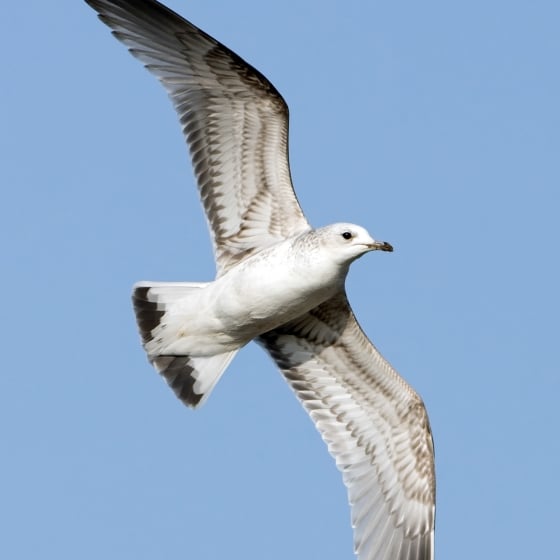
The Common Gull is a medium-sized gull, with a dark grey back and upperwings and yellowish-green bill and legs.
This species breeds in the north and west of both Britain and Ireland with a preference for upland areas. The highest densities are found in the eastern half of Scotland, whereas in Ireland it is predominantly a coastal bird.
Our breeding population is swelled in winter by the autumn arrival of a large influx from the Continent. Individuals become very widely distributed across the country – though avoiding the uplands – and are most abundant down the eastern half of Britain at this time.
Key Stats






Identification
ID Videos
This section features BTO training videos headlining this species, or featuring it as a potential confusion species.
Common Gull & Herring Gull
Songs and Calls
Call:
Alarm call:
Flight call:
Status and Trends
Conservation Status
Population Change
The coastal-nesting population increased by 70% between the 1969–70 Census and Seabird 2000 (1998–2002). However, more than half of the population counted by Seabird 2000 were breeding inland. The inland breeding colonies have not been counted consistently and hence the overall trend for this species is highly uncertain. The counts made since Seabird 2000 suggest that substantial declines may have occurred at both coastal and inland colonies, although coverage is incomplete and the extent of the decline will not be known until the results of the recent Seabirds Count (2015–2021) are available (JNCC 2022).
Distribution
Each autumn and winter a large influx of continental Common Gulls supplements local breeders, resulting in a very wide winter distribution in Britain, with birds being absent only from upland areas; in Ireland they are mostly coastal. Breeding Common Gulls are found mostly in the north and west of both Scotland and Ireland. However, in Scotland, the highest densities are found on the eastern half of the country from Angus to the Moray Firth, Caithness and the Northern Isles as well as in many Highland straths and glens.
Occupied 10-km squares in UK
2007/08–10/11
or view it on Bird Atlas Mapstore.
2008–11
or view it on Bird Atlas Mapstore.
European Distribution Map
Distribution Change
The breeding change map highlights recent losses in many parts of Scotland and western Ireland.
Change in occupied 10-km squares in the UK
from 1981–84 to 2007–11
or view it on Bird Atlas Mapstore.
from 1968–72 to 2008–11
or view it on Bird Atlas Mapstore.
Seasonality
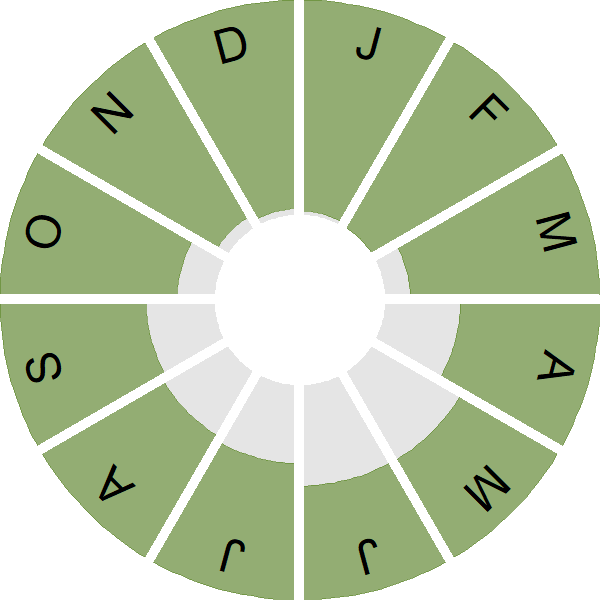
Common Gulls are recorded throughout the year.
Weekly pattern of occurrence
The graph shows when the species is present in the UK, with taller bars indicating a higher likelihood of encountering the species in appropriate regions and habitats.

Movement
Britain & Ireland movement
Foreign locations of birds ringed or recovered in Britain & Ireland
Dots show the foreign destinations of birds ringed in Britain & Ireland, and the origins of birds ringed overseas that were subsequently recaptured, resighted or found dead in Britain & Ireland. Dot colours indicate the time of year that the species was present at the location.
- Winter (Nov-Feb)
- Spring (Mar-Apr)
- Summer (May-Jul)
- Autumn (Aug-Oct)

European movements
EuroBirdPortal uses birdwatcher's records, such as those logged in BirdTrack to map the flows of birds as they arrive and depart Europe. See maps for this species here.
The Eurasian-African Migration Atlas shows movements of individual birds ringed or recovered in Europe. See maps for this species here.
Biology
Productivity and Nesting
Nesting timing
Egg measurements
Clutch Size
Survival and Longevity
Survival is shown as the proportion of birds surviving from one year to the next and is derived from bird ringing data. It can also be used to estimate how long birds typically live.
View number ringed each year in the Online Ringing Report.
Lifespan
Survival of adults
Survival of juveniles
Biometrics
Wing length and body weights are from live birds (source).
Wing length
Body weight
Ring Size
Classification, names and codes
Classification and Codes
- Order: Charadriiformes
- Family: Laridae
- Scientific name: Larus canus
- Authority: Linnaeus, 1758
- BTO 2-letter code: CM
- BTO 5-letter code: COMGU
- Euring code number: 5900
Alternate species names
- Catalan: gavina cendrosa
- Czech: racek bourní
- Danish: Stormmåge
- Dutch: Stormmeeuw
- Estonian: kalakajakas
- Finnish: kalalokki
- French: Goéland cendré
- Gaelic: Faoileag-bheag-an-sgadain
- German: Sturmmöwe
- Hungarian: viharsirály
- Icelandic: Stormmáfur
- Irish: Faoileán Bán
- Italian: Gavina
- Latvian: (kajaks), kaija
- Lithuanian: paprastasis kiras
- Norwegian: Fiskemåke
- Polish: mewa siwa
- Portuguese: famego
- Slovak: cajka sivá
- Slovenian: sivi galeb
- Spanish: Gaviota cana
- Swedish: fiskmås
- Welsh: Gwylan Gweunydd
- English folkname(s): Cob
Research
Causes of Change and Solutions
Causes of change
The causes of change in the Common Gull population are not known. Some studies have shown that American Mink Neovison vison can have a substantial negative effect at a local level and can cause colony abandonment (Craik 1997), but it is unclear whether predation from Mink and other predators may have driven wider population declines.
Publications (7)
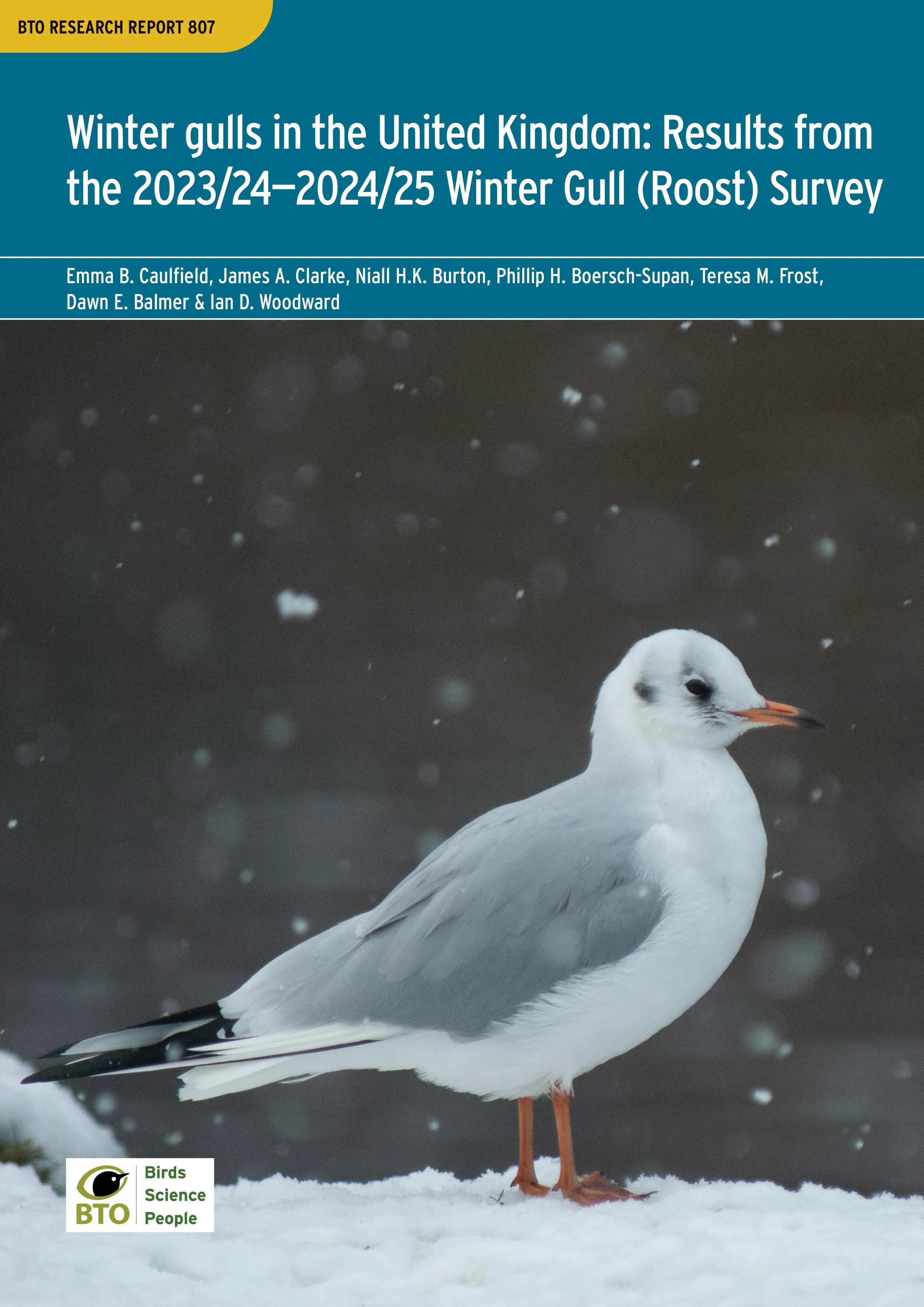
Winter gulls in the United Kingdom: Results from the 2023/24–2024/25 Winter Gull (Roost) Survey
Author:
Published: Winter 2026
This report presents updated population estimates for six gull species following the Winter Gull (Roost) Survey (WinGS) which was carried out during the 2023/24 and 2024/25 winters.
16.04.26
BTO Research Reports
Northern Ireland Seabird Report 2025
Author:
Published: 2026
This report is the published outcome of the work of the Northern Ireland Seabird Network — a network of volunteers, researchers and organisations — coordinated by the BTO Seabird Coordinator, and funded by NIEA. It contains detailed species accounts for the 22 breeding seabird species in Northern Ireland, as well as articles on a range of topics: Manx Shearwaters nesting on Rathlin Rathlin Island Breeding Seabird Census 2025 Tracking Lesser Black-backed Gulls on Lough Neagh Puffins return to Isle of Muck Outer Ards: 2025 Seabird Nesting Report Strangford Lough: 2025 Seabird Nesting Report Forthcoming seabird research work: ACCLIMATISE project
26.03.26
Reports Northern Ireland Seabird Report
Seabird Population Trends and Causes of Change: 1986–2024
Author:
Published: 2026
The annual report of the Seabird Monitoring Programme View and download the report Read the report online This report presents the latest seabird population trends in breeding abundance and productivity using data from the Seabird Monitoring Programme (SMP). It documents changes in the abundance and productivity of breeding seabird species in Britain and Ireland from 1986 to 2024. This report includes both inland and coastal populations and trends from the Channel Islands, England, Isle of Man, Northern Ireland, Scotland, Wales and the Republic of Ireland, which are presented where sufficient data are available. The results from this report are used more broadly to assess the health of the wider environment, to inform policy and for conservation action.
19.03.26
Reports SMP Report
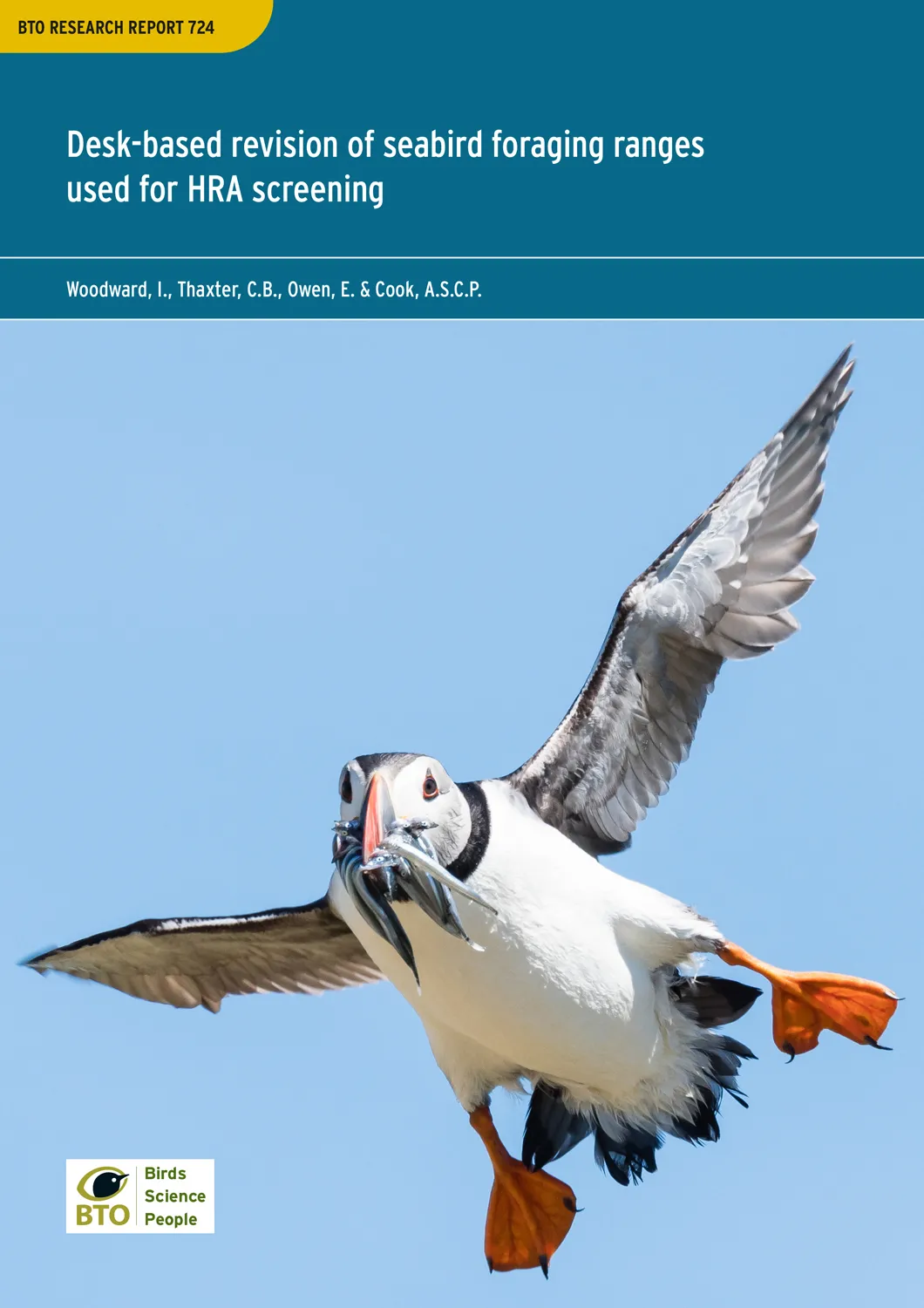
Desk-based revision of seabird foraging ranges used for HRA screening
Author:
Published: 2019
A key step in understanding the possible impacts of a proposed windfarm development is to identify potential interactions between seabird breeding colonies and the proposed development areas. Such interactions are typically assessed using generic information on foraging ranges, derived from academic studies. This report uses the latest data to provide updated estimates of foraging range, which will help to ensure that the best available information is available when new developments are being considered.
01.12.19
BTO Research Reports
The status of the UK’s breeding seabirds
Author:
Published: 2024
Five seabird species are added to the Birds of Conservation Concern Red List in this addendum to the 2021 update, bringing the total number of Red-listed seabird species to 10, up from six since seabirds were last assessed. The Amber List of seabirds moves from 19 to 14 species, and the Green List increases from one to two species.
29.09.24
Papers
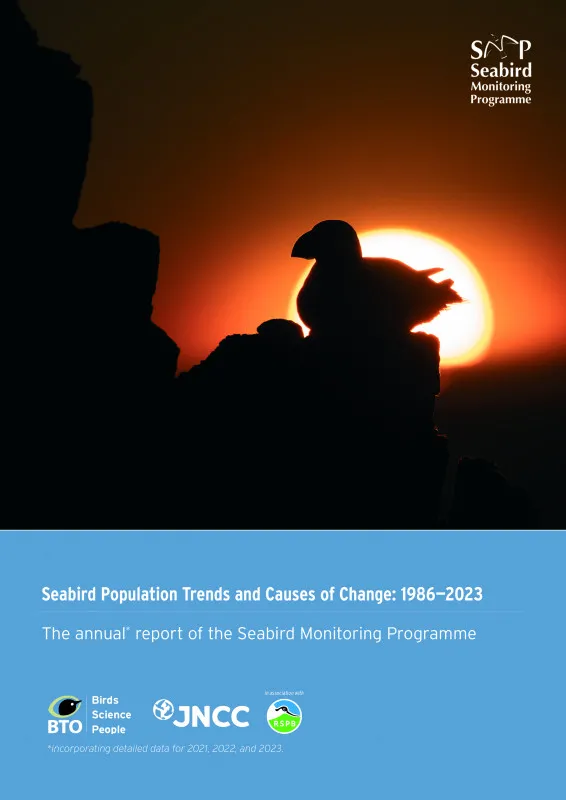
Seabird Population Trends and Causes of Change: 1986–2023
Author:
Published: 2024
This report presents the latest seabird population trends in breeding abundance and productivity using data from the Seabird Monitoring Programme (SMP).The report documents changes in the abundance and productivity of breeding seabird species in Britain and Ireland from 1986 to 2023, and provides a detailed account of the 2021, 2022 and 2023 breeding seasons. This report includes both inland and coastal populations and trends from the Channel Islands, England, Isle of Man, Northern Ireland, Scotland, Wales and the Republic of Ireland, which are presented where sufficient data are available. The results from this report are used more broadly to assess the health of the wider environment, to inform policy and for conservation action.
21.11.24
Reports SMP Report
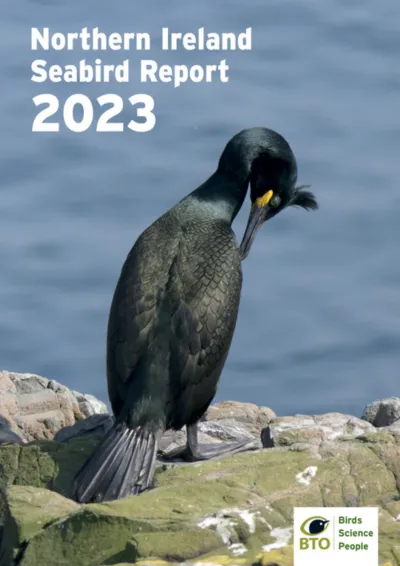
Northern Ireland Seabird Report 2023
Author:
Published: 2024
The report includes detailed information about the population trends and breeding success of seabirds in Northern Ireland, over the 2023 breeding season. Notably, Fulmar and Kittiwake populations are reported to be experiencing continued declines, while Guillemot, Common Gull and Herring Gull populations show increases at most breeding sites. Low productivity was reported in Black-headed Gulls, Sandwich Terns and Common Terns, likely due to the impacts of highly pathogenic avian influenza (HPAI). Although Black-headed Gulls make up the majority of confirmed HPAI mortality cases in Northern Ireland in 2023, other birds significantly affected include terns, Kittiwakes and auks. A contributor report about HPAI in Northern Ireland by Ronan Owens (Higher Scientific Officer, DAERA, NIEA) details developments in environmental organisations’ responses to HPAI in 2023, including cross-sector communication, improved surveillance and monitoring of HPAI impacts, and improved online systems for the public to report dead birds. Monitoring reports for Strangford Lough and the Outer Ards are included, as well as several additional contributor articles: Copeland gull censuses, by Roisin Kearney (Assistant Conservation Officer, RSPB). The Copeland Islands host one of the largest mixed gull colonies in Northern Ireland, with significant numbers of Lesser Black-backed Gulls and Herring Gulls. The annual gull census was established in 2018; the article details the refinement of the methodology to date as well as the census results so far. Manx Shearwater tracking, by Patrick Lewin (DPhil Student, OxNav, Dept. of Biology, University of Oxford). Tracking the Manx Shearwaters that breed on Lighthouse Island (one of the three Copeland Islands) began in 2007. The article describes the history of tracking Manx Shearwaters from Copeland, including recent advances in technology that have allowed the tracking of fledgling birds as well as adults of breeding age, and the impact of this research on the conservation of shearwaters. Puffin surveys on Rathlin, by Ric Else (Life RAFT Senior Research Assistant, RSPB). Rathlin Island hosts Northern Ireland’s largest seabird colony. The response of seabirds to the removal of introduced Ferrets and Brown Rats from Rathlin is currently being monitored, with a particular focus on Puffins. These birds are especially vulnerable to mammalian predators because of their burrow nests. The article describes the challenges associated with calculating a population estimate, monitoring productivity and mapping the distribution of this species, and how these are being addressed in seabird surveys on Rathlin.
15.04.24
Reports Northern Ireland Seabird Report
More Evidence
More evidence from Conservation Evidence.com
Partners
Citing BirdFacts
If you wish to cite particular content in this page (e.g. a specific value) it is best to use the original sources as linked in the page. For a more general citation of the whole page please use: BTO (20XX) BirdFacts Species: profiles of birds occurring in the United Kingdom. BTO, Thetford (www.bto.org/birdfacts, accessed on xx/xx/xxxx).