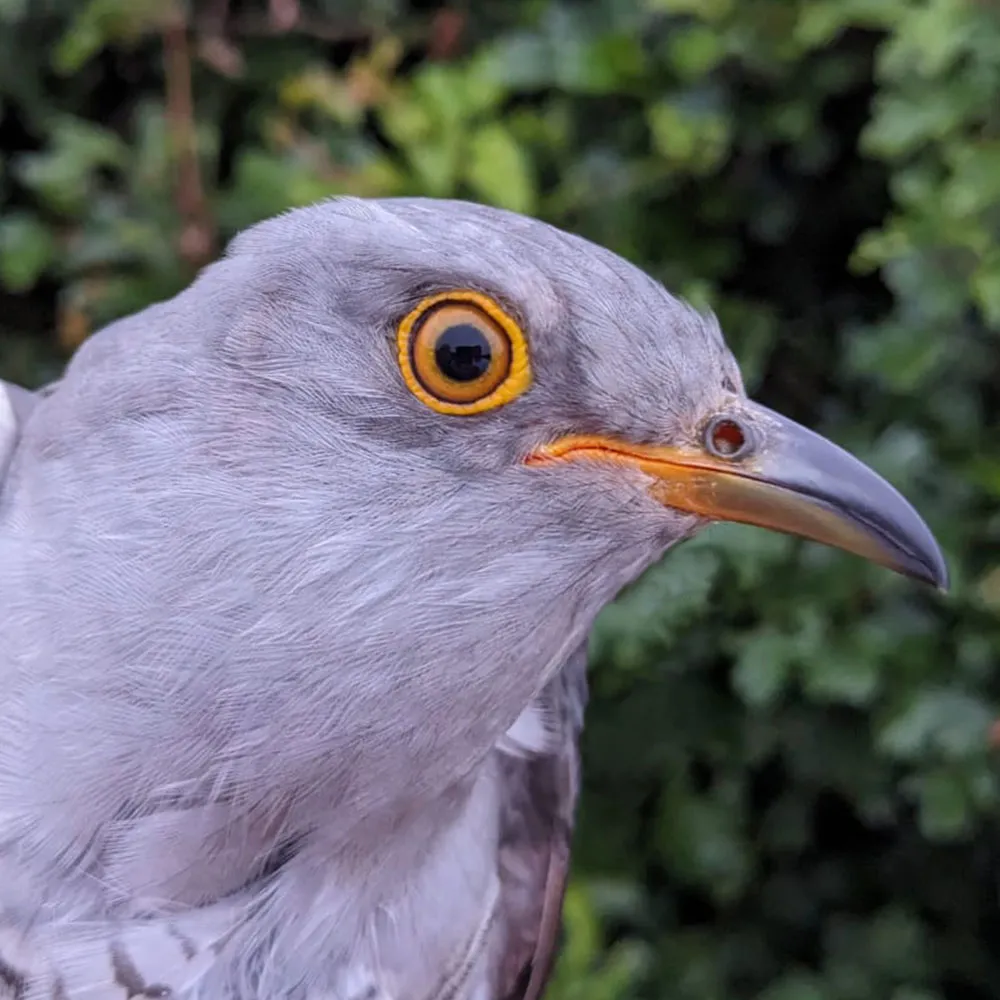
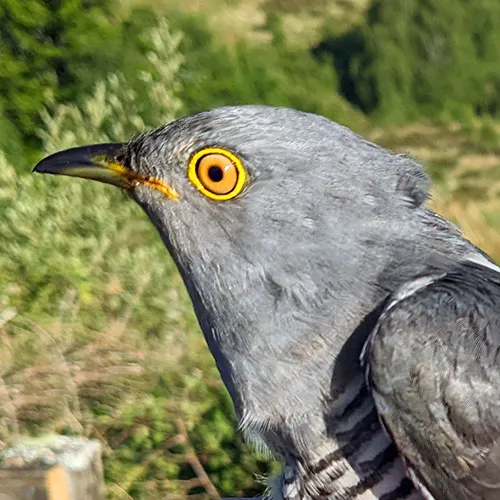
Help us track Cuckoos and watch the current cohort's epic migration on our Cuckoo migration map. Read the latest updates on how our cuckoos are managing their amazing migration from Britain and Ireland to Africa and back again.

Time, skill and support
Spend as much time as you like following each Cuckoo's migration and reading the updates about their movements.
No technical skills are required to support the Cuckoo Tracking project - just a love of Cuckoos.
Learn more on our Cuckoo BirdFacts page and how to identify them and their call in our Cuckoo ID video.
About the project
We’ve been satellite-tracking Cuckoos since 2011. We’ve learned lots of vital information, such as how the different migration routes are linked to declines, and some of the pressures Cuckoos face whilst on migration, but there is still much more to discover.
- We have been able to share our expertise around tracking Cuckoos with other international studies, such as the Beijing Cuckoo Project.
- Read more about our Cuckoo Tracking Project.
- Explore the Cuckoo BirdFacts page to learn more about this iconic species.
An important aspect of this project is how it helps us improve our understanding of why Cuckoos are in decline:
- Since 1995, the number of Cuckoos has decreased by over 30%.
- The Cuckoo is currently Red-listed as a Bird of Conservation Concern in the UK.
What’s next
We now need to look more closely at how dependent Cuckoos are on, and how much their migration is linked to, the drought-busting rains of the weather frontal system known as the Inter Tropical Convergence Zone (ITCZ) as they move out of the Congo rainforest and begin to head back to the UK via West Africa.
Learn more
- What have the Cuckoos taught us? (2022)
- Cuckoo's clocks can't adjust to climate change - now we know why (2023)
- Our Cuckoo tracking journey (2024)
- Learn more about Cuckoos (facts, figures, trends)
- Learn how to identify them and their call in our Cuckoo ID video
- More about bird tracking technology (GPS, PTTs, Geolocators)
Support the project
- Help us continue our vital research by sponsoring a Cuckoo.
Cuckoo migration map
Each Cuckoo’s tag sends us location data approximately every day, so we can follow them and learn more about their migration.
Cuckoo movements from 1st May 2025 to 3rd March 2026
Latest updates
A shock reappearance for Ashok
Back in early December all seemed good with Ashok, and we were receiving steady signals from his tag as he explored the forests of central Gabon. Then, things went quiet. We often lose the signals when the Cuckoos are deep in the forests, so this in itself was not so unusual. What was unusual, however, was the signal that we received in early February which suggested he’d moved over 2,700 km (1,678 miles) east into Ethiopia!
Now, we know enough about Cuckoos to know that this was an anomalous signal and we were certain that Ashok was actually still in the Gabon jungle. But we hadn’t received any further signals… Then, late yesterday, Ashok’s signal sprang back into life and we can now see that he has moved 680 km (423 miles) north of his wintering site in Gabon and made his way into Cameroon!
Arthur moves north
When we last posted Arthur’s whereabouts just over a week ago, he had moved into Liberia in West Africa, over 3,000 km (1,864 miles) from where he’d spent the winter months. In the last few days, he has flown a further 300 km (186 miles) north, skirting the border with Guinea and moving back into Côte d'Ivoire (Ivory Coast).
His next move could see him heading into southern Mali before making his big Saharan crossing.
Jim’s way out west
After a few months in Gabon, Jim has sprung into life in recent days and made his way approximately 2,200 km (1,367 miles) west into northeastern Côte d'Ivoire (Ivory Coast), passing through Cameroon, Nigeria, Benin, Togo, and Ghana on the way!
His latest signal shows that he is in Comoé National Park, one of the largest protected areas in West Africa and designated a Biosphere Reserve and UNESCO World Heritage Site.
Current Cuckoos
Each year, we follow a cohort of newly tagged Cuckoos as they migrate along the Afro-Palearctic flyway. We also watch Cuckoos tagged in previous years, if their tag is still transmitting data to us. Together, these are our 'Current Cuckoos'.