Acoustic Appeal
Sound science for birds
Acoustic monitoring is a powerful, unique and insightful approach that gives us a fresh perspective and new information about our ecosystems.
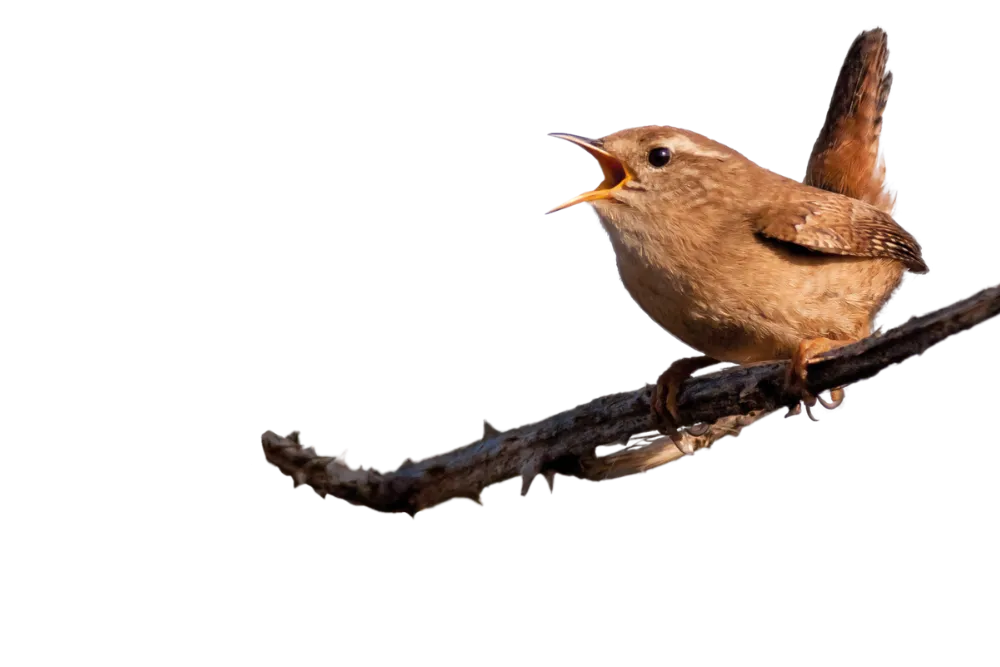
Passive Acoustic Monitoring is where ornithology meets technology
This approach uses small programmable sound recorders to capture the sounds of birds and other wildlife, providing monitoring information from remote and inaccessible places. It has the potential to dramatically improve our understanding of many bird species and support targeted conservation in habitats specific to some of our most precious breeding birds, including Curlew, Nightjar and Lesser Spotted Woodpecker.
This fresh approach allows for long-term, uninterrupted data collection, and enables us to monitor areas that are difficult to access and study species without disturbing natural behaviours, providing huge benefits to research. It is powerful, cost-effective, scalable, and when used in conjunction with traditional surveying, it has great potential for better monitoring of ecosystems.
We need your help today to support this important work
Nightjar
Surveying the vast forested areas home to this species is a daunting task, made more difficult by the birds’ nocturnal nature. By deploying programmable recorders, fieldworkers are able to collect data from many more sites than they could through traditional survey techniques.
Listen to a Nightjar’s churring song and wing-clapping display:

Storm Petrel
This species spends most of its time at sea, far from observers. When it does return to land, it is under the cover of darkness, nesting in cavities, including underground. To address the lack of knowledge about them, we are working on a pioneering project to collect much-needed data on this enigmatic species.
Listen to a Storm Petrel calling:

Lesser Spotted Woodpecker
This species is rapidly becoming one of our scarcest breeding birds and is difficult to detect with traditional survey techniques. Passive acoustic monitoring has been a game-changer, allowing us to identify occupied sites of these elusive birds.
Listen to a Lesser Spotted Woodpecker drumming:

Key benefits of Passive Acoustic Monitoring
Helps with reliable detection of rare, shy, nocturnal and cryptic species
Allows people with no previous bird identification skills to help with recordings
Enables monitoring coverage of remote and inaccessible areas
Provides comprehensive data from continuous monitoring
Gives new insights into birds, their ecology and their behaviour
With your support, we can ...
... learn much more about the sound and behaviour of birds
... create classifiers so we can identify many more birds’ sounds
... ensure rapid confirmation of rare or unexpected species
... further develop software for collaborative acoustic monitoring
... contribute to new insights in bioacoustic research
We need your help to unlock this technology’s potential
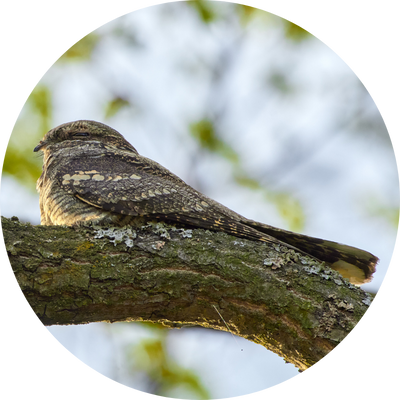
Using new advances being developed by BTO and others, analyses of sound files provide us with detailed behavioural insights that would be impossible through traditional surveying methods.
This can really support the development of effective and impactful conservation.