Learn when to feed, how to choose the right foods to support a wide range of species, and how to keep your feeders clean.
Our advice on feeding wild birds is informed by scientific research, to which BTO has made a significant contribution. As understanding evolves, we refine that guidance to reflect current knowledge. The scientific evidence highlights that there are both benefits and risks associated with garden bird feeding. Feeding can support birds in various ways, and also provides valued opportunities for people to connect with nature.
The provision of food influences individuals, populations and communities, through effects on survival, disease risk and competition, amongst others. We know more about some of these aspects than others, and important gaps in our understanding still need to be addressed.
Feeding and disease risk
The strongest and most clearly understood scientific evidence currently relates to disease transmission at feeding stations – particularly in relation to the disease finch trichomonosis. BTO research has played a central role in our understanding of finch trichomonosis and its effects on Greenfinch and Chaffinch populations. Analyses led by BTO’s Hugh Hanmer show that declines in adult survival associated with the disease have been more pronounced in residential settings, consistent with elevated transmission risk at feeding stations.
Ongoing collaborative research between the RSPB, Institute of Zoology and BTO is further examining how feeding practices influence disease dynamics. Recent results from this work, led by Hugh Hanmer and Kate Plummer, identify the post-breeding period as a time of elevated outbreak risk in gardens. These findings have directly informed the view that best practice advice on when to feed should include a seasonal component.
The recommendation for a seasonal component to food provision, introduced in April 2026, has prompted discussion about its implications for the birds we feed and the surveys we use to monitor their populations. We have produced some FAQs to answer some commonly asked questions about this change in advice.
Feeding seasonally
Based on the best available evidence, we recommend halting the provision of seeds and peanuts during the warmer months as a proportionate step to reduce the impact of finch trichomonosis. For those who choose to feed birds, this represents best practice under present conditions.
What this means in reality is:
- adjusting food types seasonally – feed seeds and peanuts from November to April, pausing May to October.
- continuing mealworms and fat / suet provision year-round.
- maintaining good food and water hygiene.
Report signs of disease
Please report sickness or death in garden wildlife (birds, amphibians, reptiles or Hedgehogs) to the Garden Wildlife Health project so wildlife vets can help reach a diagnosis, where possible, and contribute to a national database of wildlife disease incidents.
Feeding and competition
Some researchers have expressed concerns that feeding garden birds may support larger populations of common and more dominant species at the expense of other species. These researchers fear that elevated populations of Blue Tits and Great Tits may be contributing to the pressures faced by declining populations of Marsh and Willow Tits. A review of the published literature reveals the scientific evidence in this area to be less conclusive than is the case for disease effects. We do not have good evidence regarding the scale of any possible impact, but also recognise that securing such evidence is challenging. It is an area where more research is needed. For those feeding garden birds, a precautionary approach might be to limit feeding if your garden is located close to remaining populations of Marsh or Willow Tits.
Rethinking how we feed garden birds
In nature, food comes and goes. In gardens, it can become constant. Feeding in ways that reflect natural patterns can support birds while reducing unintended impacts. The ecological principles below help make sense of the recent changes to feeding guidance.
Under natural conditions, birds exploit food that is scattered and short-lived. Flocks gather, resources are depleted, and birds disperse. Different species often forage in slightly different places or at different heights, so patterns of contact are dynamic and continually changing.
Supplementary feeding can alter those patterns. When food is provided consistently at fixed locations, many individuals – sometimes from multiple species – may return repeatedly to the same feeders over extended periods. Over time, this can increase opportunities for disease transmission.
A more considered approach to feeding, grounded in these ecological principles, aims to:
- reduce repeated use of the same feeding spots by large numbers of birds,
- avoid creating predictable, long-lasting feeding sites where contamination can build up,
- encourage movement and turnover, more like natural food patches that appear and disappear,
- adjust food types seasonally, particularly during higher-risk periods,
- retain the benefits of feeding while reducing unintended disease risk.
There is no single formula – every garden is different, and conditions change from season to season and from one day to the next. Feeding well means observing, adapting and responding to what you see in your own garden.
What foods should I provide?
Many people provide black sunflower seeds and sunflower hearts as their staple foods. Alongside these, quality peanuts, nyjer seed and high-energy seed mixes are all greatly appreciated. Live foods, such as mealworms, are readily taken by Robins, Blackbirds and Wrens.
There are other foods, e.g. sultanas (soak in water first) that are good for ground-feeding Blackbirds, while pinhead oats are ideal for fine-billed Dunnocks (but should not be left out in wet weather). Note that grapes, raisins, sultanas and currants are all potentially poisonous to dogs.
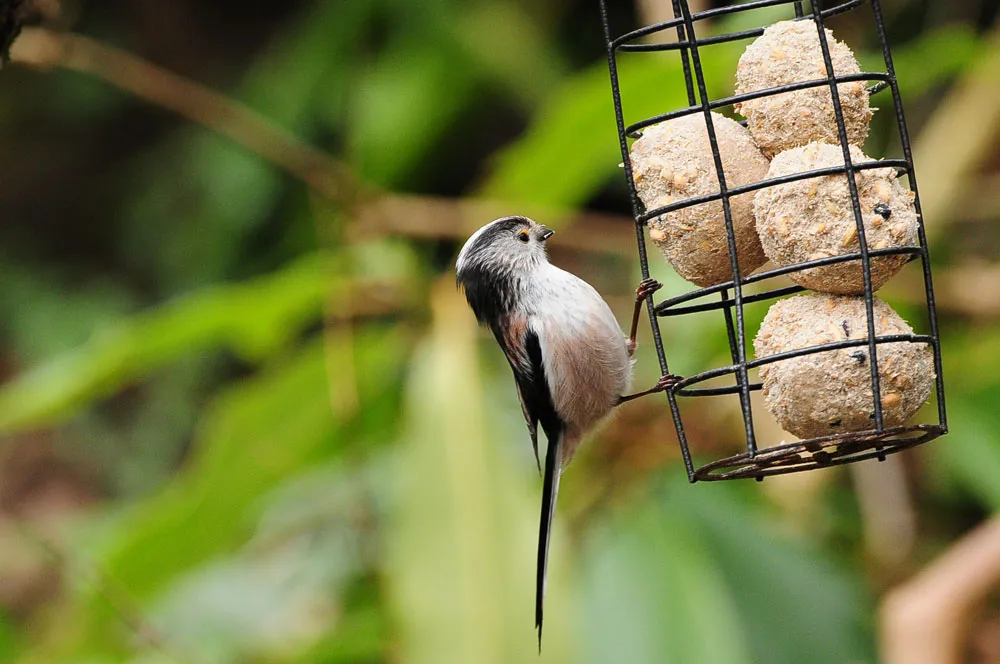
Windfall apples and small amounts of finely grated mild cheese can be very useful, particularly in the winter, while peanut cake (a mix of fats and peanut flour) will attract species like Long-tailed Tit. Fat smeared into cracks in tree bark will be found by Treecreepers and woodpeckers (read a summary of recent research into the effects of providing fat-based foods).
Sunflower seeds and sunflower hearts
Black sunflower seed was introduced in the early 1990s and revolutionised bird feeding by providing a high-energy food in a readily accessible form. Black sunflower seeds have thinner husks than the more traditional striped sunflower seeds and so are easily split open. Black sunflower seeds are a favourite of Greenfinches and tits, though they may be shunned if sunflower hearts are available nearby. The downside of feeding these seeds is the pile of husks left below the feeder.
Sunflower hearts are more expensive than black sunflower seeds but they have two advantages. First, the birds can feed more quickly because they do not have to remove the husk. Second, the lack of the husk means that there is no unsightly pile of husks left behind on the ground after the birds have had their fill.
Seed mixes
Seed mixes come in a vast range, differing in content and quality. Cheap mixes often have a high proportion of cereals. These larger grains are favoured by sparrows and pigeons. Better quality mixes have a lower cereal content, and so are particularly suitable for finches and buntings. The best mixes are carefully balanced to cater for a range of species. Some now contain added suet pellets, fruit or pieces of mealworm.
Peanuts
Peanuts are high in oils and proteins and have been used for feeding birds for many decades. Always buy good quality peanuts from a reputable source and avoid any that show any signs of mould. Peanuts are best supplied behind a wire mesh so that a bird cannot take a whole peanut away. Keep your peanuts in a cool and dry environment and buy them in small quantities, so that they do not sit around for too long. Peanuts can be contaminated with a naturally occurring toxin called aflatoxin.
Nyger
Nyger, sometimes seen spelled nyjer or sold as 'thistle' seed, initially found favour with Goldfinches – which seemed to like the small size of these seeds. Because these seeds are so small they have to be supplied in a specially adapted feeder. They are oil-rich and ideal for birds with delicate bills. There is some suggestion that Goldfinches now favour sunflower hearts, only moving onto the nyger when competition on other feeders is great. However, this may just be a local effect.
Mealworms
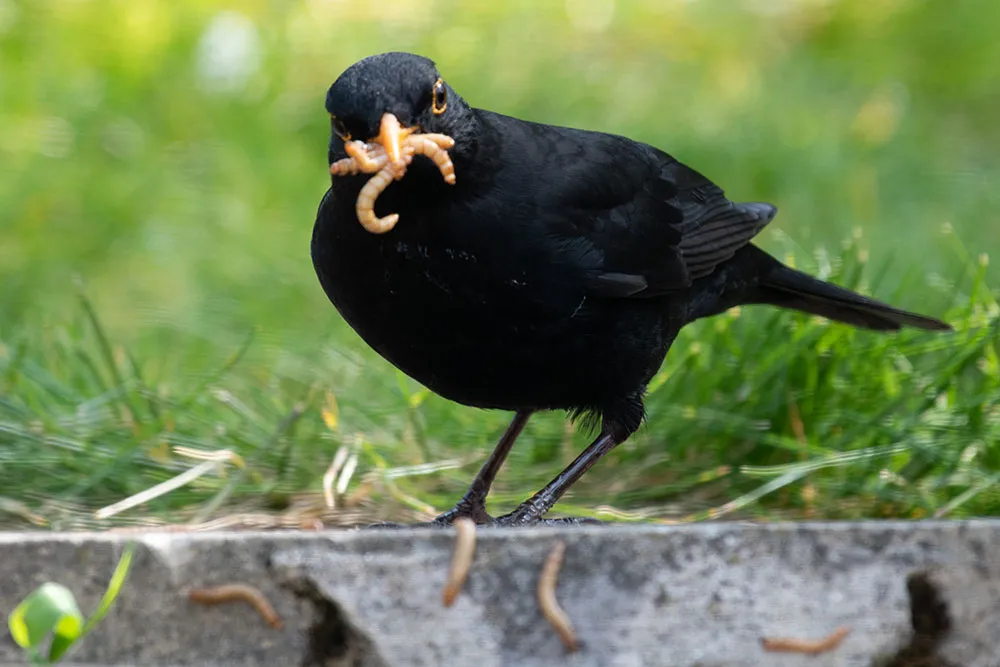
Mealworms are not worms but the larval stage of a beetle. It is the larvae of the Yellow Mealworm Tenebrio molitor that are used widely as food for wild birds, as well as captive birds, reptiles and amphibians. Another less common but similar species, the Dark Mealworm Tenebrio obscura is sometimes used, the larva being somewhat smaller in size. Why not grow your own?
Feeder hygiene
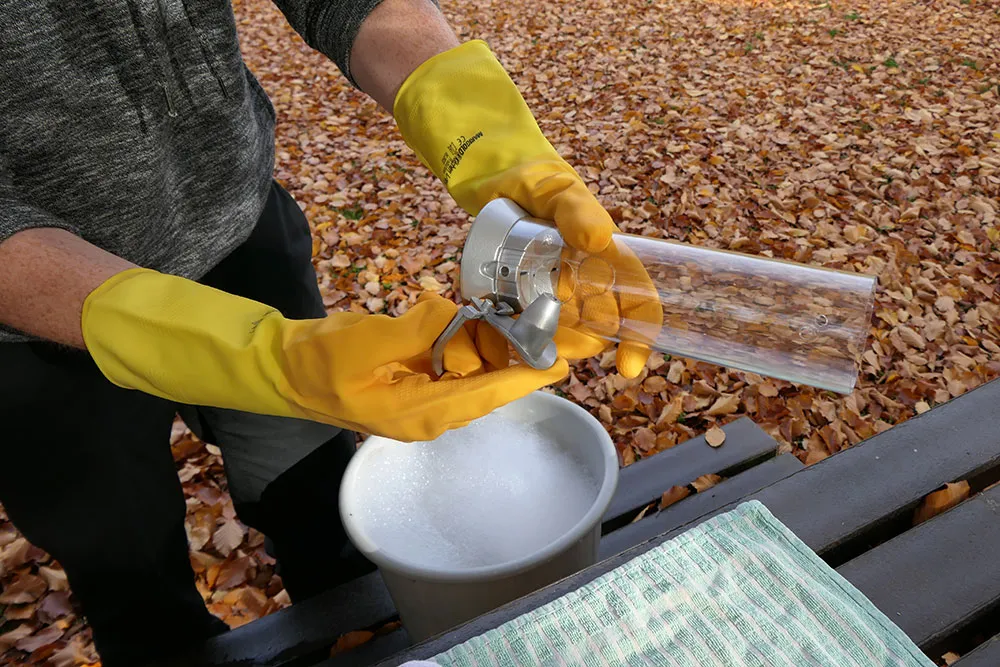
Some simple tips to reduce the risk of disease in your garden birds, and what to do if you see a sick bird.
Fatty foods for birds
Read the latest research on providing fatty foods for birds, and the impact of supplemental fatty foods on productivity.
Grow your own mealworms
Mealworms are nutrient-rich but expensive food for birds. Learn how to grow your own so you have a continuous supply.
Buy bird food and feeders from a reputable company
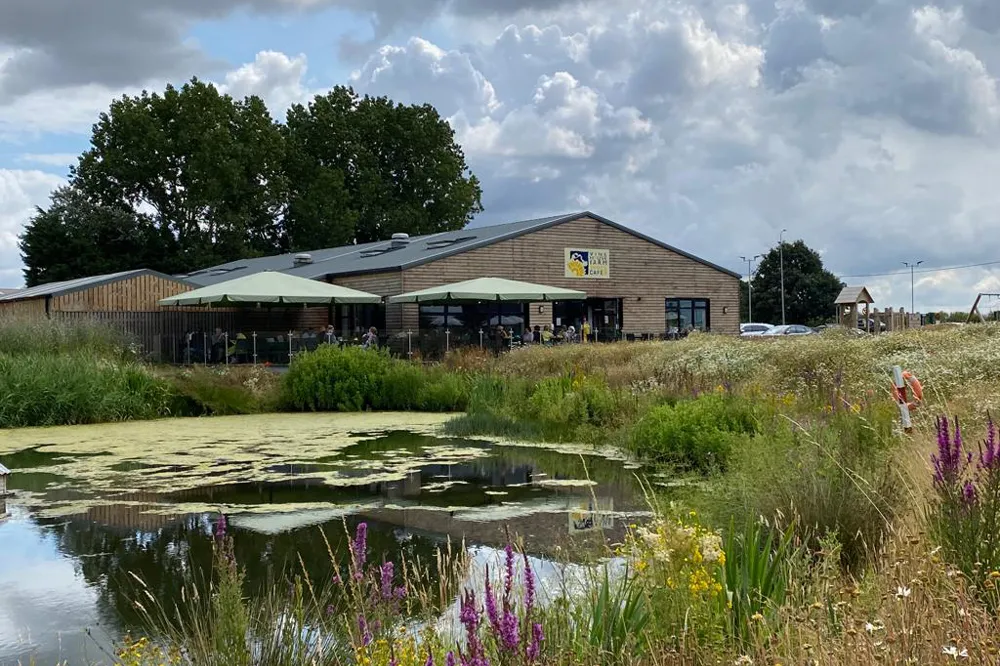
BTO is proud to work in partnership with leading bird-care company Vine House Farm, with the shared aim of making a positive impact for birds.
- Please visit the Vine House Farm website for high-quality nest boxes, bird houses, foods, feeders and more.
BTO and Vine House Farm
Vine House Farm is a conservation-award-winning farm, managed with wildlife in mind and environmental responsibility to the fore. Our partnership with Vine House Farm seeks to make a positive impact for birds.