Breeding waders need your help
Support our vital work to help protect wader populations, reverse their declines, and create a brighter future for these vulnerable birds. Please give what you can.
Waders in decline
The UK’s upland, grassland and farmland habitats host important populations of breeding waders – for some species, such as Curlew and Oystercatcher, some of the largest populations in all of Europe. However, from their peak numbers in the early part of the 20th century, many of these species are now in trouble.
Results from the BTO/JNCC/RSPB Breeding Bird Survey and Bird Atlas 2007–11 highlight the declining populations and range reductions of species such as Lapwing, Curlew, Redshank, Snipe and Oystercatcher across much of the UK.
What is driving breeding wader declines?
Analyses of long-term monitoring data from the Breeding Bird Survey and Bird Atlas 2007–11, together with species- and habitat-specific research, have identified key drivers of these declines:
- Loss and deterioration of breeding habitat as a result of changing agricultural practices, such as conversion of traditional meadows to intensive grassland monocultures; woodland-planting (particularly non-native forestry plantations on or near key breeding wader habitat, for example in upland areas); more extreme spring and summer weather due to climate change.
- Reduced breeding success because of increased predation pressure on eggs and chicks and losses from agricultural activities.
BTO’s role in addressing wader declines
BTO occupies a unique role in being able to bring evidence from our long-term partnership monitoring schemes on the drivers of population change together with research projects targeted to inform the development, monitoring and evaluation of management actions. BTO is a cornerstone of national efforts to recover breeding wader populations, working in three key areas – monitoring, collecting and synthesising evidence, and engaging and supporting stakeholders in wader conservation. These actions, together with our reputation as providers of impartial, rigorous, high-quality science means that our voice carries significant weight, from the grassroots level right up to government decision-makers.
Our aims
Achieving sustainable population recovery of the UK’s breeding waders requires understanding 1) the effects of management actions such as habitat improvements or nest-fencing on the breeding success of target species, and, ultimately, on the recruitment of new breeding birds, and population change at local and regional scales, and 2) the contexts in which and extent to which policy and practice achieve their aims, and how we can improve their effectiveness for wader conservation.
The key objectives shaping BTO’s breeding wader work aim to help inform answers to these questions through:
- Assessing solutions for breeding wader recovery in farmland landscapes and ensuring this evidence is used to guide the development of suitable agri-environment policy;
- Supporting local wader conservation initiatives;
- Informing land-use decision-making, for example tree-planting guidance;
- Assessing the benefits of peatland restoration for breeding waders;
- Testing the effectiveness of novel technologies to help monitor breeding success.
These core objectives are helping us to deliver a strong legacy that will continue engagement, collaboration, science and conservation action for breeding waders into the future.
Supporting Curlew recovery
The Curlew has been described as the UK’s highest bird conservation priority, and previous BTO work indicates that the current population declines are likely to be driven by low breeding success, particularly as a result of predation. Several key projects are investigating the effectiveness of management interventions aimed at increasing Curlew breeding success and their incorporation in agri-environment schemes, which are critical for supporting species recovery as mapped out by the UK Curlew Action Plan.
Investigating nest-fencing and Curlew nest survival
BTO has played a leading role in the design, data collection and analysis of the Curlew Solutions Trial. This pivotal project assessed the evidence around Curlew management solutions in improving breeding productivity, specifically fencing nests to protect them from predators. Together with the Curlew Recovery Partnership England and partners in key Curlew breeding areas around England, project fieldworkers monitored the outcomes of over 300 nests over two years, and demonstrated that nest-fencing can boost Curlew nest survival by a factor of seven over unfenced nests in multiple farmed grassland landscapes. However, this increase in nest success doesn’t sufficiently boost the overall number of chicks fledged each year to enable population recovery, meaning more work is needed to understand how to improve chick survival. This will be the focus of new, proposed research with our partners.
Assessing headstarting as a conservation tool
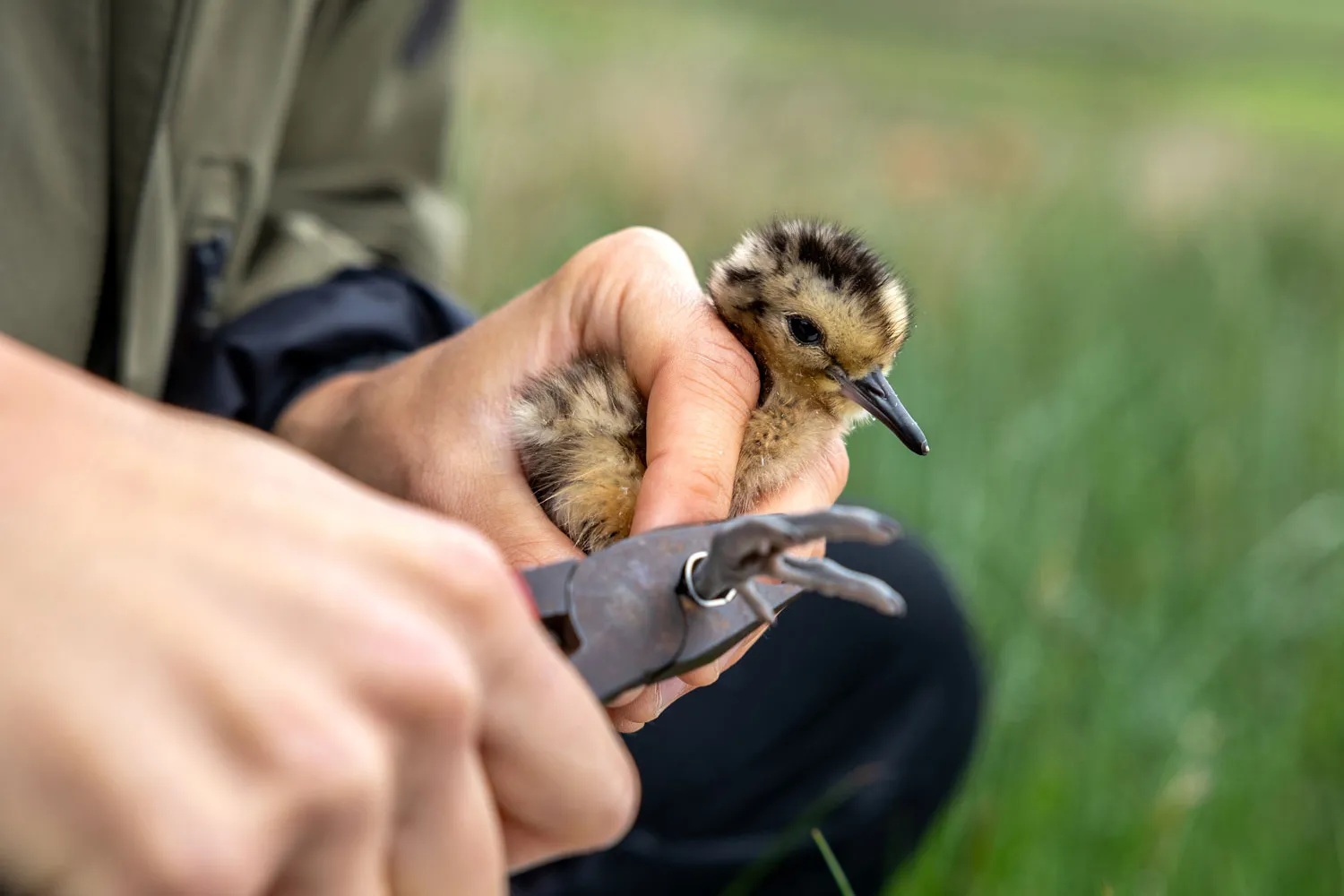
Together with other partners, we are also playing a leading role in another project assessing an innovative conservation tool for Curlew recovery – headstarting, where eggs are collected from wild nests, and the resulting chicks reared in captivity and subsequently released into the wild at fledging age. BTO has used various methods, including GPS tracking, to monitor the fate of released birds for the Norfolk Curlew headstarting project, seeing whether they behave like their wild counterparts and if they return to breed in the area where they were released – a key requirement if they are to boost numbers of declining breeding populations. This project is just starting to yield information on breeding return rates, and assessing how the effectiveness of headstarting as a conservation tool can be maximised will be the focus of future proposed work on headstarting.
Informing agri-environment scheme development
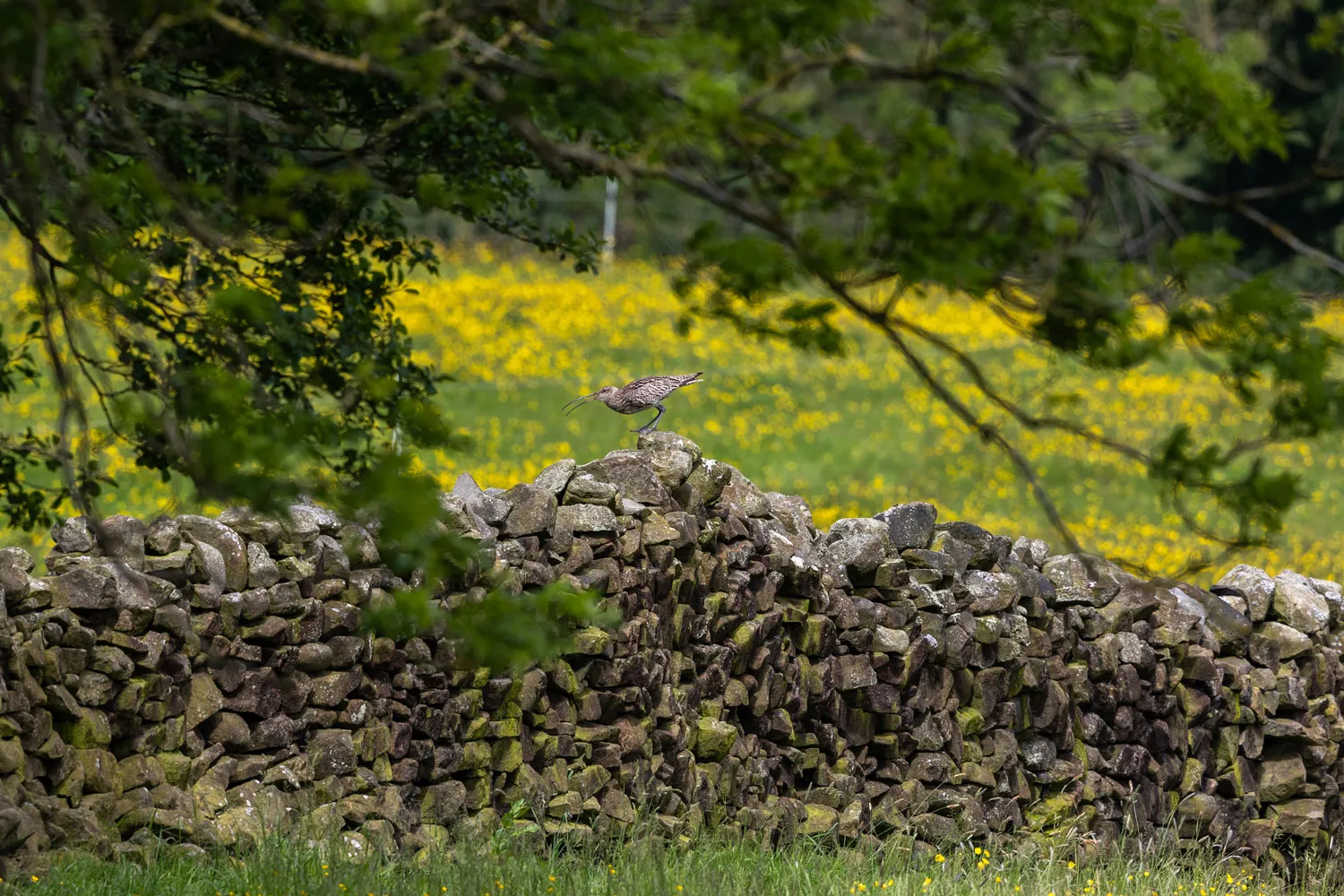
Further work in the Yorkshire Dales, funded through the Farming in Protected Landscapes (FIPL) programme and conducted in partnership with the National Park authority and various local stakeholder groups including farmers and game management estates, provided important information to guide agri-environment scheme (AES) development for breeding waders. The project used GPS tracking to assess Curlew habitat use across the breeding season in typical upland habitats, trialled various monitoring approaches to aid the evaluation of the effectiveness of AES, and reviewed whether current AES options could deliver sufficient benefits for breeding Curlew.
Supporting partners in wader conservation
BTO works to support partners from across a broad range of stakeholders, and this collaborative approach plays a key role in delivering effective conservation solutions for the UK’s breeding waders. From contributing our expertise to national wader partnerships (Curlew Recovery Partnership England; Working for Waders; Curlew Wales / Gylfinir Cymru), to supporting local groups with bespoke wader monitoring guidance and advice in our Wader Hub, partnership-working allows us to bring our core strengths of impartial evidence provision and bird monitoring expertise to underpin the actions required for the recovery of sustainable wader populations across the UK. Our position means we are trusted to engage with a range of diverse views and provide evidence for contentious topics, such as the potential conflict between breeding waders and woodland expansion.