Since 1999, these reports have provided an annual overview of the status of bird populations in the UK and its Overseas Territories. They include trends for as many of the UK’s regularly occurring species as possible.
SUKB reports on the latest assessment of the status of the UK’s breeding and non-breeding bird species. These are listed in Birds of Conservation Concern 4 (BoCC4), published in December 2015. Species were assessed against a set of objective criteria in order to be placed on the Green, Amber or Red lists – indicating increasing levels of conservation concern.
More than a quarter of the UK’s bird species are now on the Red list, and in this report we highlight some of the species that have been reclassified since the last review in 2009, as well as those groups of species for which there are particular concerns.
Who the report is produced by
Search filters
The State of the UK's Birds 2020
Author:
Published: 2020
The State of UK’s Birds reports have provided an periodic overview of the status of the UK’s breeding and non-breeding bird species in the UK and its Overseas Territories since 1999. This year’s report highlights the continuing poor fortunes of the UK’s woodland birds, and the huge efforts of BTO volunteers who collect data.
17.12.20
Reports State of the UK's Birds
The State of the UK's Birds 2016
Author:
Published: 2017
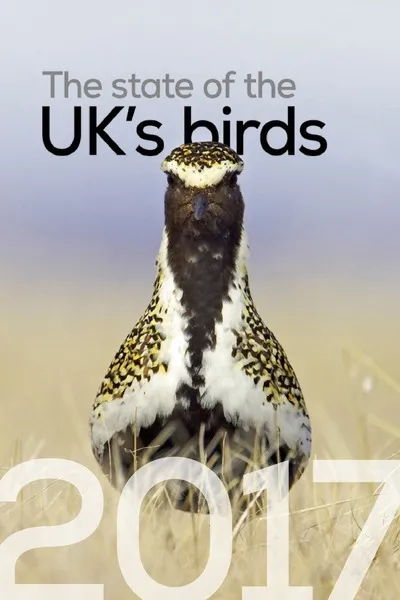
The main theme of The State of the UK’s Birds report (SUKB) 2016 is the latest Birds of Conservation Concern 4 list – BoCC4 published in 2015 - and the species whose status has changed. The increase in the Red list by 15 species is due to problems in all habitats including farmland, woodland and coasts but most notably in uplands with five new upland species moving onto the red list.One of these is Curlew. The UK supports 27% of the global population, and the long-term trend shows a 64% decline from 1970 to 2014. This, combined with the bird's global status of Near Threatened, suggests that the Curlew is one of the most pressing bird conservation priorities in the UK. “The BTO is working with others on a programme of research to understand the causes of Curlew decline and guide potential management solutions. This involves analyses of long-term data collected by thousands of volunteers, using novel tracking technology to study the needs of individual birds, and working with local enthusiasts to inform the recovery of local populations” - James Pearce-Higgins, Director of Science, BTO Upland birds Whinchat, another largely upland species monitored by the BBS shows a 53% decline during the last two decades. As an Afro-Palearctic migrant, this species is part of another group for which there is particular concern. Threats and pressures during migration and on the wintering grounds need to be considered alongside the impact of changes in upland habitats in the UK. More unexpected perhaps, is that Grey Wagtail has moved from the Amber list to the Red list. Alongside declines in Common Sandpiper and Dipper, this raises wider concerns about species associated with upland streams and rivers. The other two upland species to show marked declines are Merlin and Dotterel, the latter a montane species likely to affected negatively by climate change and grazing pressure. Scarce and rare breeding species As well as the annual update of changes in widespread breeding species based mainly on the BBS, SUKB 2016 once again includes a summary of trends in scarce and rare breeding species, drawn mainly from the annual reports of the Rare Breeding Bird Panel (RBBP) and the SCARABBS programme of periodic surveys. Of the 91 species reported on in the most recent RBBP report covering 2014, 71 were assessed by BoCC4. Eight species showed an improvement in status (including Woodlark, Bearded Tit and Chough, which joined the Green list), with conservation action to maintain suitable reed beds helping the populations of species such as Bittern recover. Five species, Pochard, Slavonian Grebe, Merlin, Dotterel and Black Redstart moved onto the Red list. The remaining 20 of the 91, not assessed by BoCC4, are those which are not considered to be a regular component of the UK’s avifauna. This may be because they breed only occasionally (eg. European Bee-eater), or indeed have never bred, but from time-to-time visiting individuals exhibit breeding behaviour (eg. Great Reed Warbler). The RBBP logs such occurrences, as it may be that they represent a precursor to future colonisation, such as the first Little Egrets that displayed to each other in the early 1990s, before first breeding in 1996 and the subsequent population explosion. The importance of volunteer data Thousands of dedicated volunteers contributed to the data used throughout most of this report. Data used to calculate UK population trends and related research. Over 2,600 volunteers participated in the Breeding Bird Survey in 2016 alone, one of many surveys highlighted in the report. This particular survey provides annual population trends for 111 species, including upland species such as Curlew, Whinchat and Grey Wagtail. At a smaller, but equally as important scale, the 258 volunteers who contribute to the Waterways Breeding Bird Survey allow monitoring on those species specific to waterways, such as Common Sandpiper and Dipper and cover almost 300 sites annually. Who produces the report SUKB is produced by a coalition of three non-governmental organisations (NGOs) – the RSPB, BTO and the WWT – and the UK Government’s statutory nature conservation agencies – Natural Resources Wales (NRW), Natural England (NE), the Department of Agriculture, Environment and Rural Affairs, Northern Ireland (DAERA), Scottish Natural Heritage (SNH) and the Joint Nature Conservation Committee (JNCC).
11.04.17
Reports State of the UK's Birds
The State of the UK's Birds 2015
Author:
Published: 2016
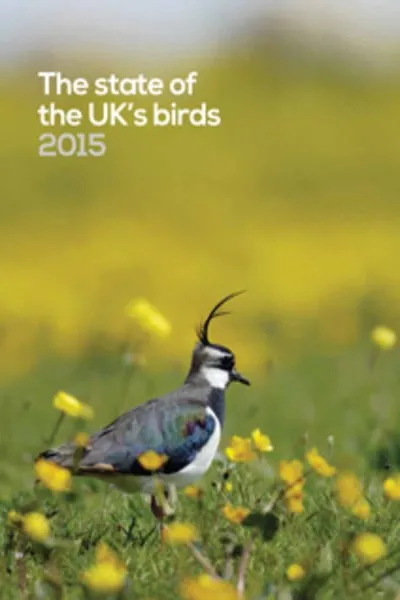
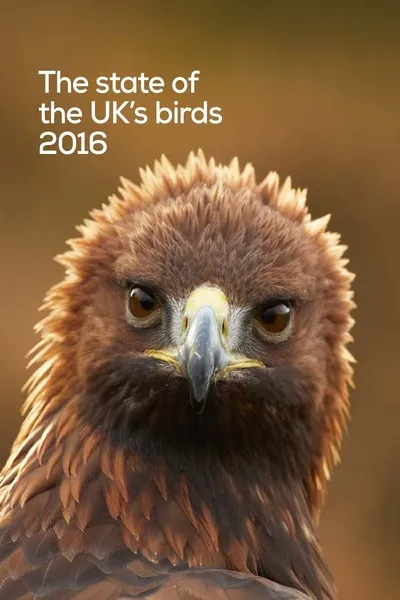
The two main themes of The State of the UK’s Birds report (SUKB) 2015 are farmland birds (illustrated by this year’s cover of a Lapwing) - a group that as a whole continues to decline, and how strong partnerships can help to reverse the fortunes of some of our farmland specialists - such as the Yellowhammer, currently faring well in Scotland; and species such as Tree Sparrow and Lapwing, all of which have shown evidence of positive responses on farms under Environmental Stewardship. Over the last four decades, declines in farmland birds have been shown to be due to a number of factors including the loss of mixed farming; increased use of pesticides; changes in grassland management and changes in crop type and the timing of management. The effects of predation and climate change, and threats to migratory species away from their breeding grounds are also playing a role. Agri-environment schemes provide the primary mechanism for improving conditions for farmland birds so how these are delivered in the future is critical. Other future challenges for farmland birds include emerging diseases and the development and use of new pesticides such as neonicotinoids. The importance of volunteer data Volunteer data continue to provide most of the information used to update the trends reported for the UK, one of the two key examples being the more than 2500 volunteer participants in the Breeding Bird Survey. Providing annual population trends for more than 100 species, the BBS results highlight six species with severe declines just since 1995: Turtle Dove, Willow Tit, Wood Warbler, Grey Partridge, Pied Flycatcher and Whinchat. Four of these species are long-distance migrants and three are woodland specialists. Counts by volunteers at more than 2,200 wetland sites at monthly intervals for the Wetland Bird Survey provide the information to report on wintering population trends in 46 species or races of waterbirds including ducks, geese, swans, waders, grebes, rails and cormorants. After two decades of increase, the wintering waterbird indicator has been declining over the last decade, particularly among species such as Turnstone and Purple Sandpiper, characteristic of the non-estuarine coasts. "Without the dedication of thousands of volunteers, and partnerships between a whole suite of organisations, bird monitoring could not function on the scale illustrated by the latest the 'State of the UK's Birds'. From monitoring comes conservation action, and it is uplifting to read examples of partnership projects working to conserve the UK's birds. The latest SUKB celebrates both volunteer effort and innovative partnerships, something volunteers and partnership organisations should be proud of. Now to continue this great work..." Sarah Harris, Breeding Bird Survey National Organiser. Scarce and rare breeding species SUKB 2015 once again includes a summary of trends in scarce and rare breeding species, drawn mainly from the annual reports of the Rare Breeding Bird Panel and the SCARABBS programme of periodic surveys. A number of these birds are perilously close to extinction in the UK: one species, the Wryneck, may be already, as the last known breeding record was in 2002 and the Golden Oriole has not bred since 2009. Red-backed Shrikes appeared to be going the same way, but successful breeding in Devon and the Highlands in recent years gives us some cause for hope. While Red-backed Shrikes and Wrynecks were once found breeding across large parts of the UK, species such as Purple Sandpipers, Savi’s Warblers, Marsh Warblers, Redwings and Fieldfares have never, to the best of our knowledge, been anything more than rare breeders. The UK lies at the edge of their breeding ranges, and their fortunes here are dependent on how they fare elsewhere in Europe. Apart from input to international conservation policy, the best we can do is to protect the few pairs that do breed.
11.04.16
Reports State of the UK's Birds