Citation
Abstract
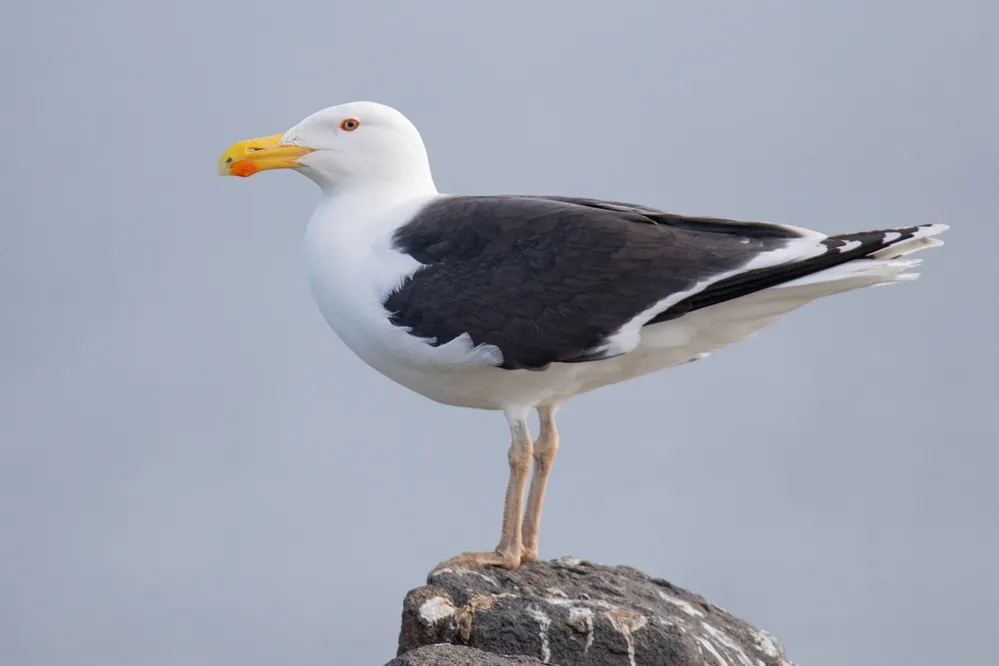
Seabirds experience variable extrinsic and intrinsic pressures throughout the annual cycle that affect their ability to forage. Consequently, their foraging strategies may vary between breeding and non-breeding seasons due to the constraints of central-place foraging during the former. Here, we studied a population of a generalist seabird, the Great Black-backed Gull Larus marinus, breeding at a colony on the Isle of May, Scotland. We quantified seasonal variation in sexual segregation, trophic position, trophic niche width, and resource use by examining stable isotopes in feathers collected from adults. We found no sexual segregation, but we detected population- and individual-level shifts in trophic position, trophic niche width, and resource use throughout the annual cycle, providing novel information about the ecology of the Great Black-backed Gull. The population was most specialised during the late non-breeding period, when marine resources made up over 95% of the population's diet. During breeding, terrestrial resources made up 20% of the population's diet, and a much greater percentage for some individuals. We highlight the importance of undertaking trophic studies beyond the breeding period to advance collective knowledge of species' ecology and to improve assessments of the potential impacts of environmental change and other anthropogenic threats during the non-breeding season, which is critical for seabird survival.
Staff author(s)


SLL was funded by a studentship under the Natural Environment Research Council (NERC) Scottish Universities Partnership for Environmental Research (SUPER) Doctoral Training Partnership (DTP); grant reference number NE/S007342/1 and website https://superdtp.st-andrews.ac.uk/. Additional funding was provided by the University of the Highlands and Islands, as well as the Scottish Government. The stable isotope analysis of all samples was funded through a National Environmental Isotope Facility grant (NEIF number 2426.1021).