Citation
Overview
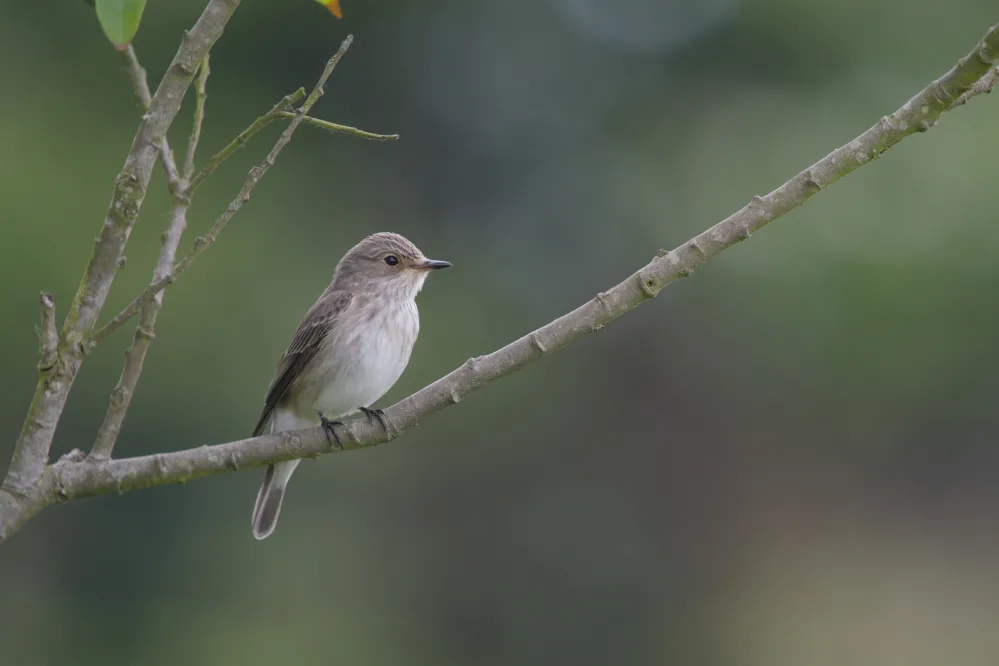
The density of rivers is strongly associated with the persistence of the Spotted Flycatcher, a Red-listed migratory species in sharp decline in the UK. Protection and improvement of riverine habitats and understanding their benefits for terrestrial species should be a priority for conservation management.
In more detail
Work involving BTO used Bird Atlas data to examine colonisation and loss of the Spotted Flycatcher between 1990 and 2010. This species is a widespread insectivorous Afro-Palearctic migrant, which declined by 92% in the UK between 1967 and 2020.
The results showed that a greater density of rivers was associated with a lower probability Spotted Flycatcher loss from any particular site, and with a higher probability of colonisation. Loss of the species was also associated with increases in urban land cover. Unexpectedly, Spotted Flycatcher colonisation was negatively associated with increases in woodland cover and in standing freshwater.
The results suggest that habitat creation is unlikely to provide sufficient benefits for Spotted Flycatcher population recovery, and efforts should instead focus on the protection and improvement of established habitats. River availability was strongly associated with the persistence of the Spotted Flycatcher, and this finding highlights that understanding the benefits of freshwater habitat for terrestrial species should be a priority for conservation management.
Abstract
Insectivorous, Afro-Palearctic migrant birds provide cross-border ecosystem services, but many are declining rapidly. The complex life cycle of migrant birds makes their conservation difficult, but understanding where they spend time during the breeding season can help indicate where those actions will be most effective. We used the spotted flycatcher (Muscicapa striata), a declining, Afro-Palearctic, migratory insectivore and habitat generalist, as a model to examine how river density and land-cover change were associated with loss and colonization during the breeding season of 2 × 2-km national atlas survey areas from 1990 to 2010. Greater river density was associated with a lower probability of loss (odds ratio [OR] 0.8) between survey periods and a higher probability of colonization (OR 1.25). Loss was associated with increases in urban land cover (OR 1.17), and, unexpectedly, colonization was negatively associated with increases in woodland (OR 0.91) and standing freshwater (OR 0.94). Our results suggest that habitat creation is unlikely to provide sufficient benefits for some insectivorous birds within the time needed for population recovery. Thus, efforts should focus on the protection and improvement of established habitats. River density was strongly associated with the persistence of the spotted flycatcher, and this finding highlights that understanding the benefits of freshwater habitat for terrestrial species should be a priority for conservation management.
Staff author(s)


The authors thank the thousands of volunteers who undertook fieldwork for the breeding bird atlases, which were a partnership between BTO, BirdWatch Ireland, and the Scottish Ornithologists’ Club. This work was supported by the Natural Environment Research Council (NE/S007423/1), and C.E.’s studentship was provided through the ENVISION Doctoral Training Partnership.