Citation
Overview
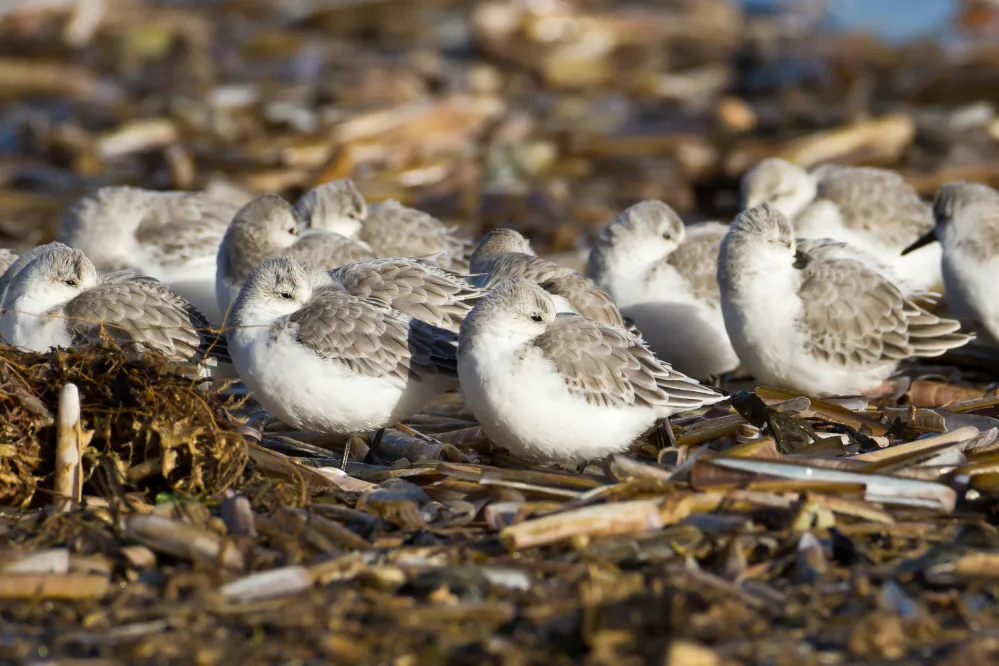
UK wintering waterbird populations increased until the mid 1990s but then declined, particularly for waders. Increasing temperatures are generally associated with increasing populations, so it is likely that recent declines are primarily driven by other factors.
In more detail
The UK is an important wintering ground for millions of waterbirds. Most UK wintering waterbird populations increased between 1970 and the mid 1990s, but many populations have declined since then. This study examined UK population trends of 46 wintering waterbird species to identify which types of species, based on ecology, migratory strategy, and breeding location, had undergone recent declines and to look for clues to the drivers of these. Waterbird populations in the UK increased from 1970 to 1994 then showed mixed trends from 1995 to 2019: geese and swan populations increased and waders declined.
From 1970 to 1994 wintering waterbird population increases were most apparent in estuaries. One potential driver for the pattern of trends is changes in water quality. In the UK, water quality generally worsened, with falling oxygen levels and increasing nitrogen and phosphorus, until legislative changes in the early 1990s, after which it improved. Many estuarine wintering waterbirds including waders benefit from low water quality, so water quality declines could have played a role in the early estuarine waterbird increases. In freshwater, the relationship between water quality and wintering waterbird populations is inconsistent.
Increased breeding season temperatures were linked to population increases for most species in both periods, although there was no beneficial impact of climate warming for migrants from 1995 to 2019. Temperature increases on Arctic breeding grounds may cause immediate ecological responses (e.g. insect abundance increasing food availability), medium-term responses (e.g. increases in predator populations) or long-term responses (e.g. shifting vegetation zones reducing breeding habitat). This shifting balance of positive and negative impacts of warming could explain why the impact of warming on waterbird numbers became less positive over time.
For Arctic- and Continental-breeding species, warming temperatures may have reduced the distances that individuals need to migrate to avoid cold temperatures. This phenonemon is known as ‘short-stopping’. The study also found that waterbird populations shifted from the warmer west of the UK to the colder east from 1970 to 1994, and this shift was most apparent in waders. However, short-stopping may be caused by species’ ranges contracting due to population declines or by range shifts due to climate change. Waders, the group experiencing the greatest recent UK declines in this analysis, are generally declining elsewhere in Europe, so their UK decline is unlikely to be solely due to range shifts.
There are many other potential drivers of the early increase in wintering waterbirds including increased restrictions on wildfowl hunting, lead shot and fishing weights, which could explain the continued rise in goose and swan populations.
Although the study identified some possible drivers of the population declines in some UK wintering waterbirds since the mid 1990s, there is an urgent need to understand the causes of these declines further, particularly in light of the international importance of the UK’s wintering waterbird populations.
Abstract
The United Kingdom is an important wintering ground for millions of waterbirds. Most U.K. wintering waterbird populations increased between 1970 and the mid-1990s, but declined thereafter. We examined U.K. population indices in 46 wintering waterbird species in two 25-year periods, 1970–1994 and 1995–2019, to identify which waterbird groups were vulnerable to declines. We modeled abundance to examine whether spatial patterns in population change were consistent with changes in habitat quality, climate, or phenology. We used the resulting model outputs to test whether there were patterns in these relationships across all monitored wintering waterbirds and within groups based on ecology, migratory strategy, and breeding location. Waterbird populations in the United Kingdom increased from 1970 to 1994, particularly in estuaries, but then showed mixed trends from 1995 to 2019: geese and swan populations increased, and waders declined. Wader declines were least apparent, although still declining, in estuaries and most apparent in reservoirs. Increased breeding season temperatures were linked to population increases for most species in both periods, although there was no beneficial impact of climate warming for migrants from 1995 to 2019. We found no evidence that apparent declines were due to phenological changes. These results highlight the need for more research into why U.K. wintering waterbird trends have become more negative over the past 25 years.
Staff author(s)




Graham Austin

David Noble

The Wetland Bird Survey (WeBS) is a partnership jointly funded by the BTO, RSPB, and JNCC, with fieldwork conducted by volunteers and previous support from WWT. The WeBS partnership funded this research.